Animal identification Addition & Subtraction Worksheets for 3-Year-Olds - Page 2
27 filtered results
-
From - To
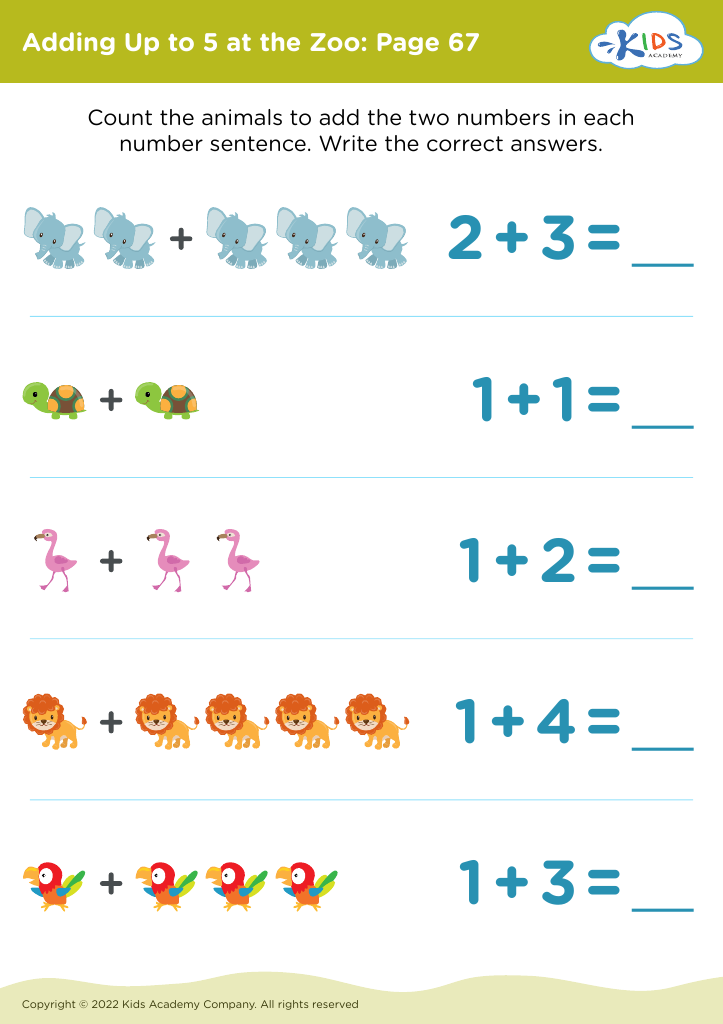
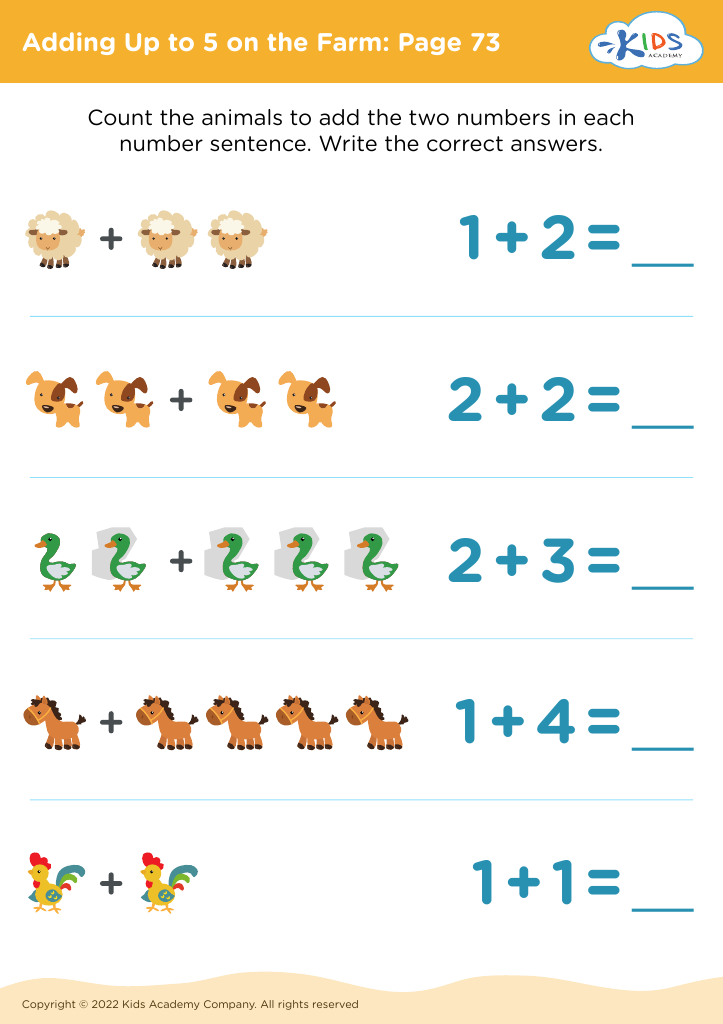
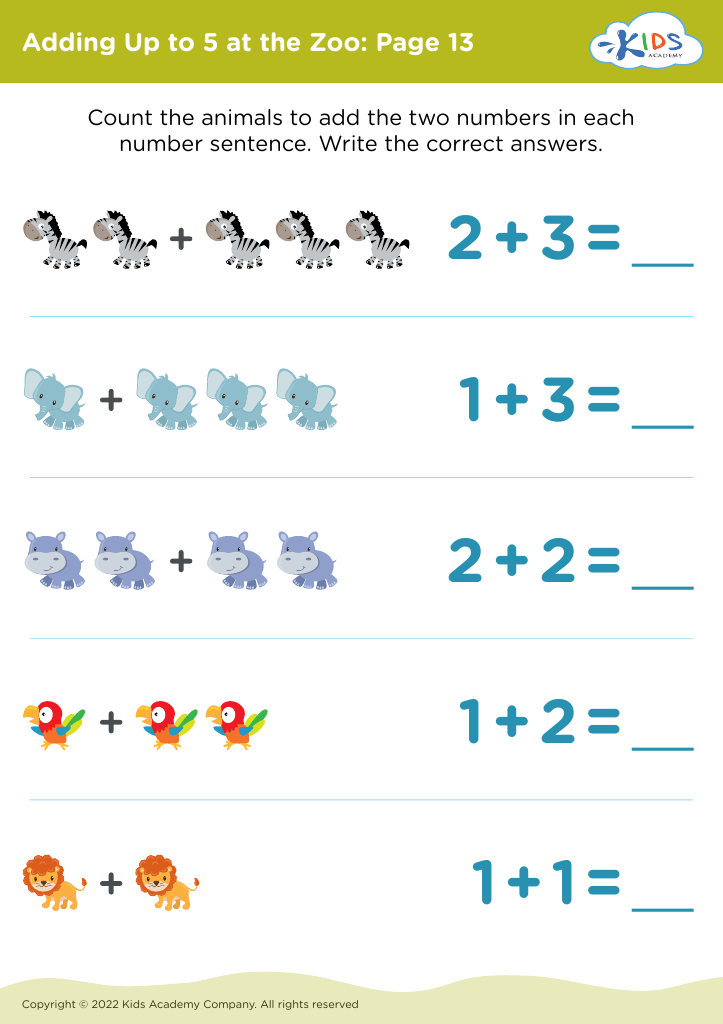








Animal identification, addition, and subtraction for 3-year-olds serves as a crucial foundation for early childhood education. First, this approach makes learning engaging and relatable for young children, as they often have a natural curiosity about animals. By integrating animal identification into simple math concepts like addition and subtraction, children can connect abstract numbers to concrete examples, enhancing their understanding and retention.
Moreover, these activities promote cognitive development by encouraging problem-solving and critical thinking skills. For instance, counting animals or adding and subtracting them in visual scenarios helps children grasp basic math concepts in a fun setting. Parents and teachers play a vital role in this interactive learning process, fostering a positive attitude towards math from an early age.
In addition, these early math skills correlate strongly with future academic success. Research indicates that a strong foundation in mathematics leads to better performance in later grades. Thus, parents and teachers should prioritize playful and hands-on approaches to teaching these skills, using animals as a theme to inspire learning. Ultimately, preparing young learners in this way not only boosts their confidence in math but also lays the groundwork for lifelong learning and curiosity.








