Basic Addition Addition & Subtraction Worksheets for 3-Year-Olds
3 filtered results
-
From - To
Welcome to our collection of Basic Addition and Subtraction Worksheets for 3-Year-Olds! Designed to introduce young learners to foundational math concepts, these engaging worksheets make learning fun and interactive. With vibrant visuals and age-appropriate exercises, children will develop essential skills in addition and subtraction through playful activities. Our printable resources encourage hands-on learning, enabling your little ones to practice counting, recognize numbers, and solve simple problems. Perfect for home or classroom use, these worksheets foster early mathematical understanding while keeping kids entertained. Start your child's mathematical journey today and watch them build confidence in their counting abilities!
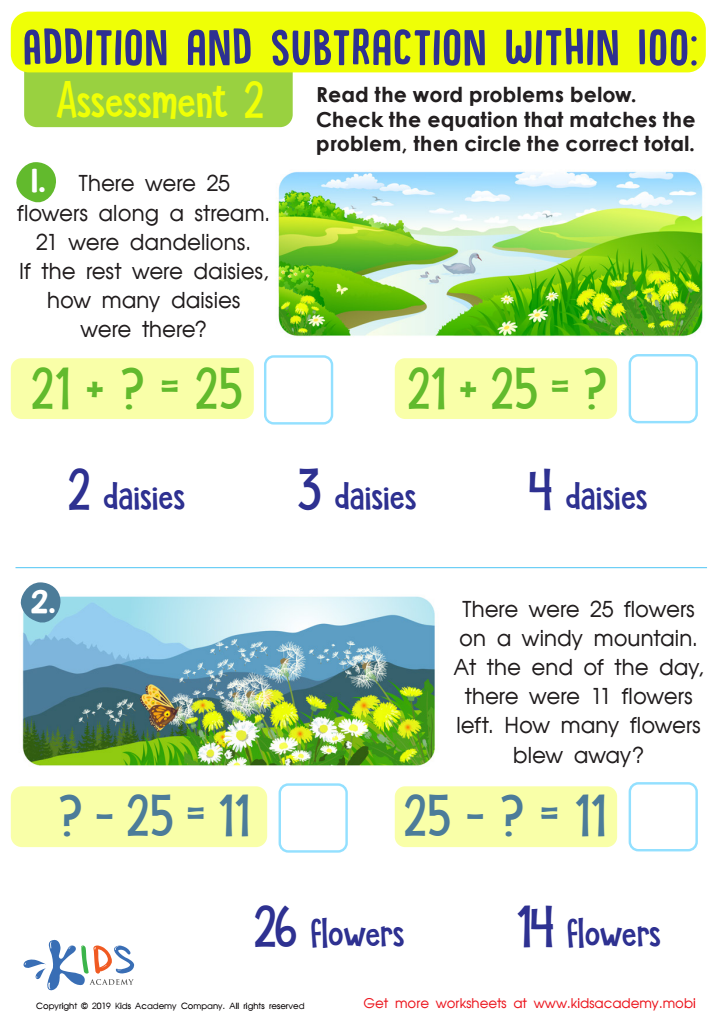
Assessment 2 Math Worksheet
 Assign to My Students
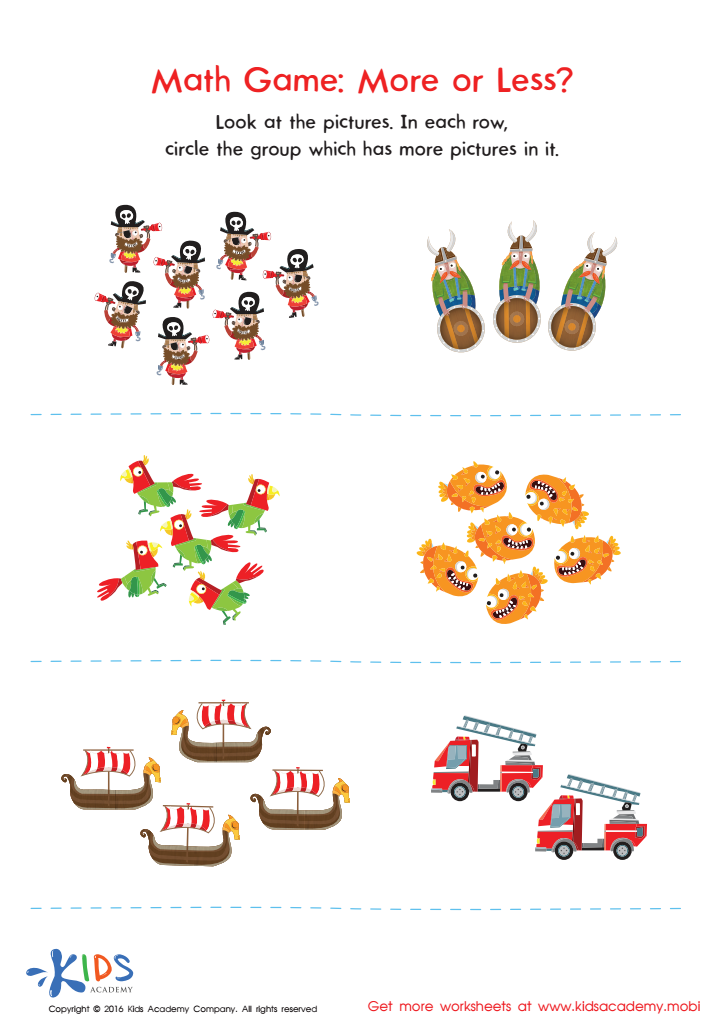
More or Less Worksheet
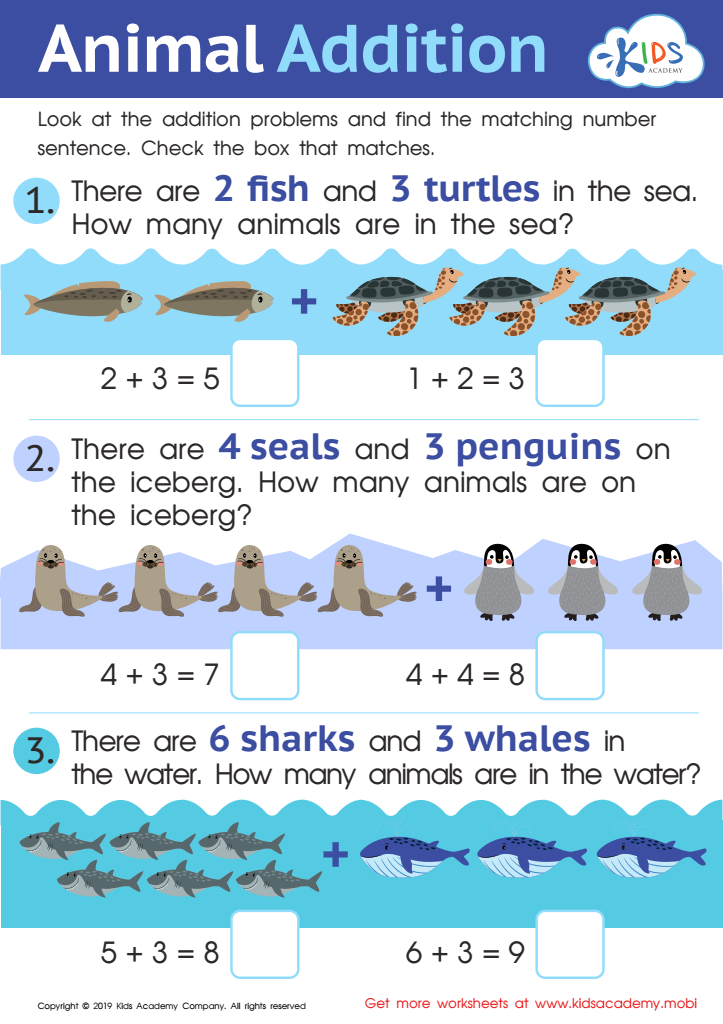
Animal Addition Worksheet








Basic addition and subtraction skills for 3-year-olds lay the groundwork for future mathematical learning and overall cognitive development. At this young age, children are naturally curious and eager to explore their environment, making it an ideal time to introduce foundational math concepts.
Engaging in simple addition and subtraction activities encourages critical thinking and problem-solving skills. For instance, using everyday objects like toys, fruits, or blocks can help children visualize numbers and understand quantity, making abstract concepts more tangible.
Learning basic math also supports language development. As parents and teachers describe the processes of adding or taking away, children expand their vocabulary and enhance their understanding of related concepts, such as 'more,' 'less,' 'total,' and 'leftover.'
Furthermore, early exposure to math builds confidence. When children grasp these basics, they feel a sense of accomplishment that fosters a positive attitude towards learning. It also prepares them for structured education, ensuring they won’t struggle with more complex concepts as they grow.
Incorporating math into daily play and interactions promotes curiosity and excitement about learning, laying a solid foundation for lifelong skills. Therefore, it is crucial for parents and teachers to make a concerted effort to nurture these skills in young children.








