Nature appreciation Addition & Subtraction Worksheets for 3-Year-Olds
5 filtered results
-
From - To
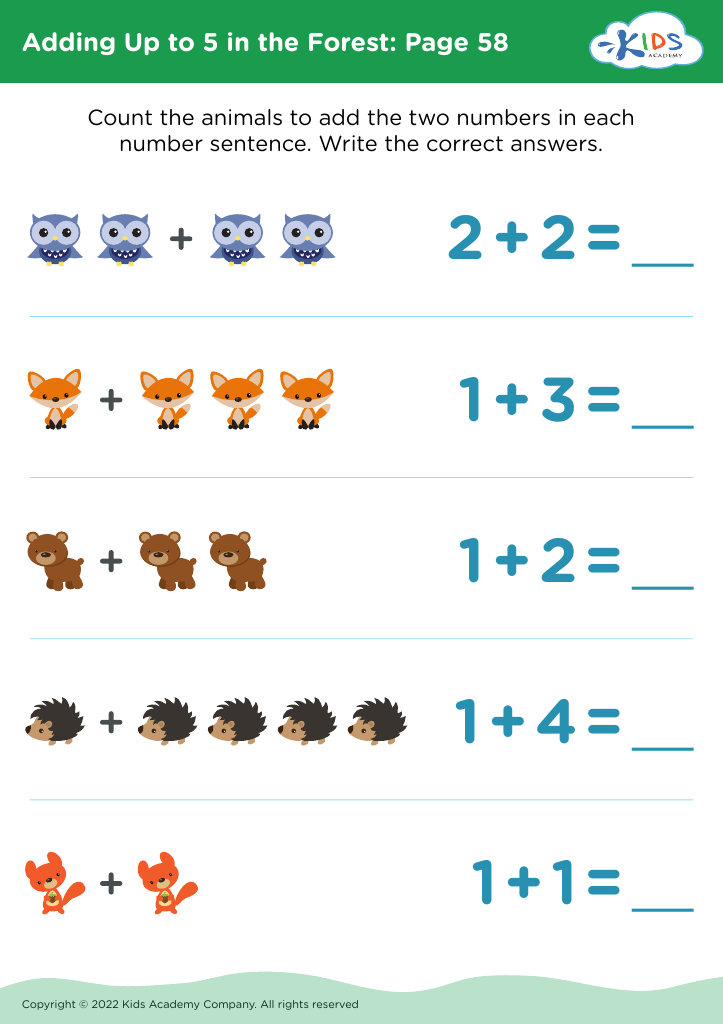
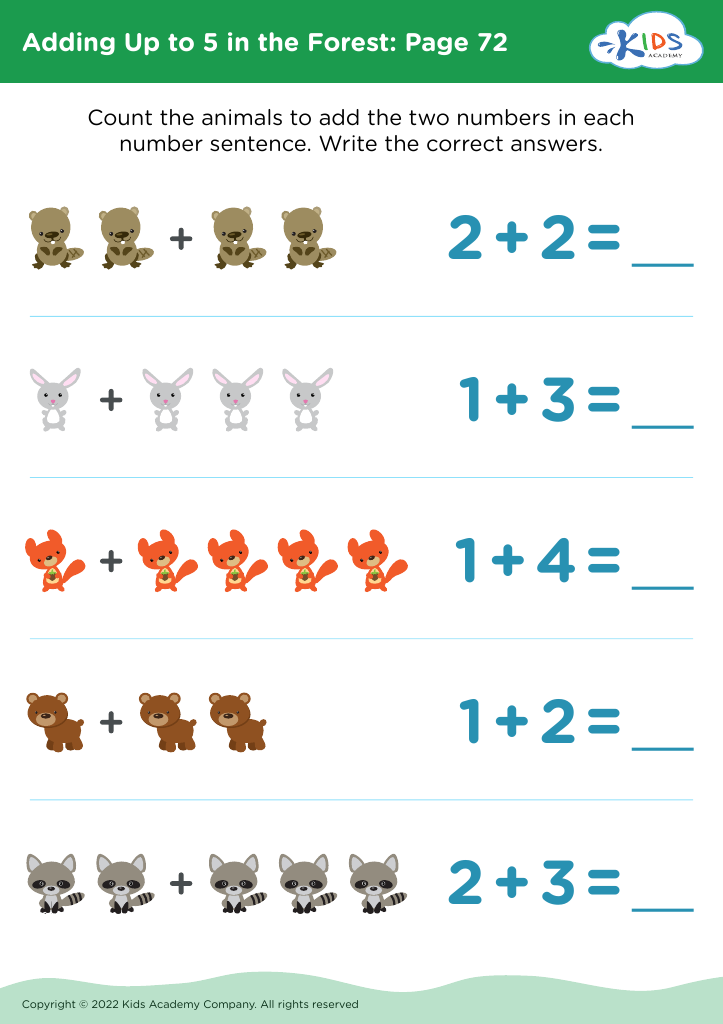
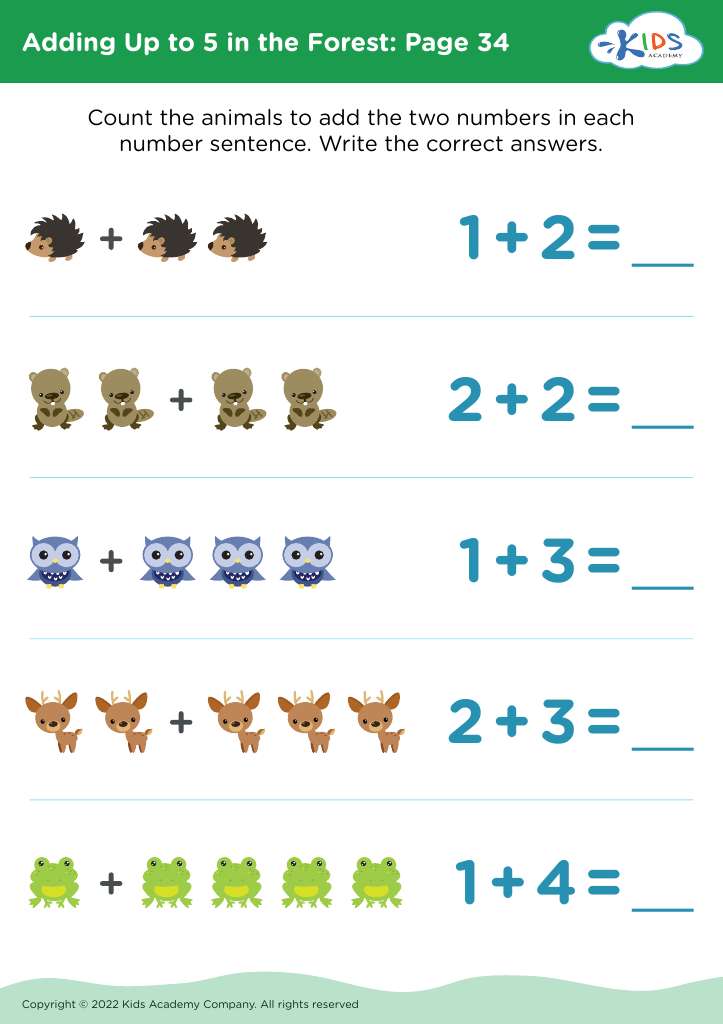
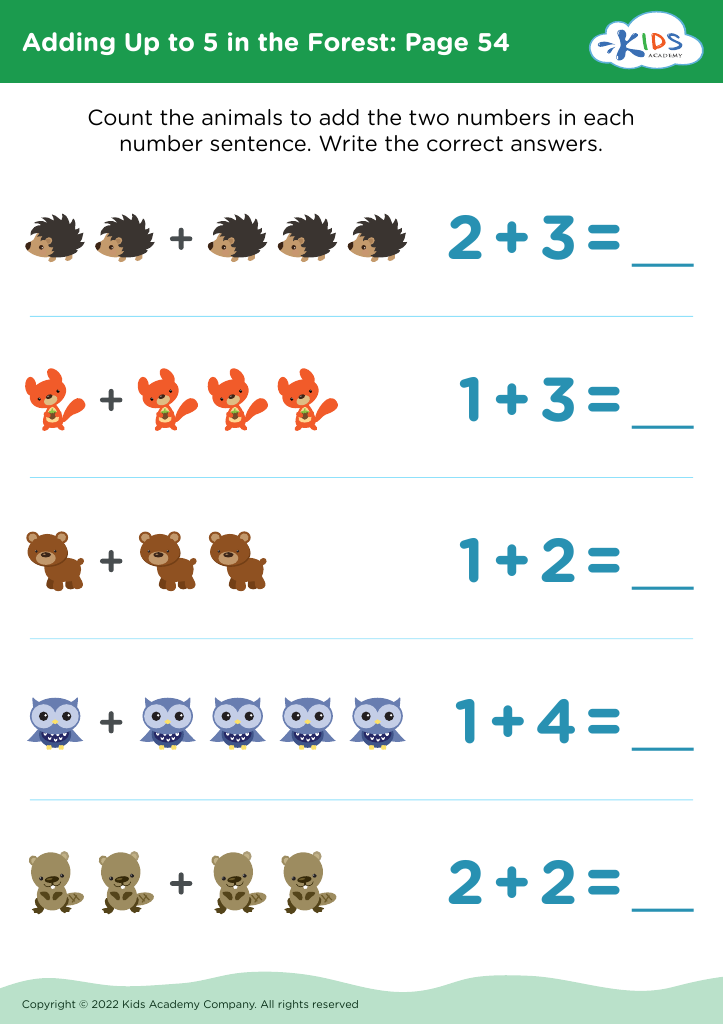
Introduce your little ones to basic math concepts, infused with a love for nature, with our Nature Appreciation Addition & Subtraction Worksheets designed for 3-year-olds. These engaging resources combine vibrant imagery of plants, animals, and outdoor scenes, making learning fun and relatable. Each worksheet focuses on simple addition and subtraction, perfect for nurturing early math skills. Using enchanting nature themes, we create an enjoyable experience that encourages young learners to explore and understand the beauty of the world around them while developing crucial arithmetic abilities. Turn math practice into a delightful adventure with our expertly crafted worksheets!
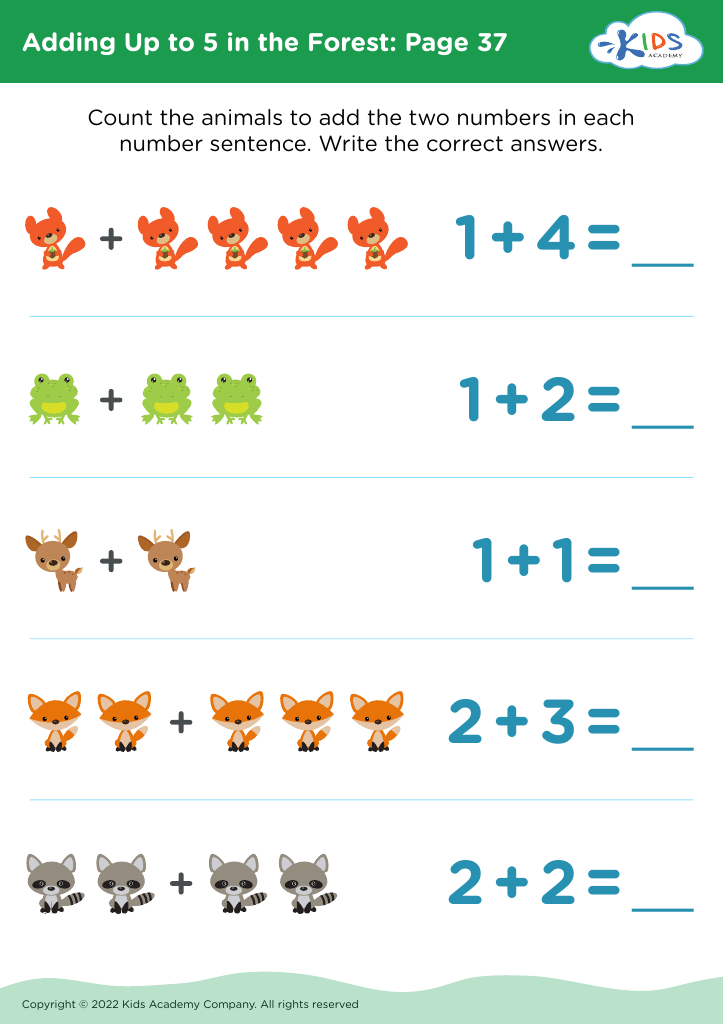








Parents and teachers should prioritize nature appreciation alongside foundational math skills, such as addition and subtraction, for 3-year-olds because both elements play crucial roles in early childhood development. Introducing toddlers to nature fosters their sense of wonder, curiosity, and appreciation for the environment. Small excursions in nature can enhance observational skills, foster creativity, and stimulate sensory experiences that are vital for cognitive development. Children who engage with nature tend to develop better problem-solving abilities and a more profound understanding of the world around them.
Simultaneously, incorporating basic math concepts through playful activities lays the groundwork for future academic success. Simple counting, addition, and subtraction activities can be seamlessly integrated with outdoor play. For example, counting acorns or sorting leaves can become a fun, practical way to introduce numerical concepts. These activities help children grasp essential skills in a tangible, memorable way.
By merging nature appreciation with simple math exercises, children benefit from a holistic educational approach that builds a lifelong love for learning and the environment. Parents and teachers set the stage for well-rounded individuals who possess both the intellectual abilities and the environmental consciousness needed to navigate an ever-changing world. Engaging children in these experiences at an early age helps cultivate versatile, resilient, and inquisitive minds.








