Understanding number relationships Addition & Subtraction Worksheets for 3-Year-Olds
3 filtered results
-
From - To
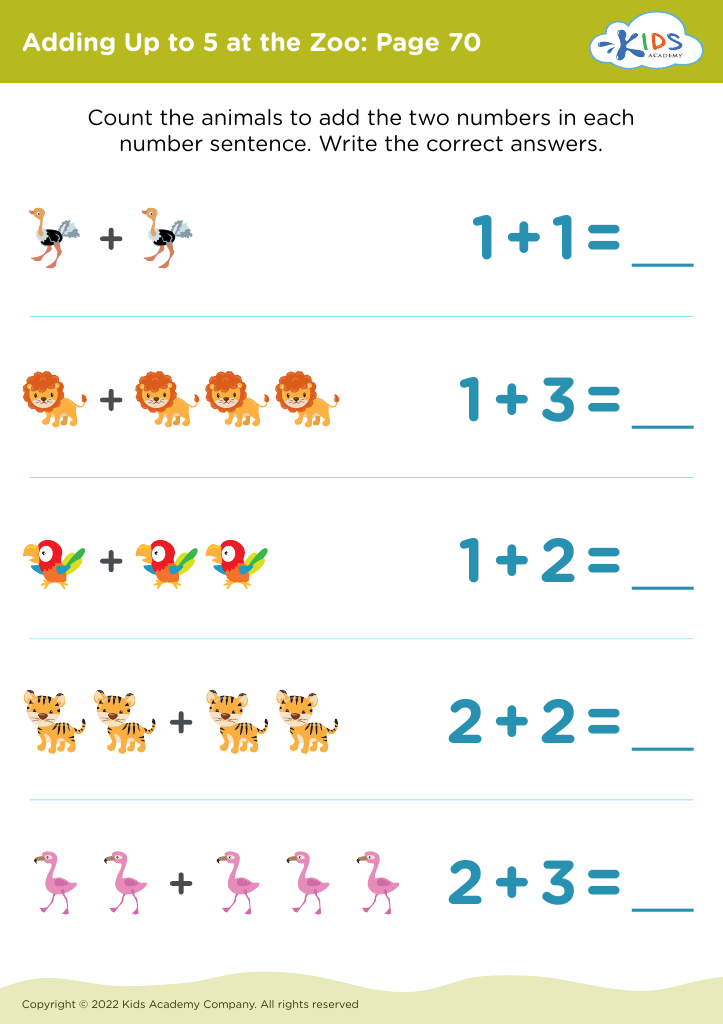
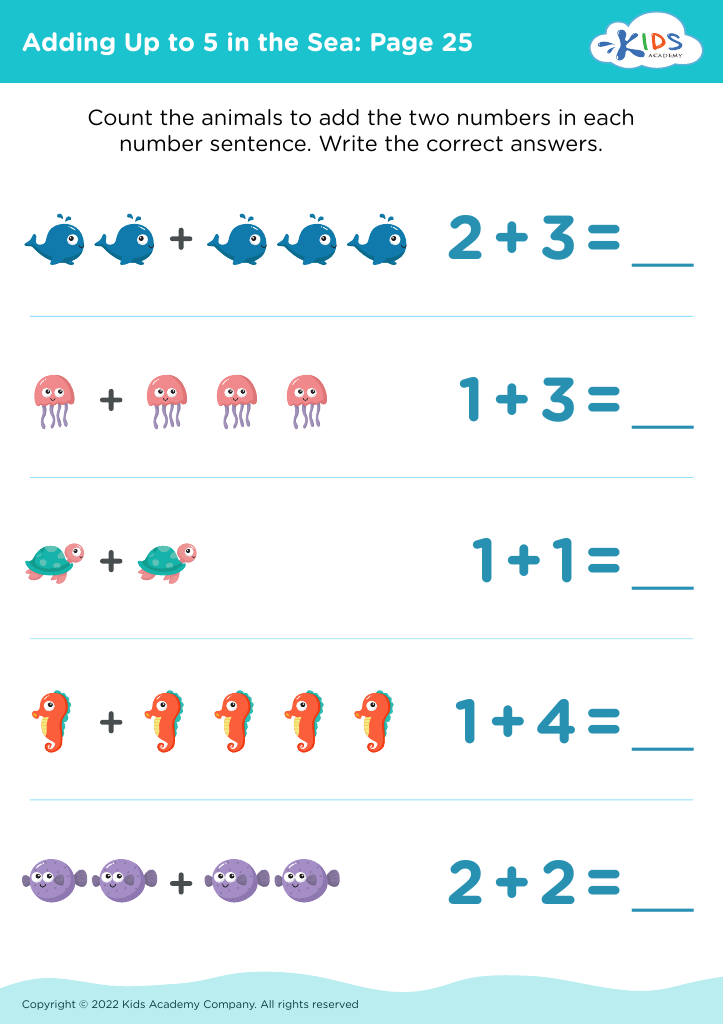
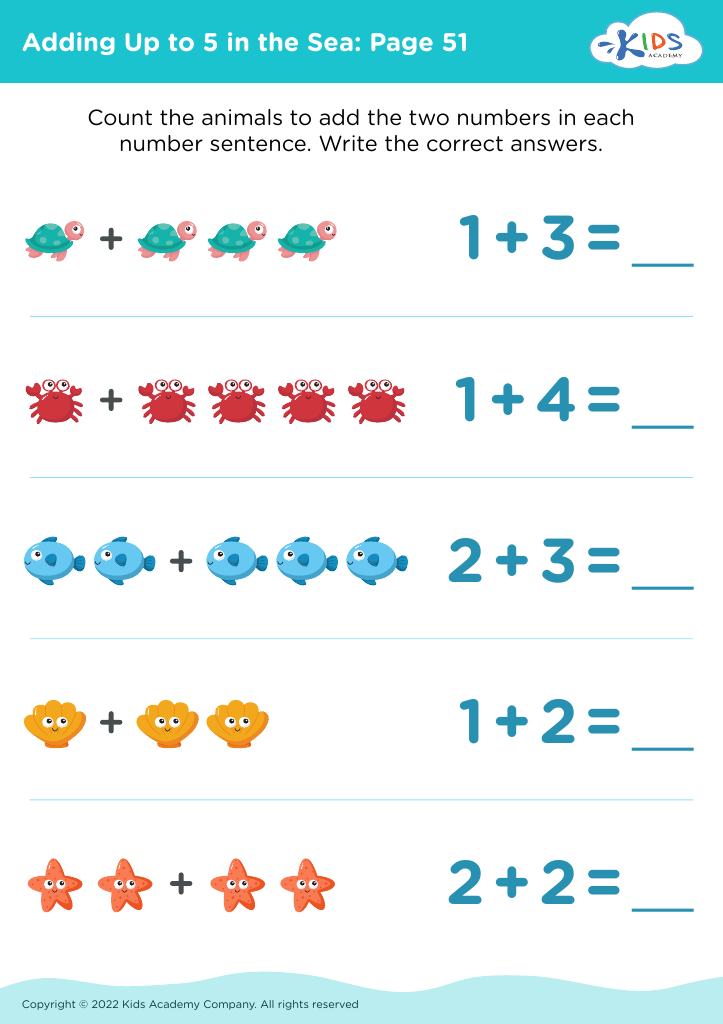
Introducing our "Understanding Number Relationships: Addition & Subtraction Worksheets for 3-Year-Olds" – a delightful gateway to foundational math skills! Perfectly tailored for young learners, these engaging worksheets utilize playful themes and vibrant illustrations to introduce basic addition and subtraction concepts. Through fun exercises, your child will begin to recognize number relationships, enhance problem-solving abilities, and build essential early math confidence. Each worksheet is designed to make learning enjoyable and accessible, fostering a positive attitude towards mathematics. Help your little ones embark on their math adventure today with our thoughtfully crafted, age-appropriate resources!








Understanding number relationships, including addition and subtraction, is crucial for 3-year-olds as it lays the foundation for their future mathematical abilities and cognitive development. For parents and teachers, fostering these early math skills is not just about preparing children for schooling; it's about nurturing their problem-solving and critical thinking capabilities from a young age.
At this formative stage, children's brains are highly receptive to new information. Introducing them to number relationships helps develop their numerical intuition and logical reasoning, setting the groundwork for more complex mathematical concepts they will encounter later. Recognizing simple addition and subtraction not only enhances their counting skills but also improves their memory, attention span, and ability to follow instructions.
Moreover, early exposure to these basic mathematical operations can make learning more engaging and less intimidating as children progress through school. Activities that involve counting objects, playing with number-related toys, or engaging in simple math games are excellent ways to integrate learning seamlessly into their everyday lives.
Additionally, mastering these skills boosts children's confidence in their abilities, promoting a positive attitude towards learning. When parents and teachers prioritize teaching number relationships early, they are investing in the child’s future academic success and holistic development, fostering an environment where curiosity and intellectual growth can flourish.








