
Visual-motor skills Addition & Subtraction Worksheets for 3-Year-Olds
3 filtered results
Difficulty Level
Grade
Age
-
From - To
Subject
Activity
Standards
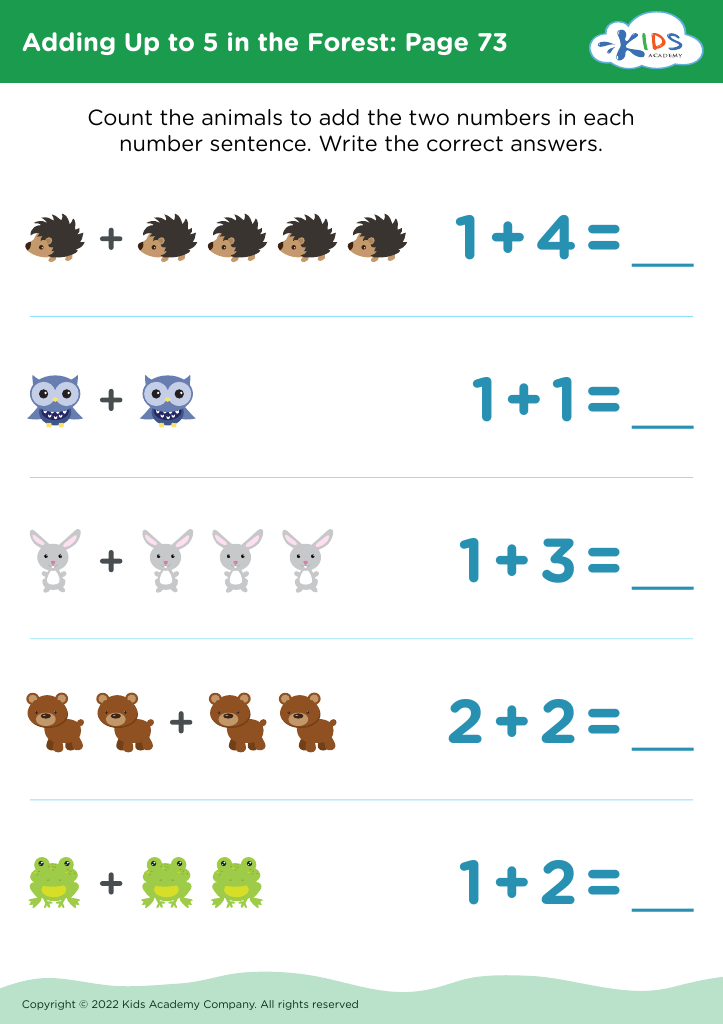
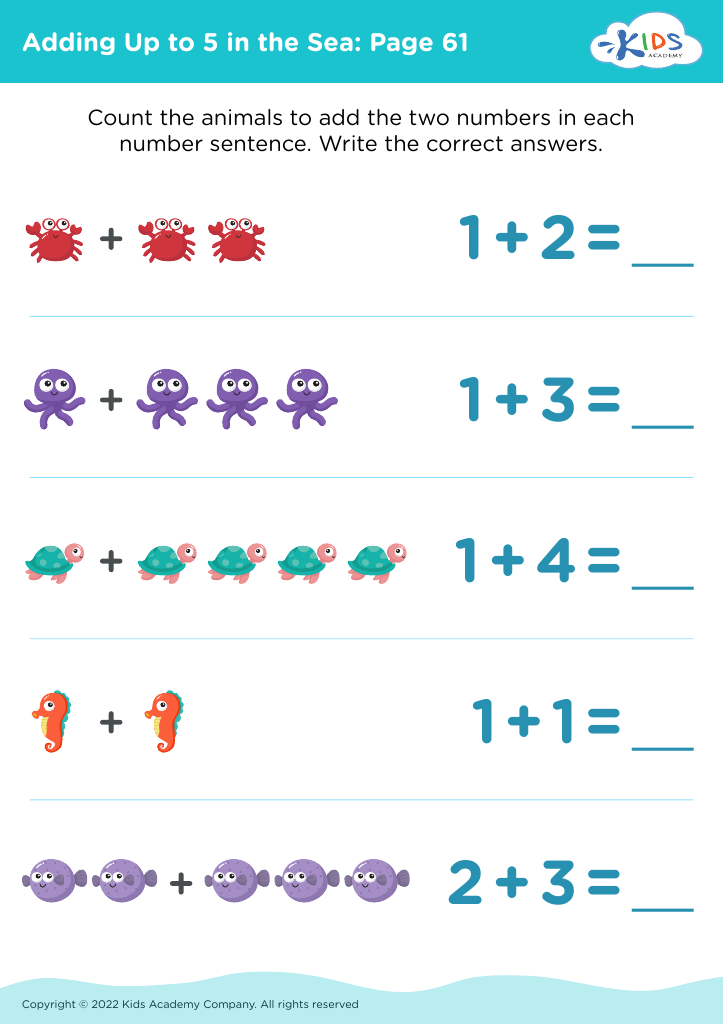
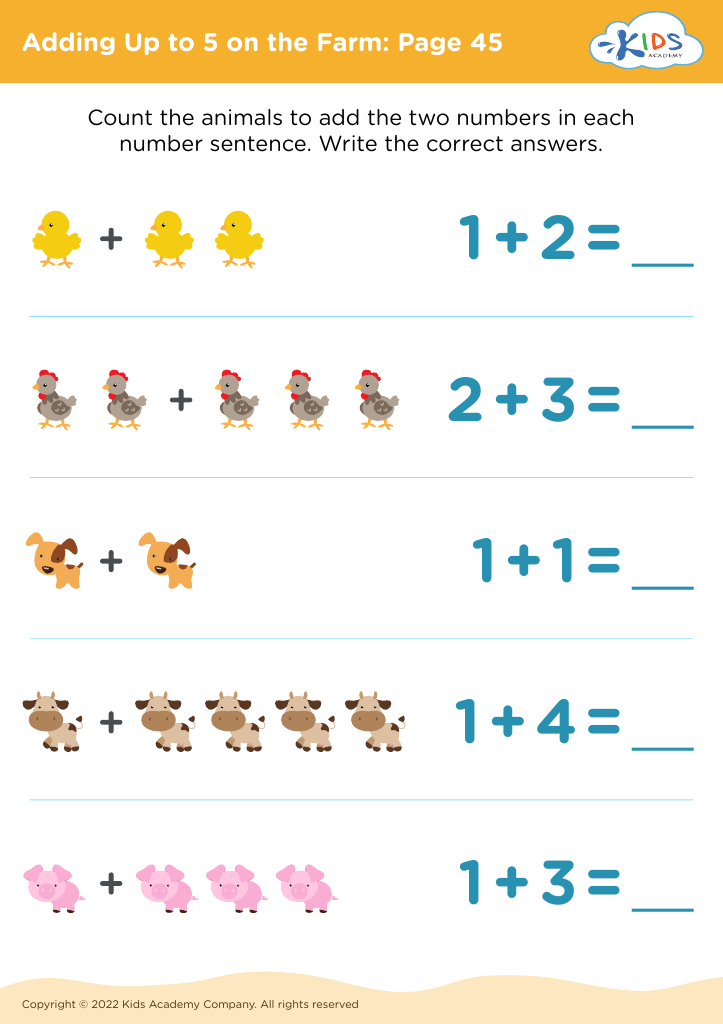
Enhance your child's visual-motor skills with our engaging Addition & Subtraction Worksheets designed specifically for 3-year-olds! These worksheets provide fun and interactive activities that help little ones practice basic math concepts while developing essential coordination skills. Each activity encourages children to connect their visual perception with motor actions, making learning both effective and enjoyable. By using vibrant imagery and simple illustrations, these worksheets captivate young learners' attention, facilitating an understanding of addition and subtraction in a playful manner. Perfect for parents and educators, our resources foster early math skills, setting the foundation for future academic success. Explore our collection today!
Favorites
With answer key
Interactive
Join Kids Academy for Free
Who is primarily going to use this learning content?








At the age of three, children are developing crucial visual-motor skills that lay the groundwork for future academic success, particularly in mathematics. Visual-motor skills involve the coordination of visual perception with fine motor movements, which facilitate tasks such as writing, cutting, or even building with blocks. When children engage in activities that require them to visually track and manipulate objects, they are simultaneously building neural pathways that play a significant role in their ability to perform addition and subtraction tasks later on.
Moreover, early engagement in math concepts, like counting or simple addition and subtraction, solidifies foundational skills. By integrating visual-motor activities—such as using counters, puzzles, or manipulatives—parents and teachers can make these mathematical concepts tangible and interactive. This hands-on approach not only fosters a positive association with math but also boosts confidence as children master basic skills.
By intentionally incorporating playful and engaging mathematical activities into learning routines, caregivers can cultivate not just visual-motor proficiency but also enthusiasm for learning. Addressing these skills at an early age supports children in becoming both competent and confident learners, ultimately setting the stage for lifelong academic achievement. Thus, nurturing visual-motor skills alongside early math concepts is vital for a child's holistic development.








