Check out this FREE Trial Lesson on Addition for age 3!

Match Exactly the Same

Favorites
With answer key
Interactive
  • 3
  • Addition skills
  • Addition
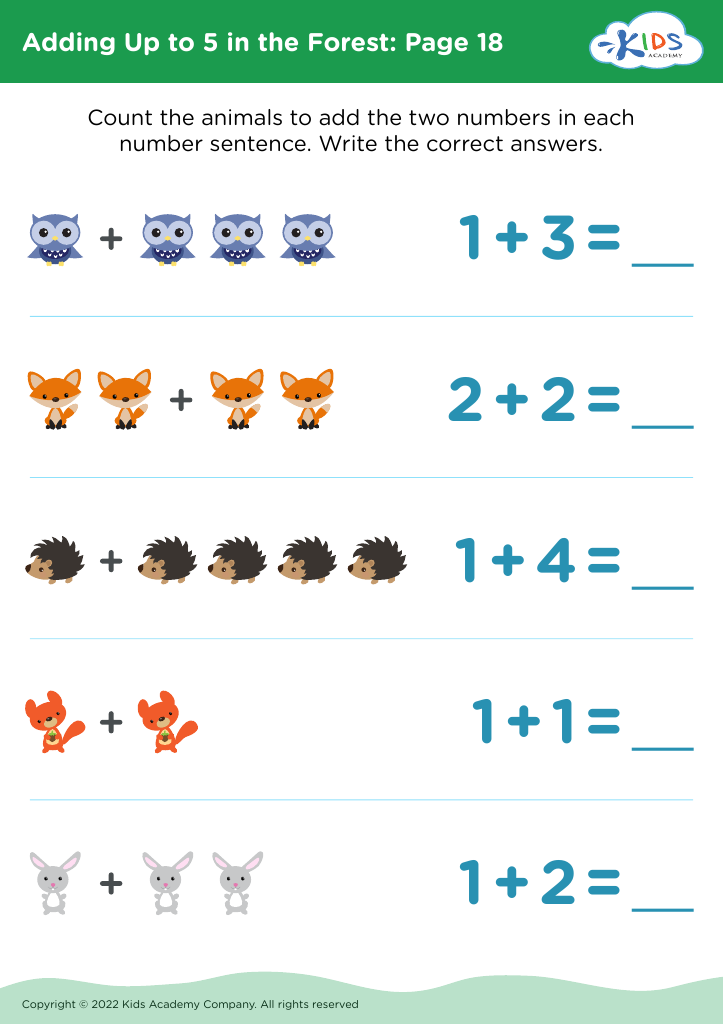
Adding Up to 5 in the Forest: Page 18
Worksheet
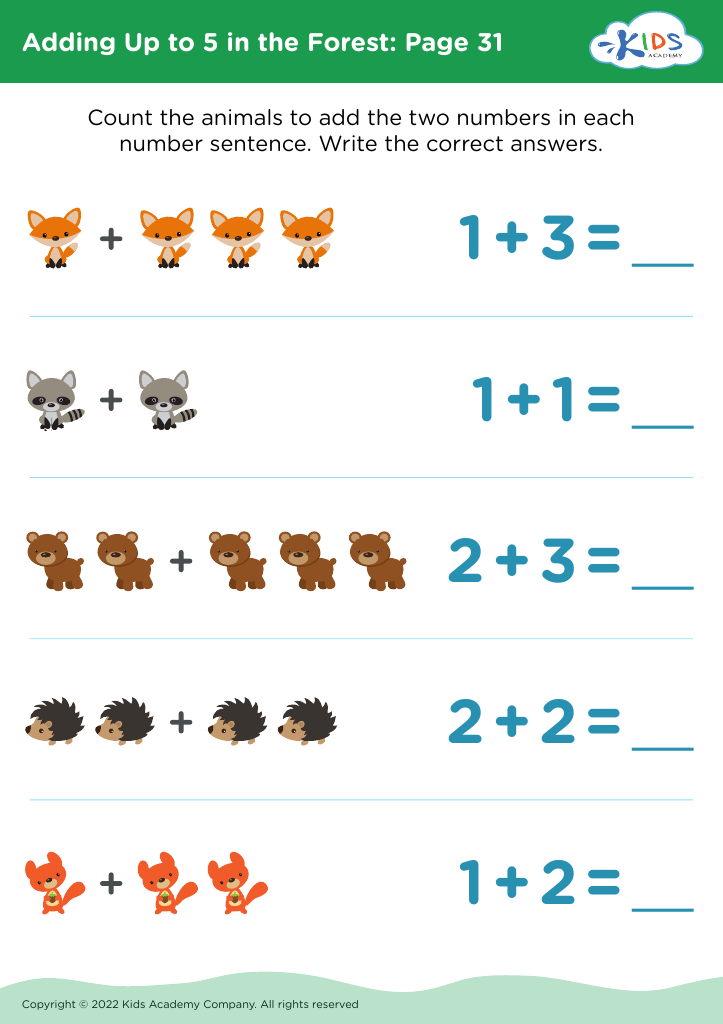
Adding Up to 5 in the Forest: Page 31
Worksheet
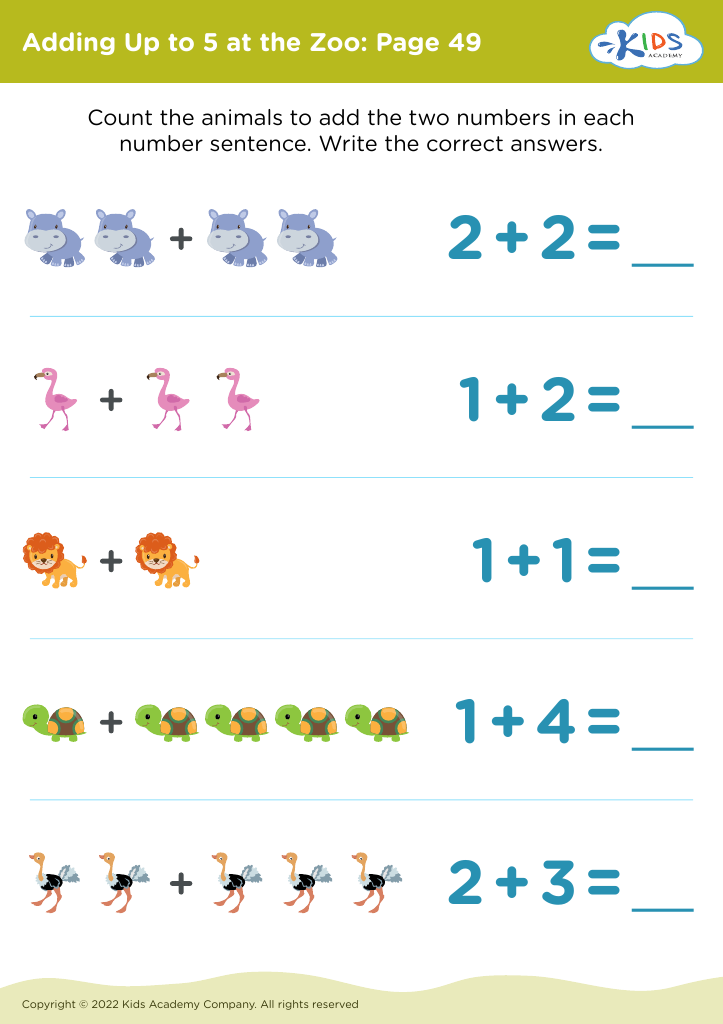
Adding Up to 5 at the Zoo: Page 49
Worksheet
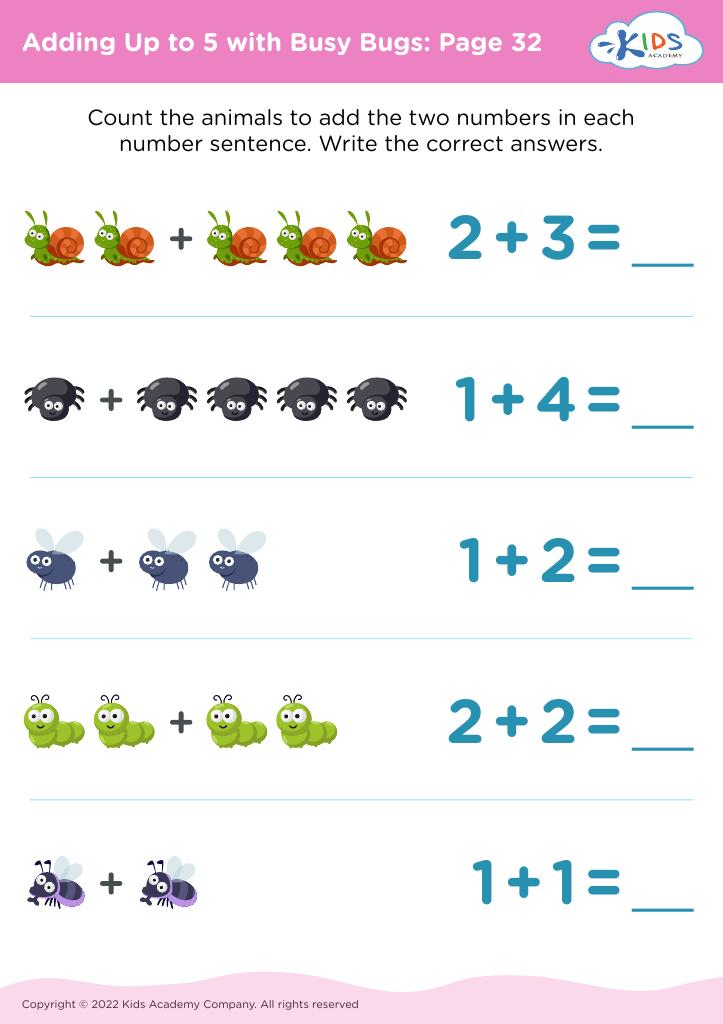
Adding Up to 5 with Busy Bugs: Page 32
Worksheet
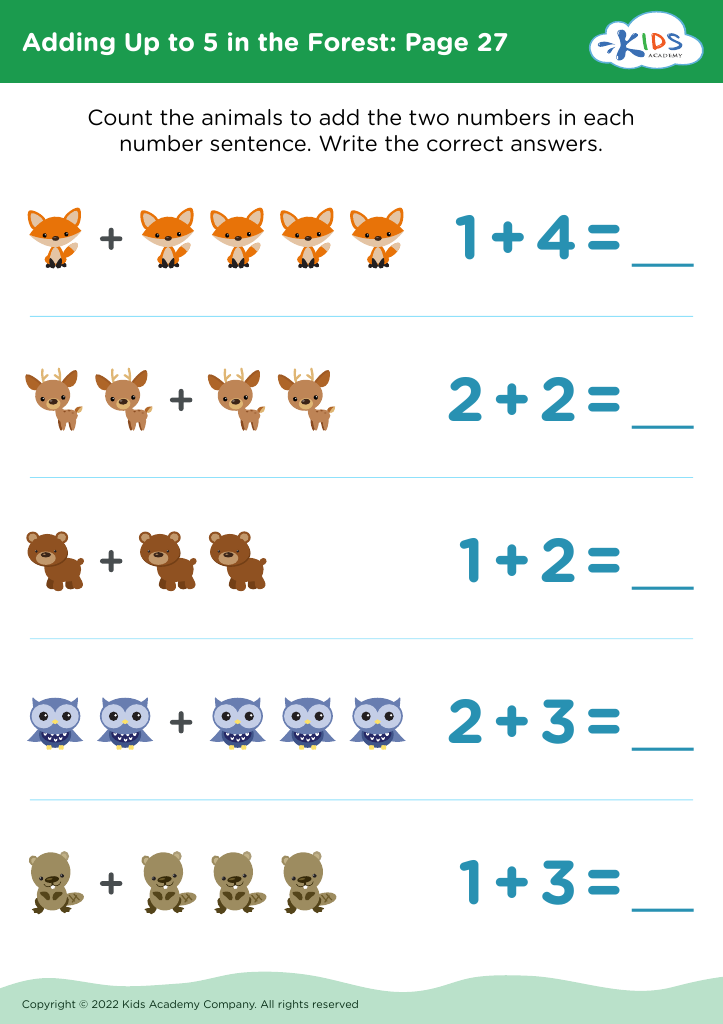
Adding Up to 5 in the Forest: Page 27
Worksheet
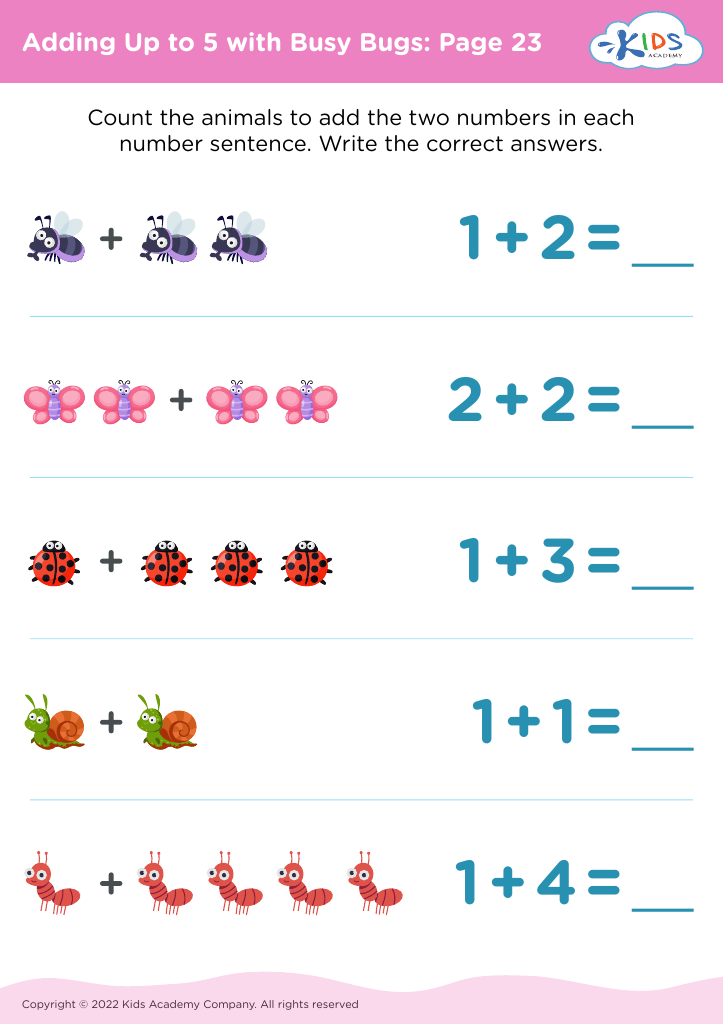
Adding Up to 5 with Busy Bugs: Page 23
Worksheet
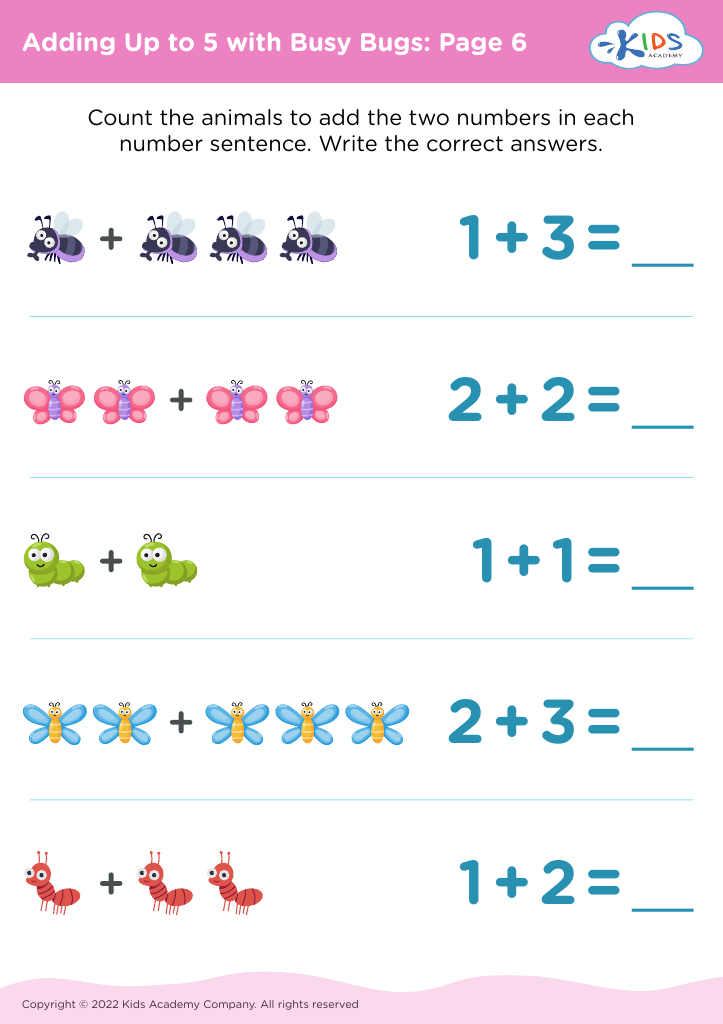
Adding Up to 5 with Busy Bugs: Page 6
Worksheet
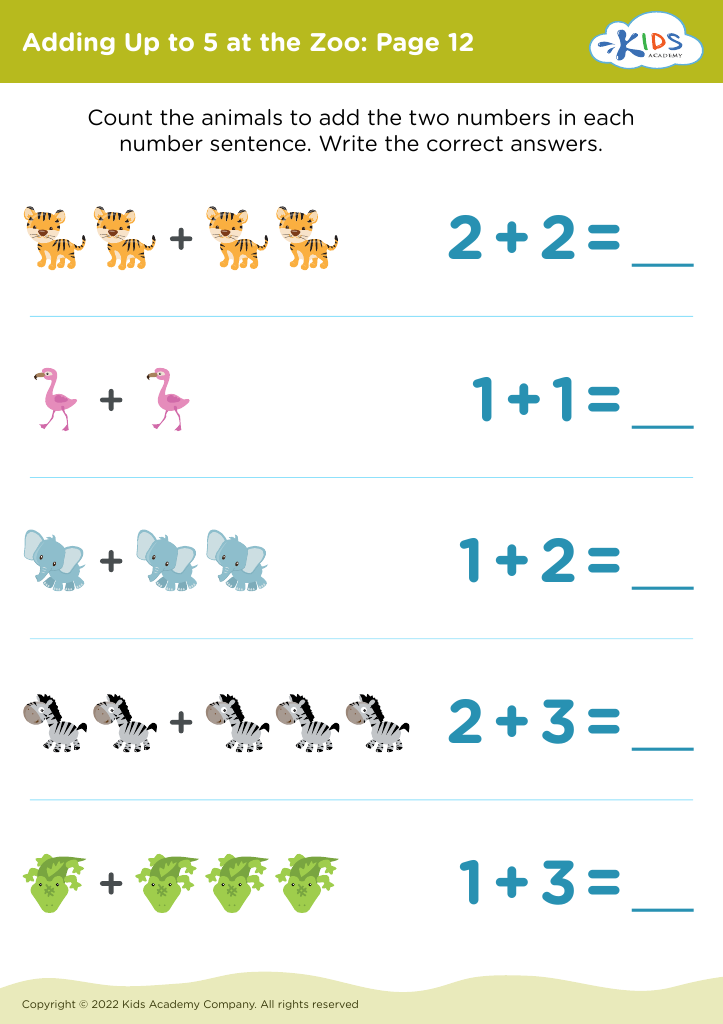
Adding Up to 5 at the Zoo: Page 12
Worksheet
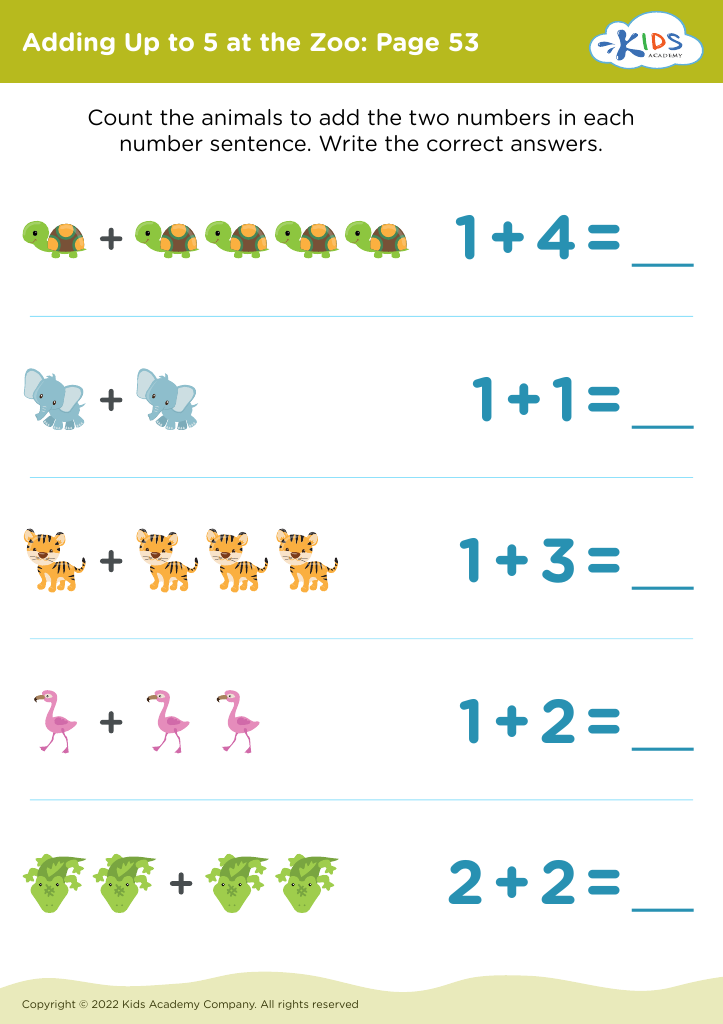
Adding Up to 5 at the Zoo: Page 53
Worksheet
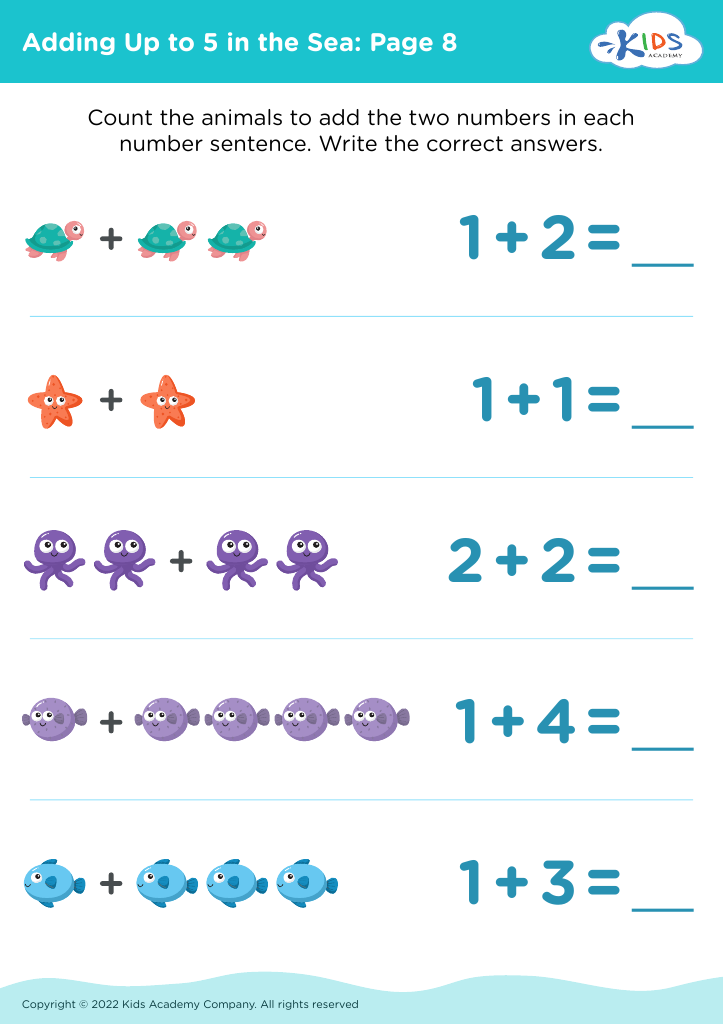
Adding Up to 5 in the Sea: Page 8

Adding Up to 5 in the Sea: Page 8

Adding Up to 5 in the Sea: Page 8
Worksheet
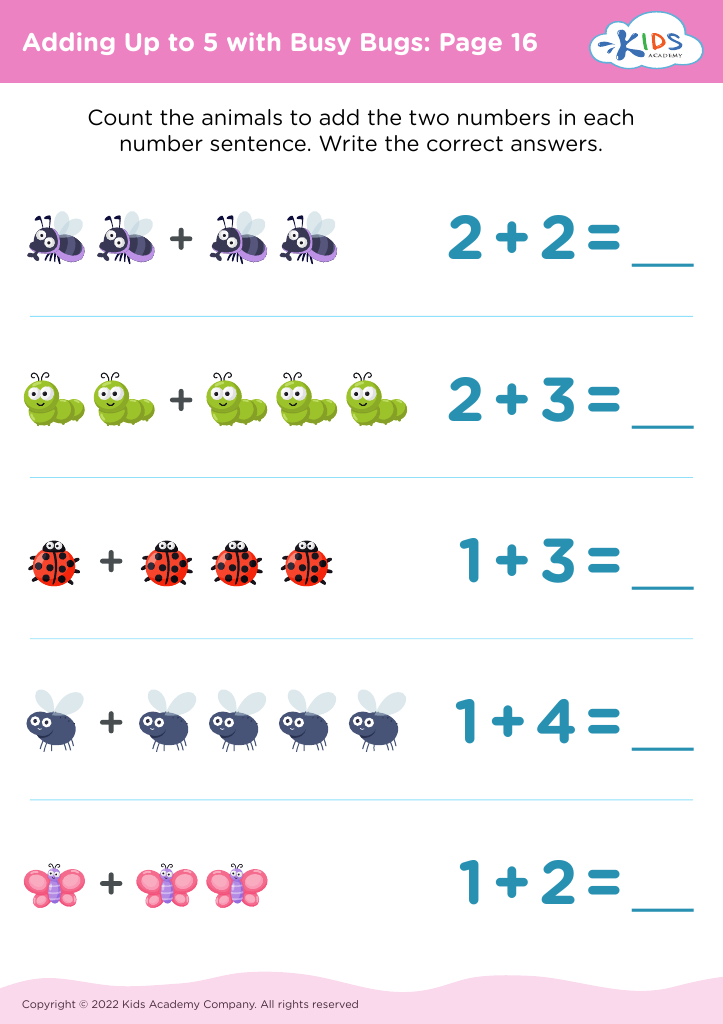
Adding Up to 5 with Busy Bugs: Page 16
Worksheet
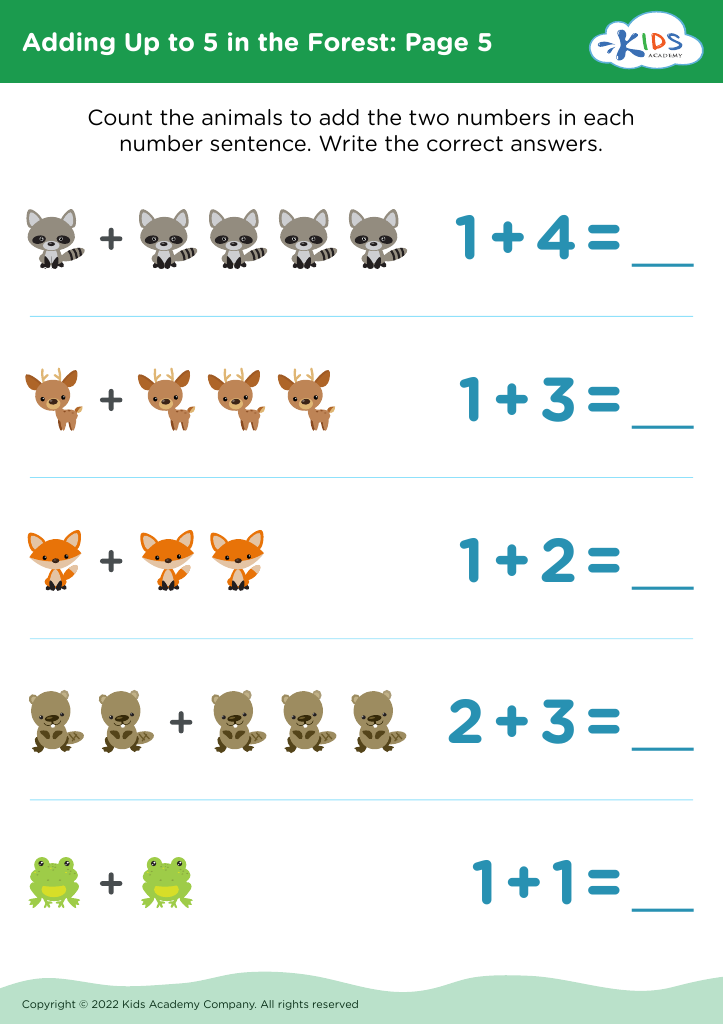
Adding Up to 5 in the Forest: Page 5
Worksheet
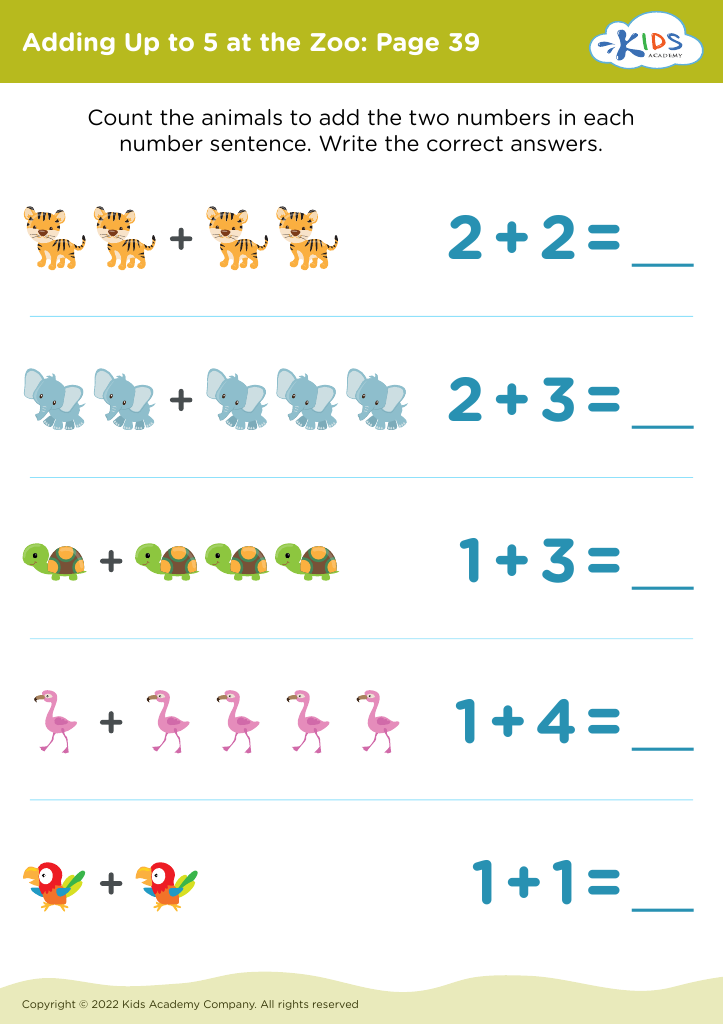
Adding Up to 5 at the Zoo: Page 39
Worksheet
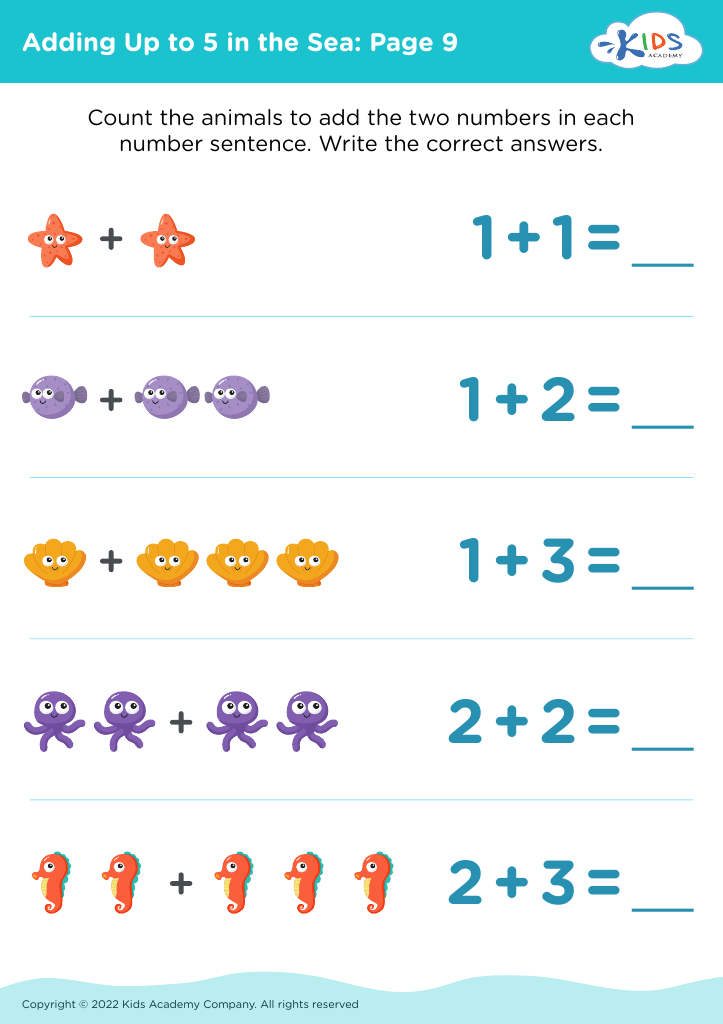
Adding Up to 5 in the Sea: Page 9

Adding Up to 5 in the Sea: Page 9

Adding Up to 5 in the Sea: Page 9
Worksheet


... 3 4

Addition skills for 3-year-olds lay a foundational role in a child's cognitive development and future learning. At this early age, children are naturally curious and eager to engage in play-based learning. Introducing basic addition concepts through fun activities helps nurture their problem-solving abilities and encourages critical thinking. It promotes numeracy skills that are essential for later, more complex mathematical concepts, which children will encounter in kindergarten and beyond.

Furthermore, developing addition skills enhances a child's language and communication abilities. Children begin to learn vocabulary related to numbers and quantities, fostering their social interactions as they share and play with peers. Parents and teachers play a crucial role in creating a supportive environment for this learning. Engaging in activities like counting objects or playing simple games offers real-world contexts for understanding addition.

By encouraging early addition skills, parents and teachers not only bolster a child's mathematical abilities but also help build confidence and a positive attitude toward learning. Instilling these skills at a young age sets the groundwork for a lifetime of academic success, helping children to approach numbers with enthusiasm rather than fear. Investing time in addition practices today fosters a love for learning that will last for years to come.