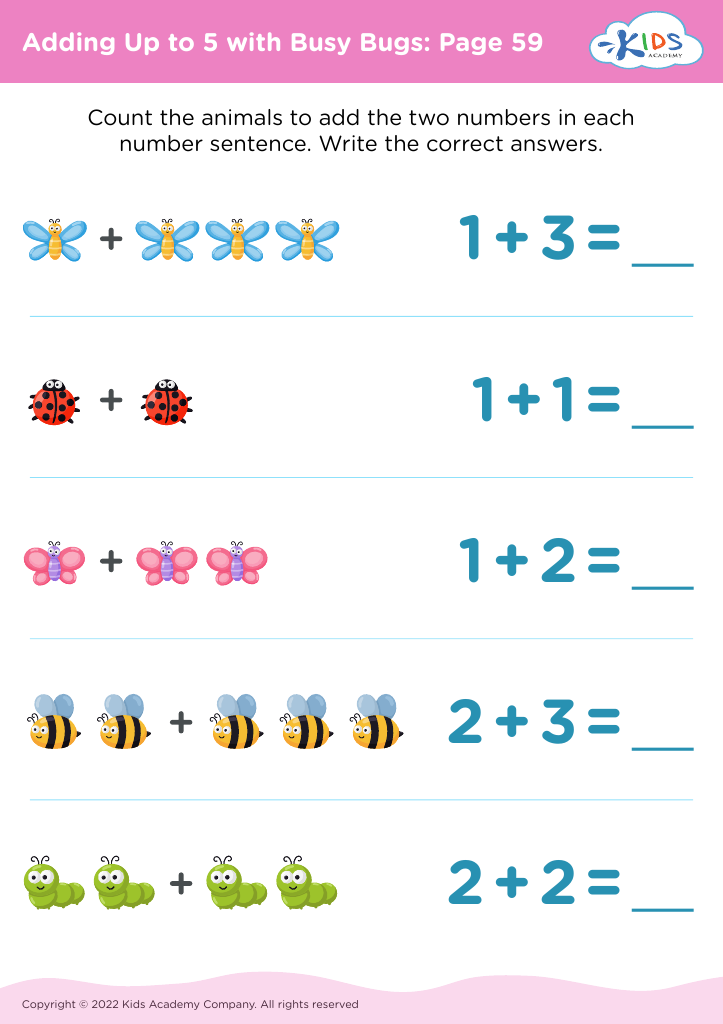
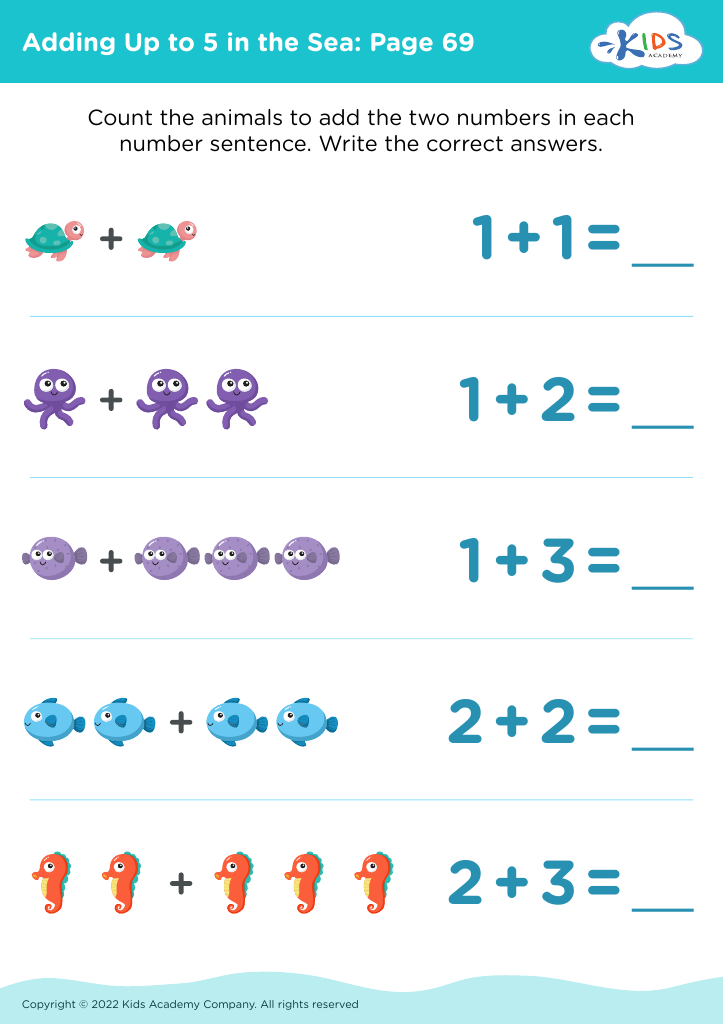
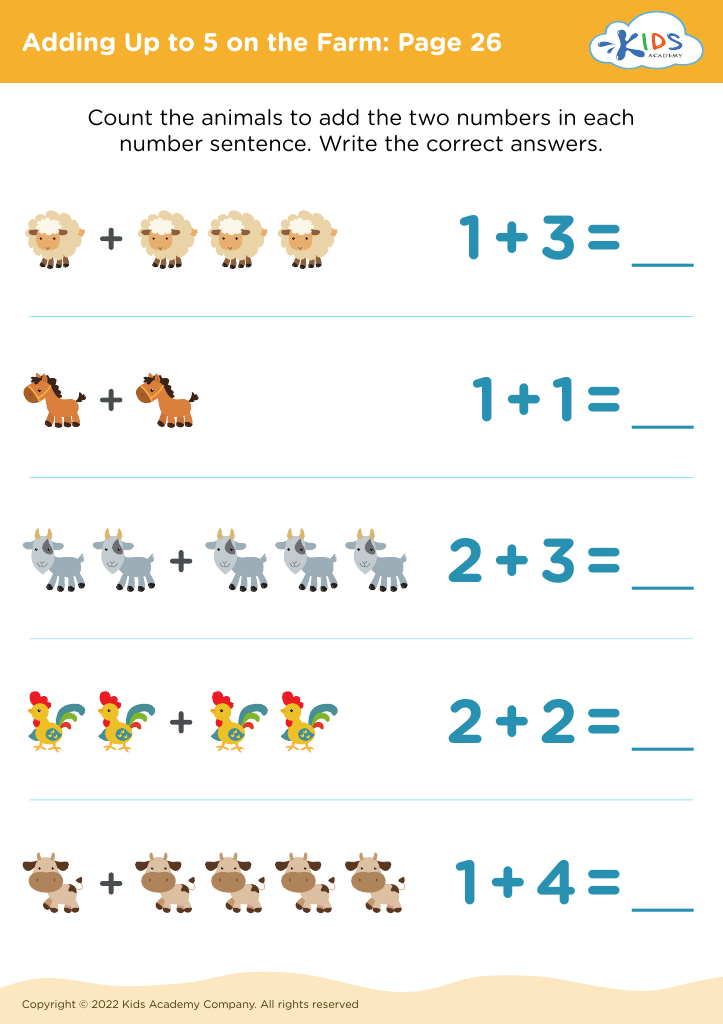
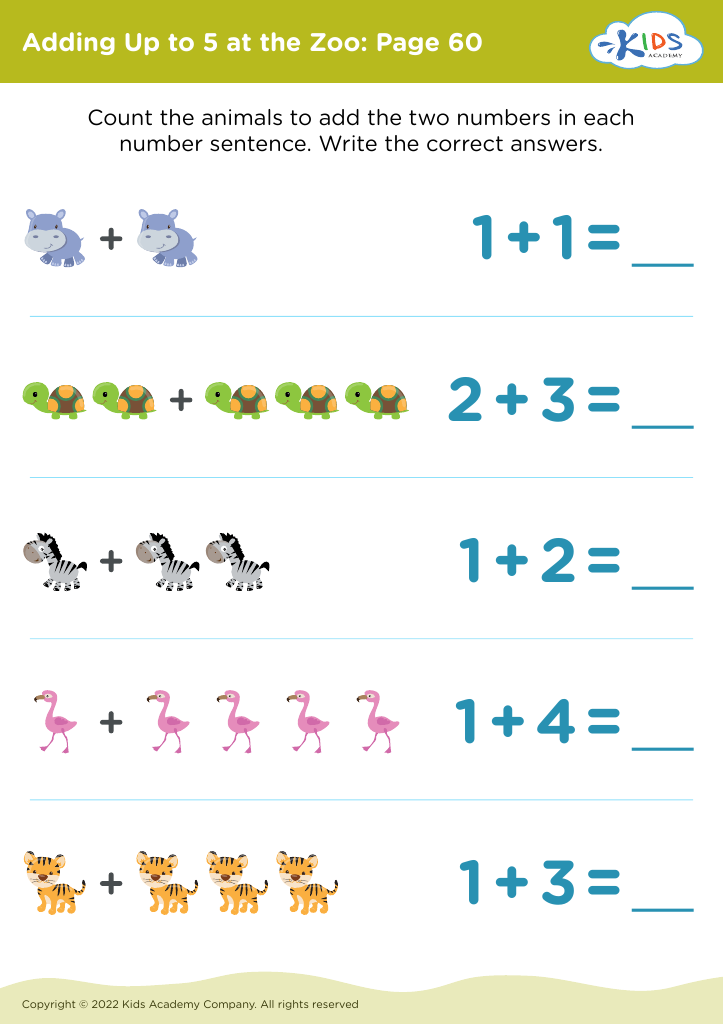
Addition up to 5 Addition Worksheets for 3-Year-Olds
4 filtered results
-
From - To
Discover engaging Addition Worksheets designed specifically for 3-year-olds to master basic addition concepts up to 5! These worksheets offer a fun and interactive way for young learners to practice their math skills through colorful illustrations and simple problems. With a variety of exercises ranging from counting objects to matching numbers, your child will develop their understanding of quantities while boosting their confidence in math. Ideal for both classroom and home learning, these worksheets are perfect for fostering a love for learning early on. Explore our collection today and support your child's mathematical journey in a playful and enjoyable manner!






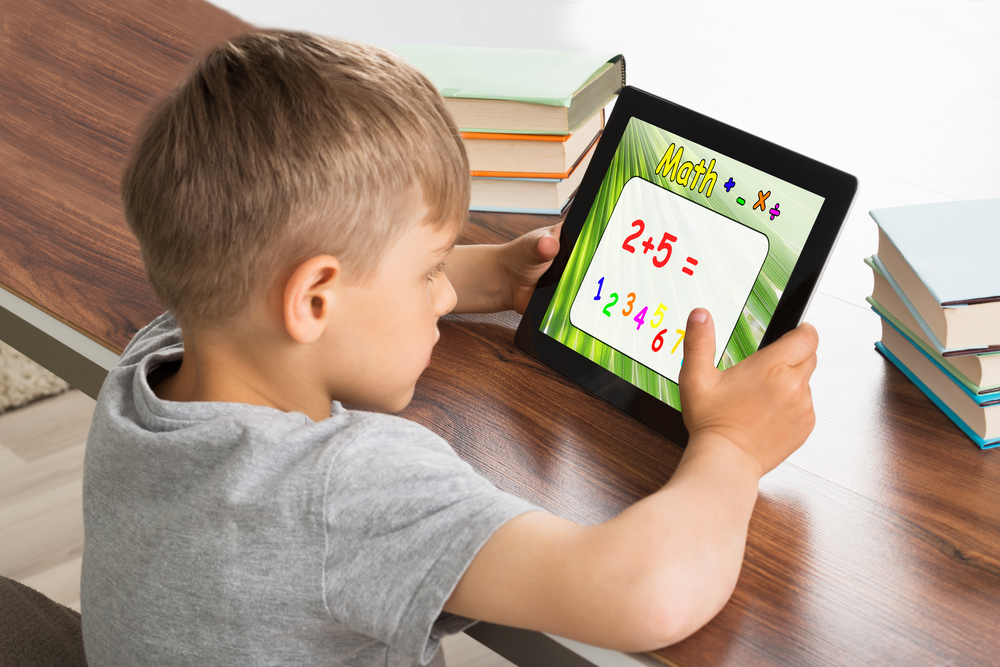

Parents and teachers should care about teaching addition up to 5 for 3-year-olds because it lays a foundational skill for early mathematics development. At this age, children are naturally curious and eager to explore numbers, making it an ideal time to introduce basic math concepts. Understanding addition helps them recognize relationships between quantities, enhancing their problem-solving and critical-thinking skills.
Early exposure to addition fosters number sense, which is crucial for later mathematical learning. It also supports cognitive development by encouraging children to engage in counting, grouping, and comparing objects. Engaging in fun activities, such as using toys or snacks for practical math, makes learning enjoyable and interactive. Furthermore, these early lessons in math promote a positive attitude toward learning, instilling confidence as they progress in school.
Additionally, developing basic math skills aligns with educational standards and preparedness for kindergarten. By nurturing these skills early, parents and teachers contribute to a child's overall academic success and lifelong learning. Ultimately, promoting addition skills not only aids in mathematics but also supports growth in critical areas such as language, creativity, and social interactions, creating a well-rounded learning experience for young children.








