Counting objects Addition Worksheets for 3-Year-Olds
11 filtered results
-
From - To
Welcome to our Counting Objects Addition Worksheets designed specifically for 3-year-olds! These engaging worksheets introduce young learners to the foundational concepts of counting and basic addition through colorful visuals and interactive activities. Children will develop their skills in recognizing numbers and counting objects while enhancing their problem-solving abilities. Each worksheet offers a variety of counting games and exercises that make learning fun and interactive. Perfect for preschool settings or home learning, our printable resources support early math development, fostering a love for numbers in your little ones. Explore, print, and watch your child flourish in their mathematical journey today!
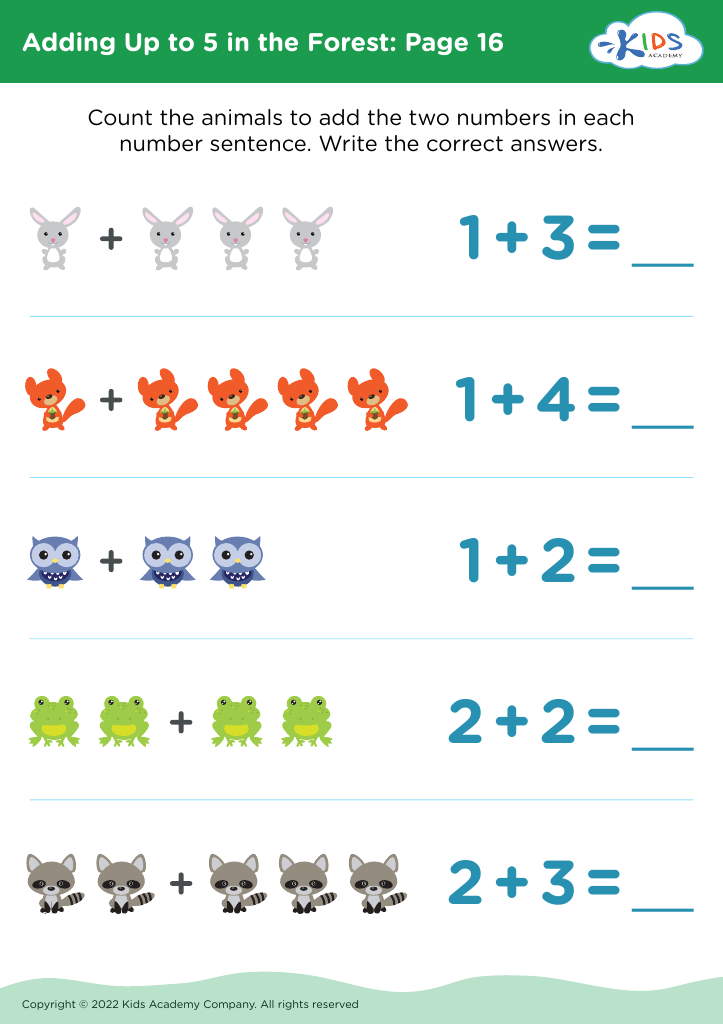
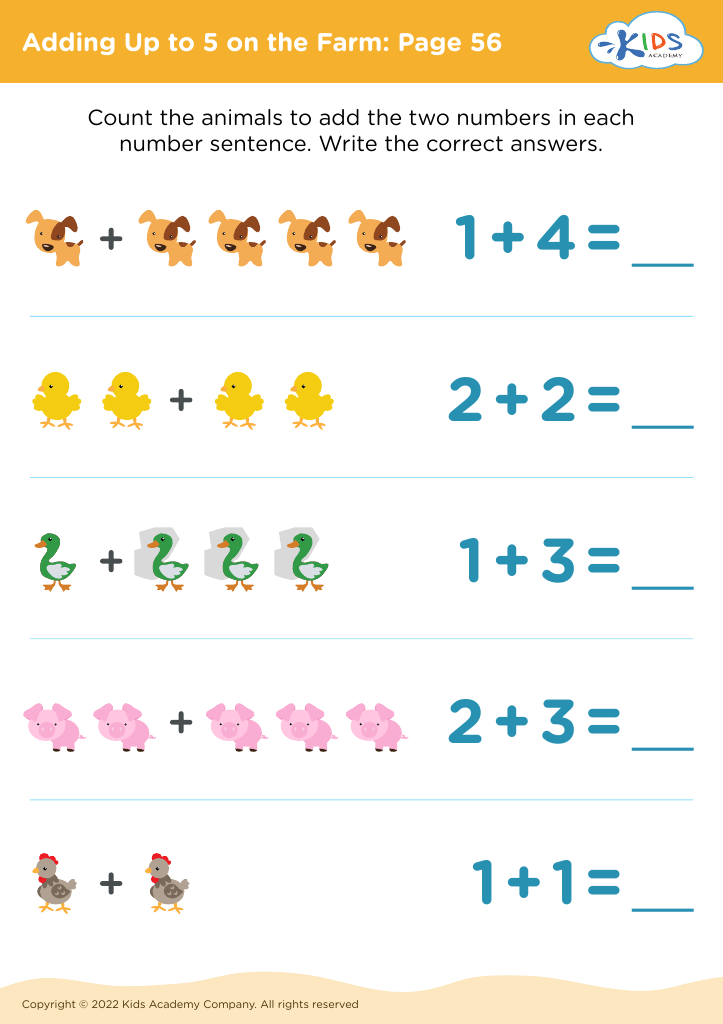
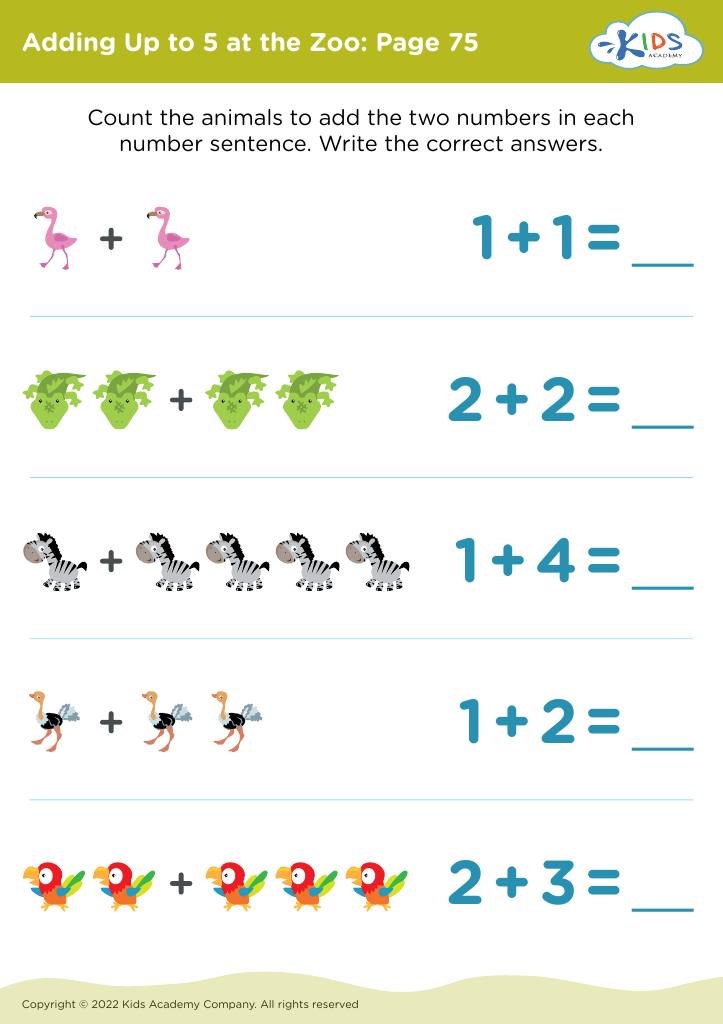
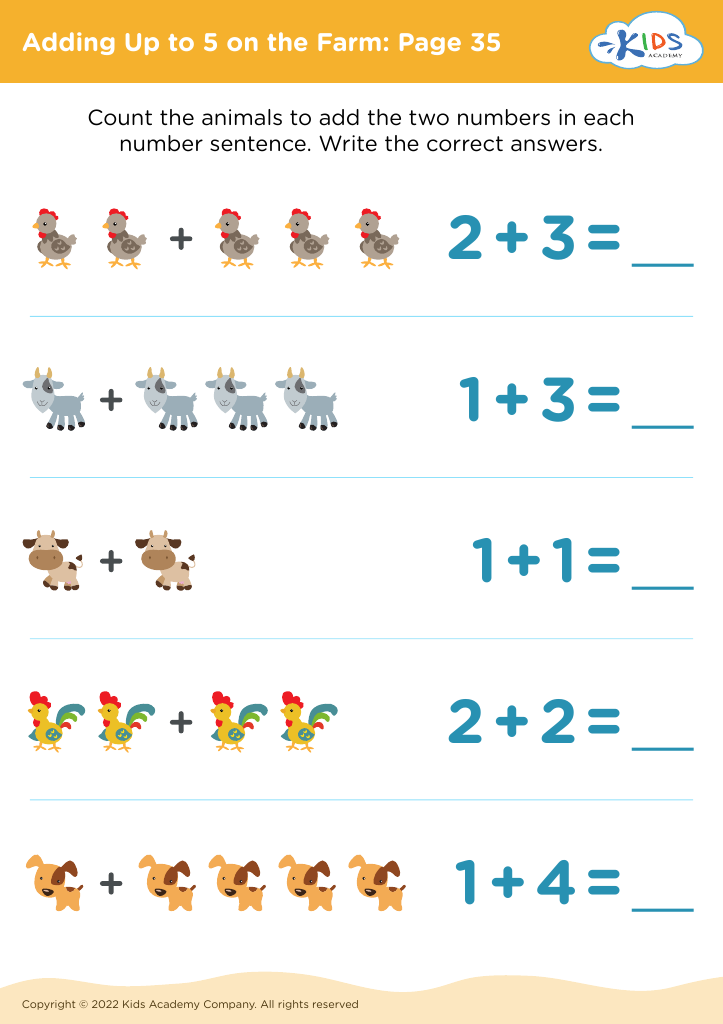
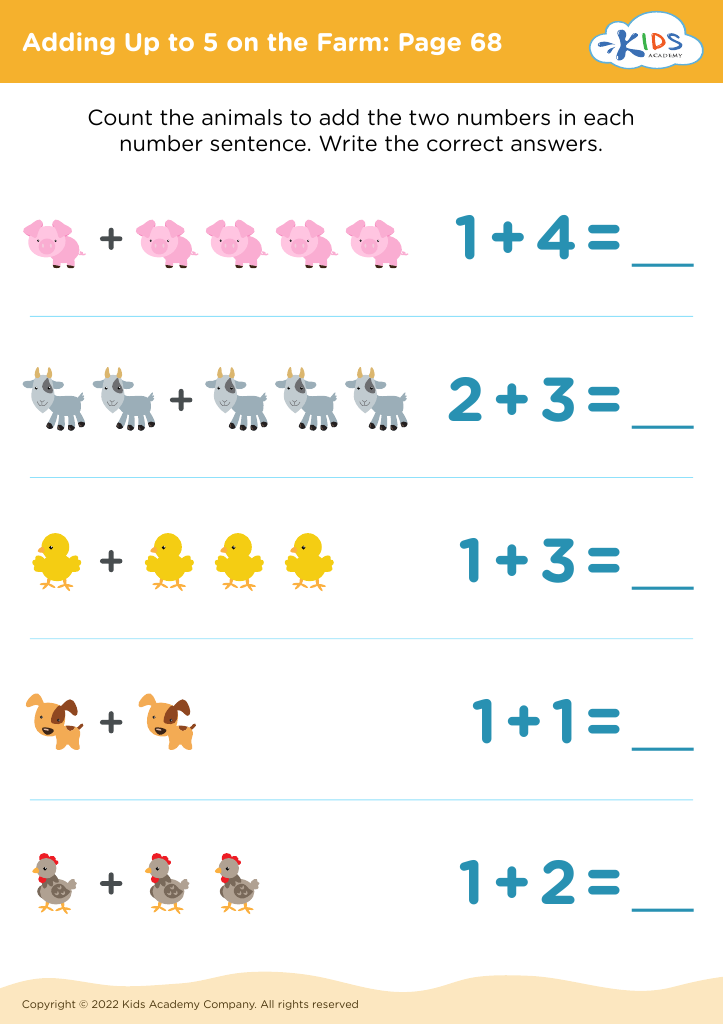
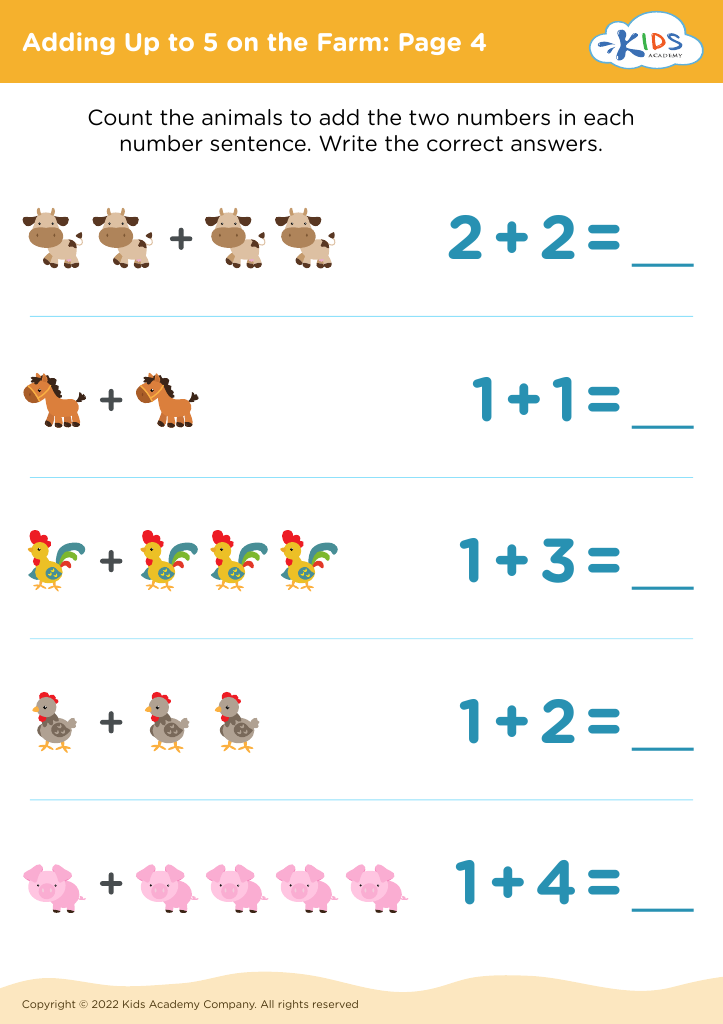
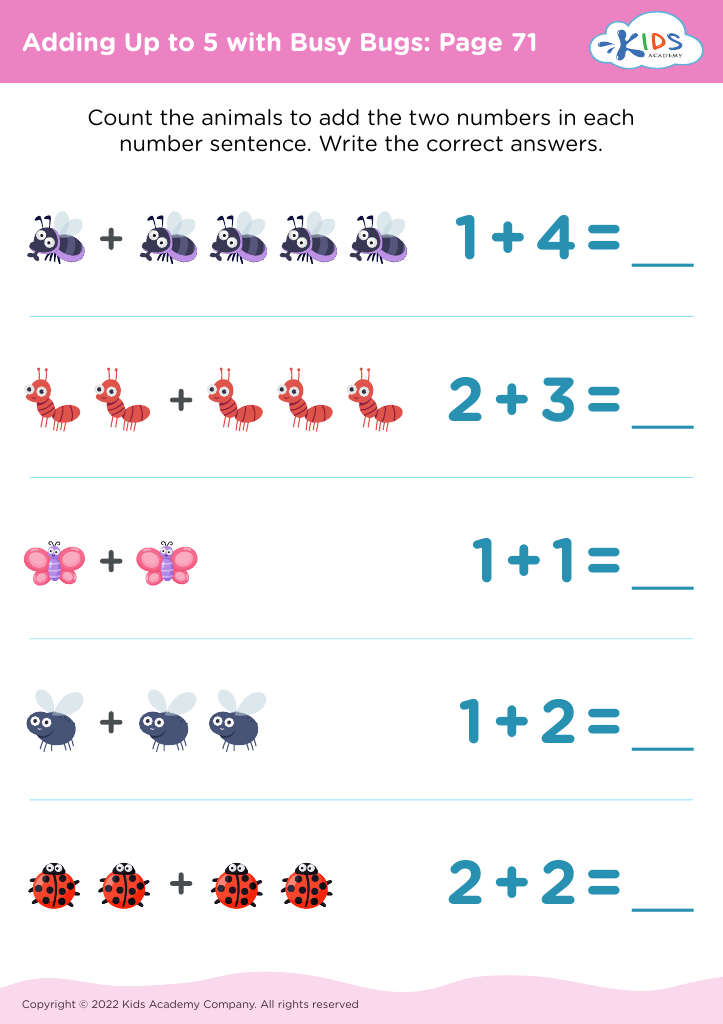
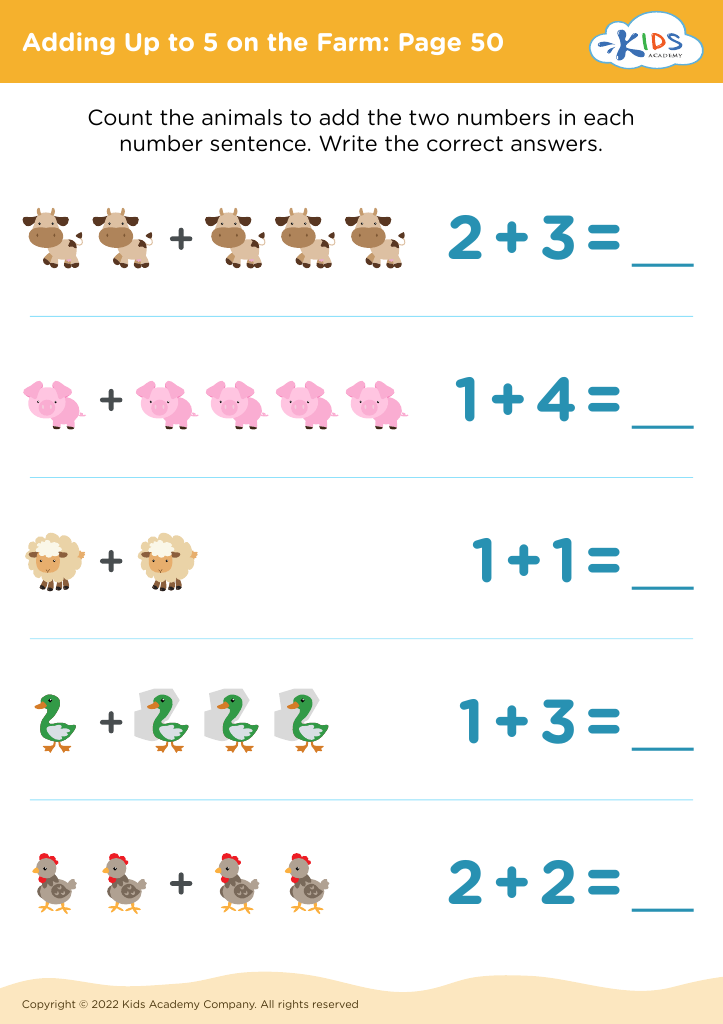
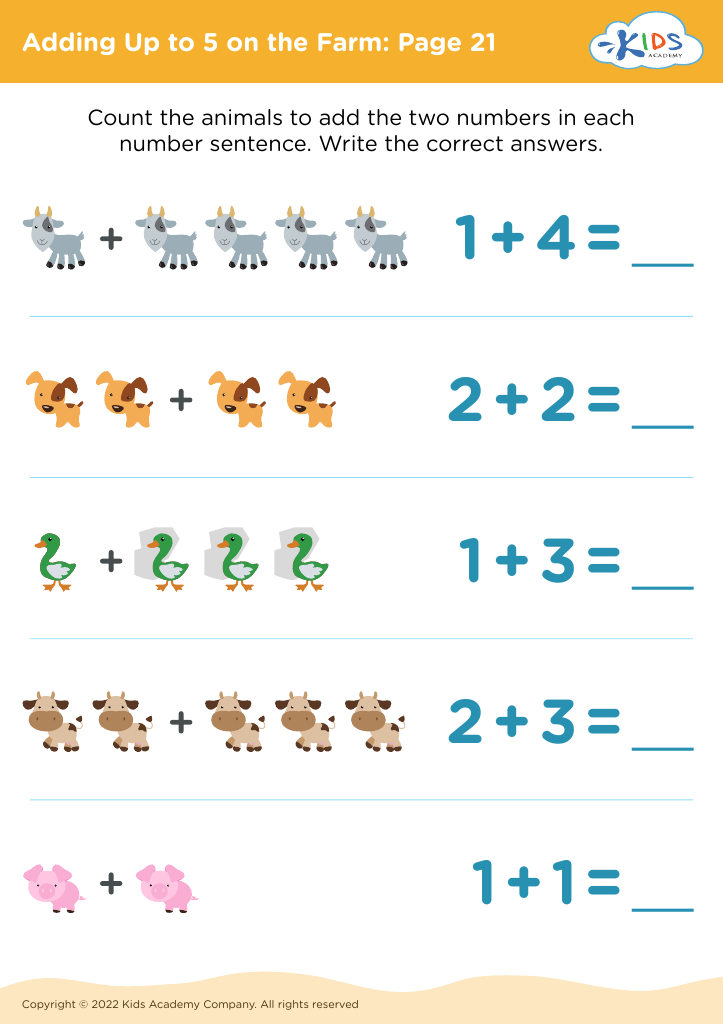
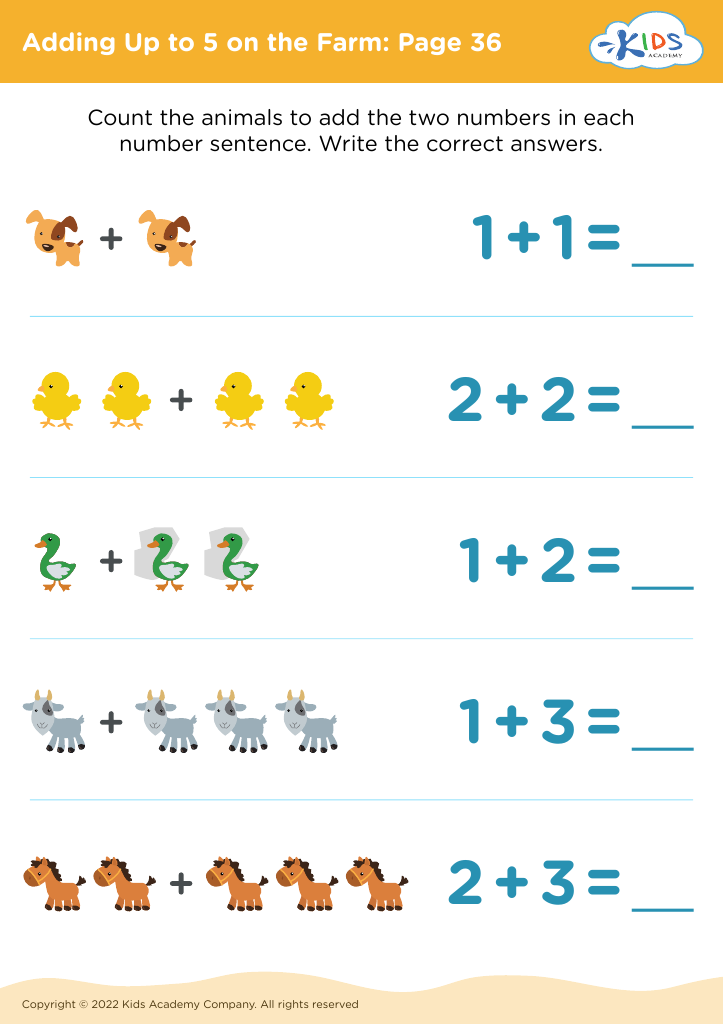
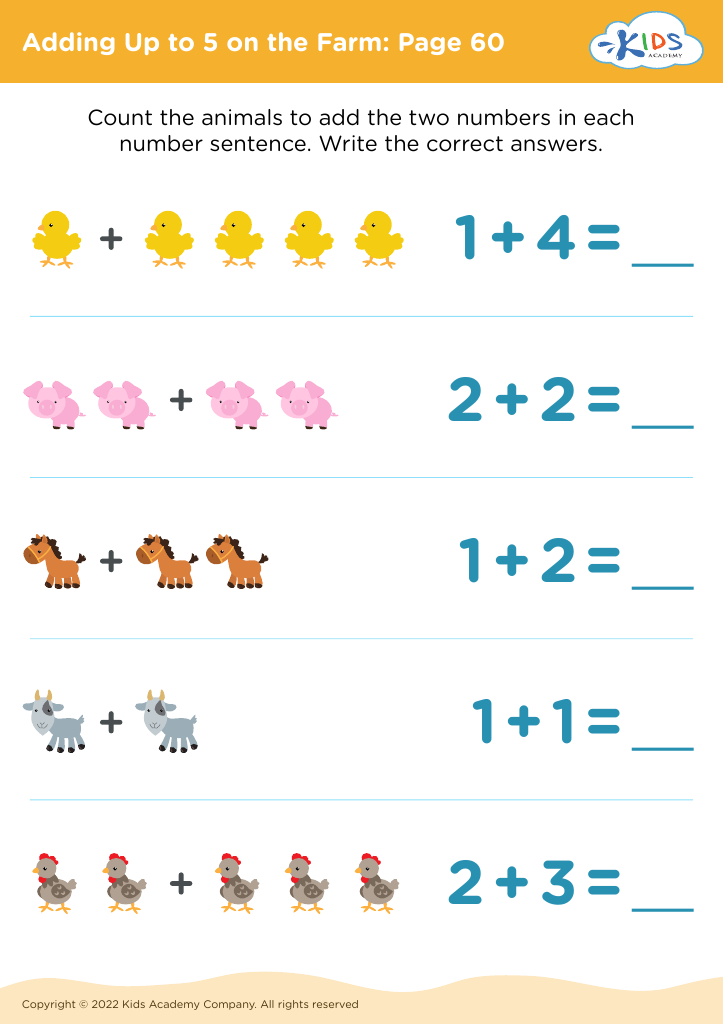








Counting objects and engaging in basic addition are essential foundational skills for 3-year-olds, laying the groundwork for future mathematical understanding. At this stage, children are naturally curious and eager to explore their surroundings. Teaching them to count objects helps them make sense of the world around them, associating numbers with physical items. This hands-on experience reinforces their understanding of quantity and promotes cognitive development.
Moreover, early exposure to math concepts nurtures critical thinking and problem-solving skills. When 3-year-olds practice simple addition—such as adding two blocks to a stack—they start to grasp the idea of combining quantities, which is vital for understanding more complex math later on. Engaging in counting and addition activities also supports language development, as children learn to articulate numbers and quantities.
For parents and teachers, facilitating these activities can forge stronger bonds with children through play and interaction, making learning enjoyable. Encouraging a love for numbers from an early age fosters confidence and curiosity in math, reducing anxiety about the subject as they grow. Ultimately, counting and introducing addition prepares children for success in school and everyday life, making it valuable for caregivers to prioritize these early experiences.








