Fine Motor Skills (coloring) Addition Worksheets for 3-Year-Olds
3 filtered results
-
From - To
Welcome to our "Fine Motor Skills (Coloring) Addition Worksheets" specially designed for 3-year-olds! These engaging worksheets combine the joy of coloring with essential introduction to addition. As children explore vibrant images and practice their fine motor skills, they also begin to grasp foundational math concepts. Each worksheet encourages little ones to connect coloring with simple addition tasks, promoting hand-eye coordination and creativity. Perfect for at-home learning or classroom activities, our resources not only make math fun but also support your child's overall development. Let’s inspire a love for learning through play! Dive into our colorful worksheets today!
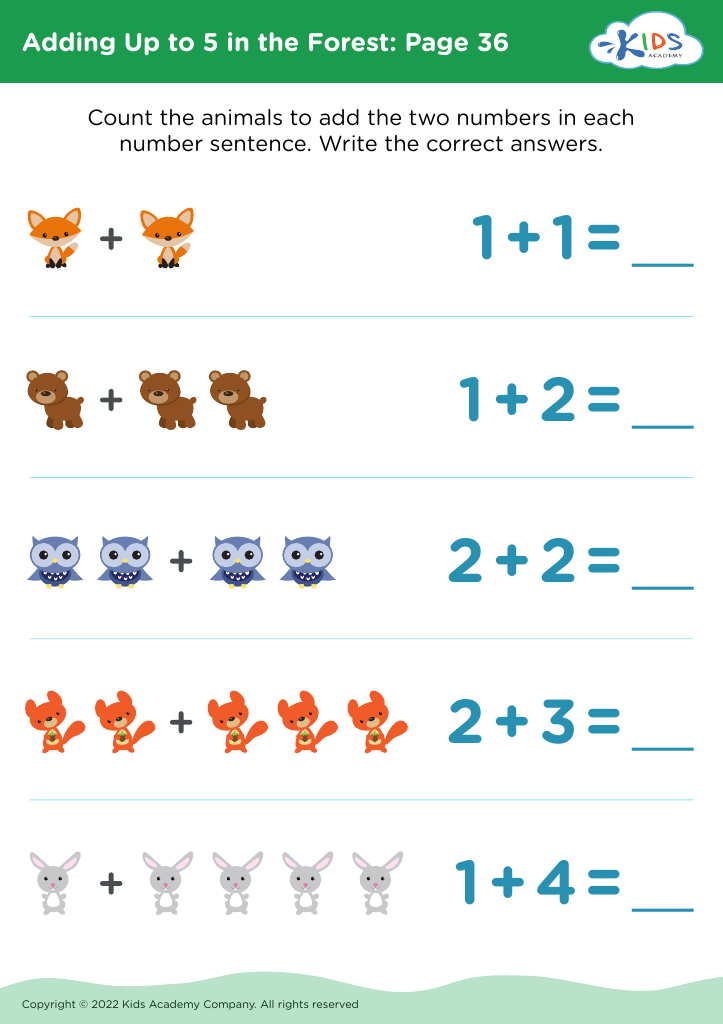
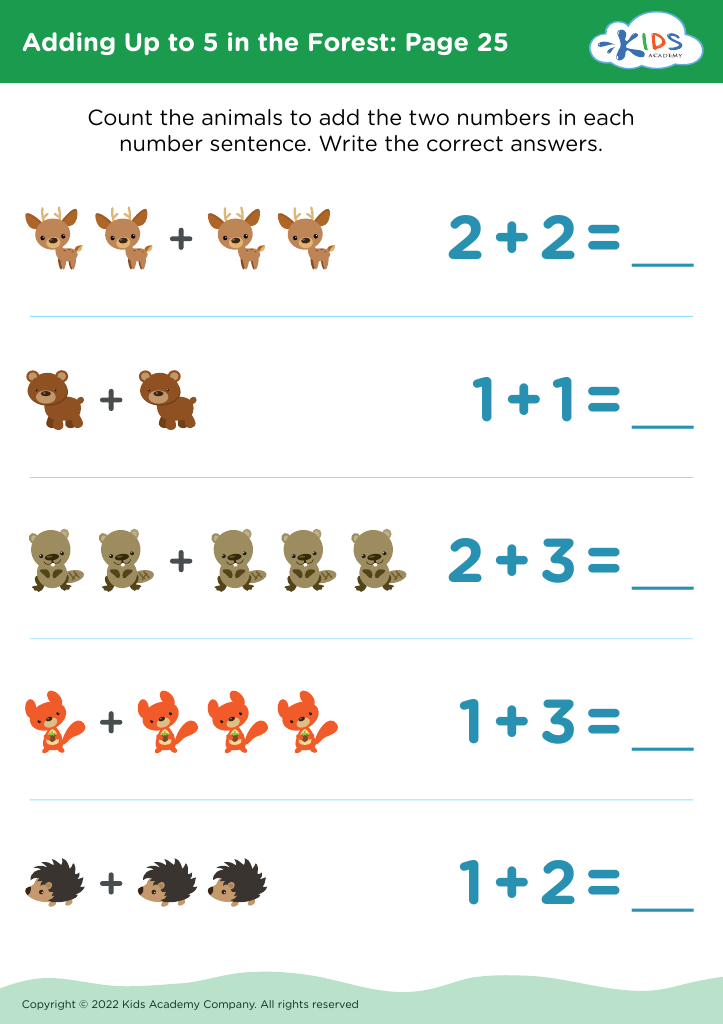
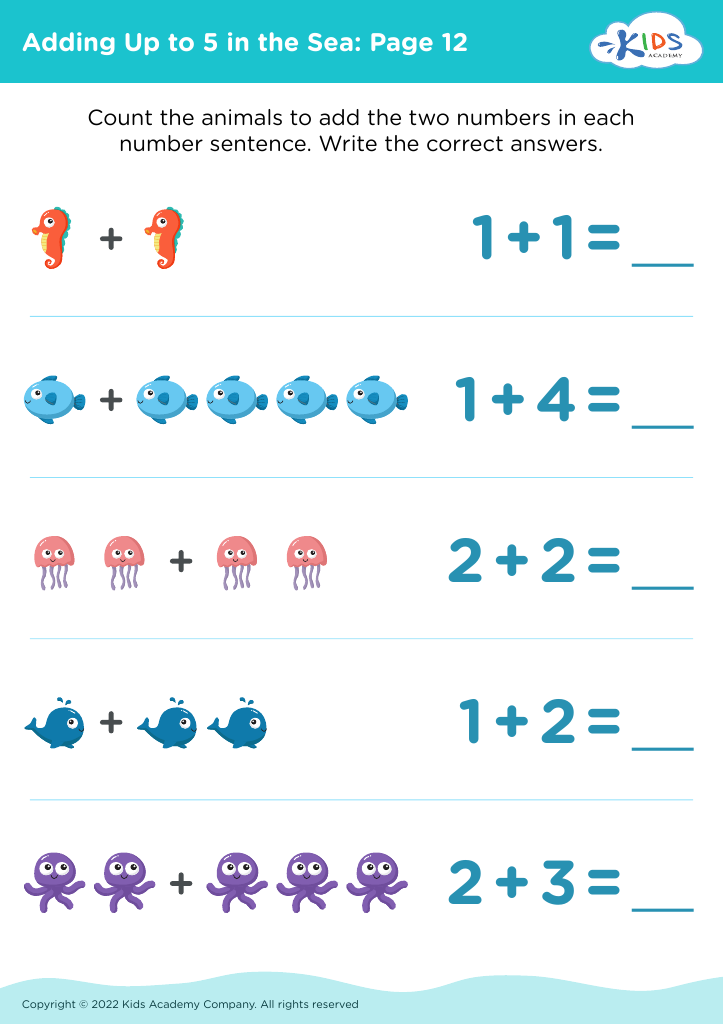








Fine motor skills are crucial for young children's overall development, particularly for three-year-olds, as they lay the foundation for future academic and everyday tasks. Engaging in activities like coloring helps enhance these skills, allowing children to develop better hand-eye coordination, dexterity, and control over their movements. At this age, children's muscles in their hands and fingers are still developing, and activities like coloring require them to grip crayons or markers, encouraging muscle strength and coordination.
Parents and teachers should emphasize the importance of fine motor skill development because it supports areas beyond just art. Strong fine motor skills are essential for tasks such as writing, using scissors, buttoning clothes, and tying shoelaces—skills they will need later in life. Additionally, the act of coloring encourages concentration, promotes creativity, and can even serve as an emotional outlet for young children.
By fostering fine motor skills through enjoyable activities like coloring, caregivers can provide their children with critical tools for success, both academically and socially. Implementing regular coloring sessions at home or in the classroom creates a fun learning environment while nurturing essential developmental milestones that will benefit children in various aspects of their lives.








