Fine Motor Skills Addition Worksheets for 3-Year-Olds - Page 2
31 filtered results
-
From - To
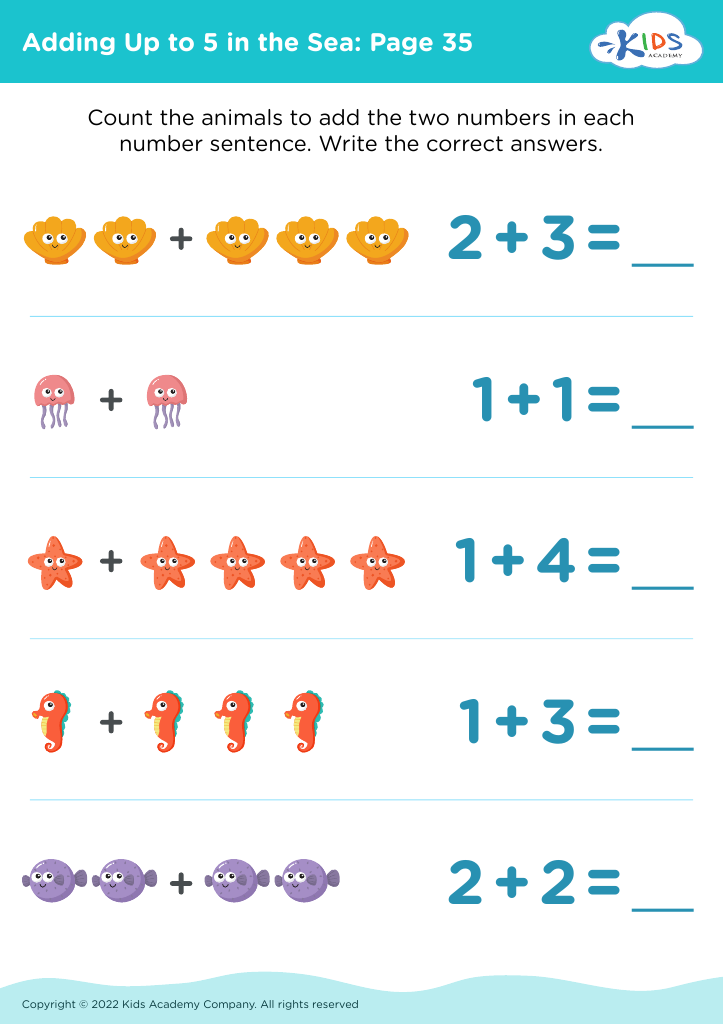
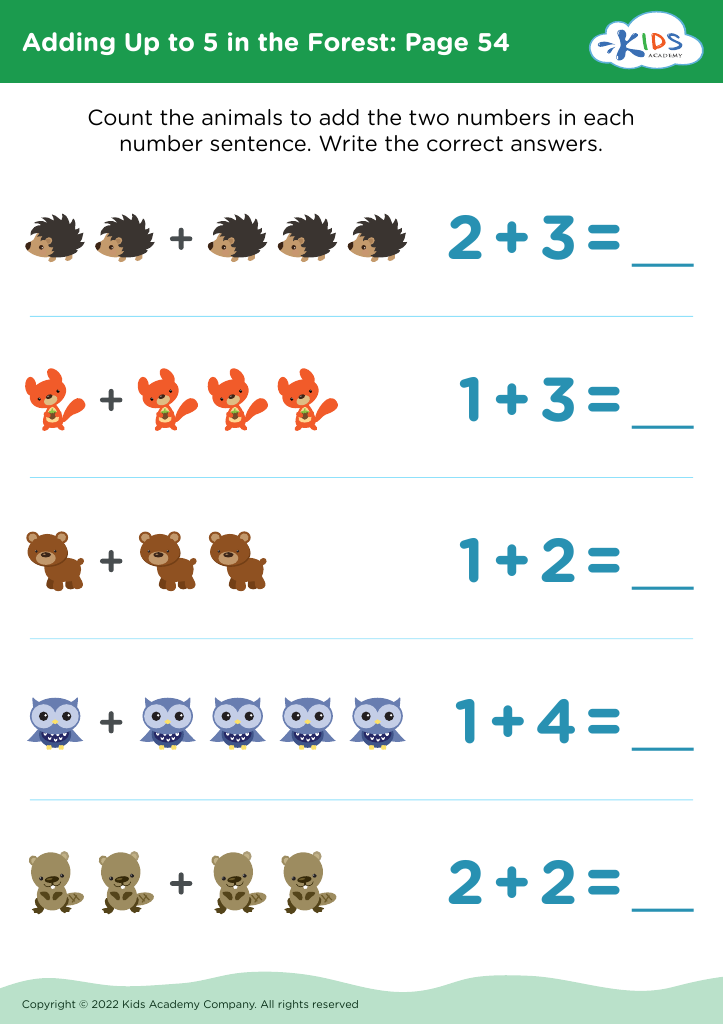
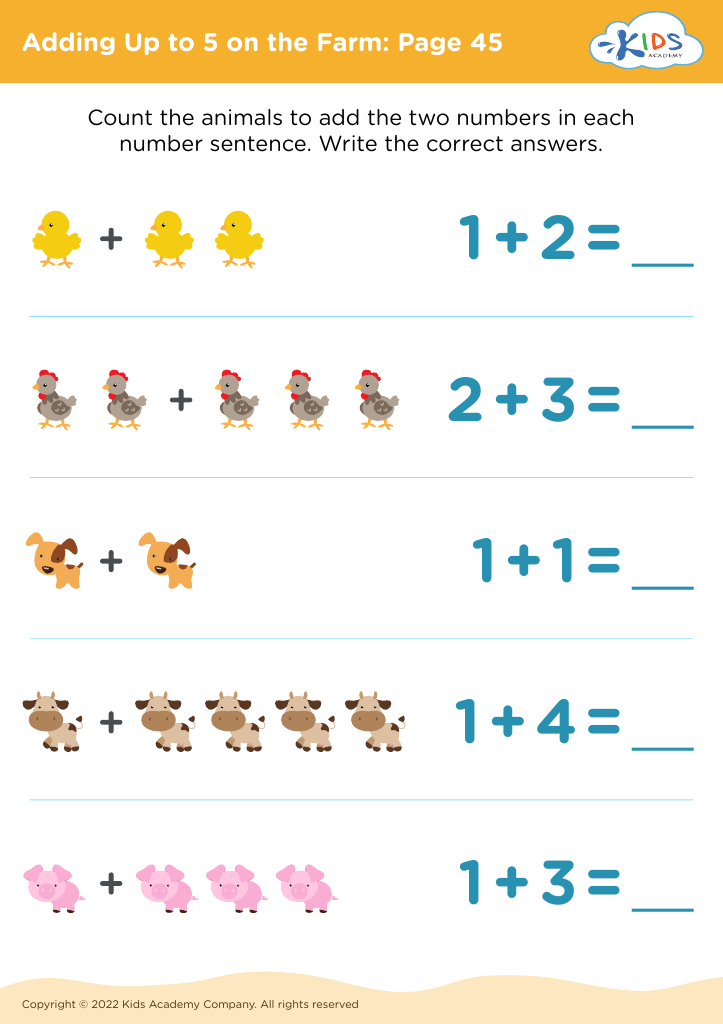
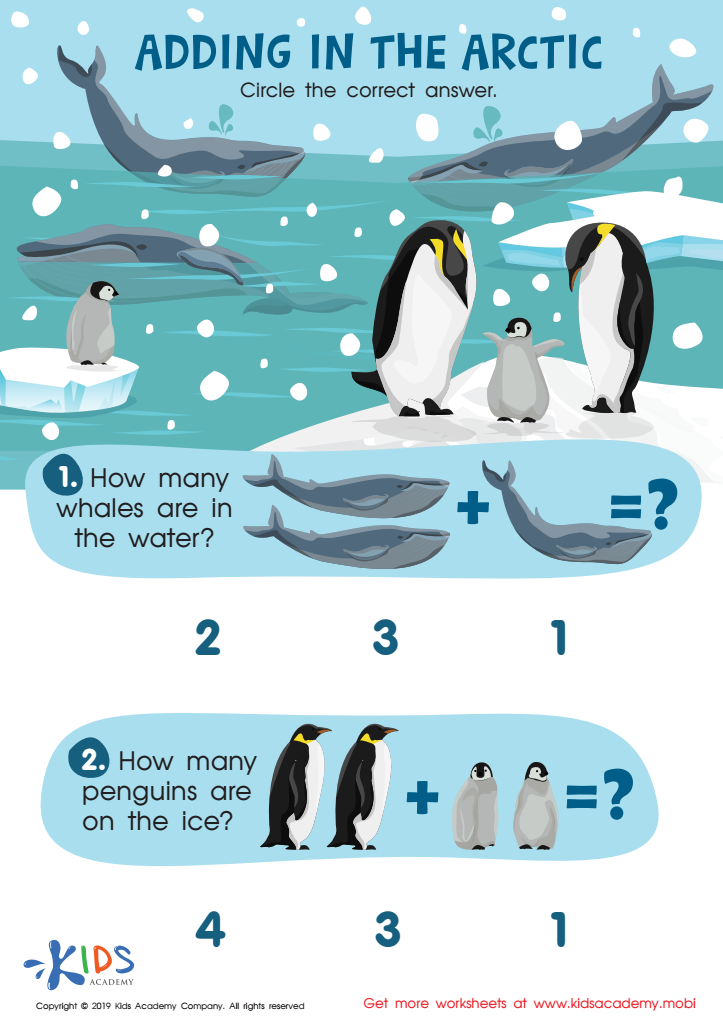
Adding in the Arctic Worksheet
 Assign to My Students






.jpg)

Fine motor skills are essential for a child's development, especially at the age of three. These skills involve the small muscles in the hands, fingers, and wrists, which are crucial for tasks such as holding a crayon, buttoning a shirt, or using scissors. Encouraging the development of fine motor skills through enjoyable activities helps prepare children for school and everyday life tasks.
Parents and teachers should care about fine motor skills for 3-year-olds because these abilities are foundational for academic success. Proficient fine motor skills improve hand-eye coordination, which is vital for writing and drawing, essential components of early education. Additionally, developing these skills fosters independence, enabling children to dress themselves, use utensils, and engage in self-care tasks.
Moreover, fine motor activities can enhance cognitive skills, such as problem-solving and concentration. Engaging children in playful yet instructive activities like puzzles, finger painting, and playdough can nurture creativity and critical thinking.
By investing time in fine motor skill development, parents and teachers can empower children with confidence, enhance their readiness for school, and set a strong foundation for lifelong learning.








