
Following instructions Addition Worksheets for 3-Year-Olds
4 filtered results
Difficulty Level
Grade
Age
-
From - To
Subject
Activity
Standards
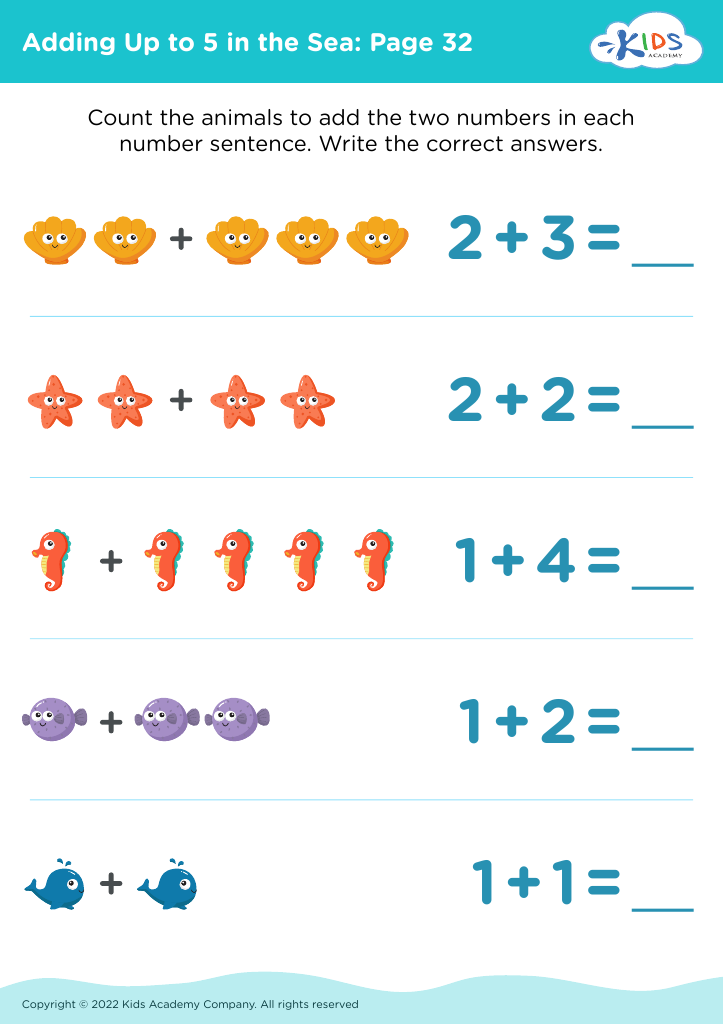
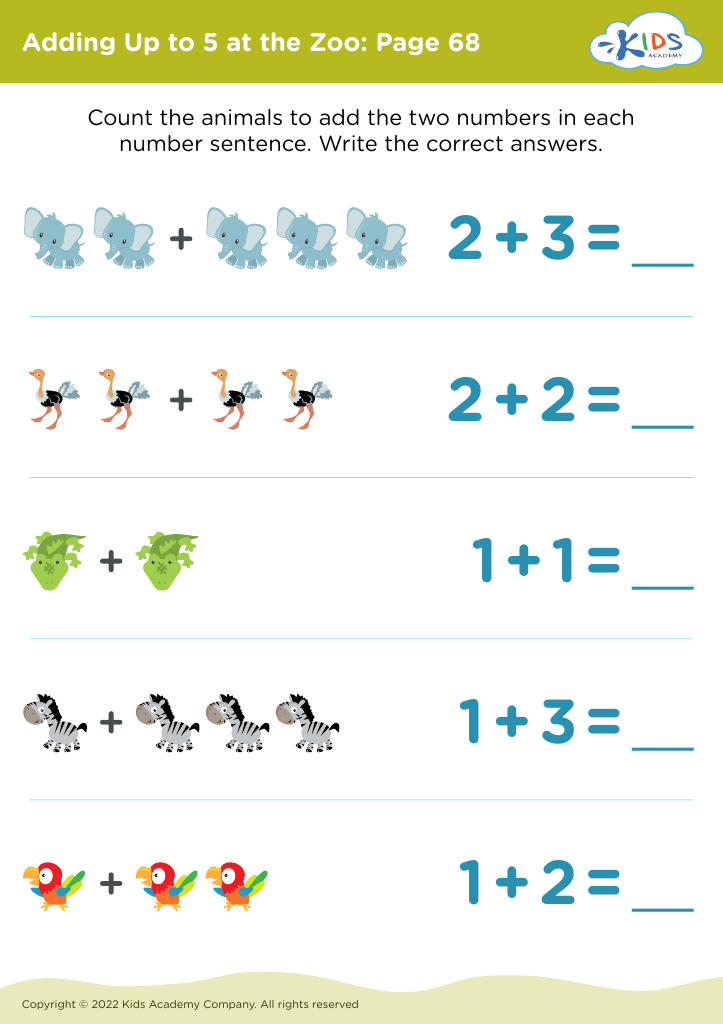
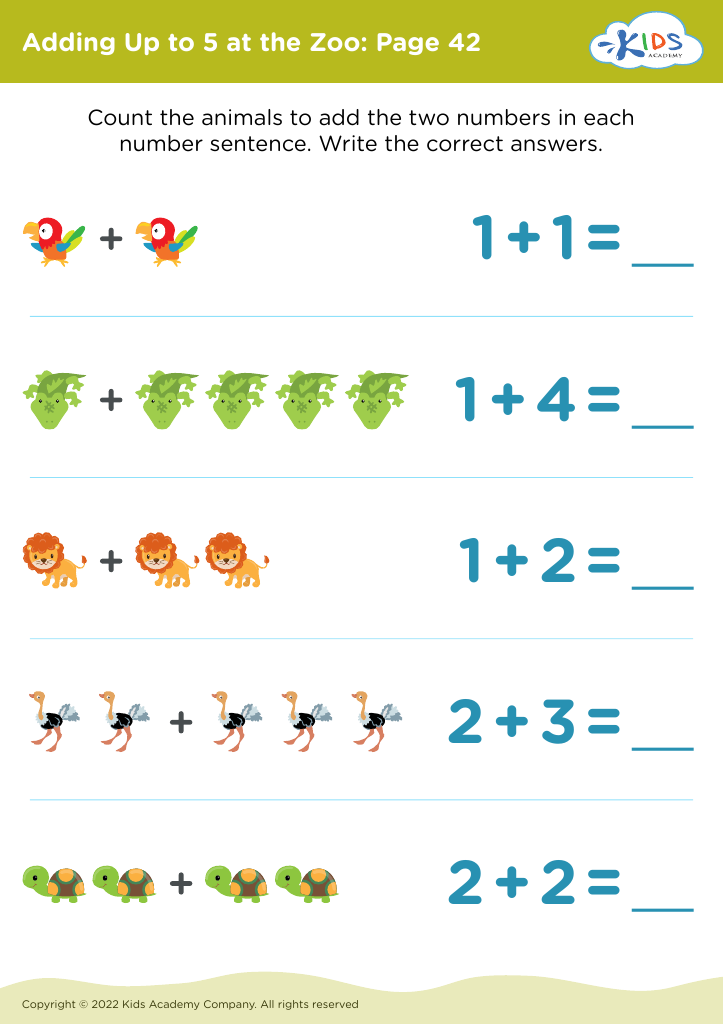
Introduce your 3-year-old to the basics of math with our fun and engaging Following Instructions Addition Worksheets. Designed specifically for young learners, these worksheets combine vibrant visuals with simple addition problems to develop early math skills. By completing these tasks, children enhance their ability to follow instructions and improve their number sense, all while nurturing their enthusiasm for learning. Ideal for both preschool settings and at-home learning, our worksheets provide a solid foundation in mathematics. Download today to inspire a love for learning and watch as your child confidently takes their first steps in math.
Favorites
With answer key
Interactive
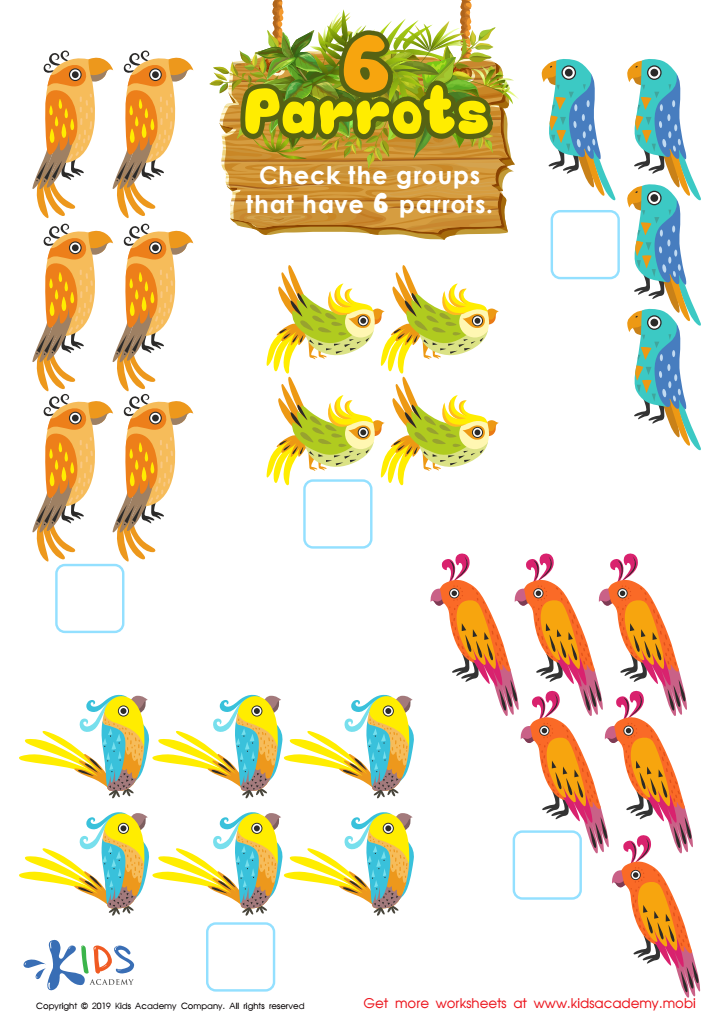
6 Parrots Worksheet
Love parrots? Here's a free worksheet to help your children practice counting to six with colorful parrot representations! Kids will adore counting the parrots and checking off groups of six - and it won't even feel like math! Just a fun way to make some new and exciting friends.
 Assign to My Students
6 Parrots Worksheet
Worksheet
Join Kids Academy for Free
Who is primarily going to use this learning content?






.jpg)

Parents and teachers should prioritize teaching 3-year-olds to follow instructions for several crucial reasons. Firstly, it lays a strong foundation for future learning and social interactions. At this formative age, children are rapidly developing cognitive and language skills, and the ability to follow instructions enhances their attention span and memory. These skills are critical as they prepare for more structured learning environments like preschool and kindergarten.
Secondly, following instructions teaches young children about rules and routines. This awareness fosters a sense of security and stability, which is essential for emotional development. When children understand what is expected of them, they are more likely to feel confident and less anxious.
Additionally, the process of learning to follow instructions aids in fine-tuning listening and comprehension abilities. For example, when engaged in simple tasks like sorting toys or following a play sequence, children practice skills that improve their ability to process information and execute tasks correctly.
Safety is another significant aspect. Understanding and adhering to basic instructions, such as "stop" or "come here," can prevent accidents and ensure a child's well-being.
In summary, fostering the ability to follow instructions in 3-year-olds promotes cognitive, emotional, and social development while also ensuring their safety, thereby laying the groundwork for their overall growth and future success.








