
Mathematical reasoning Addition Worksheets for 3-Year-Olds
4 filtered results
Difficulty Level
Grade
Age
-
From - To
Subject
Activity
Standards
Discover our engaging Mathematical Reasoning Addition Worksheets designed specifically for 3-year-olds! These worksheets introduce early math concepts through fun and interactive activities, making learning enjoyable for young learners. Our resources focus on basic addition skills, encouraging children to explore numbers, patterns, and counting in a playful manner. With colorful illustrations and age-appropriate exercises, kids can enhance their logical thinking and problem-solving abilities. Perfect for at-home learning or classroom use, these worksheets help build a strong foundation for future math success. Start your child's mathematical journey today with our carefully curated addition worksheets, tailored to inspire a love for learning!
Favorites
With answer key
Interactive
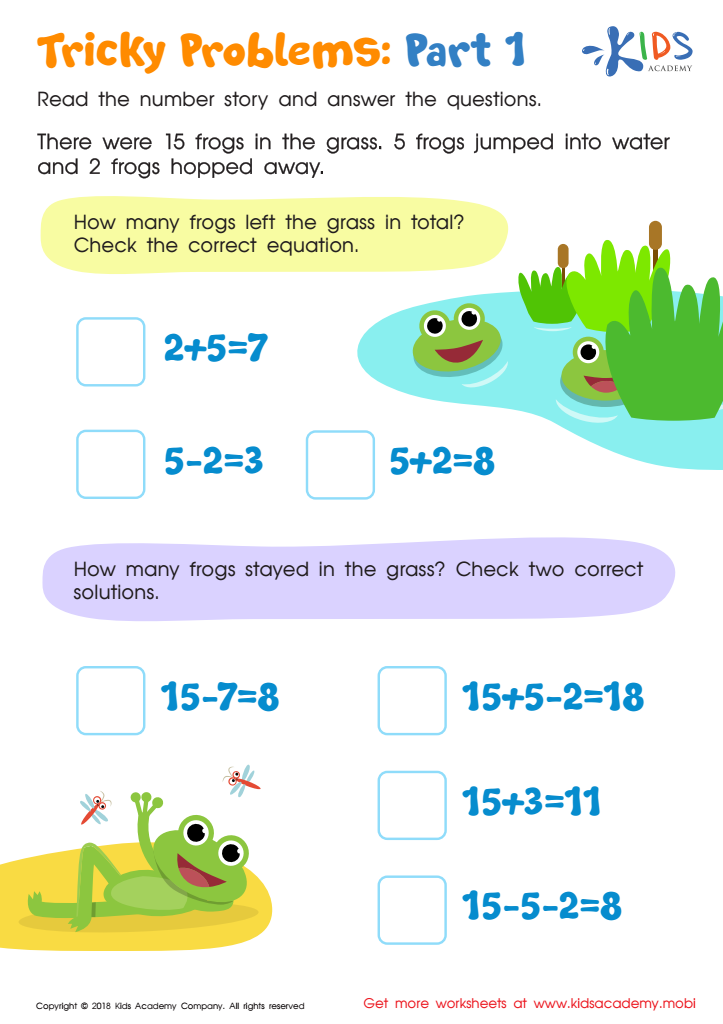
Tricky Problems Worksheet: Part 1
Visualizing word problems can help students solve them. This fun PDF worksheet encourages students to create mental images using math facts, then check boxes to match the equations for basic addition problems. It's a great way to build confidence in solving math.
 Assign to My Students
Tricky Problems Worksheet: Part 1
Worksheet
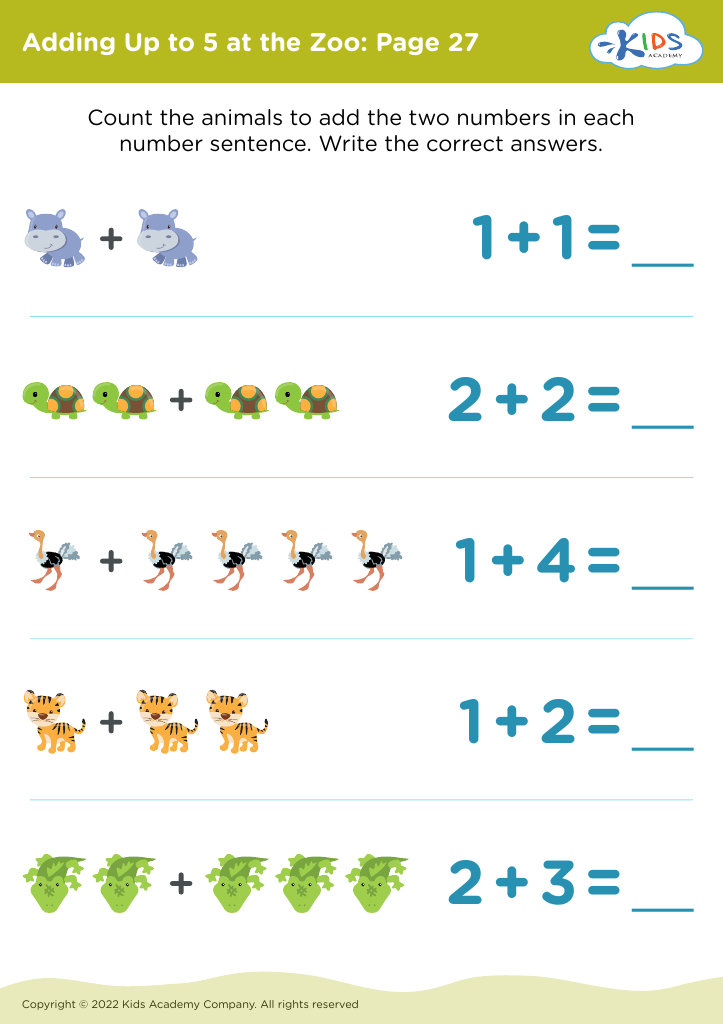
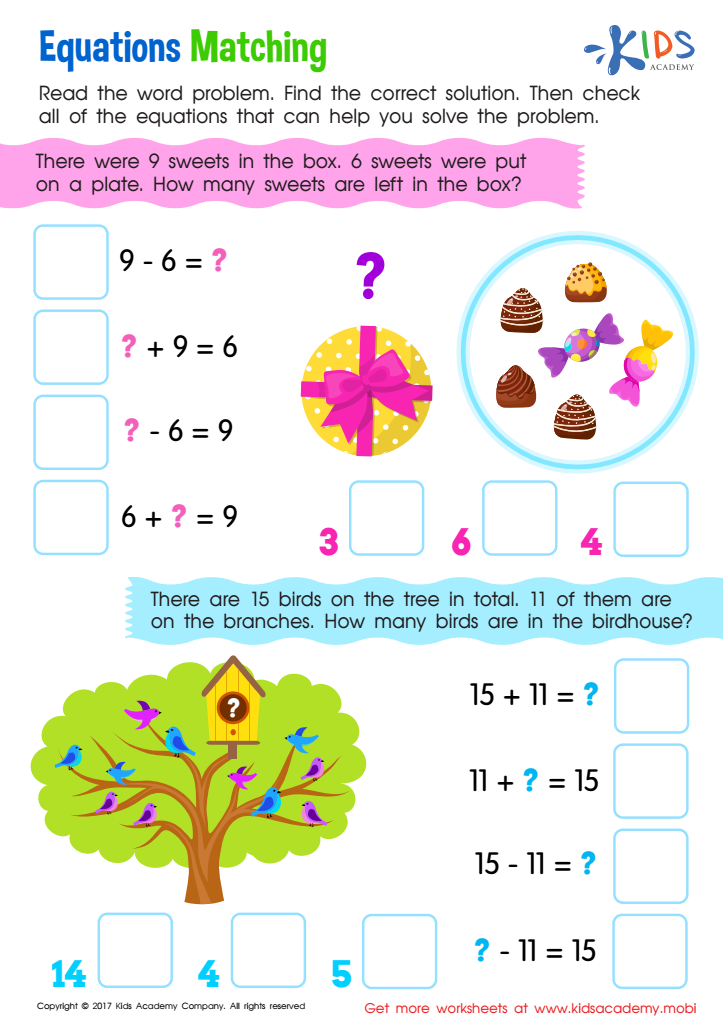
Equations Matching Word Problems Worksheet
Download this worksheet and give your young mathematician practice in solving equations using matching numbers and number family facts. They'll solve word problems, develop critical thinking and algebraic reasoning, and gain success with addition and subtraction.
Equations Matching Word Problems Worksheet
Worksheet
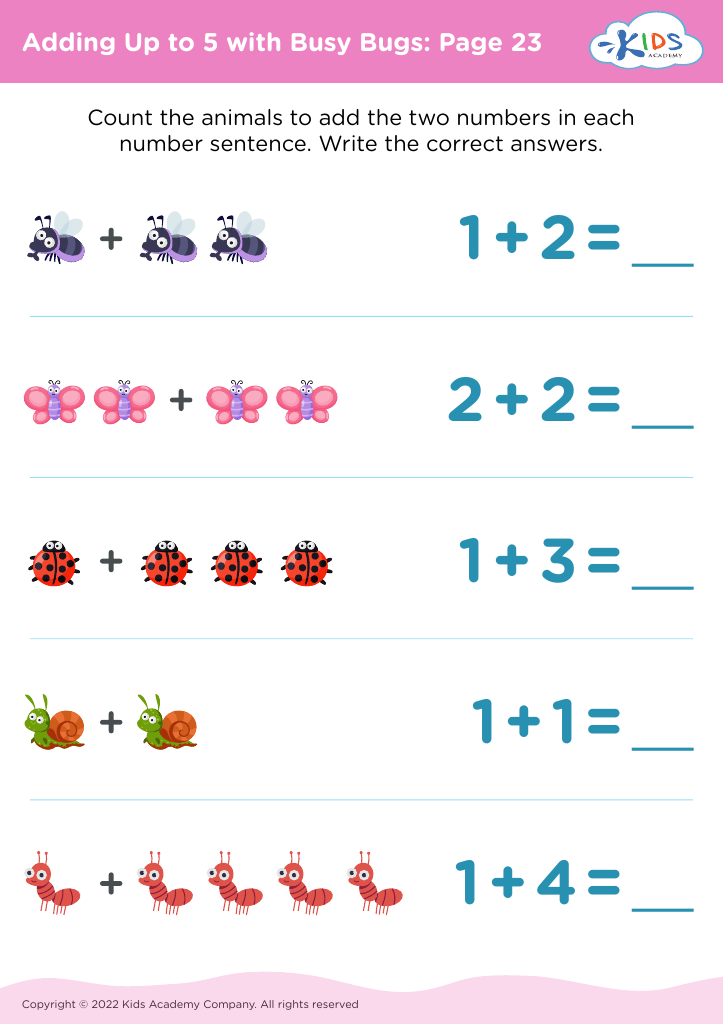
Join Kids Academy for Free
Who is primarily going to use this learning content?








Mathematical reasoning, particularly in addition, is a critical skill that begins to develop early in childhood, making it essential for parents and teachers to engage 3-year-olds in this area. At this age, children are naturally curious and eager to learn about numbers and quantities, providing a unique window of opportunity. Early exposure to addition fosters not just basic arithmetic skills but also lays the foundation for logical thinking and problem-solving abilities.
Moreover, when caregivers incorporate addition into everyday activities—like counting snacks, toys, or steps taken—they contextualize math in a relatable way, making it less abstract and more tangible. Such interactions promote cognitive engagement and help children see mathematics as a valuable tool for understanding their world.
Additionally, strong mathematical reasoning skills are linked to later academic success. Children who develop a solid grasp of basic mathematics are more likely to excel in school, paving the way for confidence in future learning. Engagement in fun, playful mathematical activities also nurtures positive attitudes toward mathematics, reducing anxiety and fostering a lifelong love for learning. Therefore, fostering mathematical reasoning through addition in young children is not just about mastering numbers; it's about nurturing critical thinkers and future learners.








