Problem-solving practice Addition Worksheets for 3-Year-Olds
3 filtered results
-
From - To
Discover engaging Problem-Solving Practice Addition Worksheets designed for 3-year-olds to enhance foundational math skills! Our printable resources focus on introducing essential addition concepts while nurturing critical thinking and problem-solving abilities. Each worksheet is filled with vibrant illustrations and interactive exercises, making learning fun and interactive for young minds. As children solve our carefully crafted problems, they develop confidence in their math skills and a joy for learning. These worksheets support early childhood education by blending play and learning seamlessly, ensuring your little one is well-prepared for future mathematical challenges. Foster a love for math with our fun-filled addition practice today!
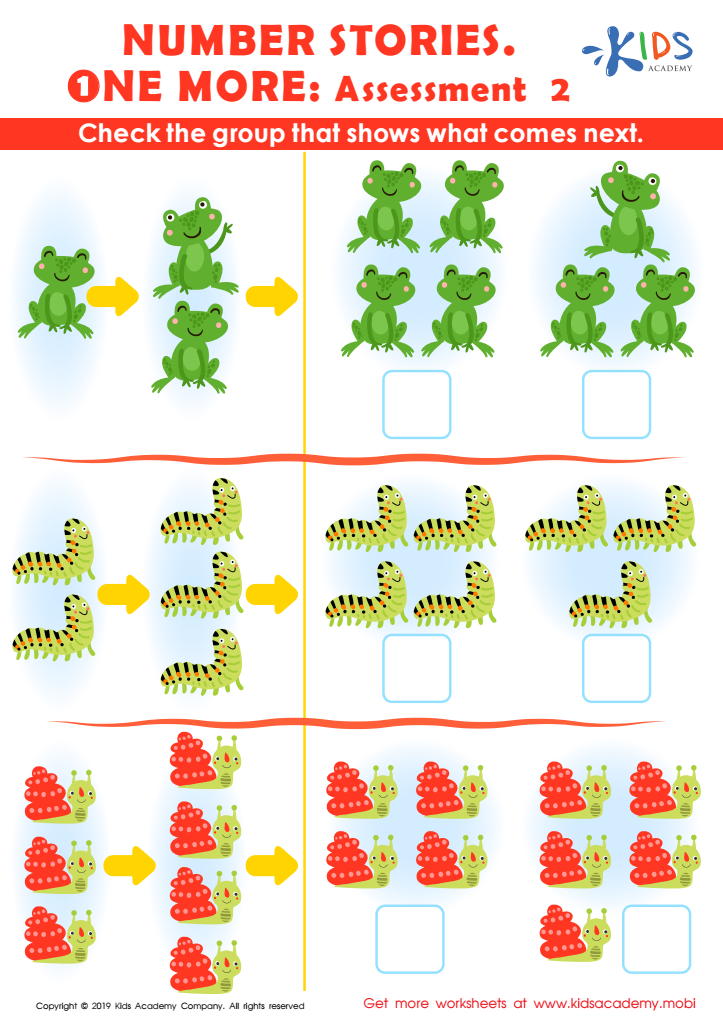
Number Stories One More – Assessment 2 Worksheet
 Assign to My Students








Parents and teachers should prioritize problem-solving practice in addition for 3-year-olds because it lays the foundation for critical thinking and cognitive development. At this age, children are naturally curious and eager to explore concepts related to numbers and quantities. Engaging in addition activities helps children develop essential early math skills, such as counting, recognizing numbers, and understanding basic arithmetic operations.
Moreover, problem-solving enhances a child's ability to reason and think critically. When children are presented with simple addition problems, they learn to approach challenges methodically, analyze situations, and devise solutions. This not only supports their mathematical understanding but also nurtures a sense of accomplishment and perseverance when they successfully solve a problem.
Additionally, fostering these skills in a supportive environment promotes social interaction. Group activities involving addition can encourage collaboration, communication, and teamwork as children work together to find solutions. As early learners are equipped with confidence in their problem-solving abilities, they transition more effectively into formal education and develop a lifelong love for learning. Ultimately, prioritizing problem-solving practice in addition offers a rich, engaging, and beneficial experience that serves as a building block for future academic success.








