Sea creatures identification Addition Worksheets for 3-Year-Olds
3 filtered results
-
From - To
Introduce your 3-year-old to the fascinating world of sea creatures with our engaging Sea Creatures Identification Addition Worksheets! Designed specifically for young learners, these worksheets combine early math skills with the exploration of delightful ocean life. Children will identify various sea creatures while practicing addition in a fun and interactive way. By incorporating colorful images and simple math problems, we make learning exciting and accessible for toddlers. These worksheets foster not only math readiness but also a love for marine biology. Perfect for homeschooling or classroom activities, our resources ensure your child gains confidence in their skills while exploring the wonders of the sea!
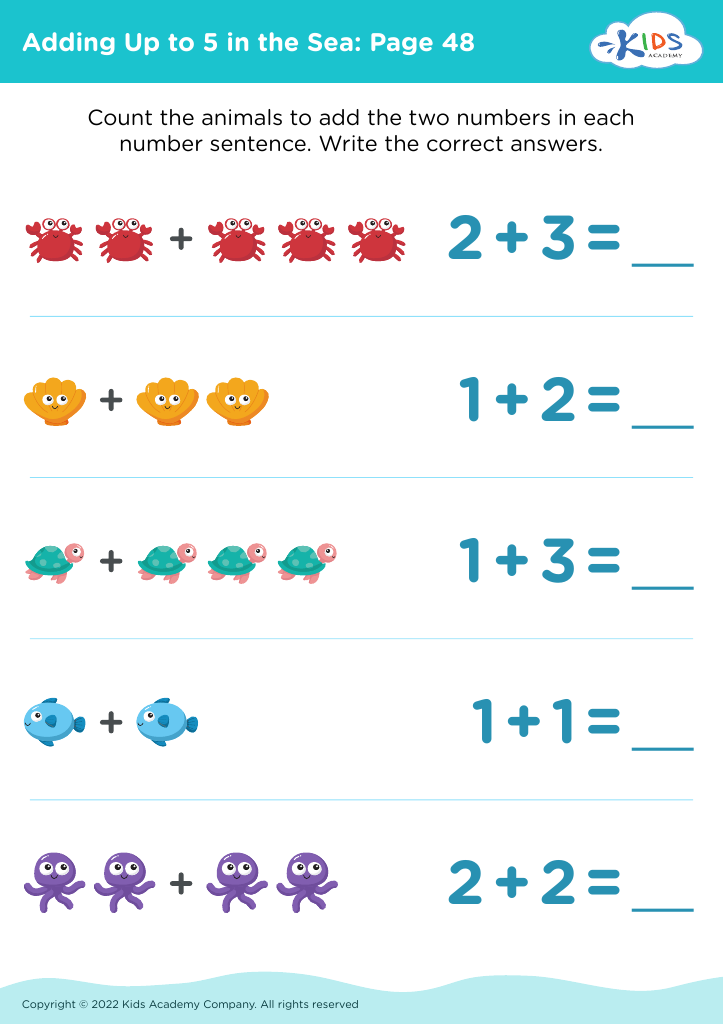
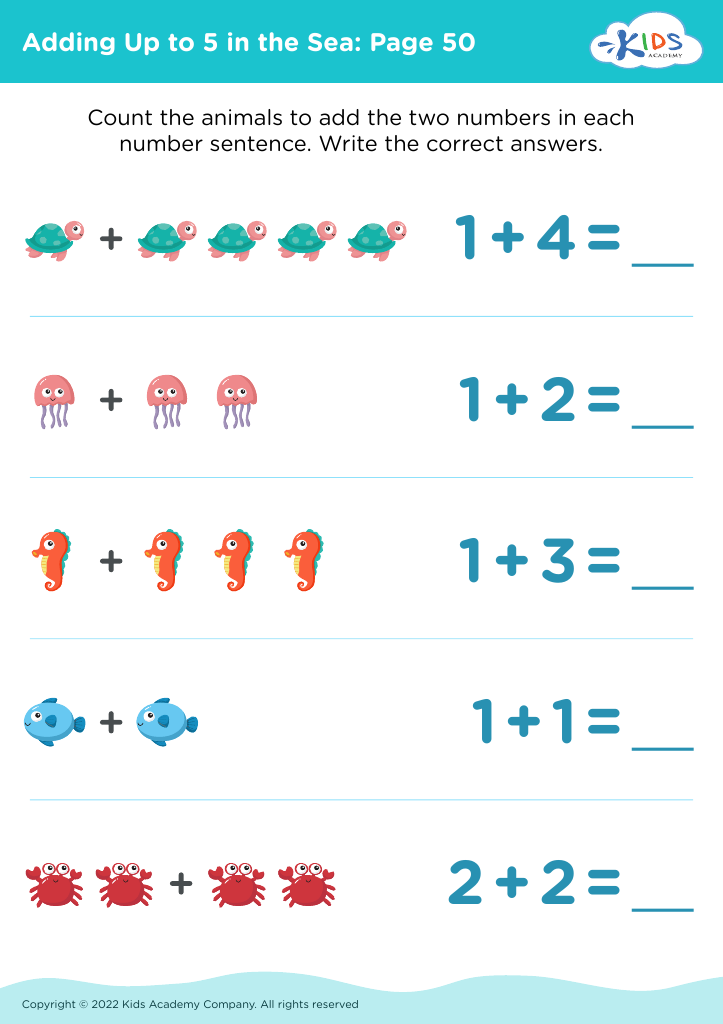
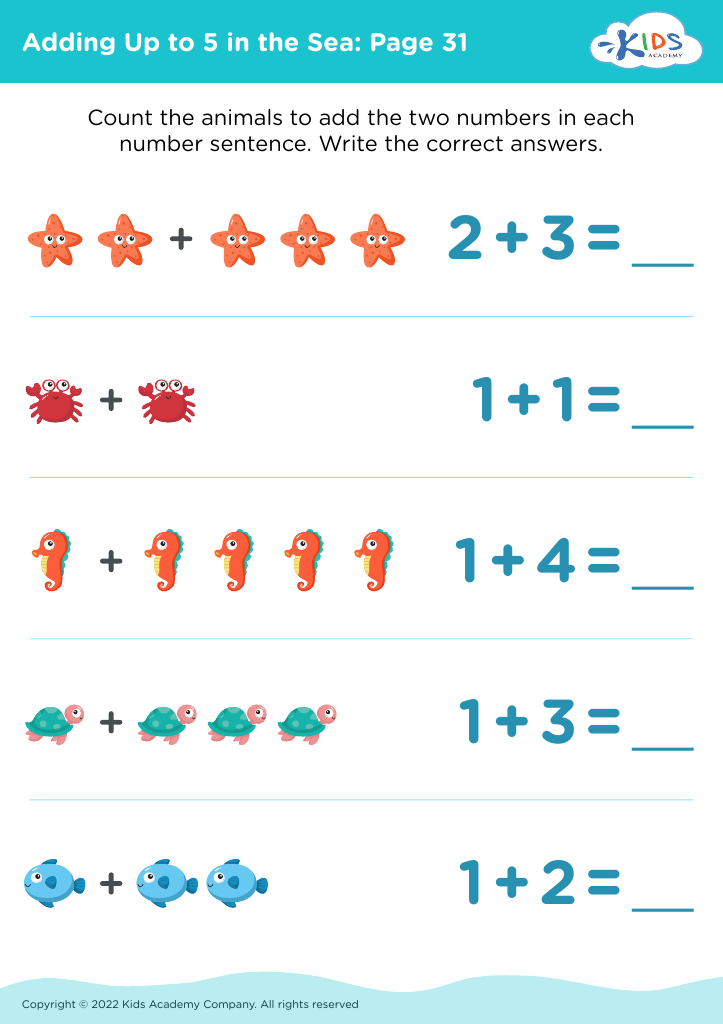








Parents and teachers should care about sea creature identification for three-year-olds because it enhances early childhood learning and development in multiple ways. Firstly, exposing young children to marine life fosters curiosity about the natural world, sparking a sense of wonder and discovery. When children learn to identify sea creatures, they engage their senses, promoting observational skills and cognitive development.
Additionally, sea creature identification supports language development. Teaching children to recognize and name different sea animals enriches their vocabulary and encourages communication. Simple activities, such as storytelling or arts and crafts involving these creatures, can further enhance their expressive skills.
Learning about marine life can also instill a sense of environmental stewardship. As children begin to understand different sea creatures and their habitats, they can develop empathy toward nature, becoming aware of the importance of protecting our oceans. This foundation can encourage responsible behavior towards the environment as they grow.
Moreover, introducing themes of diversity through the variety of sea creatures can boost social awareness and inclusivity. Overall, sea creature identification serves as a fun and engaging way to promote cognitive, linguistic, social, and emotional development in young learners, setting the stage for lifelong learning and curiosity.








