Understanding number relationships Addition Worksheets for 3-Year-Olds
3 filtered results
-
From - To
Unlock your child's early math potential with our "Understanding Number Relationships: Addition Worksheets for 3-Year-Olds." These engaging, age-appropriate exercises are designed to introduce young learners to basic addition concepts in a fun and interactive way. Featuring vibrant visuals and simple problems, our worksheets help toddlers grasp number relationships and build a strong mathematical foundation. Perfect for hands-on learning at home or in the classroom, our expertly-crafted materials encourage curiosity and boost your child's confidence in math skills. Start your child's educational journey today with our delightful addition worksheets!
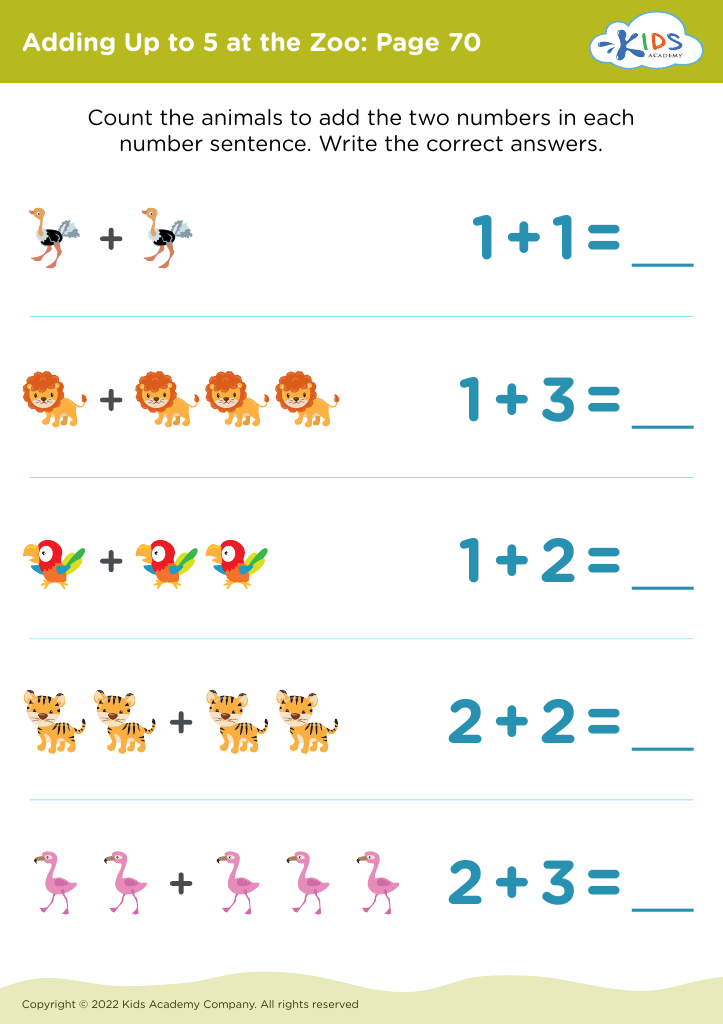
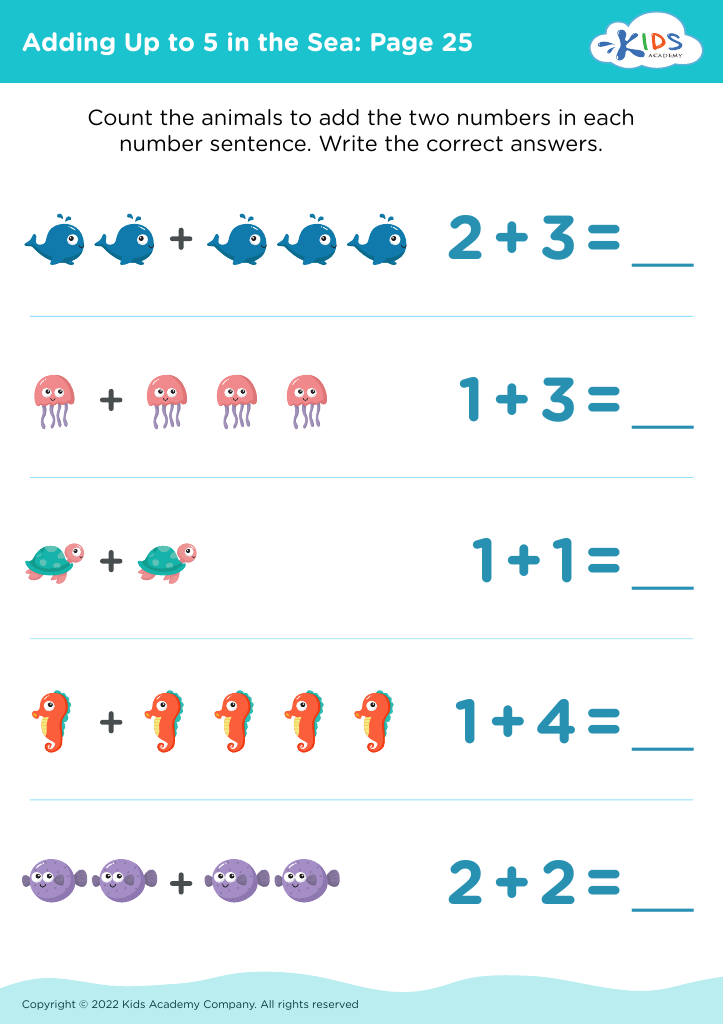
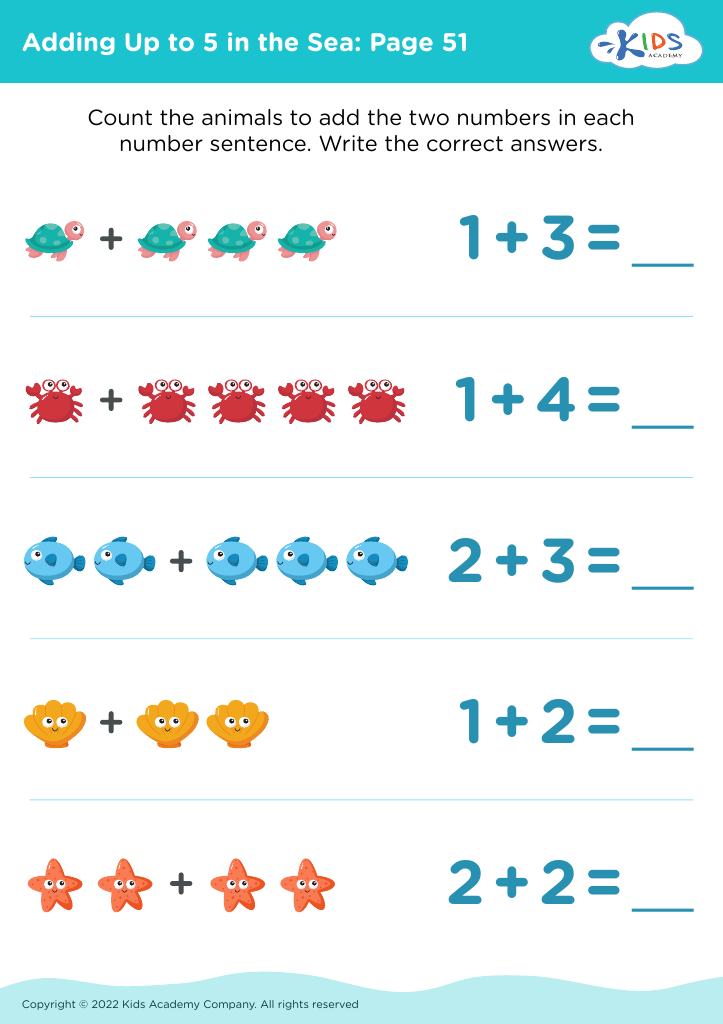








Understanding number relationships and addition at a young age is crucial as it lays the foundation for future mathematical proficiency. For 3-year-olds, learning these concepts guides them towards recognizing patterns, sequences, and the basics of computation, which are all integral to more complex problem-solving skills later in life.
Firstly, grasping number relationships helps children understand the concept of quantity and order. They begin to differentiate between groups of items and can start comparing sizes, amounts, and even spatial relationships. This cognitive ability to process quantities is a preliminary step toward arithmetic operations, including addition.
When young children are introduced to addition, they learn valuable skills such as counting, object grouping, and minute quantity transfers (like adding 1 more item). These early experiences build number sense, making them comfortable and confident with numbers. This confidence is critical as it encourages a positive attitude towards math in their school years and beyond.
Furthermore, understanding and performing simple additions foster critical thinking and logical progression. It nurtures their ability to follow step-by-step procedures and improves their memory and attention span, beneficial far beyond mathematics.
Thus, by emphasizing early math education in activities and play, parents and teachers can help 3-year-olds establish a strong mathematical foundation, setting the stage for academic success and everyday problem-solving skills.








