Underwater animal identification Addition Worksheets for 3-Year-Olds
3 filtered results
-
From - To
Introduce your little learners to the magical world beneath the waves with our Underwater Animal Identification Addition Worksheets designed specifically for 3-year-olds! These engaging and colorful worksheets combine foundational addition skills with fun images of aquatic creatures, helping children identify and count various underwater animals while practicing early math concepts. Each worksheet includes simple addition problems that encourage interaction and exploration, making learning enjoyable and effective. Perfect for home or classroom use, these resources promote cognitive development, fine motor skills, and a love for learning about marine life. Dive into educational fun and watch your child's confidence grow in mathematics today!
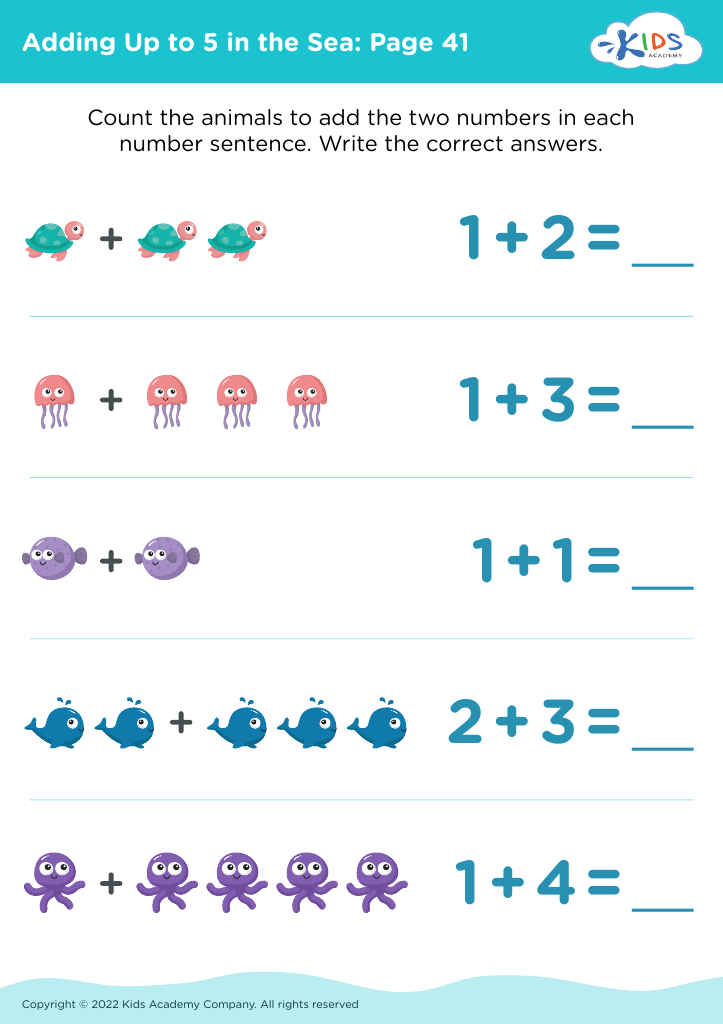
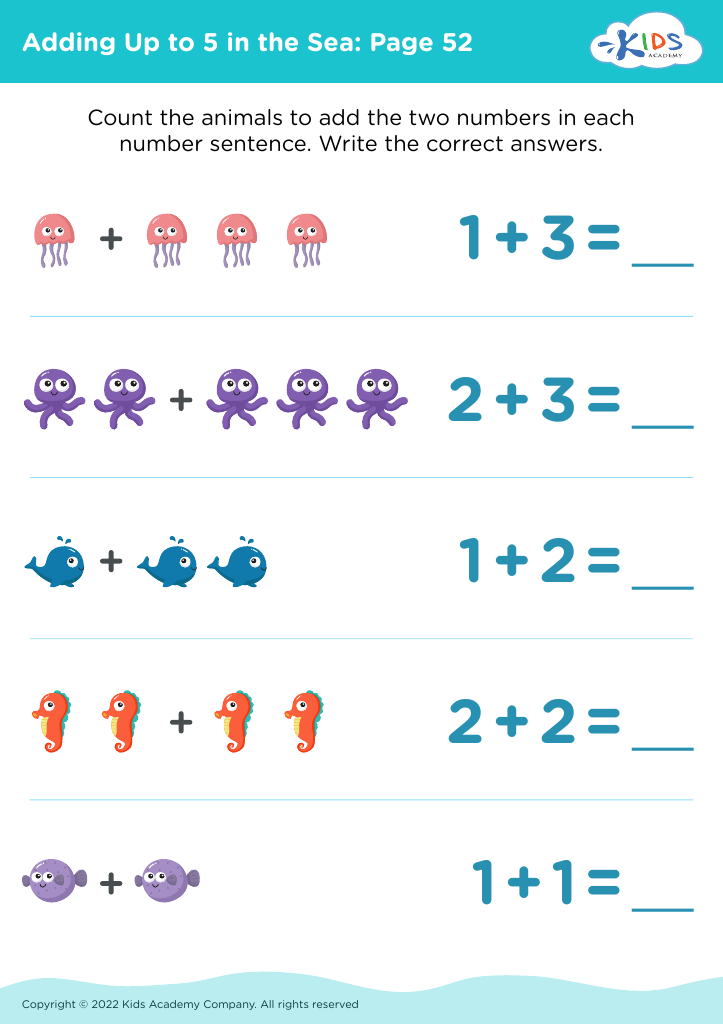
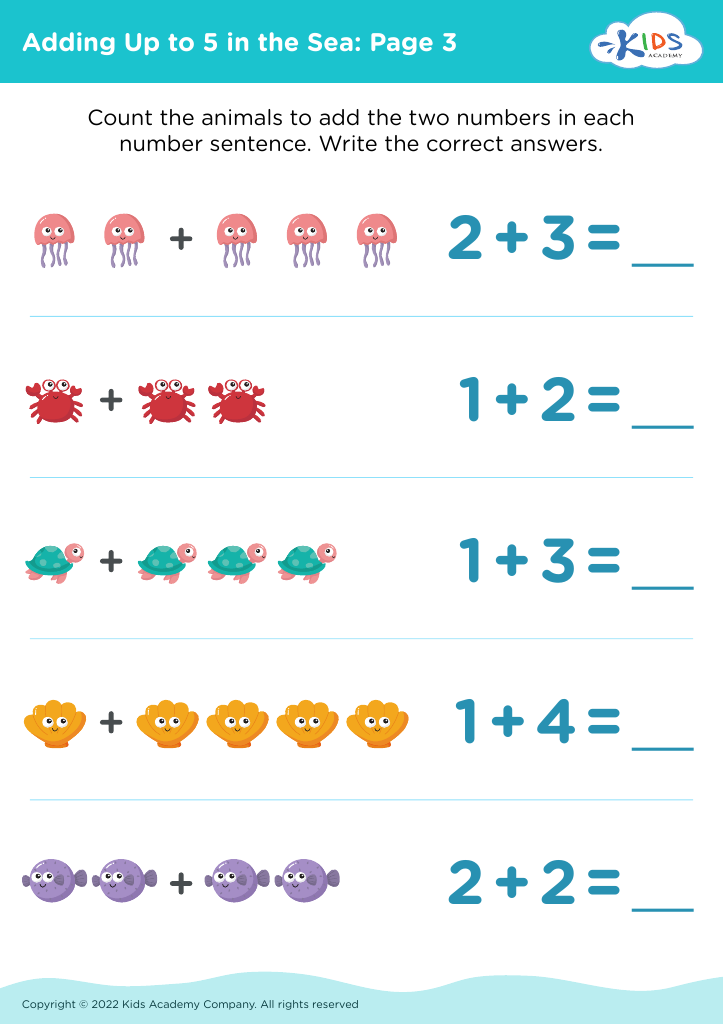








Teaching 3-year-olds about underwater animal identification through addition can be an engaging and beneficial learning experience. Firstly, it introduces young children to the fascinating world of marine life. Early exposure to various species fosters curiosity and respect for the environment, which can lead to a lifelong interest in ocean conservation.
Incorporating addition into this theme strengthens essential math skills. Learning to identify underwater animals while practicing basic addition helps reinforce numerical concepts in a contextual and imaginative way. Children typically learn best through play and hands-on activities, so using colorful visuals and interactive games can make math enjoyable.
Furthermore, this approach encourages the development of critical thinking and cognitive skills as children categorize animals or count their features. It also enhances language development, as they learn the names of different animals and describe their characteristics. This interdisciplinary method combines science and math, highlighting the interconnectedness of knowledge.
Lastly, engaging parents in this process creates shared learning experiences, promoting positive communication spend time nurturing their children’s education. When both educators and parents prioritize playful learning, children gain confidence, motivation, and foundational skills to succeed in their academic journeys.








