Color Identification Geometry Worksheets for 3-Year-Olds
3 filtered results
-
From - To
Introduce your 3-year-old to the exciting world of shapes and colors with our Color Identification Geometry Worksheets! Designed to captivate young minds, these engaging worksheets help children identify and differentiate between various shapes and colors. Through vibrant illustrations and interactive exercises, kids will enhance their geometric understanding and color recognition skills while having fun. Perfect for early learners, these printable resources are easy to use at home or in preschool settings. Foster your child's cognitive and motor development with our expertly crafted worksheets, and watch them build a strong foundation for future learning. Download now from Kids Academy!
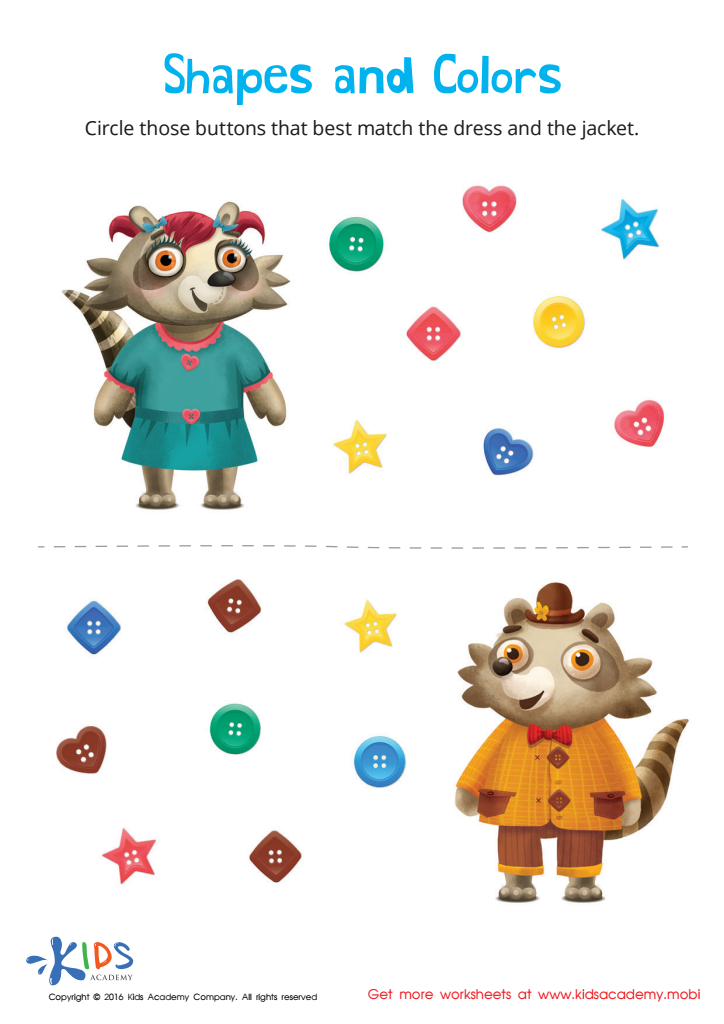
Matching: Shapes and Colors Worksheet











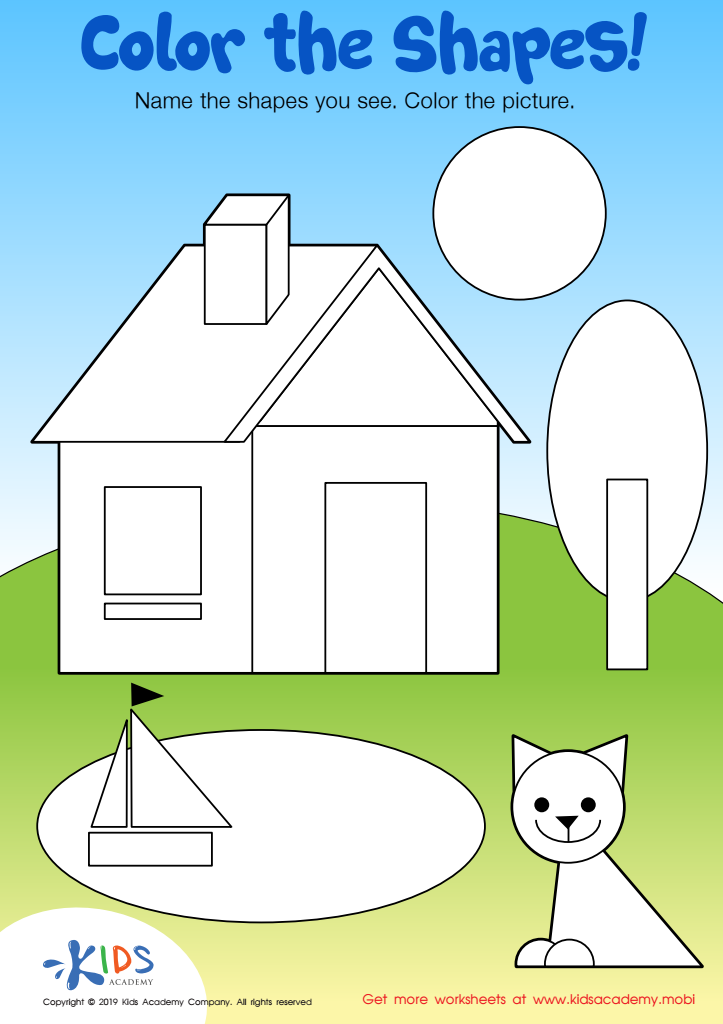
Color the Shapes Worksheet
 Assign to My Students
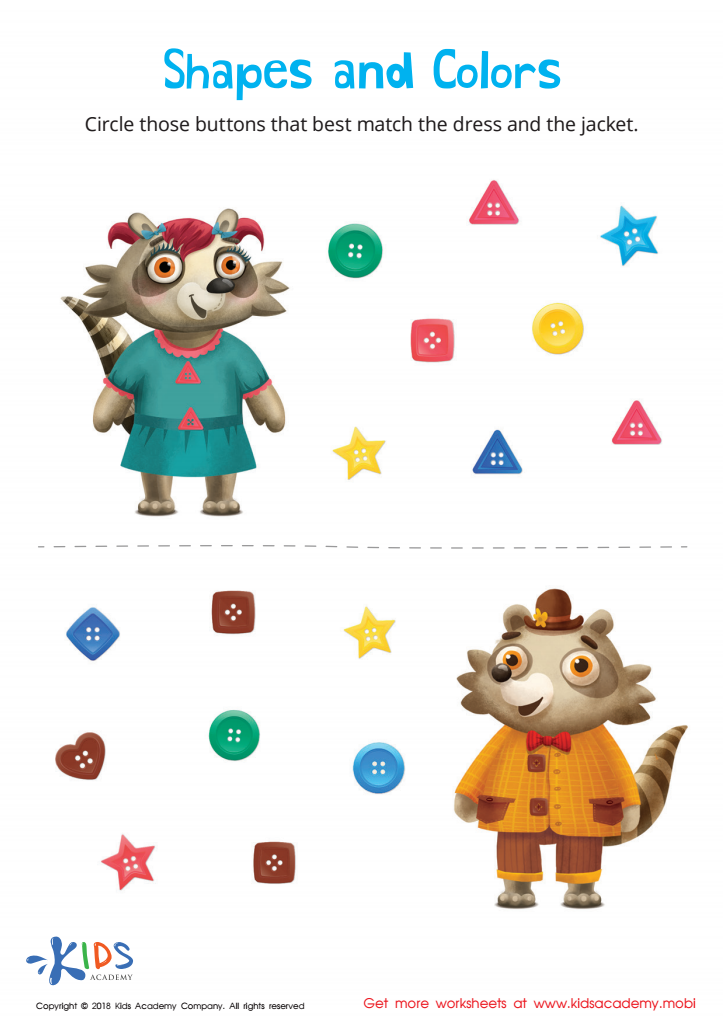
Shapes and Colors Worksheet








Color identification and geometry are foundational skills that parents and teachers should prioritize for 3-year-olds because they significantly contribute to a child's cognitive development and school readiness. Learning to identify colors helps young children in language development as they learn to associate words with visual stimuli. This skill enhances their ability to describe the world around them and effectively communicate their observations.
In addition to aiding in language and communication, color identification plays a role in developing sorting and categorizing abilities, which are crucial for problem-solving and logical thinking. Children who can distinguish between colors are better equipped to recognize patterns and categorize objects, laying the groundwork for more complex mathematical concepts.
Geometry, on the other hand, introduces kids to the basics of shapes, spatial reasoning, and relationship between objects. When children learn about shapes like circles, squares, and triangles, they begin to understand the concept of geometry which is fundamental in subjects like math and science. This knowledge helps them develop spatial awareness, an essential skill that enables them to navigate and make sense of their environment.
Overall, integrating color identification and geometry into early education fosters essential cognitive, linguistic, and problem-solving skills, preparing children for more advanced learning and everyday life challenges. This early intervention is crucial for building a strong academic foundation and fostering a lifelong love for learning.








