Filters

30 filtered results

Clear all filters
Favorites
With answer key
Interactive

30 filtered results

Difficulty Level

Grade


Check out this FREE Trial Lesson on Math for age 3!

Drawing it Out Addition

Favorites
With answer key
Interactive
  • 3
  • Basic Addition
  • Math
Dot to Dot Numbers 1-10

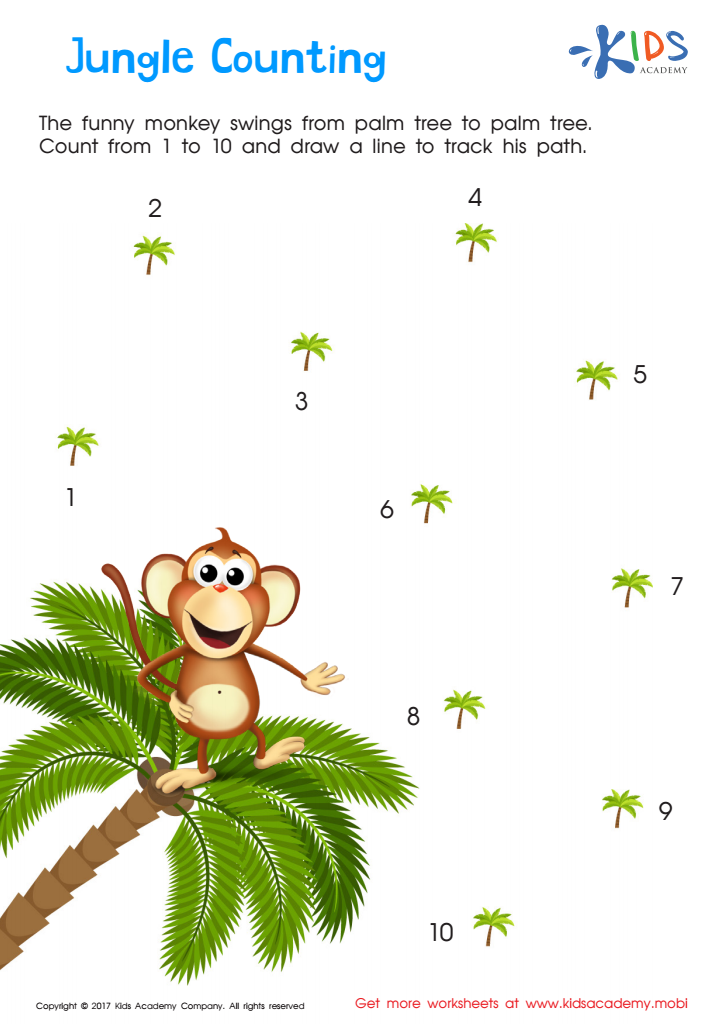
Jungle Counting Connect Dots Worksheet

Help your child count from 1-10 and practice problem solving skills with this dot to dot worksheet. Your child will enjoy helping the cute monkey swing from tree to tree while honing their math skills. Let them have a jungle-themed counting adventure!
Jungle Counting Connect Dots Worksheet
Worksheet
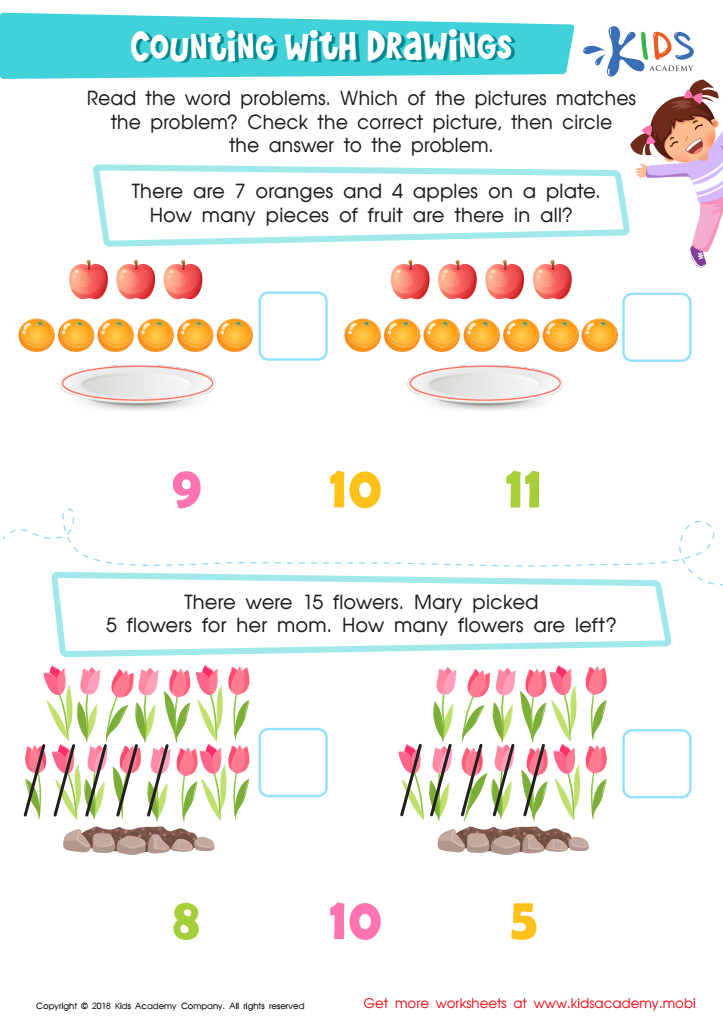
Counting with Drawings:Fruits & Flowers Worksheet

Counting with Drawings:Fruits & Flowers Worksheet

At Kids Academy, we know pictures make math come alive and make sense. This worksheet is perfect for early learners to practice word problems. Kids read each problem and count the images that represent the numbers, then solve the problem with addition or subtraction to get the right answer.
Counting with Drawings:Fruits & Flowers Worksheet
Worksheet
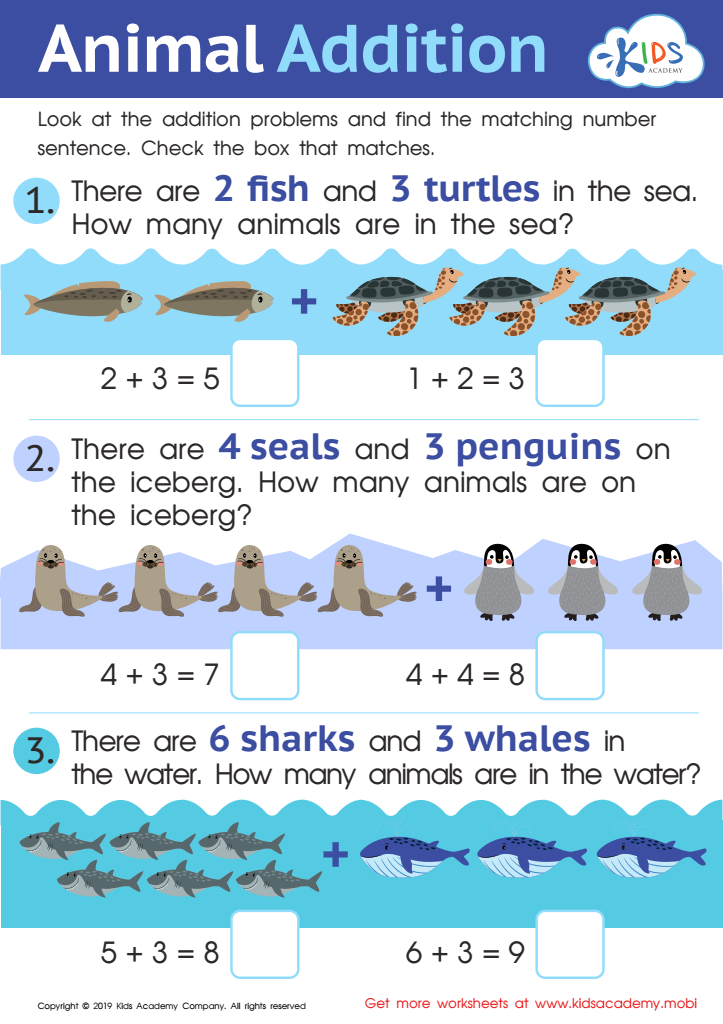
Animal Addition Worksheet

Animal Addition Worksheet

Get your kids learning addition and subtraction with this fun worksheet! Show them that solving equations can be enjoyable and help them match number sentences to the correct boxes. By doing this together, you'll create a positive learning experience that your kids won't forget.
Animal Addition Worksheet
Worksheet
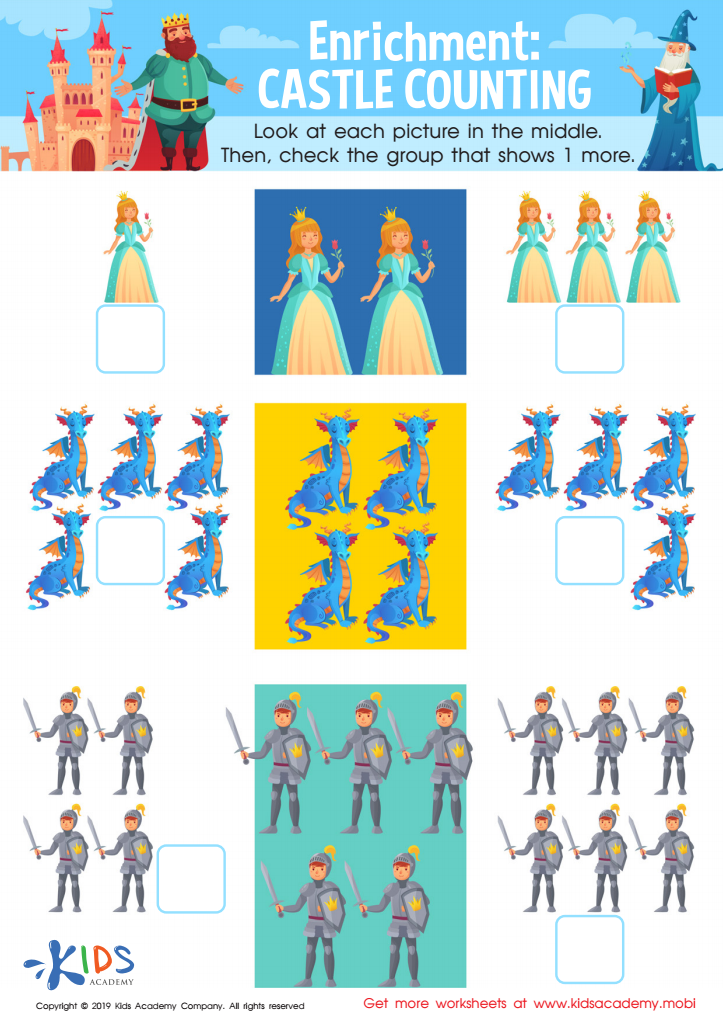
Enrichment: Castle Counting Worksheet

Enrichment: Castle Counting Worksheet

Help your kids learn to count. Start with easy counting of numbers as high as possible. Use the pictures in this printout. Point to the middle one, help them identify it and then count one more than it. Do this to help them get ready for more difficult math concepts like addition, subtraction and multiplication.
Enrichment: Castle Counting Worksheet
Worksheet
Firefighter Counting Worksheet

Firefighter Counting Worksheet

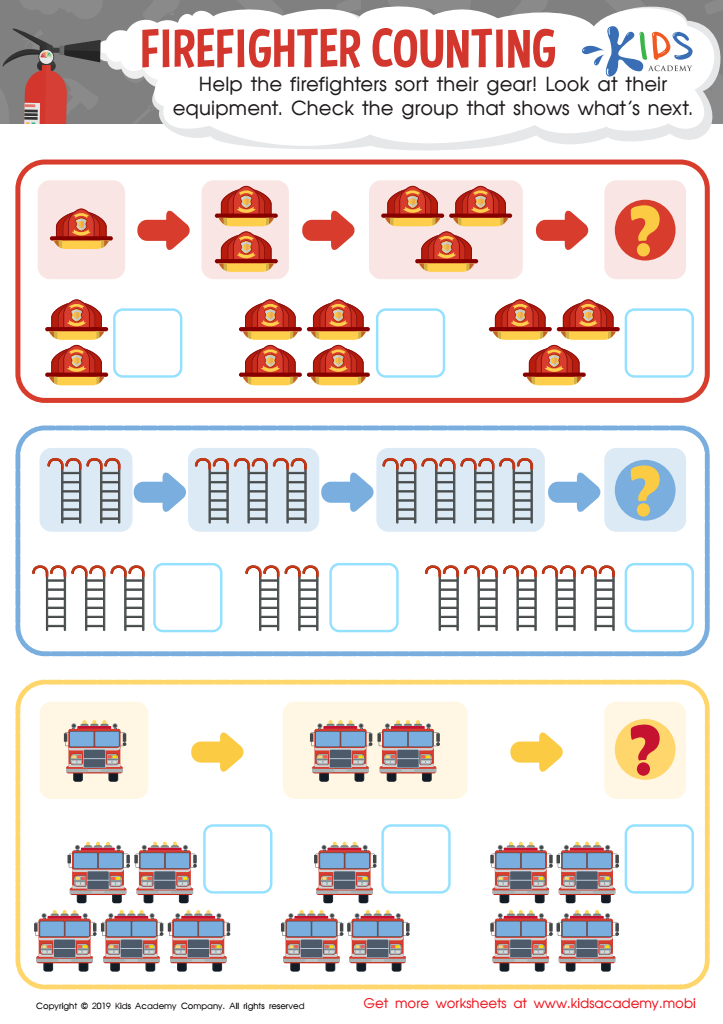
Firefighters are a vital part of any community. When a fire breaks out, they respond promptly to protect citizens and extinguish the blaze. Wearing specialized gear, they not only make the job easier, but safer too. Get your kids involved and help the firefighters sort their gear. Count the equipment, and check the group for the next steps.
Firefighter Counting Worksheet
Worksheet
Counting Birds Worksheet


Counting Birds Worksheet

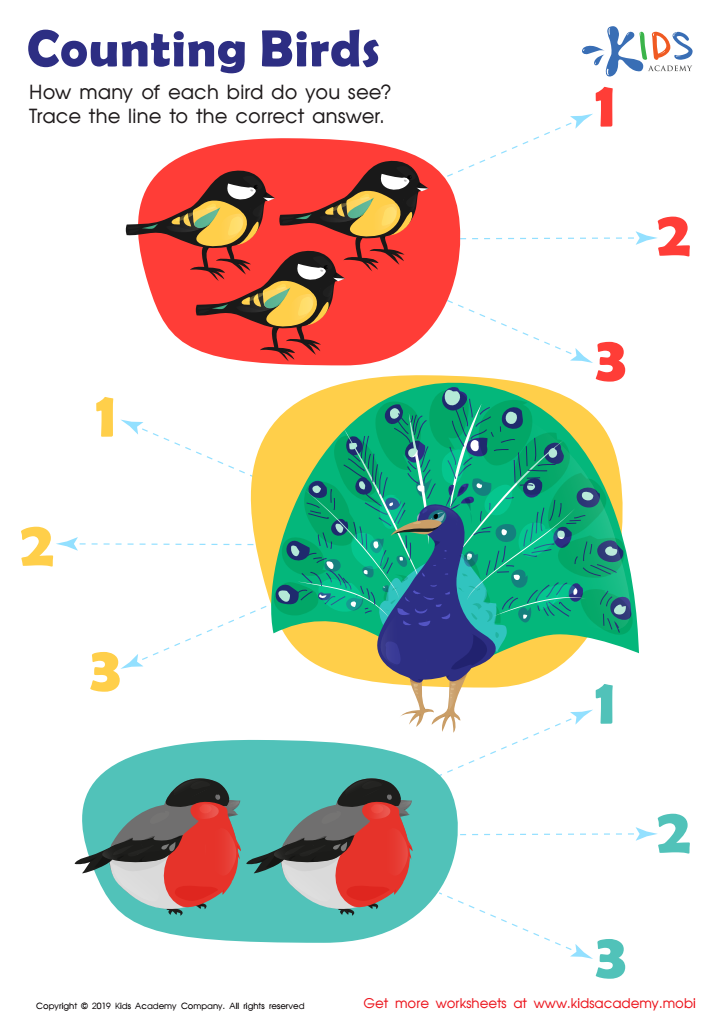
Kids love counting! With each number they learn, they can make a one-to-one representation with an item. The more practice they get, the better. Try this counting worksheet with traceable lines, to give your children practice and work on their fine motor skills. They will enjoy connecting the picture to the right number, and will feel like mathematicians with each success!
Counting Birds Worksheet
Worksheet


Parents and teachers should prioritize basic addition skills for 3-year-olds because early math learning lays the groundwork for future academic success. At this age, children are naturally curious and eager to learn, making it an ideal time to introduce mathematical concepts. Basic addition helps children develop critical thinking skills, enhancing their cognitive development.

Additionally, incorporating fun activities like counting objects in everyday contexts—such as toys, snacks, or family members—turns learning into an engaging game. This promotes not only math skills but also social interaction and language development. Learning addition at this stage fosters a sense of achievement and builds confidence in their abilities.

Moreover, early exposure to math can reduce anxiety around numbers as children grow older. Research indicates that early math skills correlate strongly with future math outcomes, highlighting the importance of these foundational lessons. By focusing on basic addition for 3-year-olds, parents and teachers help nurture a generation comfortable with numbers, preparing them for more complex mathematical concepts in the coming years. Encouraging a positive attitude towards math can help children thrive academically and develop essential problem-solving skills that extend beyond the classroom.