Basic math practice Math Worksheets for 3-Year-Olds
3 filtered results
-
From - To
Welcome to our engaging collection of Basic Math Practice Worksheets designed especially for 3-year-olds! These worksheets are tailored to introduce young learners to fundamental math concepts in a fun and interactive way. Children will enjoy activities that enhance their counting skills, recognition of numbers, and simple addition and subtraction. Each worksheet features colorful illustrations to capture their interest and promote a love for learning. Perfect for parents and educators, our resources aim to build a strong foundation in early math skills while encouraging creativity and critical thinking. Discover the joy of math with our thoughtfully crafted worksheets today!
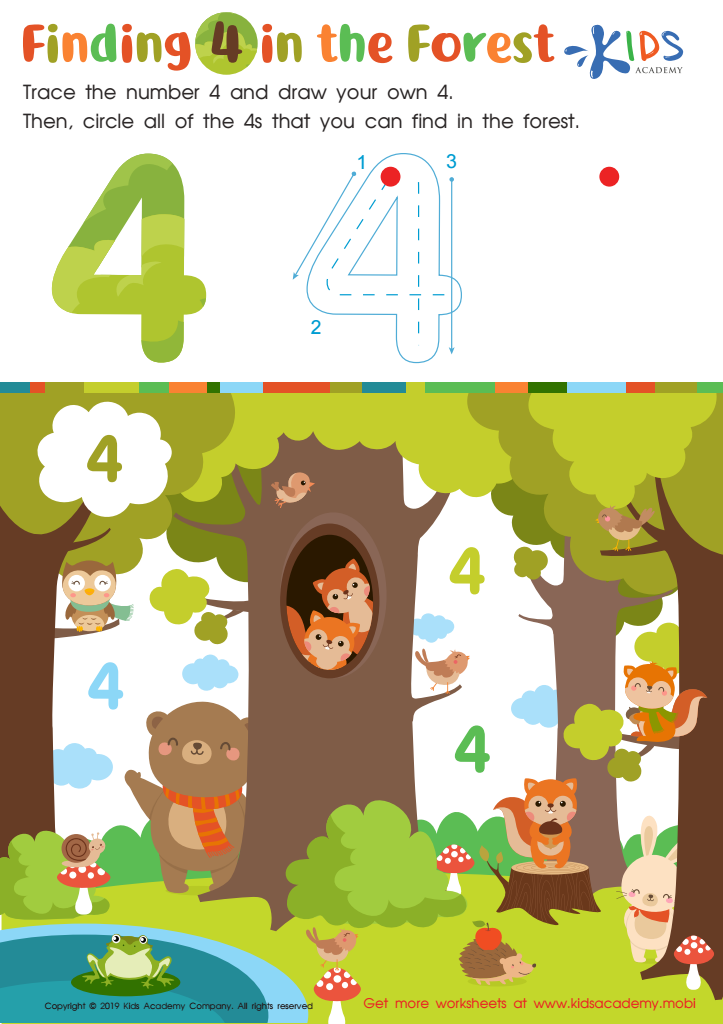
Finding 4 in the Forest Worksheet
 Assign to My Students
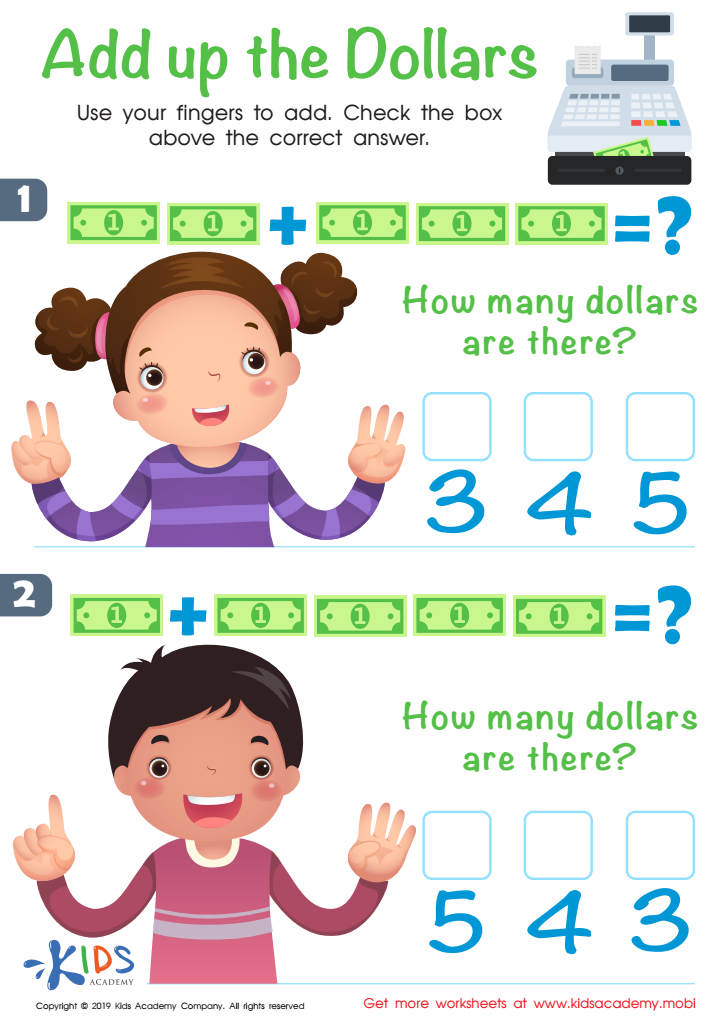
Add up the Dollars Worksheet





.jpg)

Parents and teachers should prioritize basic math practice for 3-year-olds, as early exposure to math concepts lays the foundation for lifelong mathematical understanding and problem-solving skills. During this critical developmental stage, children are naturally curious and eager to learn about the world around them. Engaging them in fun, age-appropriate math activities can enhance their cognitive skills, language development, and critical thinking.
Early math skills, such as counting, recognizing shapes, and understanding simple patterns, are crucial for later academic success. When children develop confidence in their mathematical abilities from a young age, they are more likely to enjoy and engage in math throughout their schooling. Additionally, basic math practice is linked to enhanced spatial awareness and analytical skills, which are essential in various fields and everyday situations.
Moreover, math practice can be seamlessly integrated into daily routines—counting steps as they walk, identifying shapes in the environment, or sorting and classifying objects during play. Such activities not only foster math skills but also strengthen parent-child and teacher-student interactions, enriching learning experiences. By prioritizing basic math practice, caregivers empower children to develop critical foundational skills that will serve them well in school and beyond.








