Real-life application Math Worksheets for 3-Year-Olds
3 filtered results
-
From - To
Discover our engaging "Real-Life Application Math Worksheets for 3-Year-Olds," designed to make learning math fun and relevant! These worksheets encourage early learners to explore essential math concepts through everyday situations. From counting fruits to sorting objects, your child will develop foundational skills while relating math to the world around them. Each activity is carefully crafted to spark curiosity and enhance problem-solving abilities. Our resources promote hands-on learning, ensuring that children understand the practical uses of math. Perfect for at-home practice or classroom activities, these worksheets will nurture a love of math in your little one. Start their math journey today!
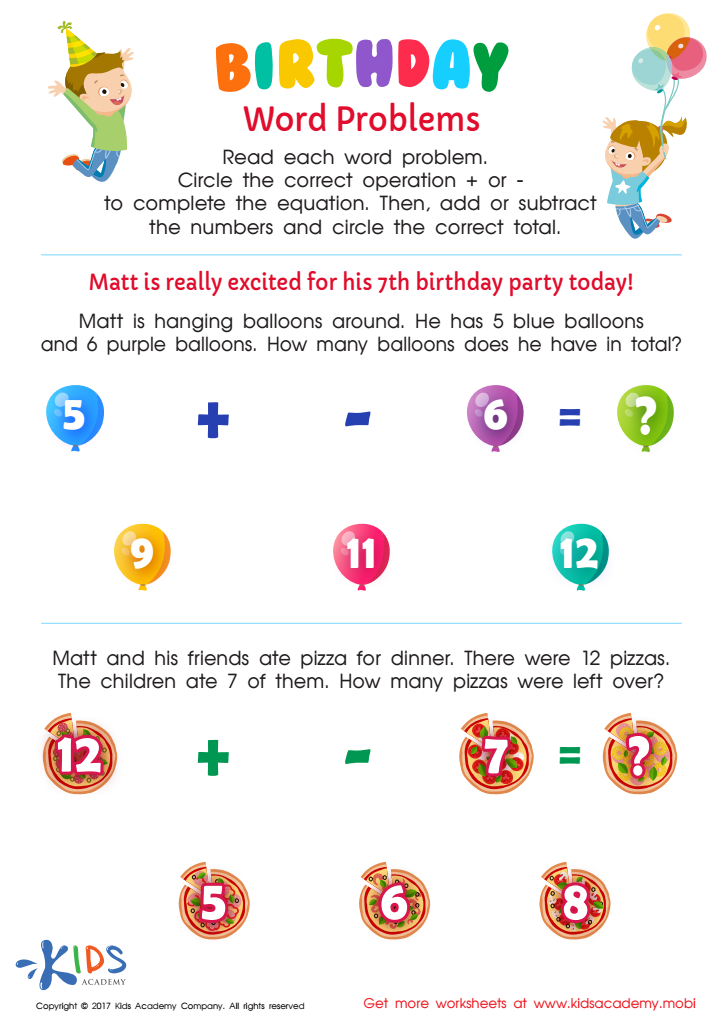
Birthday Word Problems Substraction Worksheet
 Assign to My Students
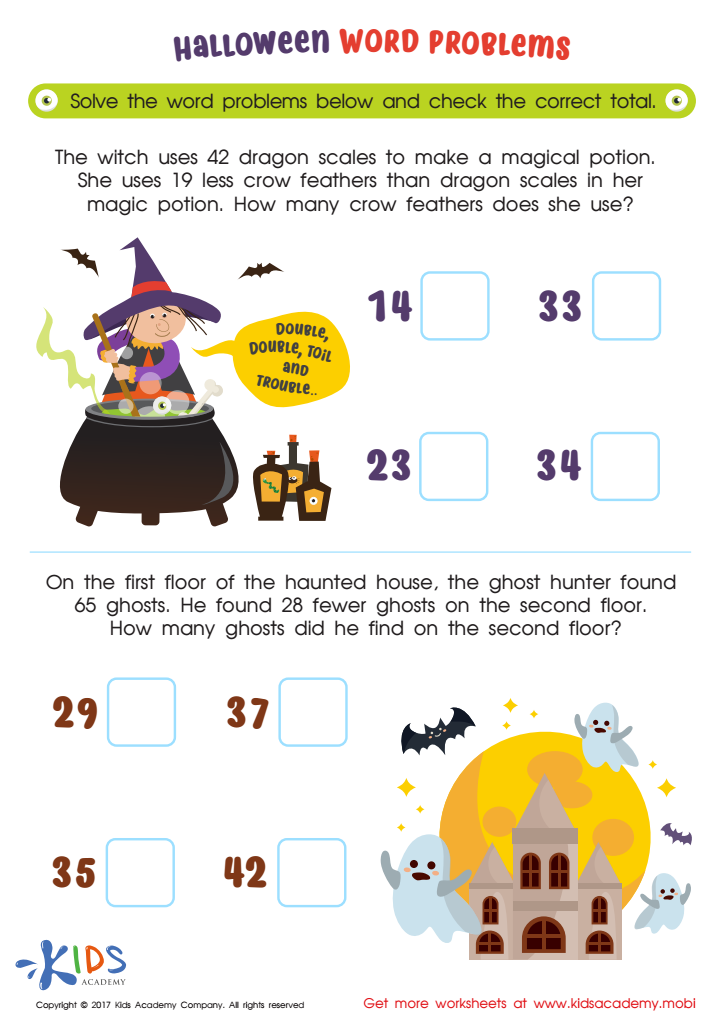
Halloween Word Problems Printable
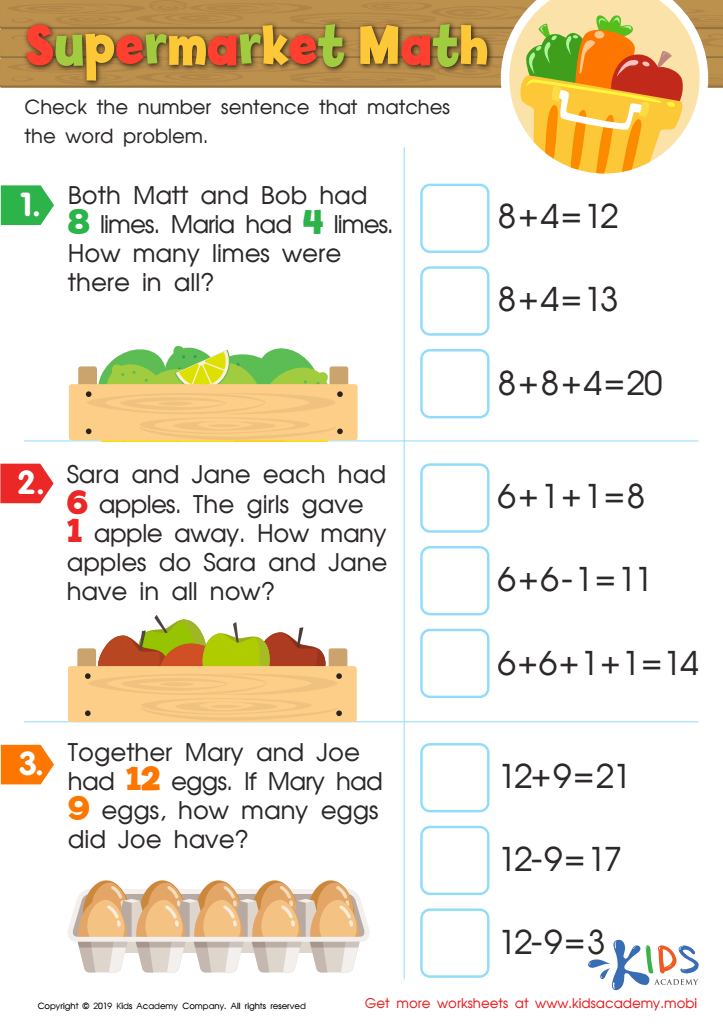
Supermarket Math Worksheet




.jpg)

Mathematics is foundational in a child's early development, and real-life application math for 3-year-olds engages them in learning in ways that produce meaningful connections. Parents and teachers should recognize the immense benefits of integrating math into everyday situations as children at this age learn best through play and exploration.
By incorporating math in real-life scenarios, such as counting toys, measuring ingredients during cooking, or sorting laundry, children begin to understand mathematical concepts instinctively. This approach promotes critical thinking and problem-solving skills, as they learn to recognize patterns and relationships in the world around them.
Furthermore, real-life application math equips children with essential vocabulary and numerical understanding that will aid their future learning. It encourages a positive attitude towards math by showing them its relevance, thus reducing math anxiety as they grow.
Engaging with math in meaningful contexts also fosters communication, cooperation, and creativity. Ultimately, the focus on practical applications makes learning enjoyable, and instills confidence in children, paving the way for a lifelong appreciation for mathematics and its role in everyday life. Parents and teachers can cultivate a strong mathematical foundation by prioritizing real-life applications that foster engagement and understanding from an early age.








