
Fine Motor Skills Matching Worksheets for 3-Year-Olds
7 filtered results
Difficulty Level
Grade
Age
-
From - To
Subject
Activity
Standards
Enhance your 3-year-old's fine motor skills with our engaging matching worksheets! Designed specifically for young learners, these worksheets focus on improving hand-eye coordination, grasping abilities, and concentration through fun activities. Children will enjoy matching items, sorting shapes, and connecting pictures, all while developing essential motor skills critical for early learning. Each worksheet is user-friendly, visually appealing, and promotes independent learning, making them perfect for home or classroom use. Foster creativity and fine motor development in your little ones today with our carefully crafted worksheets that turn learning into a joyful experience! Download now to provide endless hours of educational fun!
Favorites
With answer key
Interactive
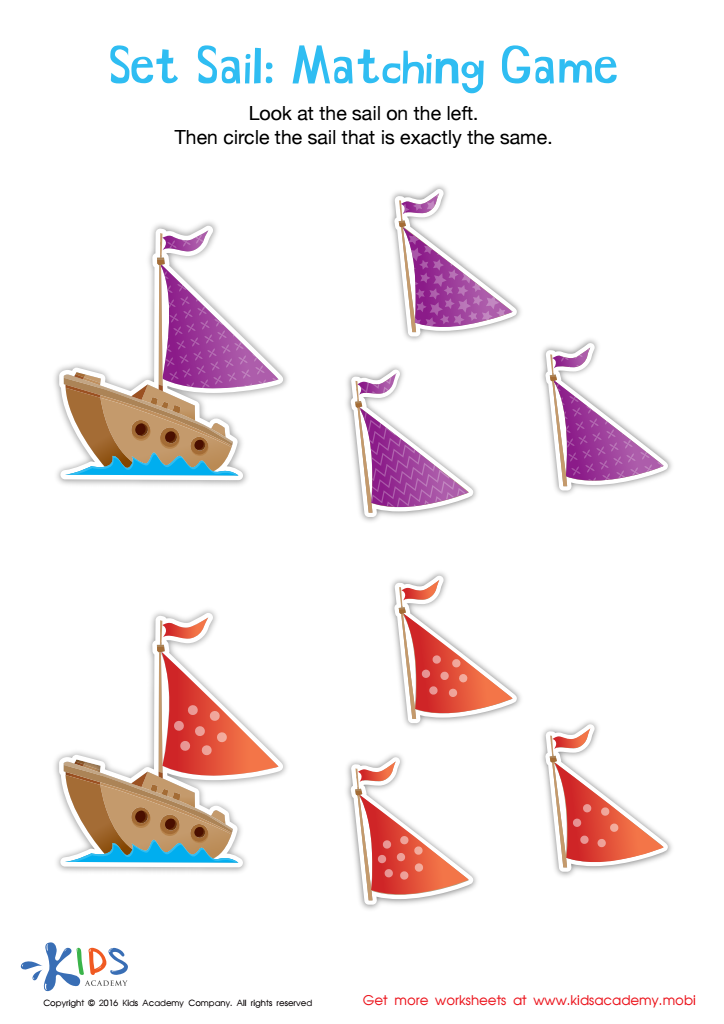
Set Sail Worksheet
Set sail with this fun matching game for toddlers! Kids will love finding the same pattern on the sails, improving their problem-solving and counting skills. Enjoy this bright and engaging worksheet!
 Assign to My Students
Set Sail Worksheet
Worksheet
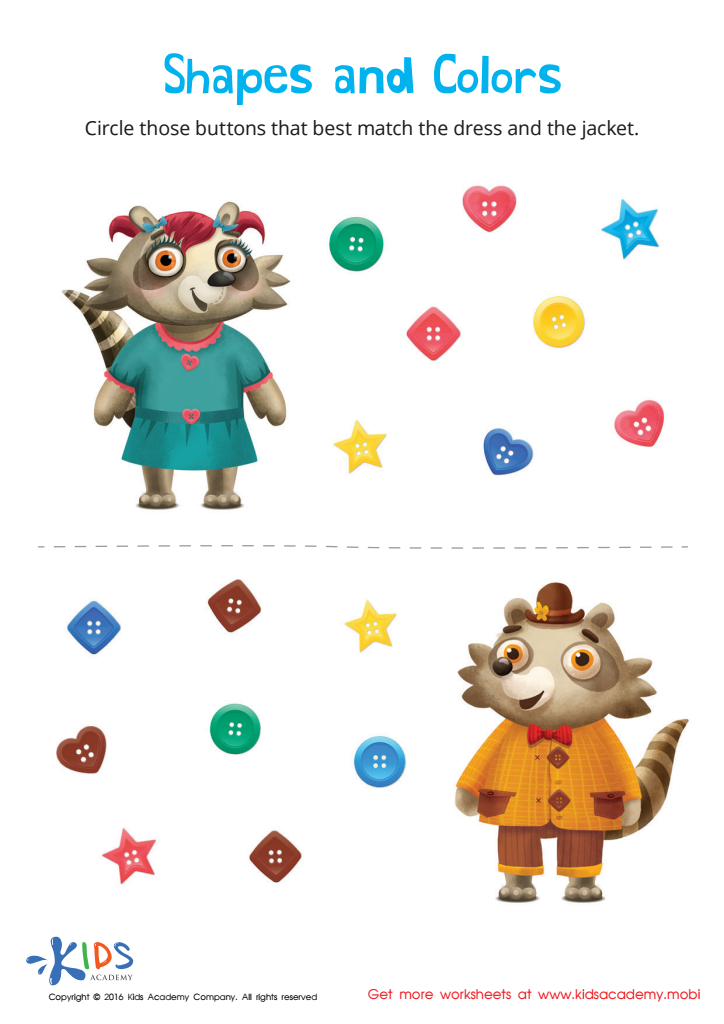
Matching: Shapes and Colors Worksheet
Help Mr. and Mrs. Raccoon find the right buttons to match their shirts! Kids will identify shapes and colors and learn to match them correctly.
Matching: Shapes and Colors Worksheet
Worksheet
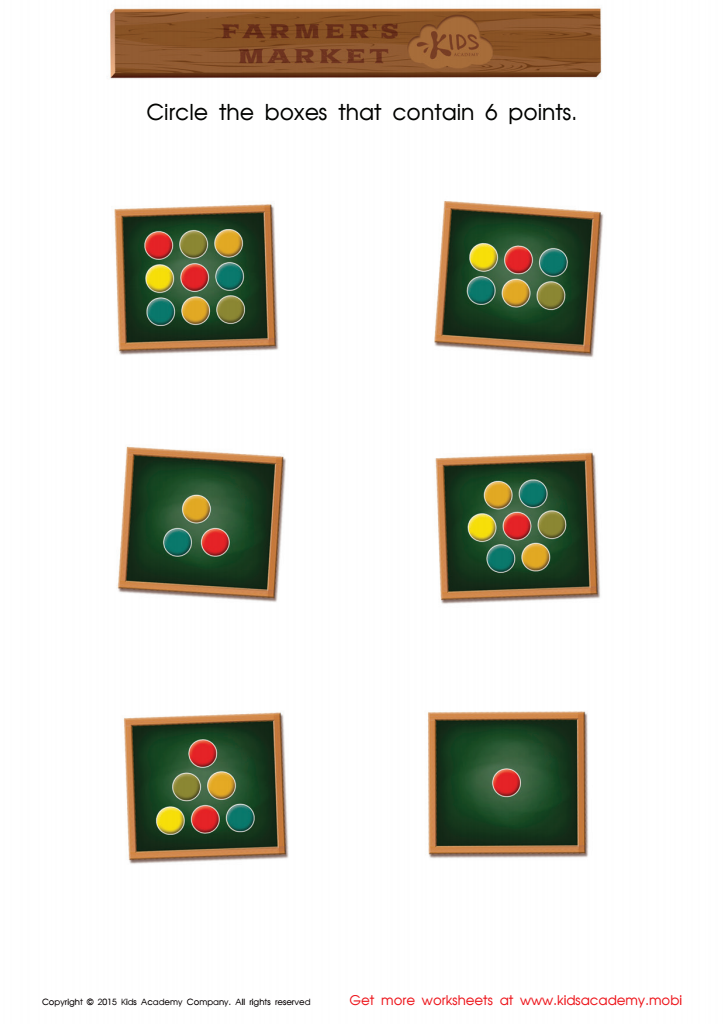
Count and Match Points 6 Math Worksheet
Help your child with mathematics by guiding them with this fun printable worksheet. They will practice counting numbers by looking at all the boxes and circling the ones containing 6 dots. Together you will gain a better understanding of mathematics.
Count and Match Points 6 Math Worksheet
Worksheet
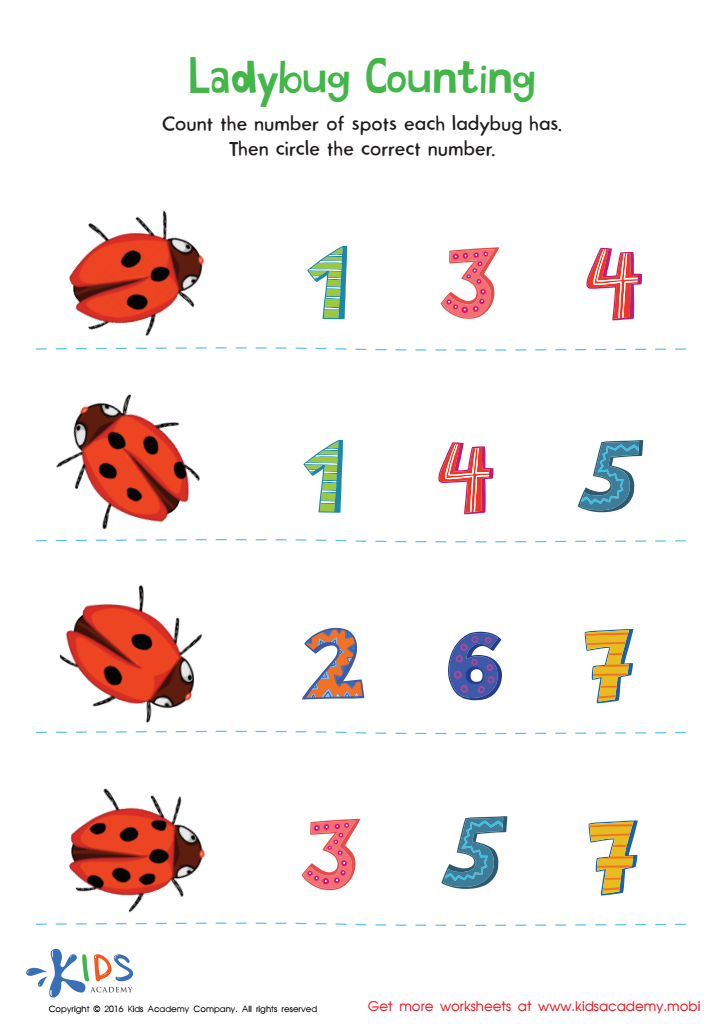
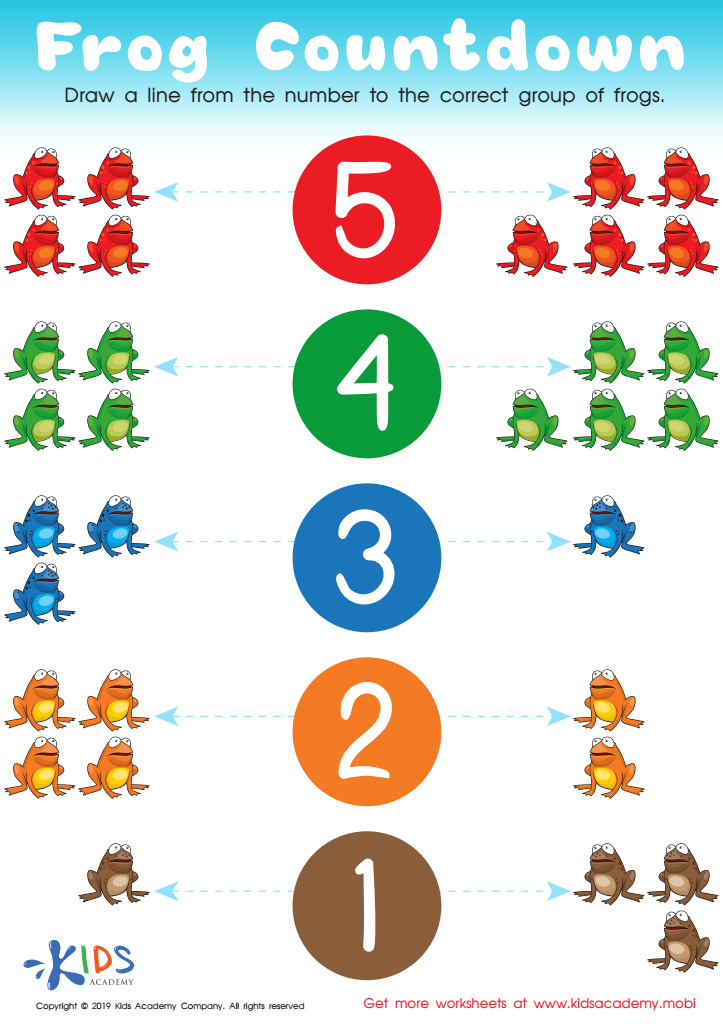
Frog Countdown Worksheet
Make learning fun for kids with traceable printouts! This exercise has kids counting frogs and drawing a line to match the number. Expand their knowledge with activities like this, beyond the basics they learn in school. Help them explore new ways of learning and make it enjoyable.
Frog Countdown Worksheet
Worksheet
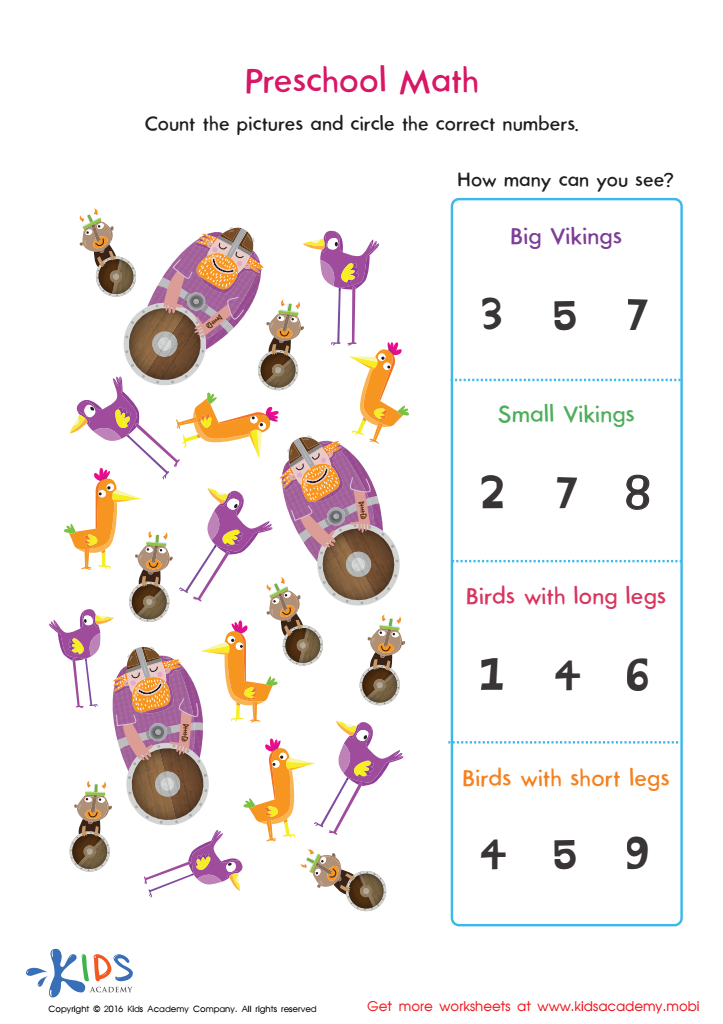
Counting Worksheet: Preschool Math
Worksheet
Join Kids Academy for Free
Who is primarily going to use this learning content?








Fine motor skills are essential for the overall development of 3-year-olds, as they underpin tasks like writing, drawing, buttoning clothes, and using utensils. Parents and teachers should prioritize fine motor skills matching because it lays the foundation for more complex skills necessary for daily life and academic success.
Engaging in fine motor skill activities—such as matching shapes or colors with small objects—enhances hand-eye coordination, dexterity, and precision. This type of play stimulates neural pathways in young children, improving cognitive development and problem-solving abilities. Moreover, matching activities foster concentration and patience, enabling children to focus better on tasks over time.
Furthermore, regular practice of fine motor skills contributes to self-confidence. Mastering matching tasks can provide a sense of achievement for 3-year-olds, encouraging them to tackle new challenges enthusiastically. It also promotes social skills when children engage in these activities with peers or family members.
Thus, emphasizing fine motor skills matching can significantly enrich a child's learning journey, equipping them with critical skills that extend far beyond early childhood, ultimately preparing them for future academic endeavors and everyday tasks. Parents and teachers can play a vital role in this by providing stimulating and supportive environments for fine motor development.








