
Understanding measurement units Measurement Worksheets for 3-Year-Olds
3 filtered results
Difficulty Level
Grade
Age
-
From - To
Subject
Activity
Standards
Our "Understanding Measurement Units" printable worksheets are designed specifically for 3-year-olds to introduce them to basic measurement concepts in a fun and engaging way. These worksheets feature age-appropriate activities that help toddlers recognize, compare, and classify various measurements such as length, height, and size. Through colorful illustrations and simple exercises, children can easily grasp the foundational skills of measurement, fostering early math development and critical thinking. Perfect for use at home or in preschool settings, our worksheets make learning measurement enjoyable and accessible for young learners. Visit today and start exploring innovative educational resources!
Favorites
With answer key
Interactive
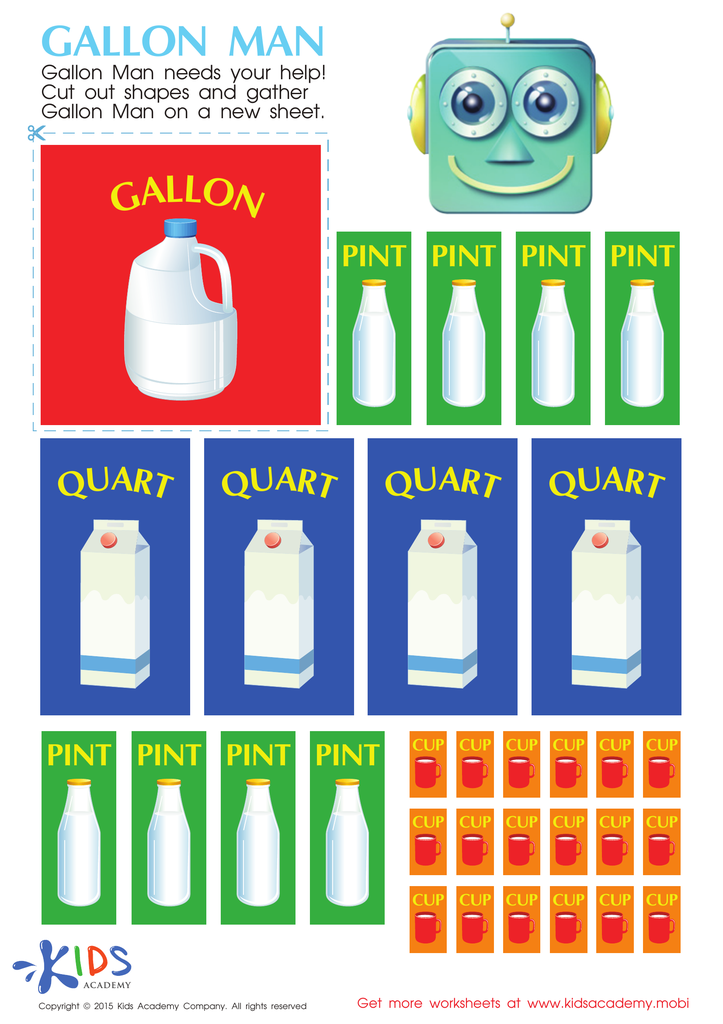
Cups, Pints and Quarts With Gallon Man Worksheet
Measurement in cups, pints, quarts and gallons has never been this fun!
Cups, Pints and Quarts With Gallon Man Worksheet
Worksheet
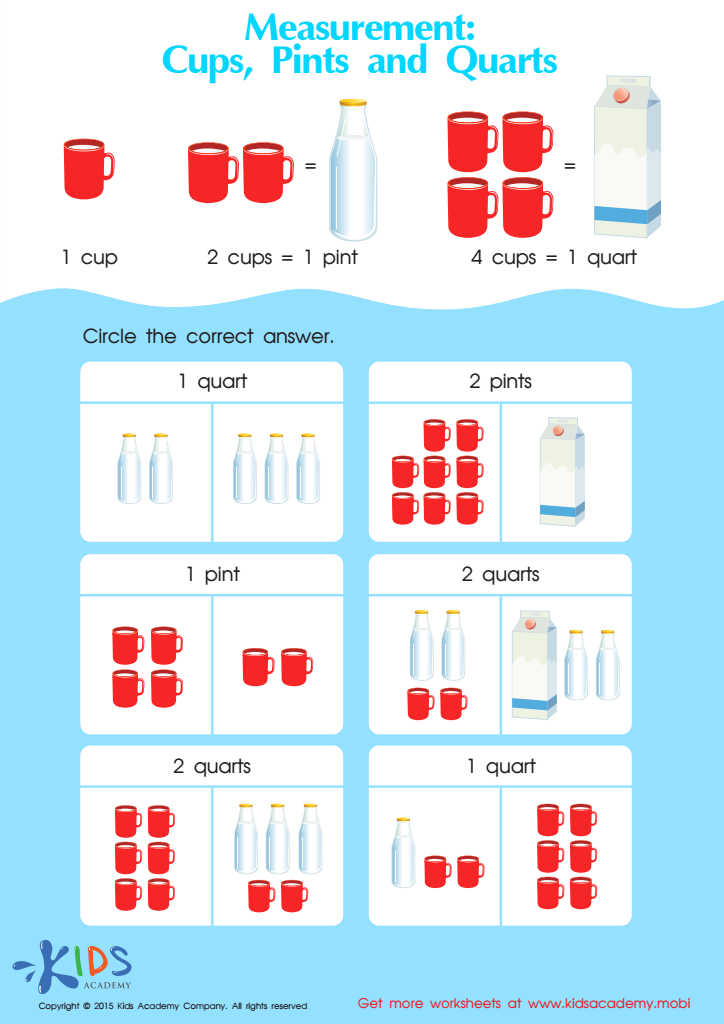
Cups, Pints and Quarts Worksheet
Let your kids explore the world of math with our worksheet! Have them count cups, pints and quarts in pictures and circle the right answer. Get even more free printable math worksheets for kindergarten on our website. Come on, join the adventure!
 Assign to My Students
Cups, Pints and Quarts Worksheet
Worksheet
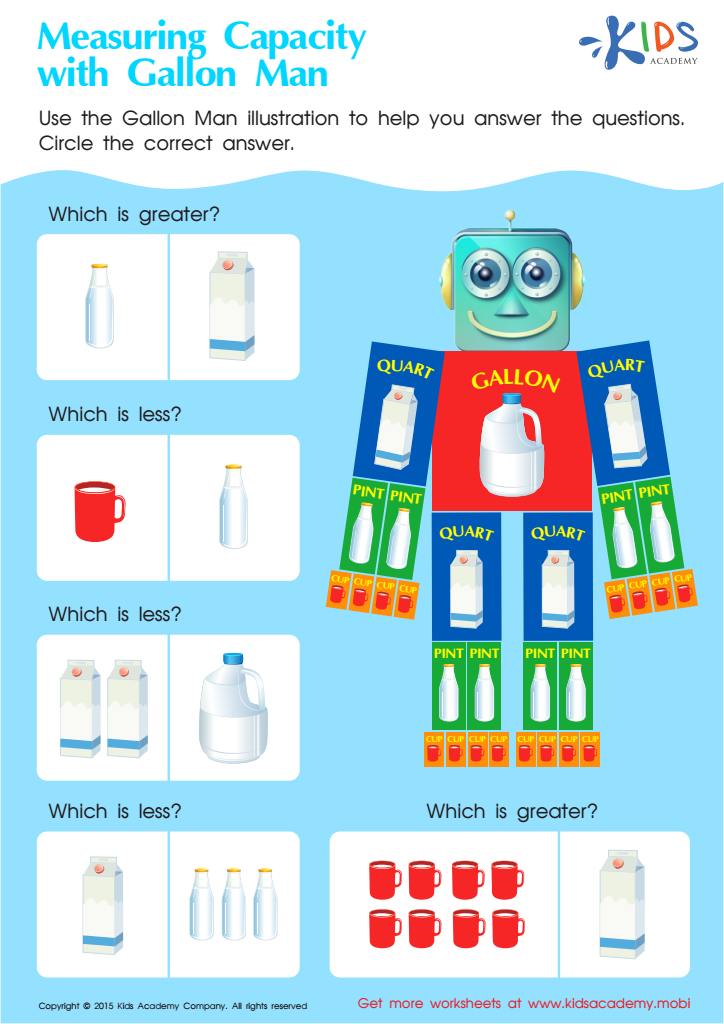
Measurement: Measuring Capacity with Gallon Man Worksheet
Check out Gallon Man to practice measuring capacity with cups, pints, quarts, and gallons. Our worksheet has questions with answers checked against Gallon Man. For more practice, visit our site for free printable math worksheets for kindergarten and learn math with fun!
Measurement: Measuring Capacity with Gallon Man Worksheet
Worksheet
Join Kids Academy for Free
Who is primarily going to use this learning content?








Understanding measurement units is fundamental to a child's cognitive and practical development, even at the tender age of three. Early exposure to concepts of measurement helps children make sense of their world by enabling them to compare and categorize objects, improving their observational skills. This understanding sets a crucial mathematical foundation necessary for more complex math skills later in life. Parents and teachers should care about teaching measurement units to 3-year-olds because these concepts integrate into daily activities seamlessly. For instance, whether they're pouring water into different size cups during playtime or comparing the heights of toys, children begin to develop important skills such as estimating, counting, and spatial awareness.
Teaching these concepts early on can also encourage language development. Talking about measurements provides opportunities to expand vocabulary with terms like “big,” “small,” “tall,” “short,” and various unit names such as "inches" or "liters." This enhanced vocabulary helps youngsters articulate and understand their surroundings better. Moreover, grasping measurement units early can foster problem-solving skills. By handling practical tasks, like determining whether a toy will fit into a specific box, children learn to approach problems in a structured manner. Therefore, cultivating an early acquaintance with measurement units sets the stage for academic confidence and everyday competence, benefiting children far beyond their preschool years.








