Logical Reasoning Two-step Word Problems Worksheets for 3-Year-Olds
3 filtered results
-
From - To
Introduce your 3-year-old to the basics of critical thinking with our "Logical Reasoning Two-step Word Problems" worksheets. Specially designed for young minds, these engaging printable sheets combine fun and learning to develop early cognitive skills. Each worksheet presents captivating scenarios that require children's logical reasoning to solve two-step problems. Perfect for strengthening foundational math concepts while enhancing problem-solving abilities, our dynamic activities encourage kids to think sequentially and draw simple conclusions. These worksheets are ideal for parents and educators seeking effective ways to introduce deep thinking in a playful, age-appropriate manner. Explore our collection and empower your child’s early learning journey today!
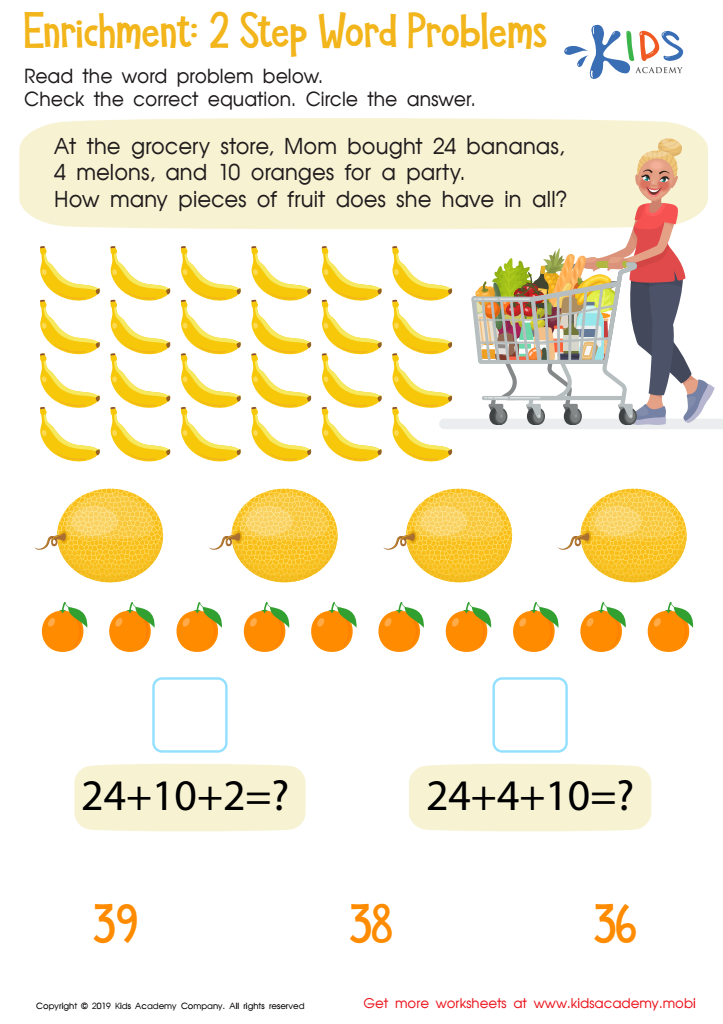
Enrichment -2 Step Word Problems Worksheet
 Assign to My Students
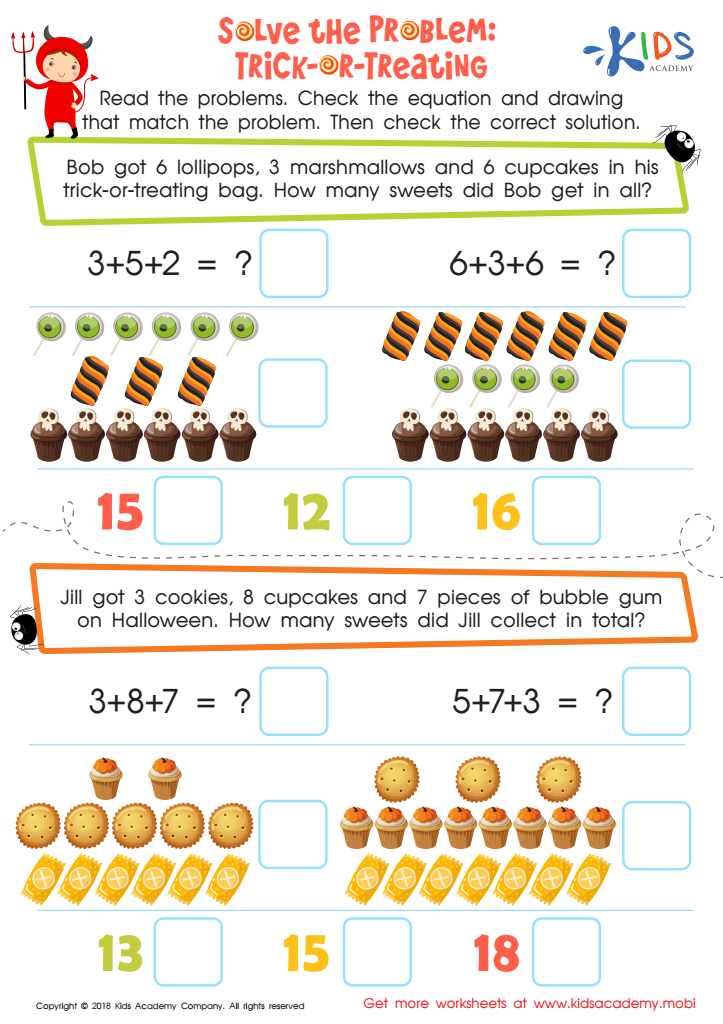
Solve the Problem: Trick–or–treating Worksheet
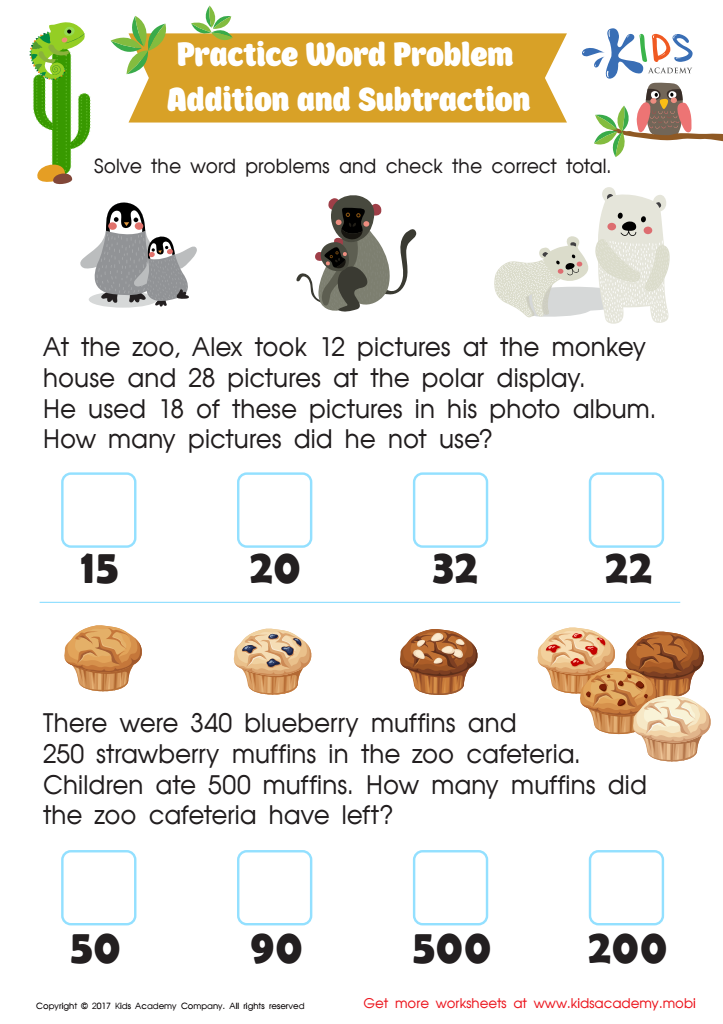
Addition and Subtraction: Word Problems Worksheet



Exploring logical reasoning two-step word problems with 3-year-olds lays a crucial foundation for their cognitive development. At this early stage, children's brains are highly receptive to new information, and engaging them in thought-provoking activities enhances their critical thinking and problem-solving skills. Two-step word problems, while simplified for their age, encourage kids to follow sequential instructions and connect ideas, fostering their ability to understand cause-effect relationships.
For parents and teachers, focusing on these problems helps in observational assessment, noting how a child approaches and resolves tasks. This can highlight areas where a child excels or may need more support, offering insights into their individual learning styles and cognitive strengths. Additionally, nurturing these skills early on helps in building future readiness for more complex mathematical concepts and general academic rigor.
Moreover, addressing two-step word problems aids in vocabulary expansion and comprehension, as children must grasp problem narratives and specific terms. It also aids in the emotional domain by instilling a sense of accomplishment and confidence when they reach solutions, setting positive attitudes towards learning and challenges.
In essence, integrating logical reasoning tasks into the early educational journey propels cognitive growth, academic readiness, and emotional resilience, laying a robust foundation for lifelong learning.