Coloring skills Building Vocabulary Worksheets for 3-Year-Olds
3 filtered results
-
From - To
Enhance your 3-year-old's vocabulary with our engaging Coloring Skills Building Vocabulary Worksheets! Designed to make learning fun, these worksheets combine colorful illustrations with essential language development exercises. As children color, they’ll discover new words and concepts, fostering creativity while expanding their vocabulary. Our worksheets cover a variety of themes, making it easy for little learners to connect colors with the terms they represent. Perfect for parents and educators, these resources cater to early literacy skills through interactive play. Download today to give your child a head start in building a solid vocabulary foundation while enjoying the joy of coloring!
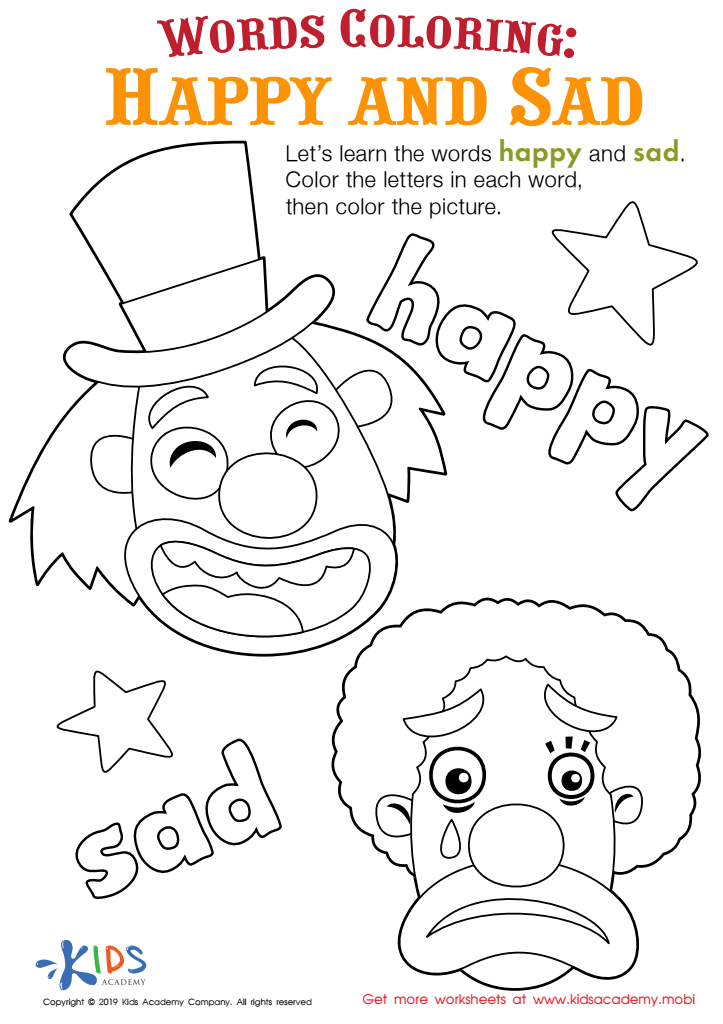
Happy and Sad Words Coloring Worksheet
 Assign to My Students











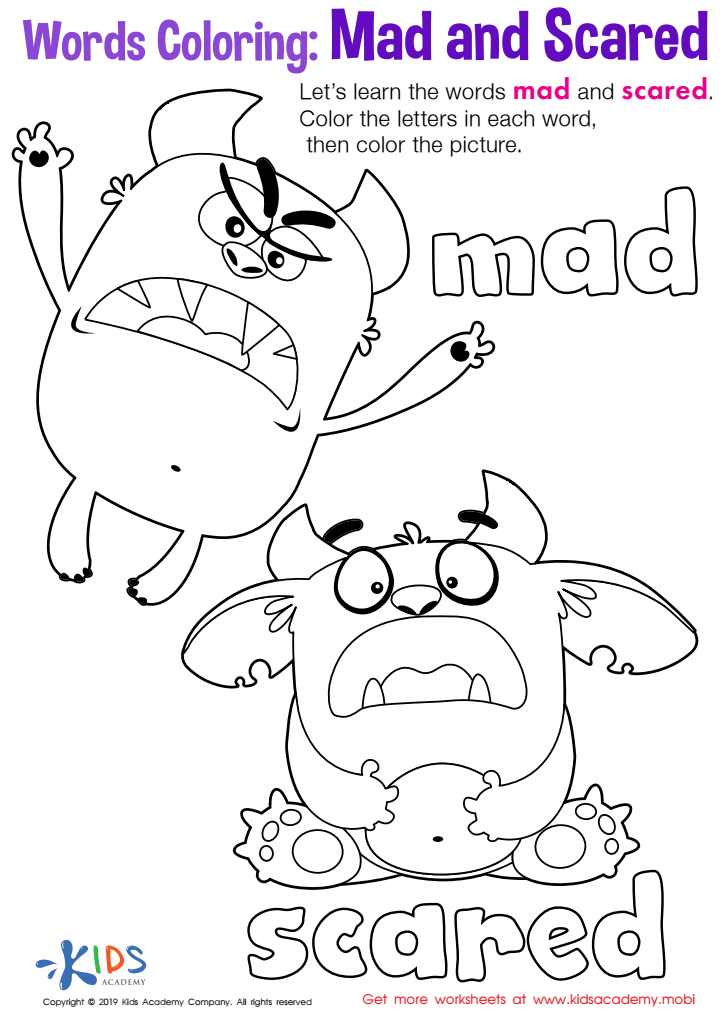
Mad and Scared Words Coloring Worksheet
Assign to My Students
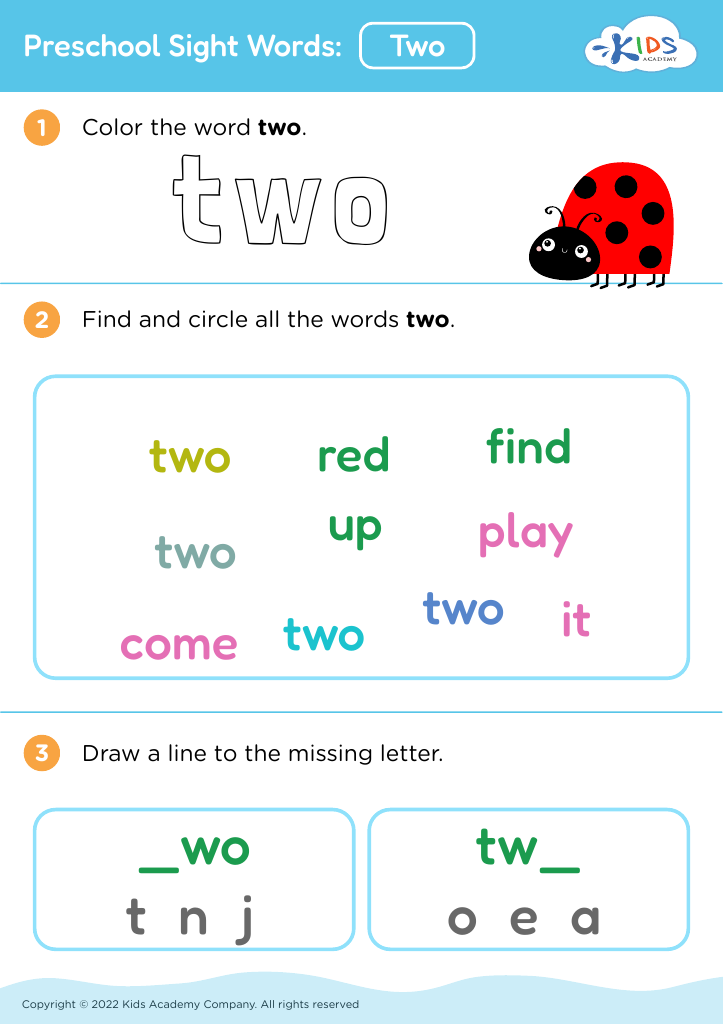








Coloring skills play a crucial role in the development of vocabulary in 3-year-olds, and both parents and teachers should take an active interest in fostering this connection. Engaging in coloring activities not only hones fine motor skills but also encourages creativity and expression. As children color, they often talk about their choices, describing colors, shapes, and the objects they are representing. This verbal expression expands their vocabulary, allowing them to articulate thoughts and emotions.
Moreover, when caregivers participate in coloring sessions, they have the opportunity to introduce new words related to colors, concepts, and items represented in the drawings. For instance, asking questions like, "What color is this tree?" or "Can you find something else that is green?" stimulates not only cognitive but also linguistic development.
Additionally, coloring can serve as a springboard for discussions about themes, such as nature, seasons, or emotions, enriching the child’s understanding of the world around them. By creating a supportive environment where coloring and vocabulary growth intersect, parents and teachers can significantly impact a child's language acquisition, paving the way for improved communication skills in the future. Encouraging this interplay establishes essential building blocks for literacy and overall cognitive development.








