Hand-eye Coordination Building Vocabulary Worksheets for 3-Year-Olds
3 filtered results
-
From - To
Enhance your 3-year-old’s vocabulary and motor skills with our Hand-eye Coordination Building Vocabulary Worksheets! Carefully designed for preschoolers, these engaging activities blend word learning with fun, hands-on exercises. Young learners can trace, match, and color within outlines to boost hand-eye coordination while expanding their vocabulary. With playful themes and simple tasks, our worksheets maintain children’s interest, making learning both enjoyable and effective. Perfect for early education at home or in preschool classrooms, these resources support key developmental milestones. Visit Kids Academy to easily print and start your journey towards your child's brighter academic future!
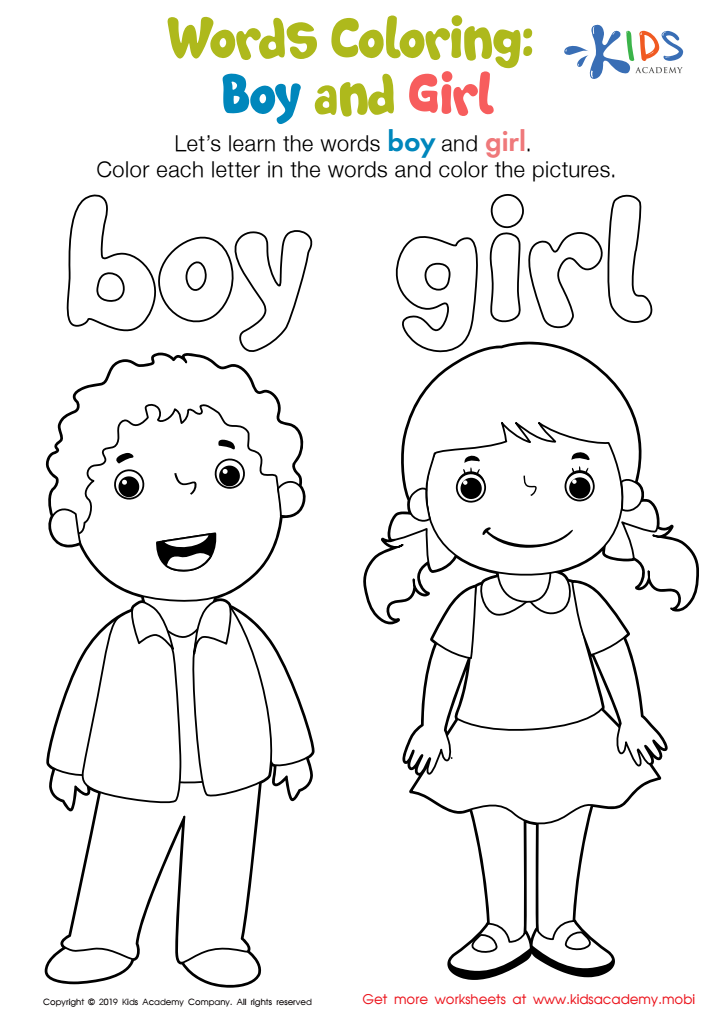
Boy and Girl Words Coloring Worksheet
 Assign to My Students











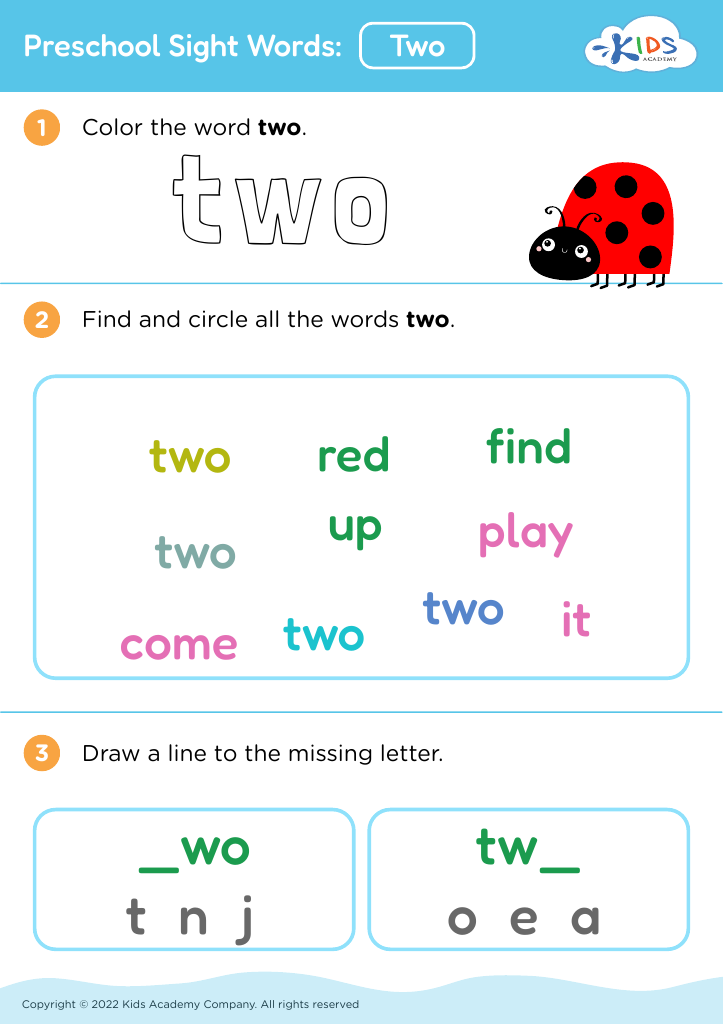
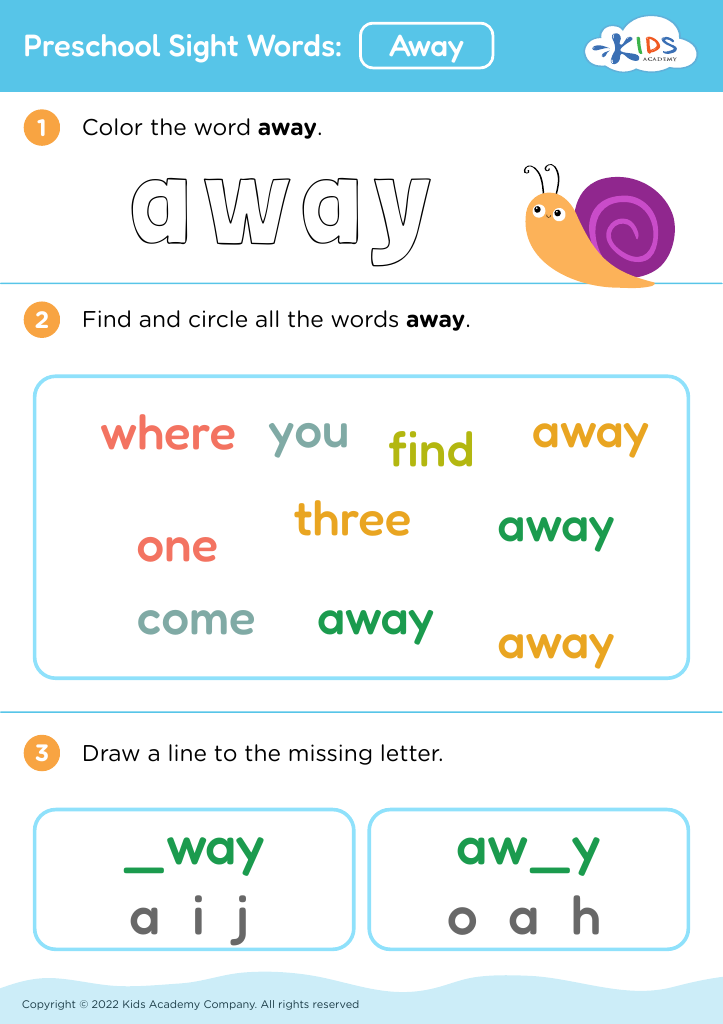






.jpg)

Parents and teachers should prioritize building hand-eye coordination and vocabulary for 3-year-olds as these skills are fundamental to early childhood development. Hand-eye coordination, which involves the brain directing hand and eye movements for tasks such as grasping, drawing, and writing, underpins many crucial daily activities. Strengthening this skill at an early age helps children proficiently handle objects, improve their motor skills, and later succeed in academic and extracurricular tasks like writing, sports, and playing musical instruments.
Similarly, developing a rich vocabulary at this stage lays the foundation for effective communication and literacy. At three years old, children's brains are highly receptive to language; enhancing their vocabulary helps improve their ability to express thoughts and emotions, understand instructions, and engage in social interactions. A robust vocabulary is strongly linked to later reading comprehension and academic success. Through simple activities like reading together, playing word games, and interactive dialogues, parents and teachers can significantly boost a child's language skills.
By focusing on hand-eye coordination and vocabulary development, caregivers help set the stage for well-rounded growth, ensuring that children are equipped with essential skills needed for future learning and everyday interactions.








