Letter formation ABC Order Worksheets for Ages 4-6
3 filtered results
Difficulty Level
Grade
Age
-
From - To
Subject
Activity
Standards
Discover our engaging Letter Formation ABC Order Worksheets, specially designed for children aged 4-6! These fun and interactive activities not only help young learners master the alphabet but also enhance their fine motor skills. Each worksheet focuses on the proper formation of letters, guiding kids to write accurately while reinforcing their understanding of alphabetical order. Perfect for home or classroom use, these resources support early literacy development, making learning enjoyable and effective. Encourage your child’s writing journey today with our exciting worksheets, tailored to inspire creativity and confidence in every letter they write! Explore our collection and watch them flourish!
Favorites
With answer key
Interactive
Letter A Tracing Page
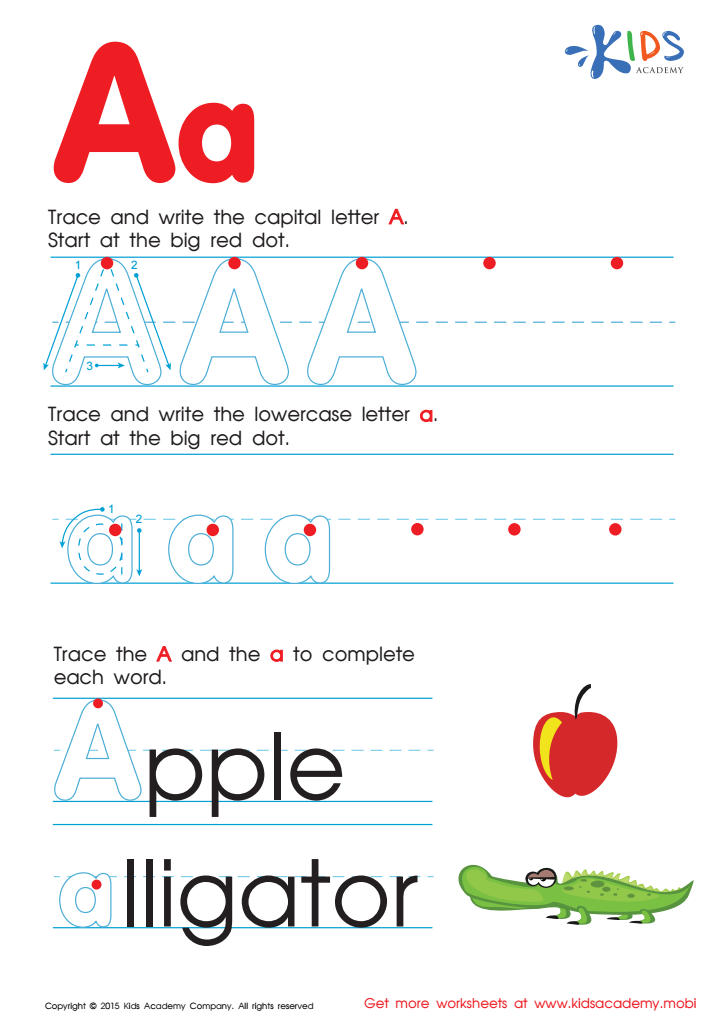
Trace and write the letter "A"! Start with the big red dot, then do the capital and lowercase versions. Then write it again with two words - apple and alligator. Download more tracing worksheets at Kids Academy.
 Assign to My Students
Letter A Tracing Page
Worksheet




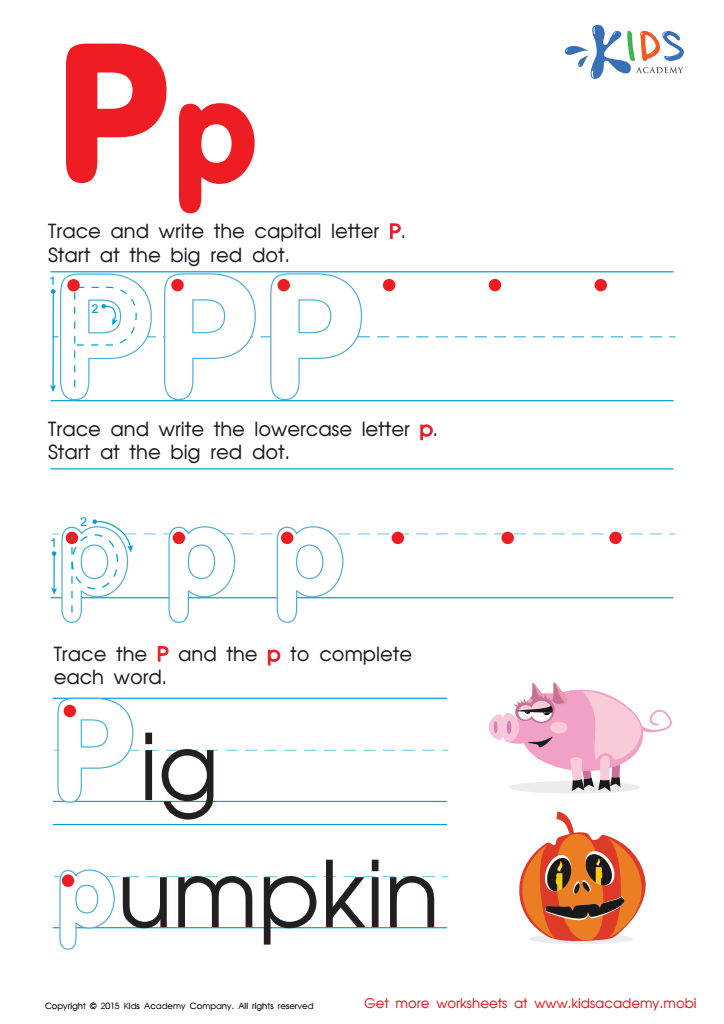
Letter P Tracing Page
Trace the lines from the red dot to learn to write "P"! Then practice this letter with the fun activities: complete the word "Pig" and "Pumpkin". Check out Kids Academy to get more free ABC worksheets.
Letter P Tracing Page
Worksheet
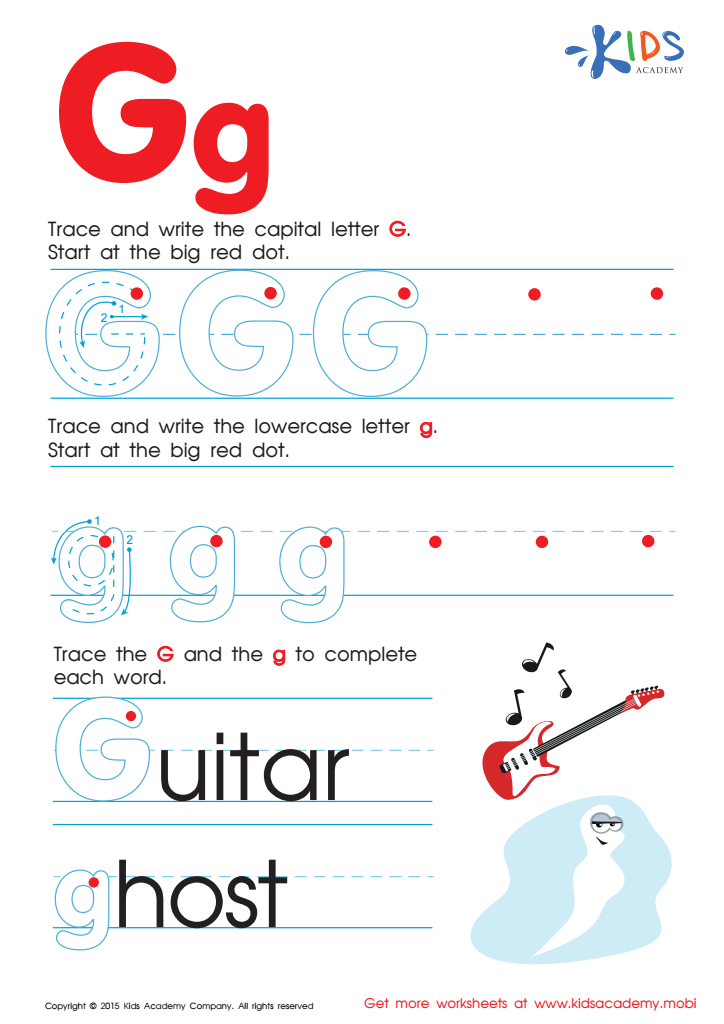
Letter G Tracing Page
Get ready to trace the letter "G" – with a big red spot as the starting point, trace the lines and watch the letter appear. Uppercase and lowercase letters are both easy and fun to write. Give it a go and finish the word "go". Play the guitar and say "hello" to a funny ghost!
Letter G Tracing Page
Worksheet
Join Kids Academy for Free
Who is primarily going to use this learning content?








Letter formation and ABC order are foundational skills for young learners, setting the stage for successful literacy development. For children aged 4-6, mastering proper letter formation not only develops fine motor skills but also fosters a sense of ownership and pride in their writing. When children learn to write letters correctly, they can express themselves more clearly and gain confidence in their abilities, which is essential for their overall development.
Understanding ABC order introduces children to the concept of organizing information, which enhances their cognitive skills. It helps them recognize letter names and sounds, reinforcing phonemic awareness—crucial for early reading. Familiarity with ABC order aids in vocabulary acquisition, as children learn to categorize words and can recall them more easily, supporting their communication skills.
Moreover, mastering these skills encourages engagement in classroom activities. Teachers and parents who prioritize teaching letter formation and ABC order promote essential literacy milestones that not only benefit language arts but are also applicable across subjects. By nurturing these skills early on, adults empower children to become confident learners equipped for future academic success. Ultimately, caring about these foundational skills is about laying the groundwork for lifelong learning and effective communication.