Phonics Skills Consonant Blends Worksheets for Ages 4-6
4 filtered results
Difficulty Level
Grade
Age
-
From - To
Subject
Activity
Standards
Boost your child's reading proficiency with our engaging Phonics Skills Consonant Blends Worksheets, tailored for ages 4-6. These vibrant, interactive printables support early learners in mastering essential blending techniques, enhancing both their reading and pronunciation abilities. Through fun activities involving common consonant blends like “bl,” “cl,” “st,” and more, children will develop a strong phonics foundation crucial for literacy success. Perfect for classroom or at-home learning, these worksheets turn phonics practice into an exciting adventure. Trust Kids Academy to make learning seamless and joyful for your young ones. Download today and watch your child's reading skills soar!
Favorites
With answer key
Interactive
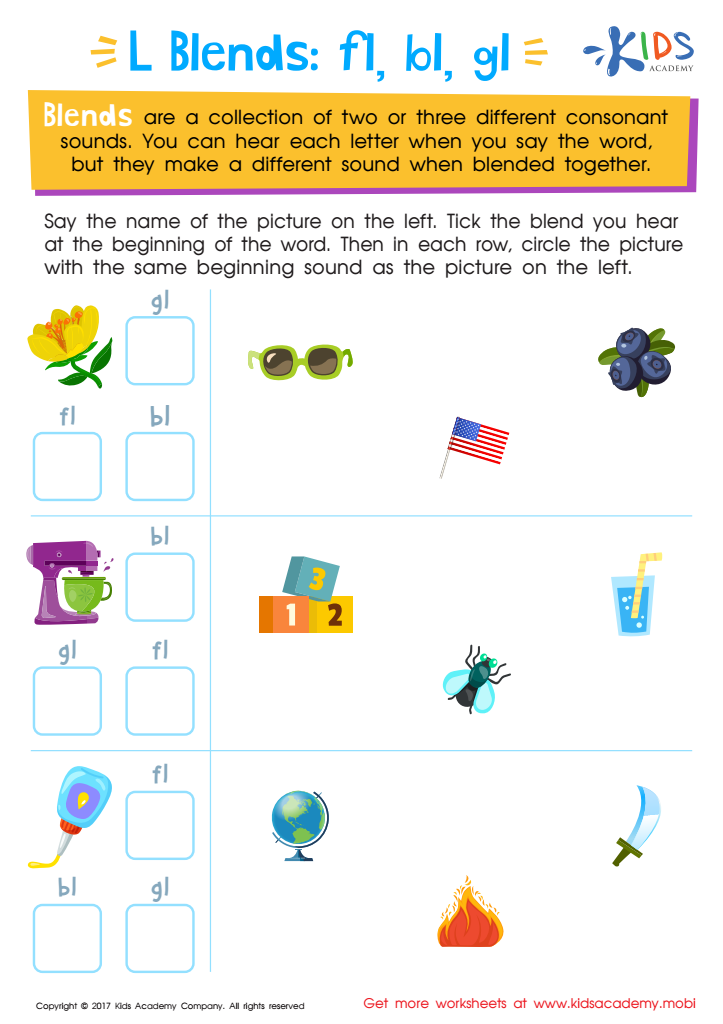
Blending Consonants: "Fl", "Bl" and "Gl" Printable
Help your child master consonant blends Fl, Bl, and Gl with this printable worksheet. Find words associated with the pictures and learn to better understand the difference between consonant blends. Vibrant images motivate and aid in learning. Download now for improved phonics success!
 Assign to My Students
Blending Consonants: "Fl", "Bl" and "Gl" Printable
Worksheet
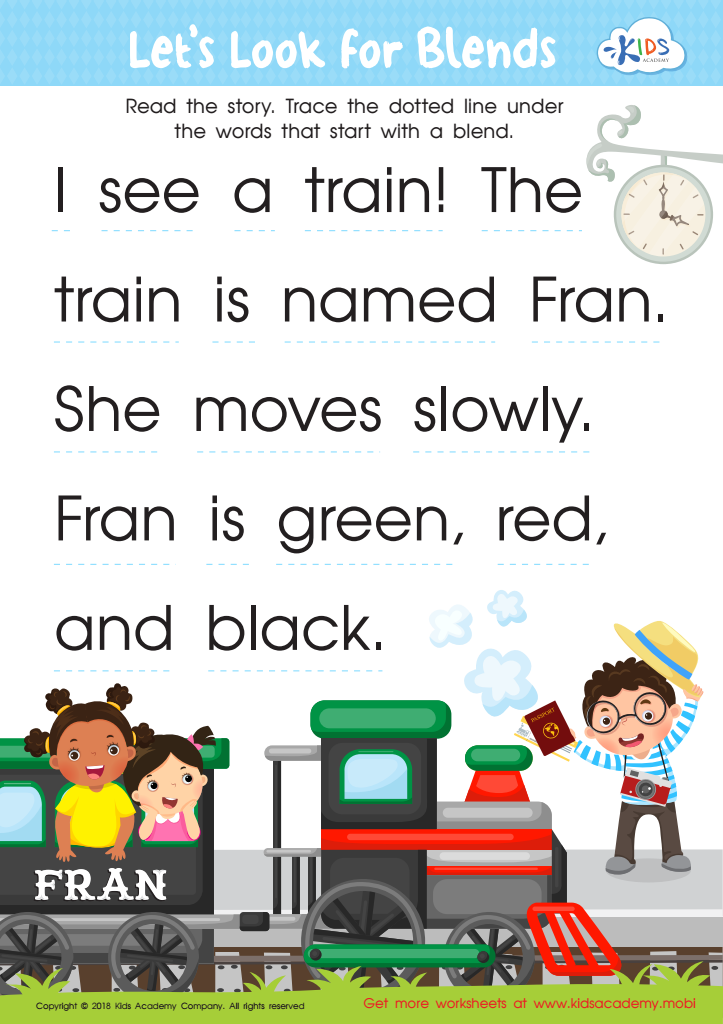
Let's Look for Blends Worksheet
Does your child love trains? Get them to read the story or help them read it aloud. Ask them to trace the words that start with blends on the dotted lines. This exercise will help them improve their blend-identifying skills!
Let's Look for Blends Worksheet
Worksheet
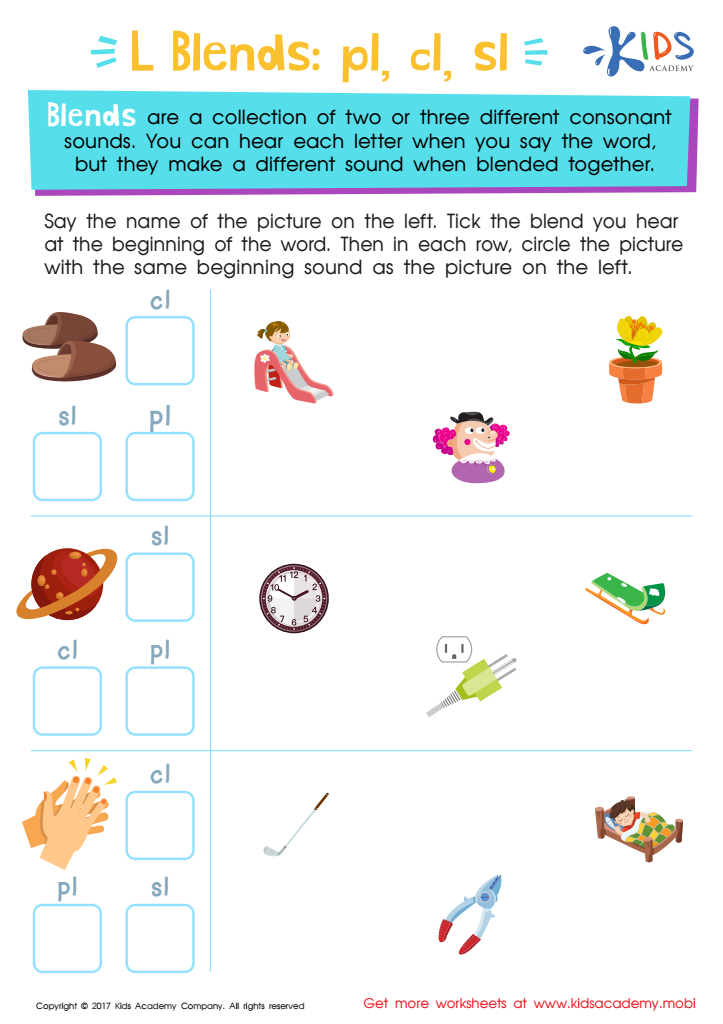
L Blends: "Pl", "Cl" and "Sl" Printable
This printable worksheet will help your child recognize and identify the Pl, Cl, and Sl consonant blends, sound them out, and identify them in print. Improve your child's reading and writing skills with fun and colorful phonics practice!
L Blends: "Pl", "Cl" and "Sl" Printable
Worksheet
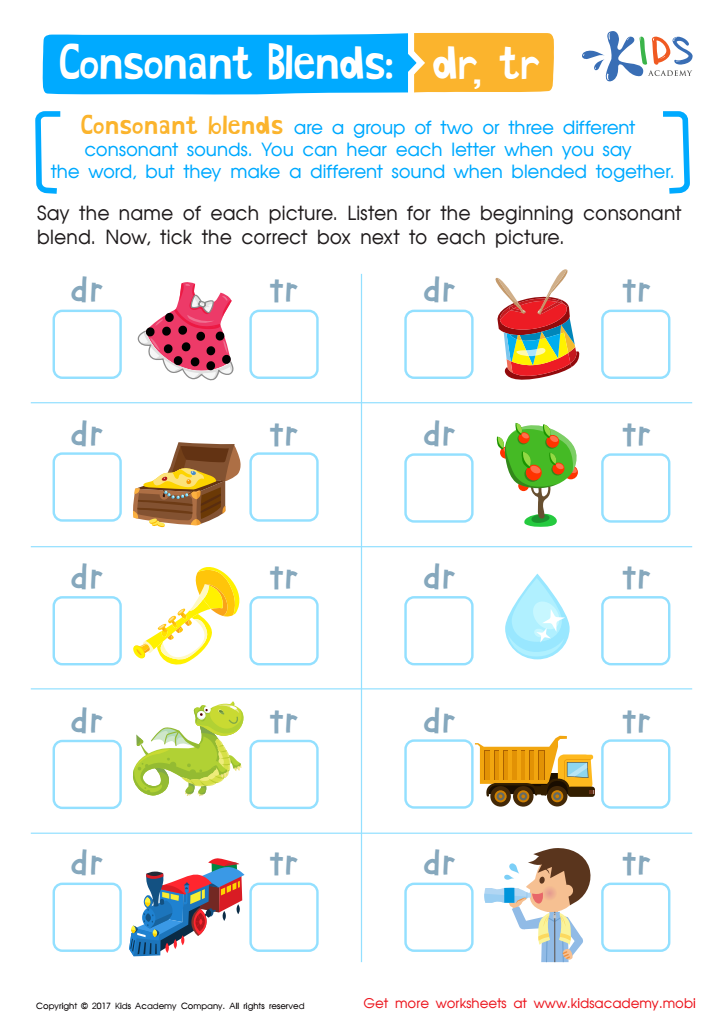
Consonant Blends: "Dr" and "Tr" Printable
Pictures of the words provide a visual cue, and sound-outs help with auditory cues.
Consonant Blends: "Dr" and "Tr" Printable
Worksheet
Join Kids Academy for Free
Who is primarily going to use this learning content?





Phonics skills, particularly those involving consonant blends, are foundational for young children ages 4-6 learning to read. Consonant blends, such as "bl," "st," and "pr," consist of two or more consonants grouped together, where each consonant retains its sound. Mastering these blends is crucial for several reasons.
Firstly, phonics awareness contributes significantly to a child’s reading fluency. Understanding how consonant blends work helps children decode words more rapidly and accurately, paving the way for smoother and more confident reading. This is essential for overall literacy development, as early reading proficiency is closely linked to later academic success in various subjects.
Secondly, learning consonant blends builds oral language skills. Children get better at phonological processing—identifying and manipulating sounds within words—which directly impacts their spelling and writing abilities. Strong phonics skills enable children to spell and write words correctly, fostering clearer communication and more advanced writing tasks in later grades.
Moreover, early mastery of phonics and consonant blends boosts a child's self-esteem and motivation. When children can read and write effectively, they feel more competent and are likely to develop a lifelong love of reading. Therefore, parents and teachers should prioritize phonics skills, especially consonant blends, to support holistic literacy and cognitive development in early childhood.