Sound identification Elementary Phonics Worksheets for Ages 4-6
4 filtered results
-
From - To
Discover our engaging "Sound Identification Elementary Phonics Worksheets" designed for children aged 4-6. These interactive resources help young learners enhance their phonemic awareness by focusing on recognizing and identifying sounds in various contexts. Our worksheets cover essential skills through fun activities that capture children's attention and encourage their curiosity in reading and language. Perfect for both classroom use and at-home learning, each worksheet fosters confidence as children practice phonics skills vital for early literacy. Help your little ones build a strong foundation in reading with our easy-to-use and vibrant sound identification worksheets today!
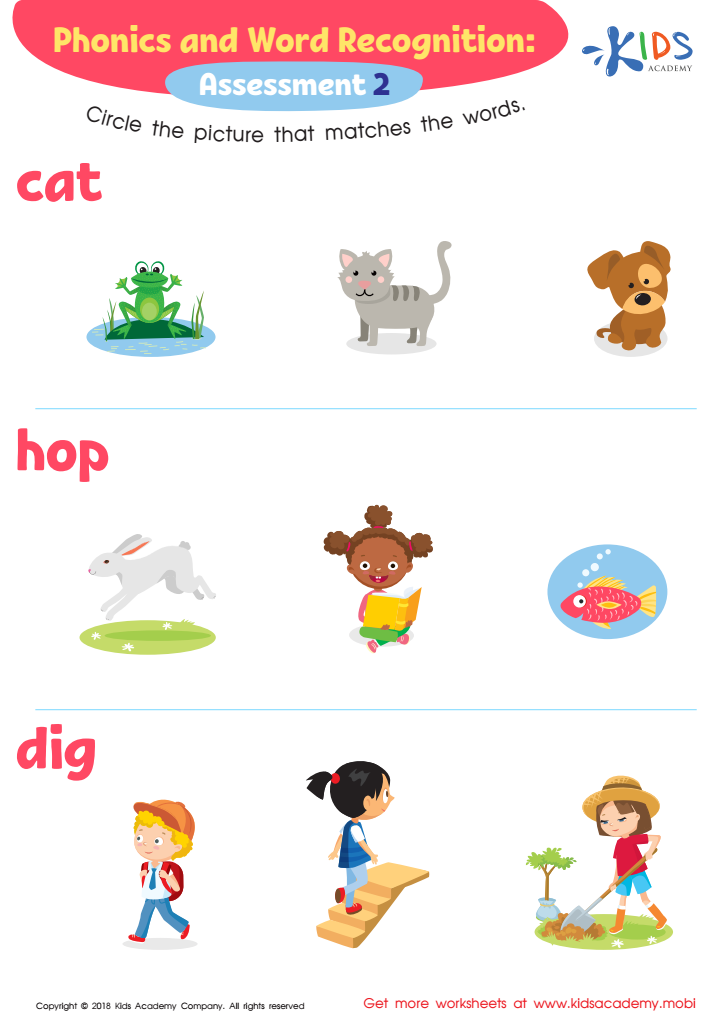
Phonological Awareness: Assessment 2 ELA Worksheet
 Assign to My Students
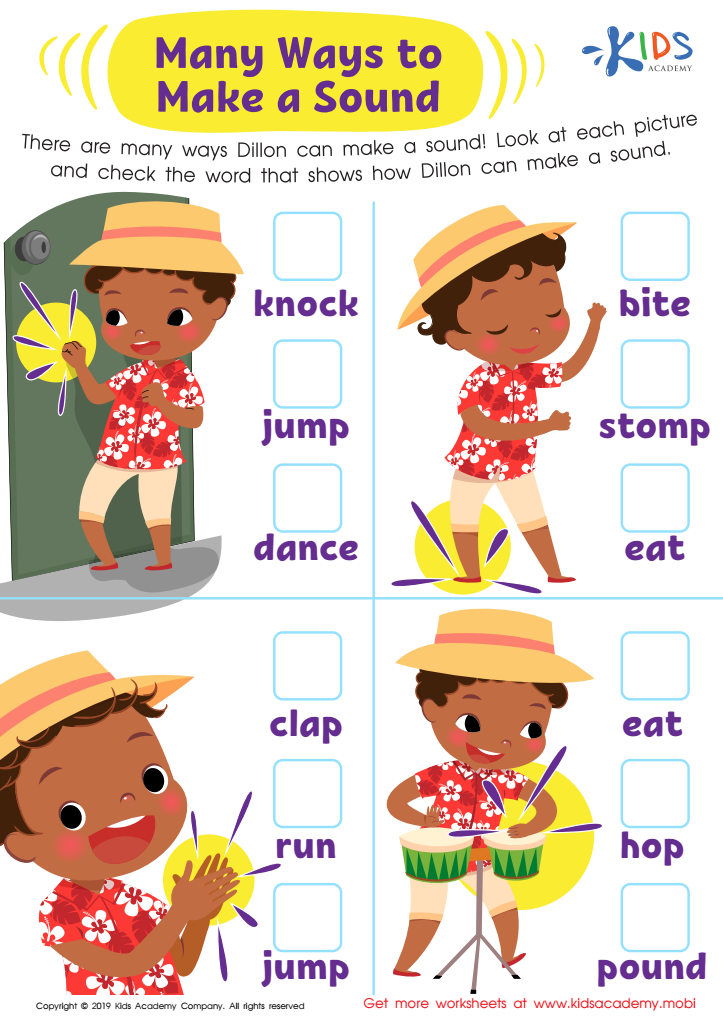
Many Ways to Make a Sound Worksheet
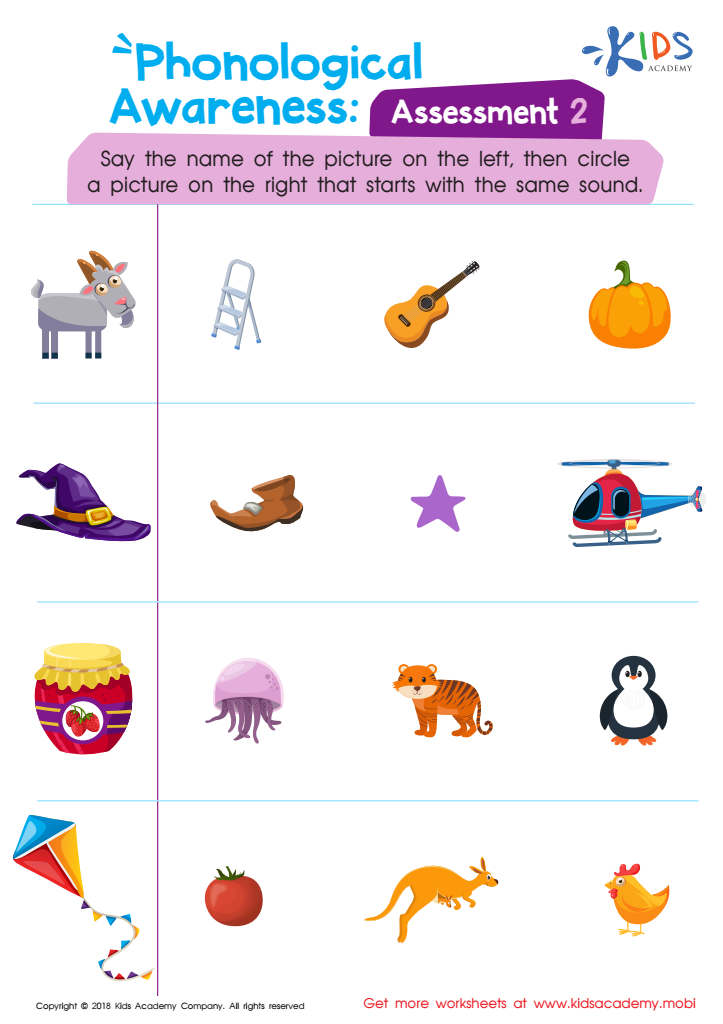
Phonological Awareness: Assessment 2 Worksheet
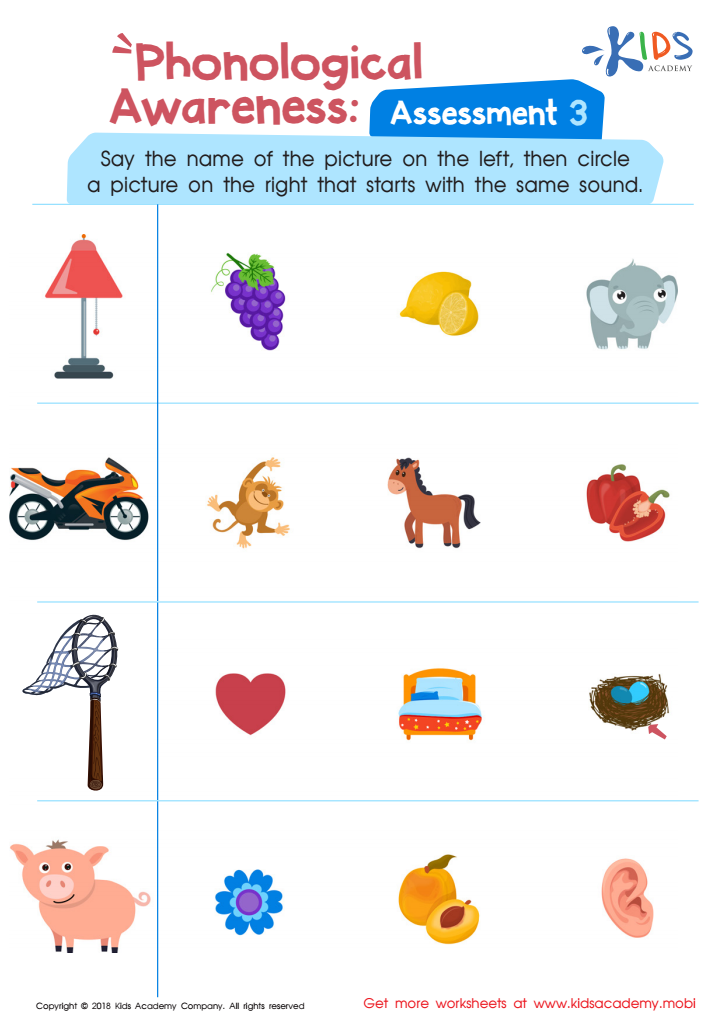
Phonological Awareness: Assessment 3 Worksheet




Sound identification in elementary phonics is a foundational skill essential for young learners aged 4-6. Understanding sounds helps children decode written language, making reading and writing accessible and enjoyable. Mastery of phonemic awareness—hearing, identifying, and manipulating sounds—paves the way for literacy development. Children who can identify sounds are better equipped to blend letters, enabling them to read words independently and with confidence.
Parents and teachers should care about sound identification because it directly impacts a child's overall academic success. Early phonics instruction fosters critical early literacy skills which correlate with future reading achievement. Additionally, mastery of these skills helps develop a positive relationship with reading, encouraging curiosity and a lifelong love of learning.
Furthermore, strong phonemic awareness helps children improve their communication abilities. Children equipped with sound identification skills can articulate their thoughts more effectively, contributing to better social interactions and self-expression.
Investing time in sound identification from a young age creates a solid literacy foundation, mitigating later reading difficulties. For both educators and parents, emphasizing this skill is crucial for setting children on a path toward academic success and heightened self-esteem. By fostering sound identification, we nurture confident learners prepared for future challenges.







