Filters

6 filtered results

Clear all filters
Favorites
With answer key
Interactive

6 filtered results

Difficulty Level

Grade


Discover our engaging Spelling Practice Elementary Phonics Worksheets designed specifically for children aged 4-6. These worksheets provide a fun and effective way to enhance phonics skills and promote early literacy. With vibrant visuals and interactive activities, young learners will build essential spelling abilities while exploring sounds and letters. The worksheets are structured to cater to varying skill levels, ensuring that each child receives the right challenge to foster their development. Perfect for classroom use or at-home learning, these resources make phonics enjoyable, laying a strong foundation for lifelong reading and writing success. Start the spelling adventure today!

Check out this FREE Trial Lesson on Elementary Phonics for age 4-6!

Sight Word Review

Favorites
With answer key
Interactive
  • 4-6
  • Spelling practice
  • Elementary Phonics
Words: Assessment 2 Worksheet

Words: Assessment 2 Worksheet

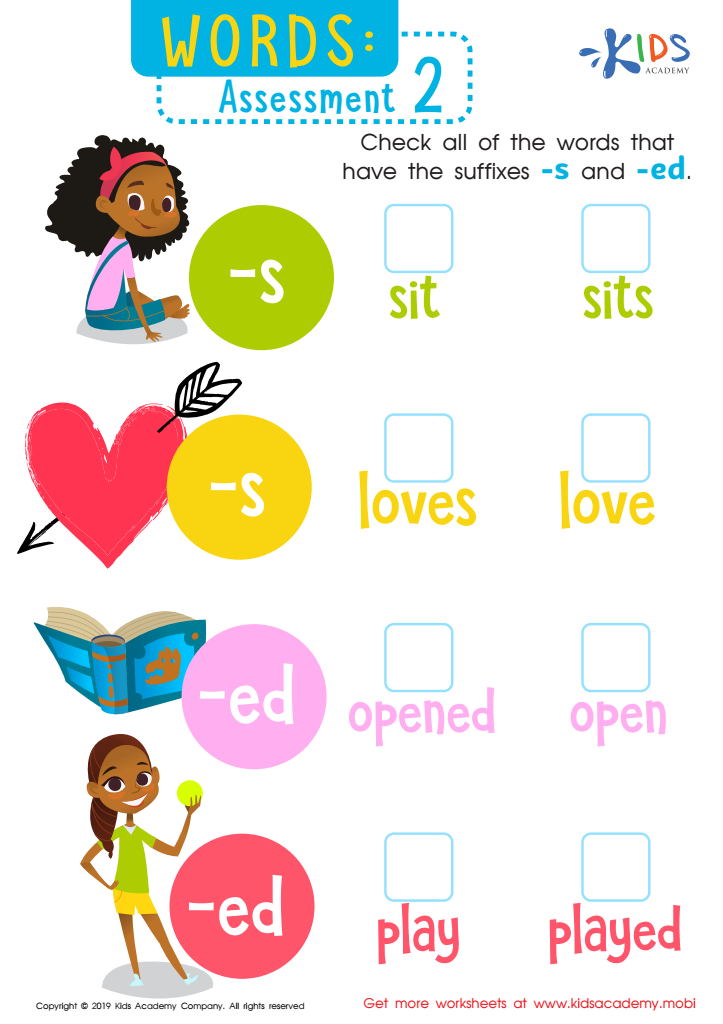
Test your child’s knowledge of -s and -ed word endings with this fun worksheet! They'll look at images and read the words, then choose the correct suffix to finish each one. Vivid illustrations make this an enjoyable learning experience!
Words: Assessment 2 Worksheet
Worksheet
Words: Assessment 4 Worksheet

Words: Assessment 4 Worksheet

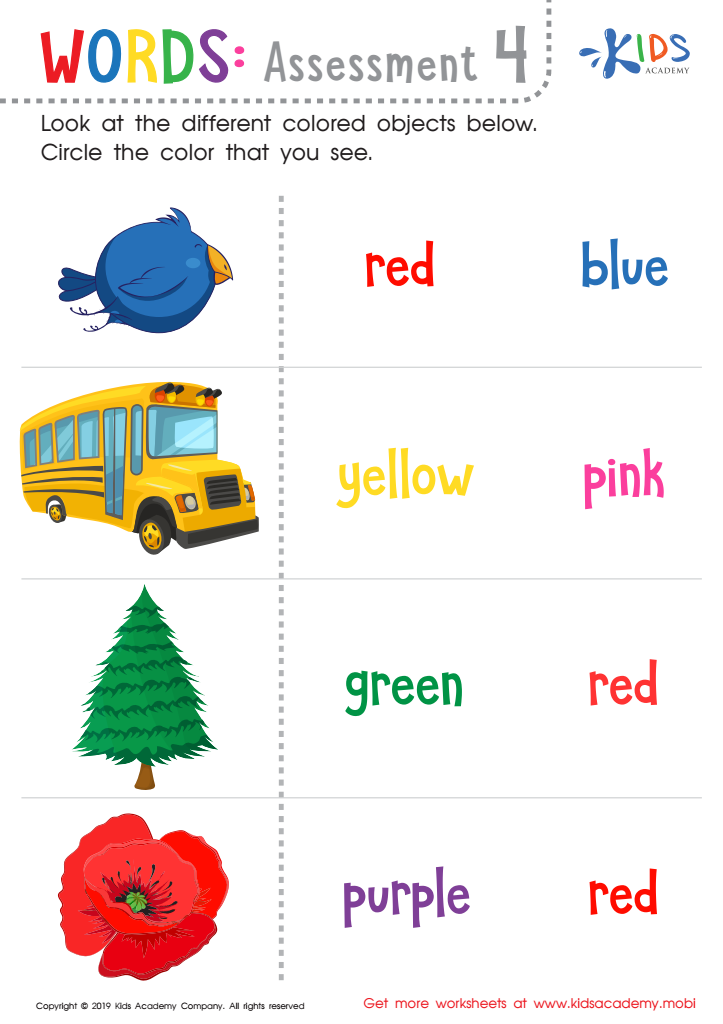
Look at the pictures and have your child circle the color they see. This free worksheet is great for assessing their knowledge of vocabulary words. It offers familiar images with words for kids to read and match with the colors. Help your child build their reading and understanding skills with this fun activity!
Words: Assessment 4 Worksheet
Worksheet
Word Matching Game Worksheet

Word Matching Game Worksheet

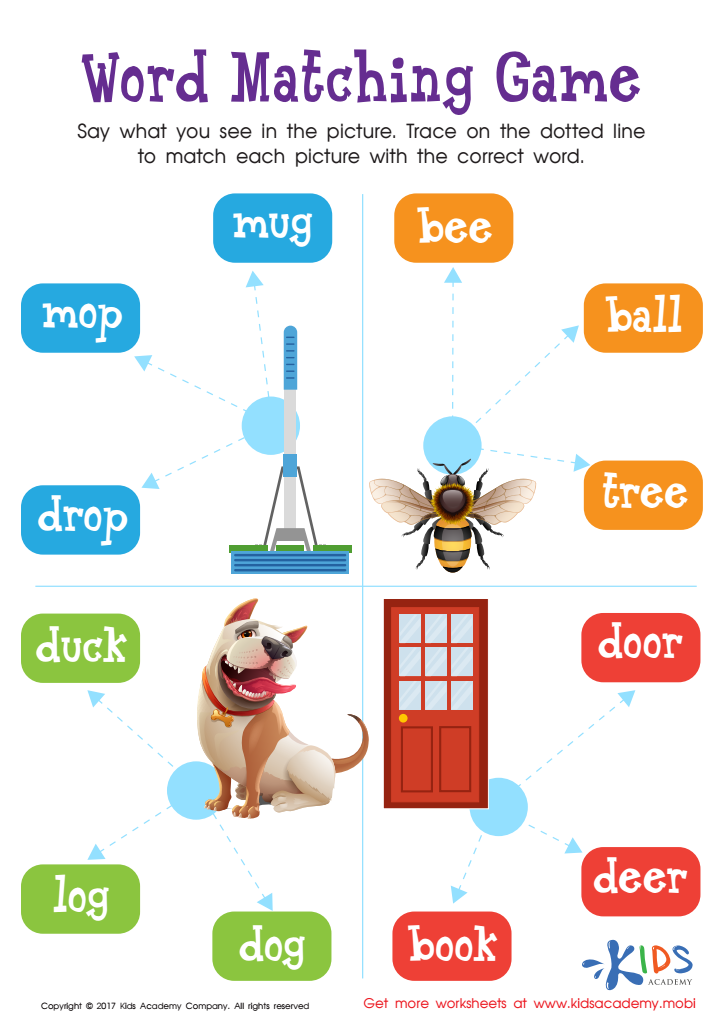
Help your early reader develop prereading skills with this fun matching worksheet! Visual cues help them learn sight words, decode words in word families, and identify phonetic patterns. They'll practice discerning sounds past initial consonants while saying the name of the picture and finding the matching word - and reading at the same time!
Word Matching Game Worksheet
Worksheet
Tricky Words Worksheet

Tricky Words Worksheet

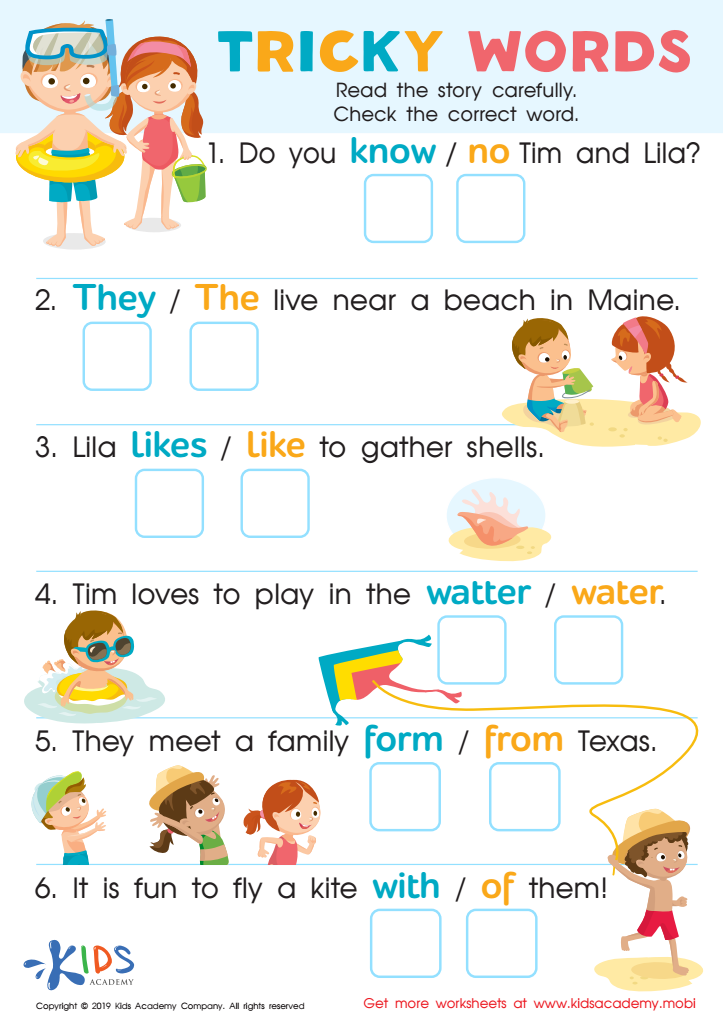
Reading can be tricky to start with, but this worksheet helps kids learn the basics of editing and strengthens their attention to detail. They'll select the right word from tricky choices, improving their reading and grammar skills.
Tricky Words Worksheet
Worksheet
Long I Vowel Team Coloring Worksheet

Long I Vowel Team Coloring Worksheet

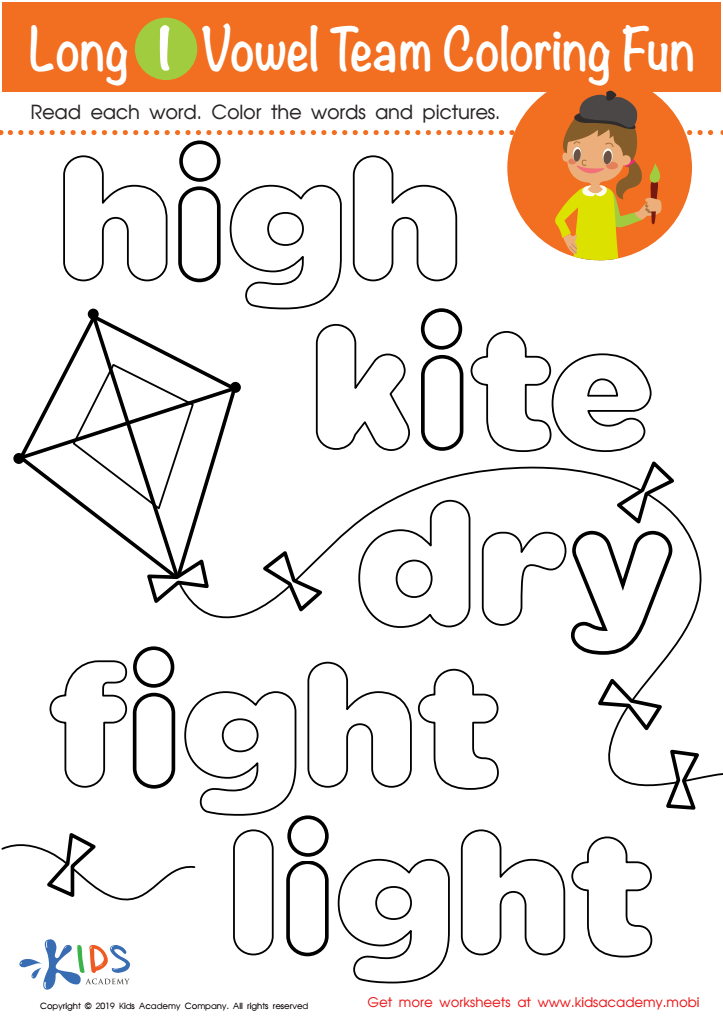
This worksheet provides practice with letter combinations that make the long "i" sound while enhancing creativity and motor skills with a fun coloring activity. Unknowingly, new readers learn key phonics skills while having fun!
Download (PDF)
Assign to My Students
Long I Vowel Team Coloring Worksheet
Worksheet
Phonological Awareness: Assessment 5 Worksheet


Phonological Awareness: Assessment 5 Worksheet

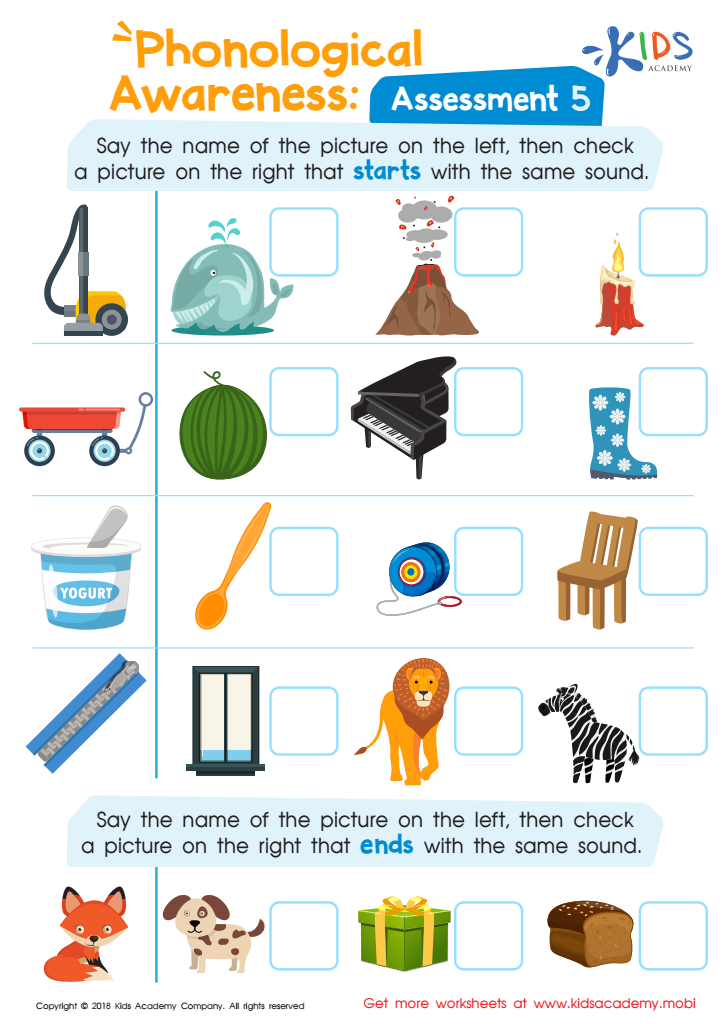
Repetition is key to success! This worksheet tests kids' ability to match beginning and ending sounds in words. Instruct them to say each word and listen closely to the sounds they make. Focus on the starting sounds for the first four pics, then the last one to hear ending sounds and find the right match!
Phonological Awareness: Assessment 5 Worksheet

Worksheet


Spelling practice in elementary phonics for ages 4 to 6 is crucial for early literacy development, laying the foundation for reading and writing skills. At this age, children are rapidly developing their language abilities, and phonics provides them with the building blocks to decode words. By engaging in phonics activities, children learn the relationship between letters and sounds, making it easier to read new words confidently. This skill enhances their ability to comprehend what they read, promoting a love for literature from an early age.

Moreover, consistent spelling practice boosts children's cognitive development by improving memory and auditory discrimination. It helps them develop fine motor skills as they write letters and words, contributing to overall hand-eye coordination. Early proficiency in spelling and phonics can also increase a child’s self-esteem and motivation to read and write, showing them that they are capable learners.

Furthermore, these skills support teachers’ and parents’ efforts to foster a supporting and enriching learning environment. By valuing phonics and spelling practice, caregivers emphasize the importance of literacy, paving the way for academic success and lifelong learning. Ultimately, prioritizing spelling practice equips young learners with essential tools they will carry into their educational journeys and everyday lives.