Letter identification Alphabet Worksheets for Ages 4-6
4 filtered results
-
From - To
Introduce your child to the exciting world of letters with our "Letter Identification Alphabet Worksheets" for ages 4-6! These engaging worksheets are designed to help young learners identify, recognize, and memorize every letter of the alphabet through fun activities and exercises. From coloring to tracing, each sheet enhances visual and cognitive skills, making the learning process enjoyable and effective. Perfect for preschoolers and kindergarteners, our worksheets lay a solid foundation for reading and writing. Give your child a head start on their educational journey with our expertly crafted resources. Explore more at Kids Academy and watch them thrive!
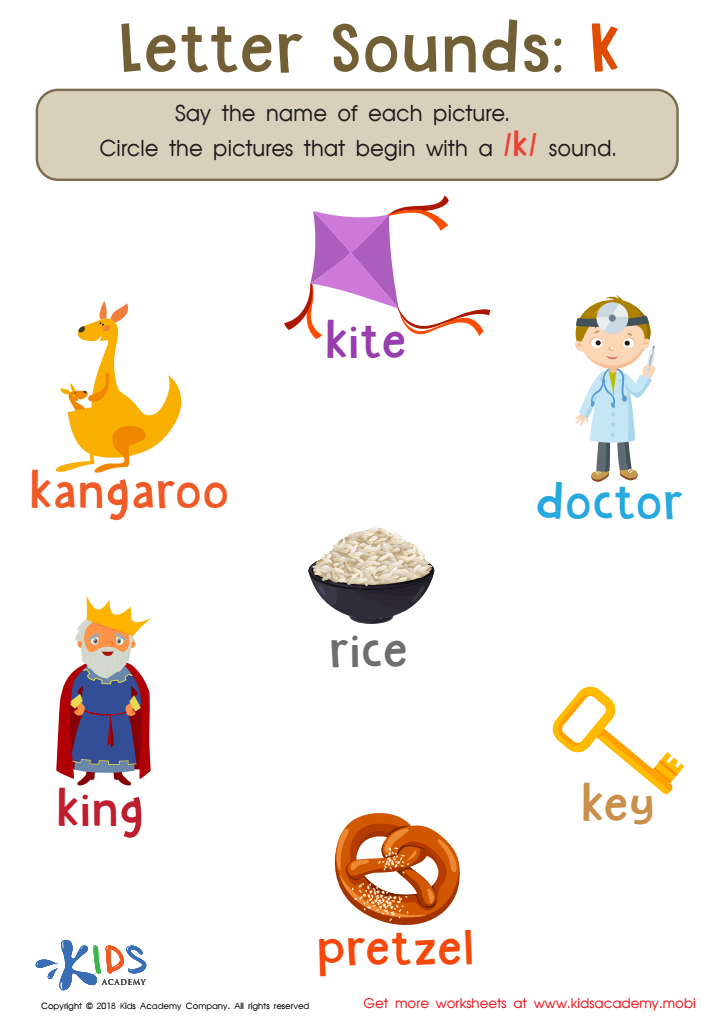
Letter K Sounds Worksheet
 Assign to My Students
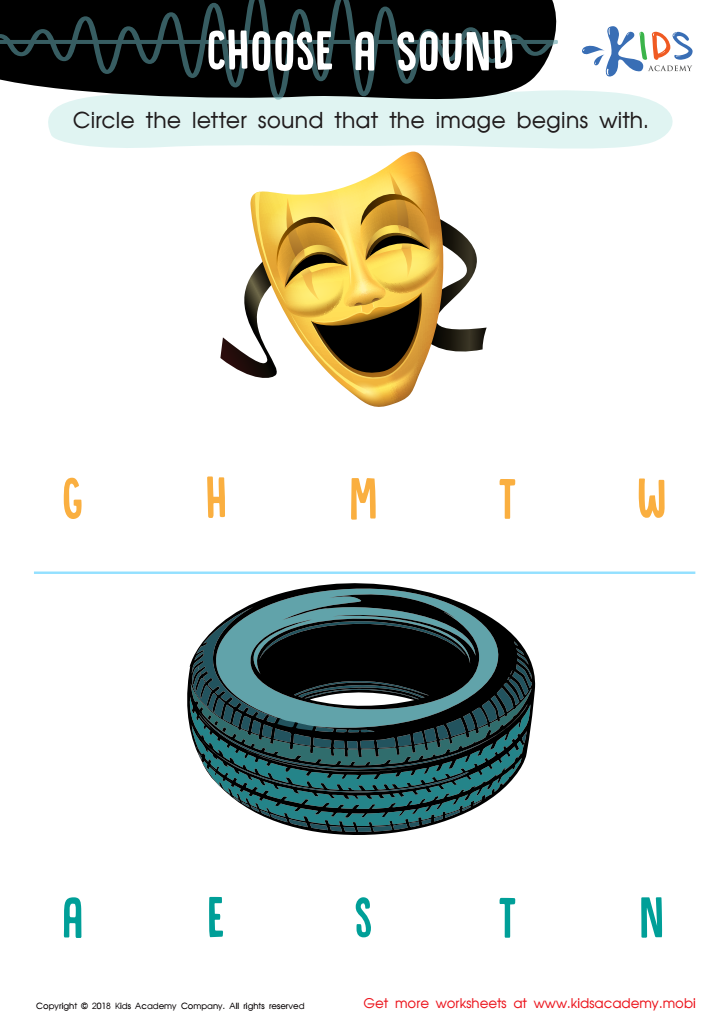
Choose a Sound Worksheet
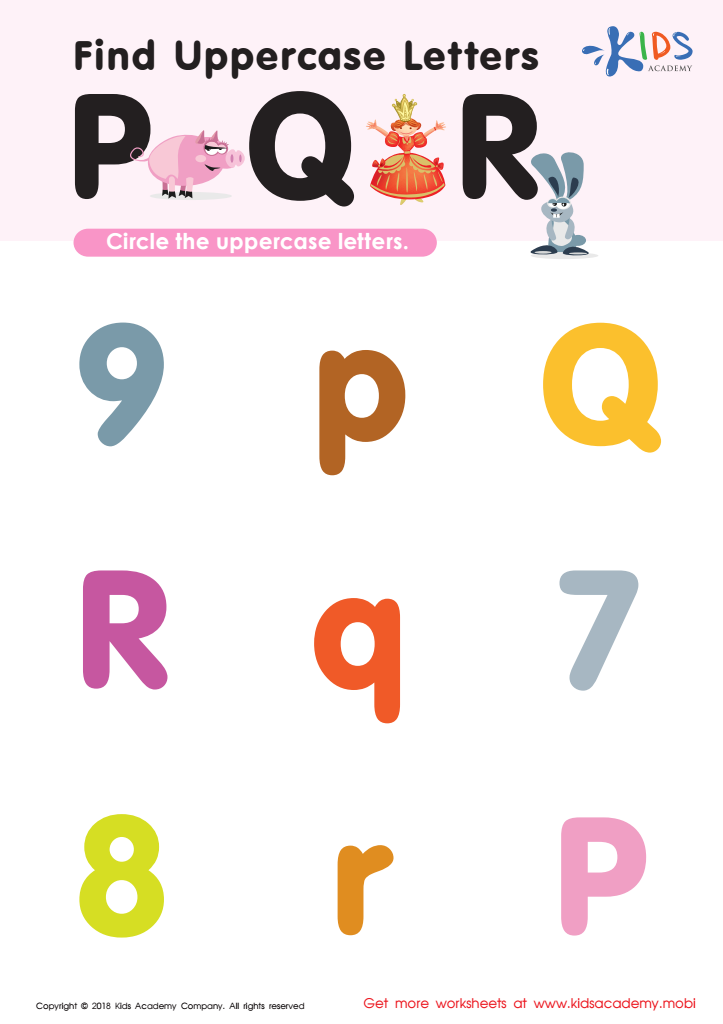
Find Uppercase Letters P, Q, and R Worksheet
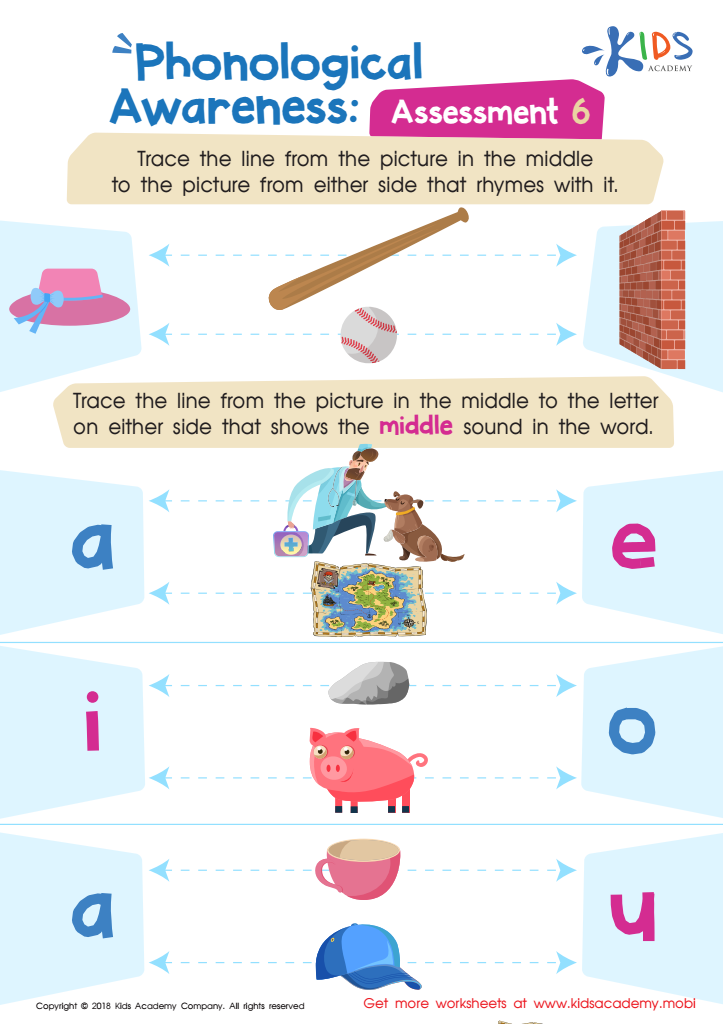
Phonological Awareness: Assessment 6 Worksheet







Letter identification is crucial for children aged 4-6, serving as a fundamental building block for literacy development. At this formative age, children's brains are highly receptive to new information, making it an ideal time to introduce the letters of the alphabet. Early recognition of letters allows kids to associate visual symbols with specific sounds, which is essential for reading and writing proficiency.
For parents and teachers, investing time in teaching letter identification can set the stage for future academic success. Knowing the alphabet enables children to decipher words more easily when they start reading. This foundational skill increases their confidence and promotes a positive attitude towards learning. Moreover, early literacy skills are linked to better communication abilities and cognitive development, impacting overall academic achievements in later years.
Additionally, letter identification is often integrated into play-based activities that can stimulate a child’s interest and make learning enjoyable. Activities such as singing alphabet songs, playing letter-matching games, or using alphabet blocks make the learning process engaging and interactive.
In essence, prioritizing letter identification in early childhood education equips children with critical skills for later educational endeavors, boosts their confidence, and fosters a love for learning. Parents' and teachers' active involvement in this early stage can have lasting, positive impacts on a child's educational journey.







