Rhyme recognition Alphabet Worksheets for Ages 4-6
4 filtered results
-
From - To
Introduce your child to the magical world of letters and sounds with our "Rhyme Recognition Alphabet Worksheets" designed for ages 4-6! These engaging activities combine fun and learning, helping young minds connect rhyming words with their corresponding letters. Perfect for early learners, our printable worksheets enhance phonemic awareness, vocabulary, and pre-reading skills. Watch as your child enjoys identifying pairs of rhyming words through colorful visuals and interactive exercises. Ideal for both classroom and at-home learning, our expertly crafted worksheets provide a strong foundation for literacy. Spark a love for reading and wordplay today!
Visit Kids Academy for more educational resources.
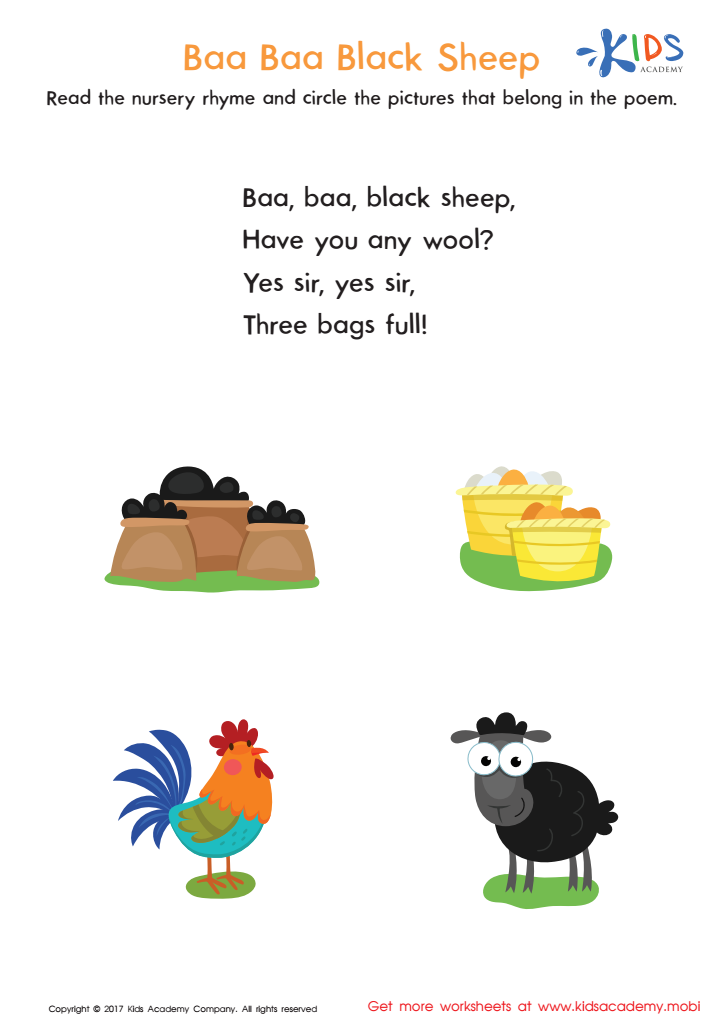
Baa Baa Black Sheep Printable
 Assign to My Students
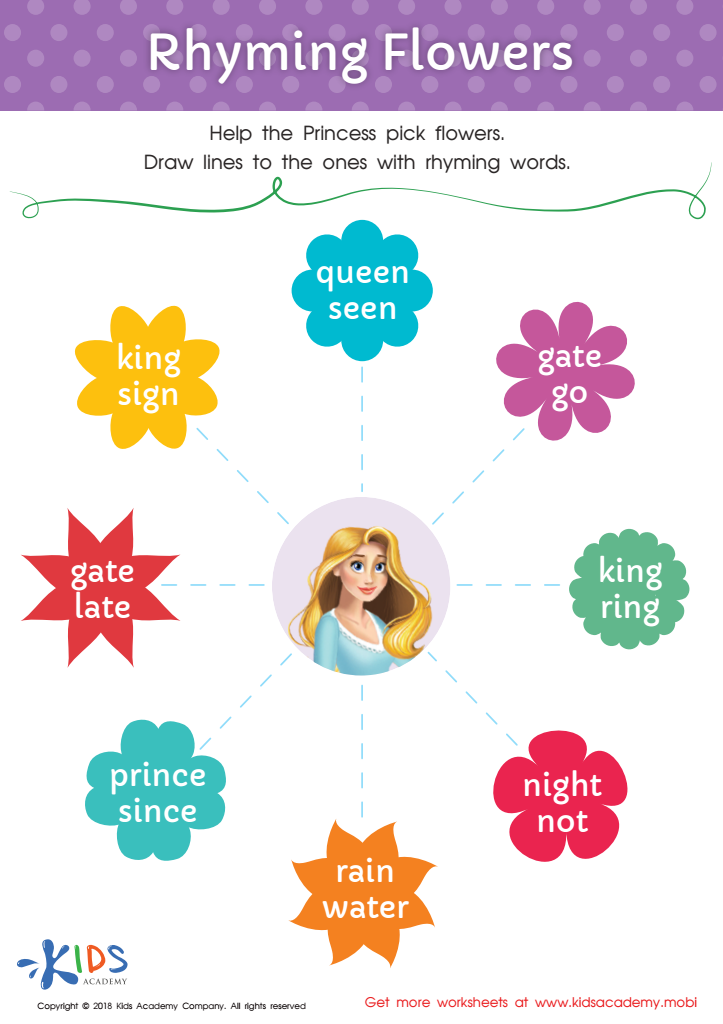
Rhyming Flowers Worksheet
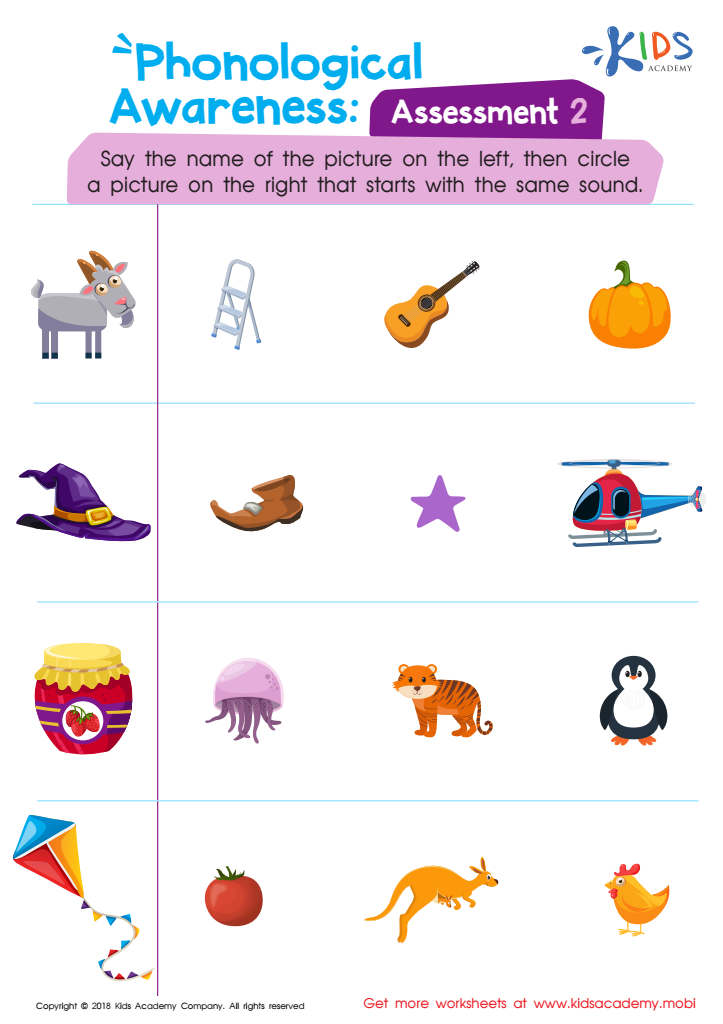
Phonological Awareness: Assessment 2 Worksheet
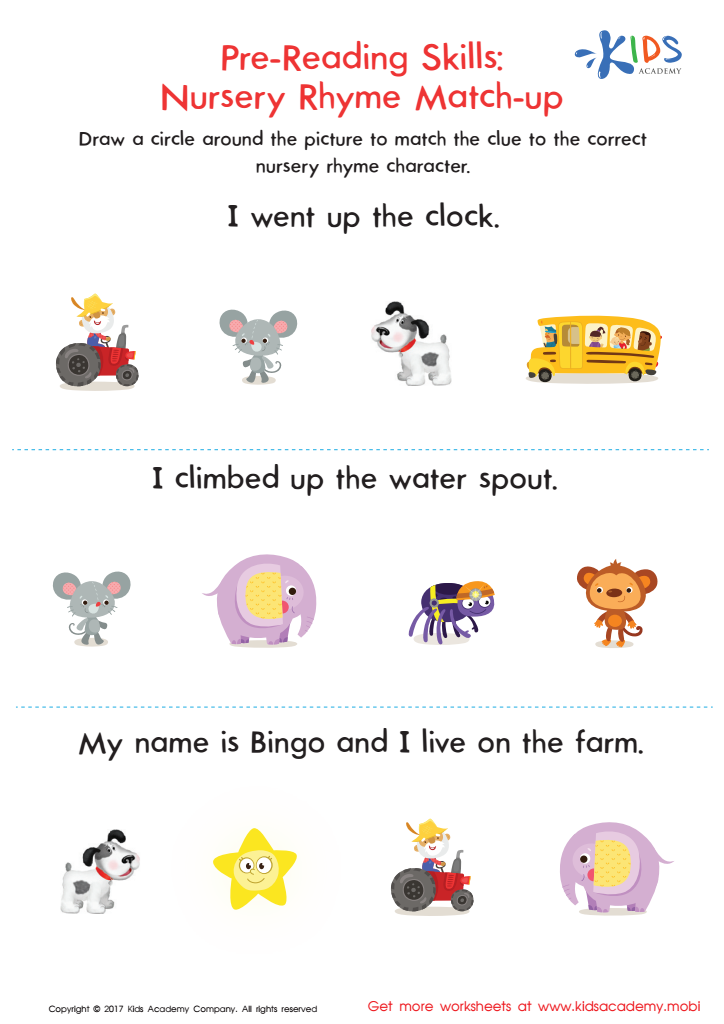
Nursery Rhyme Match–Up Worksheet








Rhyme recognition and learning the alphabet are foundational skills crucial for literacy development in children ages 4-6. Understanding and recognizing rhymes help children with phonemic awareness—an essential precursor to reading. When children identify rhyming words, they practice listening for and distinguishing between different phonetic sounds. This skill enhances their ability to decode new words, leading to improved reading fluency.
Moreover, rhymes often come in catchy, repetitive patterns, making language learning fun and engaging. This enjoyment fosters a positive attitude toward reading and learning, encouraging children to practice more. Engaging in rhyming activities also strengthens memory and cognitive connections between words that sound alike, making it easier to learn new vocabulary.
Simultaneously, learning the alphabet equips children with the basic building blocks of written language. Recognizing letters and their respective sounds (phonics) lays the groundwork for word formation and sentence construction. Young learners who have a good grasp of the alphabet tend to transition more seamlessly into reading and writing.
Parents and teachers should prioritize rhyme recognition and alphabet learning as they together establish a robust foundation for academic success, improve communication skills, and foster a lifelong love of reading. Nurturing these skills early on can significantly impact a child's educational journey and overall cognitive development.







