Sound identification Alphabet Worksheets for Ages 4-6
5 filtered results
-
From - To
Explore our engaging Sound Identification Alphabet Worksheets designed specifically for children aged 4-6! These worksheets help young learners enhance their phonemic awareness through interactive activities focused on sound recognition. By connecting letters to their corresponding sounds, kids will build a solid foundation for reading and writing. Each worksheet introduces colorful illustrations and simple exercises that make learning fun and effective. Perfect for preschool and kindergarten educators, parents, and caregivers, these resources promote essential language skills while encouraging creativity and critical thinking. Download now to empower your child’s journey towards literacy with our captivating sound identification worksheets!
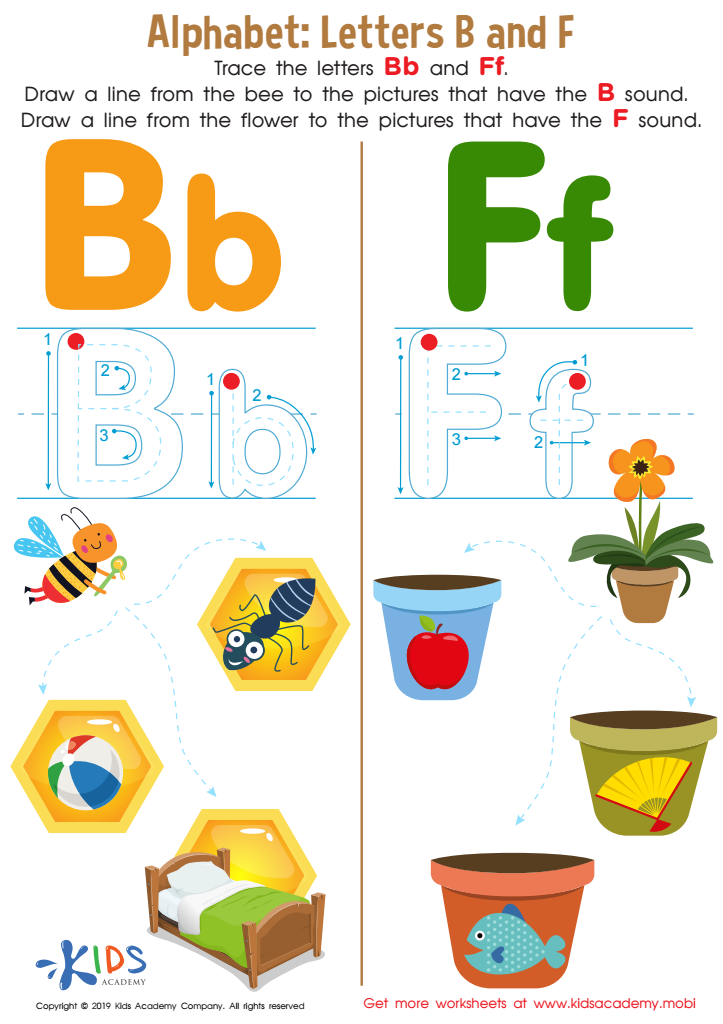
Letters B and F Tracing Worksheet
 Assign to My Students
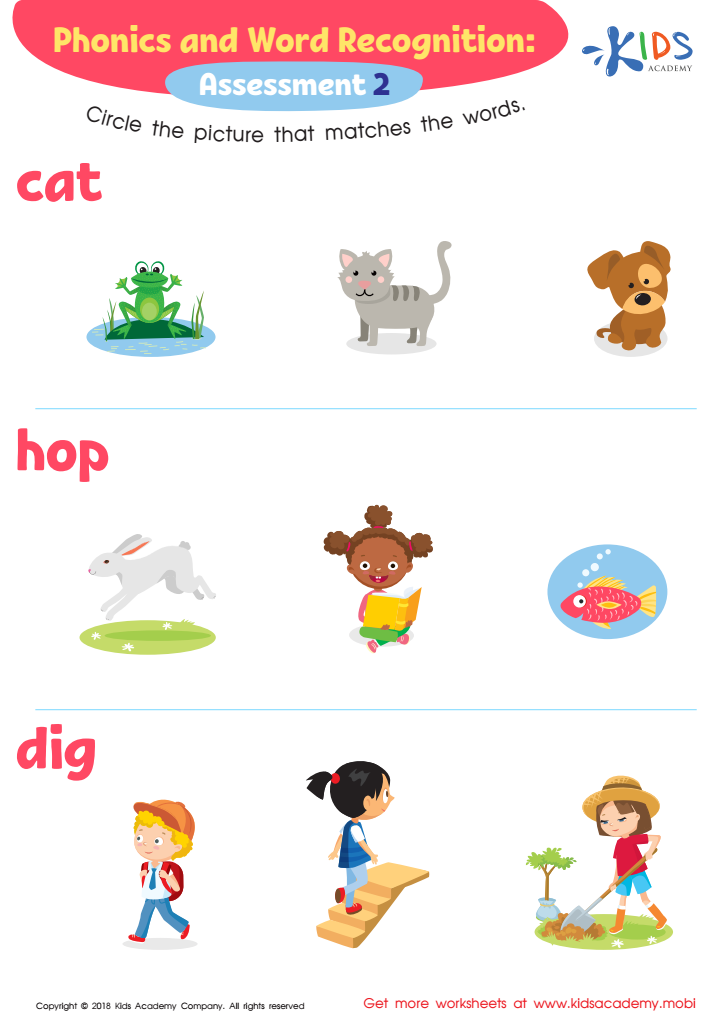
Phonological Awareness: Assessment 2 ELA Worksheet
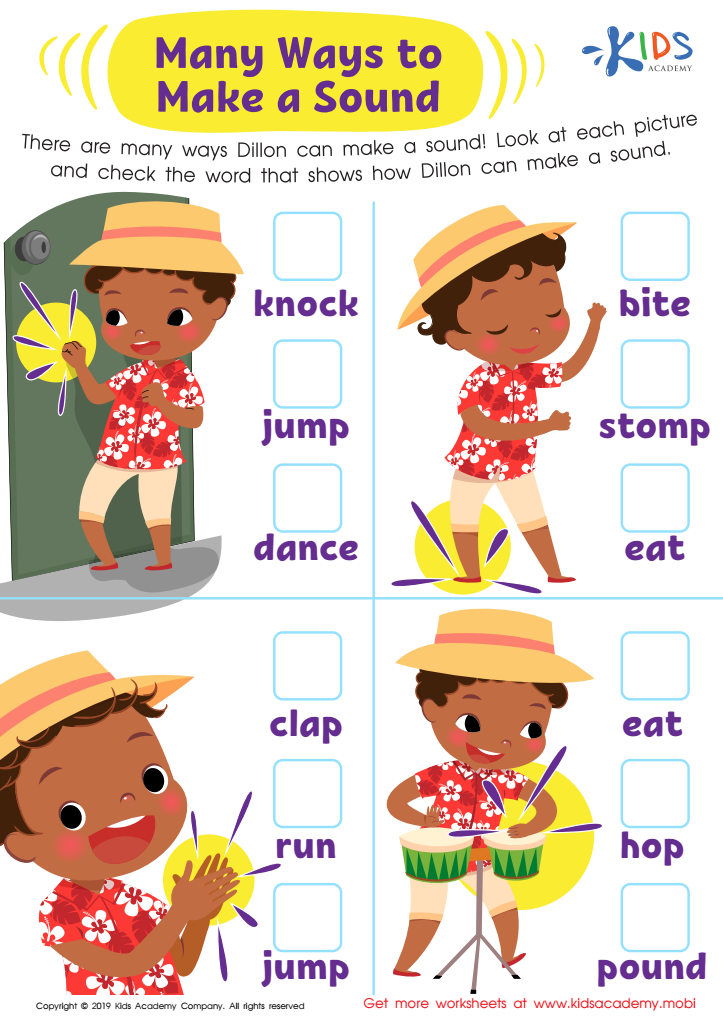
Many Ways to Make a Sound Worksheet
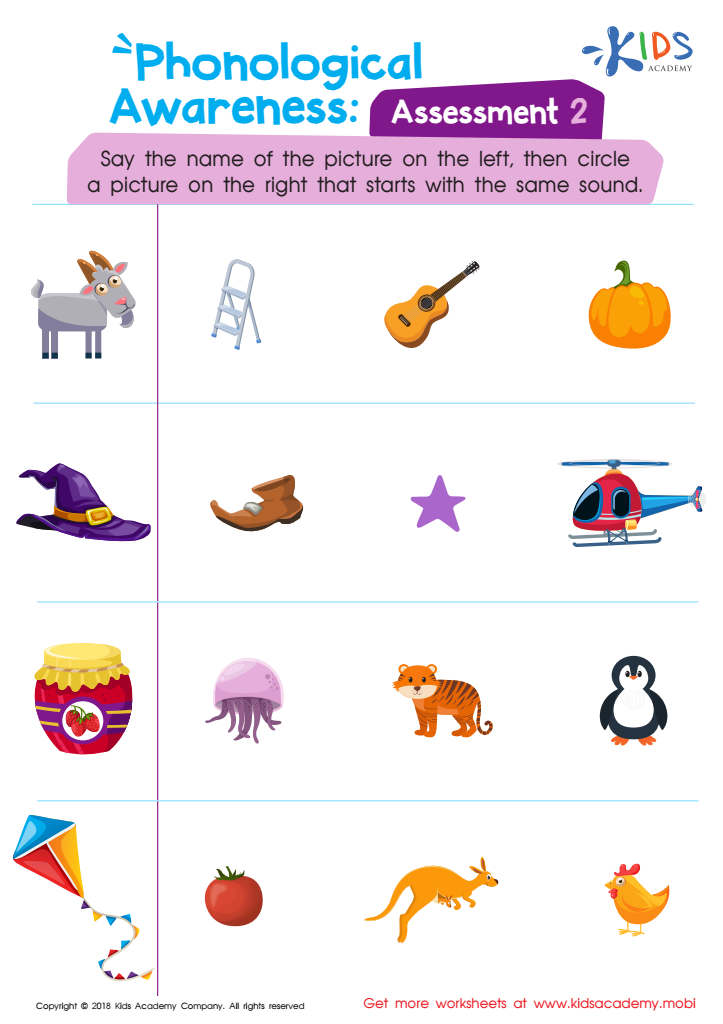
Phonological Awareness: Assessment 2 Worksheet
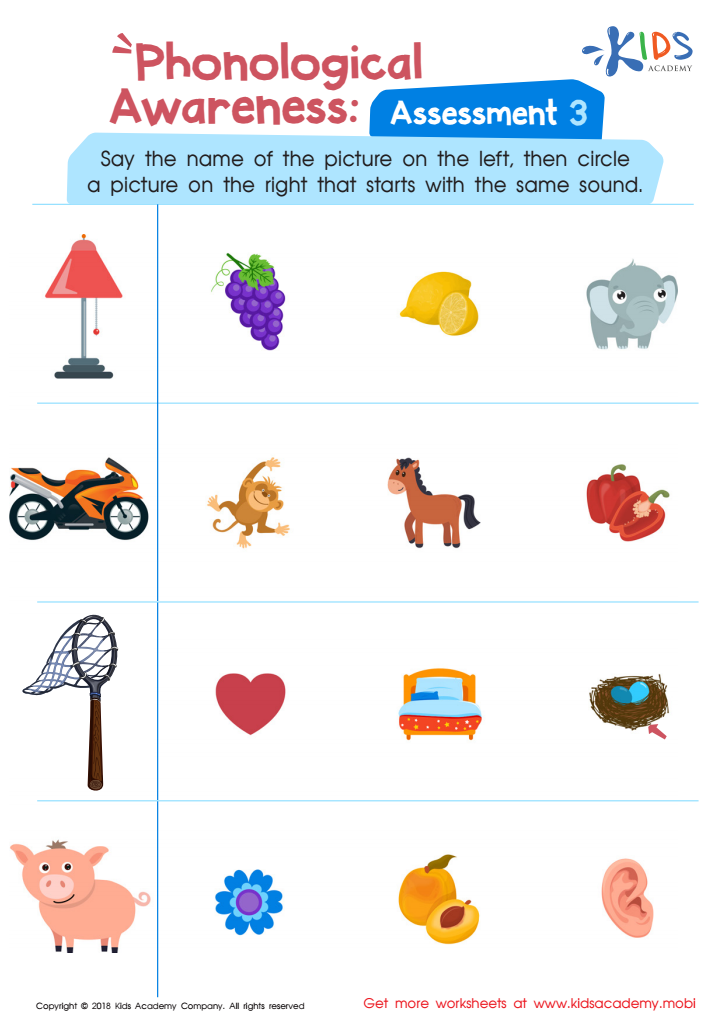
Phonological Awareness: Assessment 3 Worksheet








Sound identification, or phonemic awareness, is a crucial skill in early literacy development for children ages 4-6. It lays the foundation for reading and writing by helping children understand the relationship between sounds and letters. Parents and teachers should care about sound identification because it significantly impacts a child's ability to decode words, comprehend texts, and develop effective communication skills.
When children can identify and manipulate individual sounds in words, they become more proficient readers and spellers. This skill is directly linked to successful reading interventions and ultimately their confidence in reading. Additionally, early sound identification activities are often engaging and can be woven into play, fostering a love for learning.
Moreover, understanding phonemes is essential for vocabulary development, as it enhances children’s ability to articulate and understand new words. In an increasingly literate world, ensuring that children master these fundamental skills provides them with the tools they need for academic success and lifelong learning. Therefore, both parents and teachers play a vital role in nurturing sound identification skills through interactive and enjoyable learning experiences, setting a positive trajectory for children’s future achievements in literacy and beyond.







