Handwriting practice Letter G Worksheets for Ages 4-6
3 filtered results
Difficulty Level
Grade
Age
-
From - To
Subject
Activity
Standards
Help your child master the letter G with our engaging Handwriting Practice Letter G Worksheets designed for ages 4-6. These expertly crafted worksheets from Kids Academy provide step-by-step guidance, making it enjoyable for young learners to trace and write both uppercase and lowercase G's. Through fun activities and colorful illustrations, children will develop fine motor skills and boost their confidence in handwriting. Each worksheet offers ample practice space for repeated learning, ensuring that your child can achieve neat and consistent letter formation. Perfect for use at home or in the classroom, these worksheets are a great addition to any early education curriculum.
Favorites
With answer key
Interactive
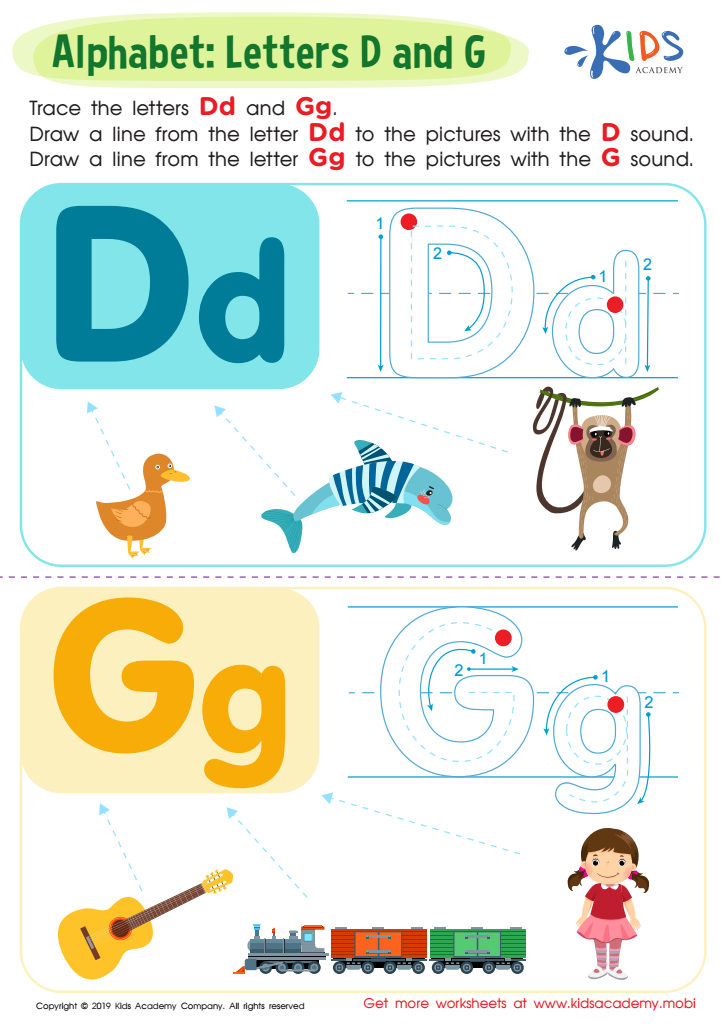
Letter D and G Tracing Worksheet
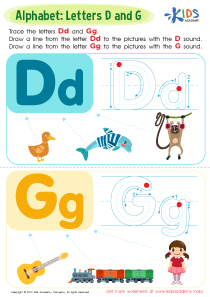
Kids can explore their imagination with the 'Alphabet: Letters D and G' worksheet! They'll trace capital and lowercase "D" and "G" and trace a line from the words. Colorful animals and objects make the task more fun and entertaining!
Letter D and G Tracing Worksheet
Worksheet
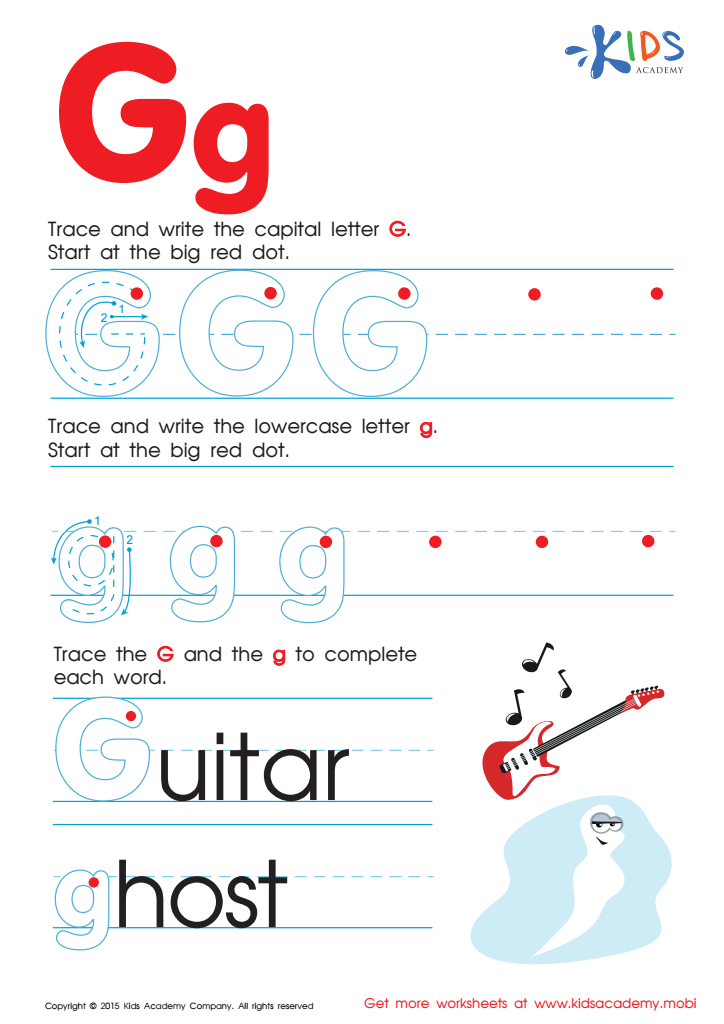
Letter G Tracing Page
Get ready to trace the letter "G" – with a big red spot as the starting point, trace the lines and watch the letter appear. Uppercase and lowercase letters are both easy and fun to write. Give it a go and finish the word "go". Play the guitar and say "hello" to a funny ghost!
Letter G Tracing Page
Worksheet
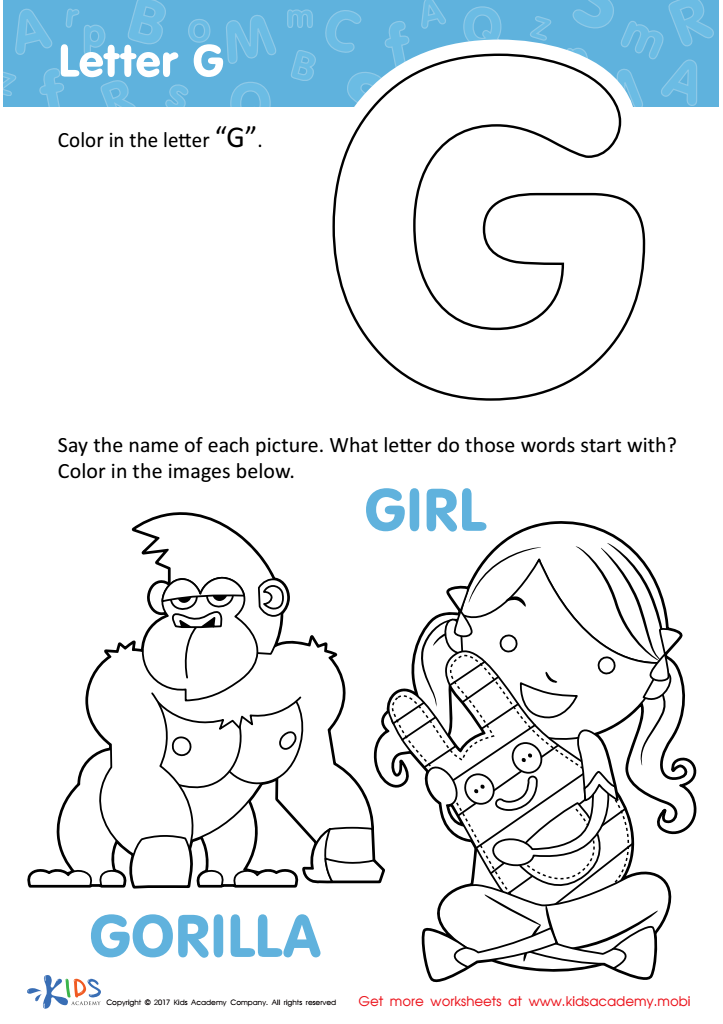
Letter G Coloring Sheet
This "G" coloring page encourages creativity and teaches kids the letter "G" sound. With its fun visuals and familiar words, it's sure to excite your child. Plus, you can talk about the letter’s sound with the pictures given.
Download (PDF)
 Assign to My Students
Assign to My Students
Letter G Coloring Sheet
Worksheet
Join Kids Academy for Free
Who is primarily going to use this learning content?






Handwriting practice, particularly focusing on a specific letter like "G," is incredibly important for children ages 4-6 for multiple reasons. Firstly, it helps fine-tune their fine motor skills. These skills are essential for other daily tasks such as buttoning clothes, using utensils, and eventually typing on a computer. Practicing the letter "G" also aids in hand-eye coordination and strengthens the hand muscles, enhancing their overall dexterity.
Additionally, handwriting practice contributes to cognitive development. When children write by hand, they engage multiple brain regions, reinforcing memory and understanding of letter shapes and sounds. This can be particularly beneficial in literacy development. Proficiency with individual letters like "G" lays the groundwork for constructing words and sentences, which are key milestones in academic achievement.
Moreover, the discipline required in practice enables young children to develop better concentration and patience. These traits are valuable not just in academic settings, but also in building social skills and eventual problem-solving abilities. Finally, seeing tangible progress in their handwriting can boost children's self-esteem, encouraging them to tackle other challenging tasks with confidence. Therefore, focusing on the letter "G" isn't just about better handwriting—it's about fostering a comprehensive growth environment for young learners.