Letter formation Letter Recognition Worksheets for Ages 4-6
5 filtered results
-
From - To
Unlock your child's potential with our engaging Letter Formation and Letter Recognition Worksheets, specially designed for ages 4-6! These interactive worksheets not only help young learners master letter shapes but also enhance their recognition skills in a fun and creative way. Each worksheet is filled with vibrant illustrations and child-friendly designs that encourage active participation. Children will practice tracing letters, identifying them, and even associating them with corresponding words. Ideal for preschool and kindergarten, these resources foster early literacy skills that set the foundation for successful reading and writing. Start this exciting journey of alphabet discovery and skill-building today!
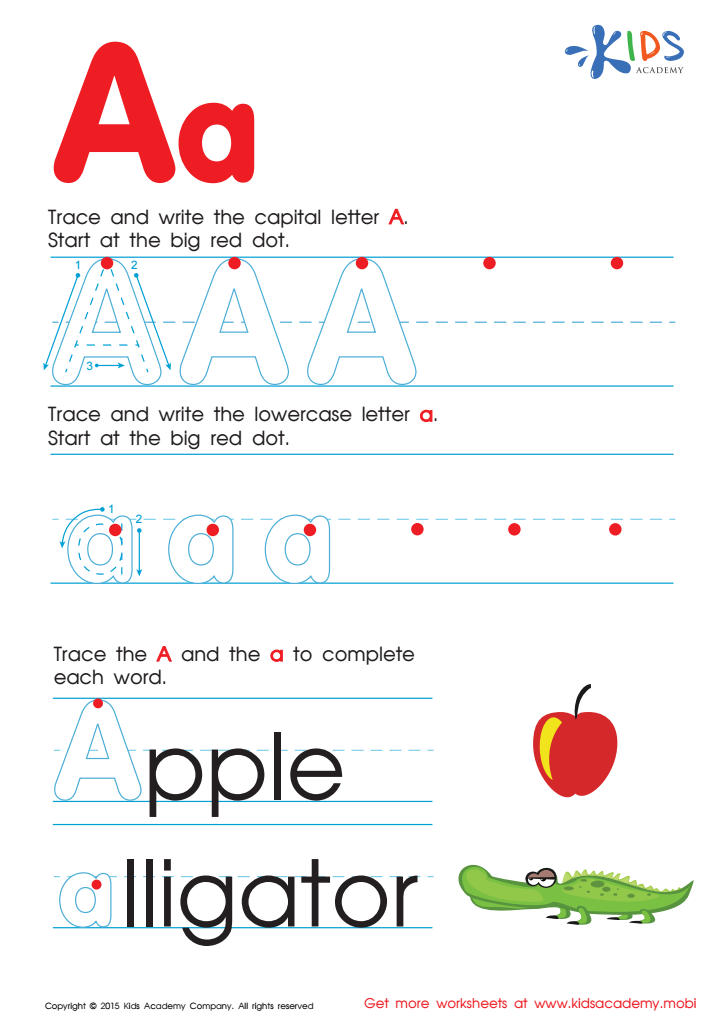
Letter A Tracing Page

Letter P Tracing Page
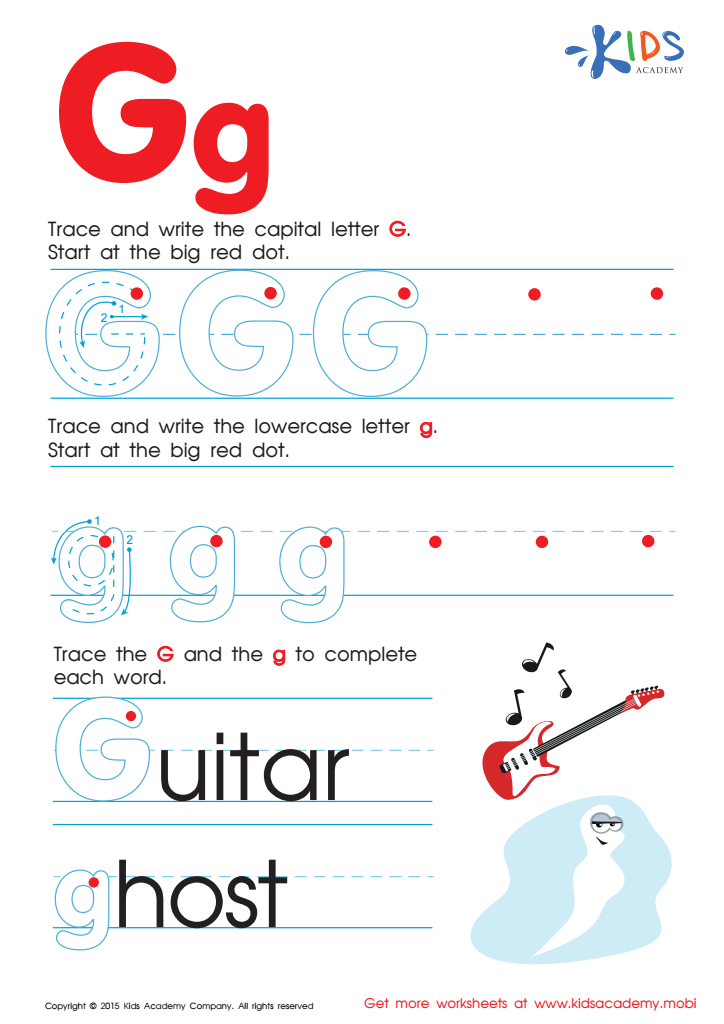
Letter G Tracing Page
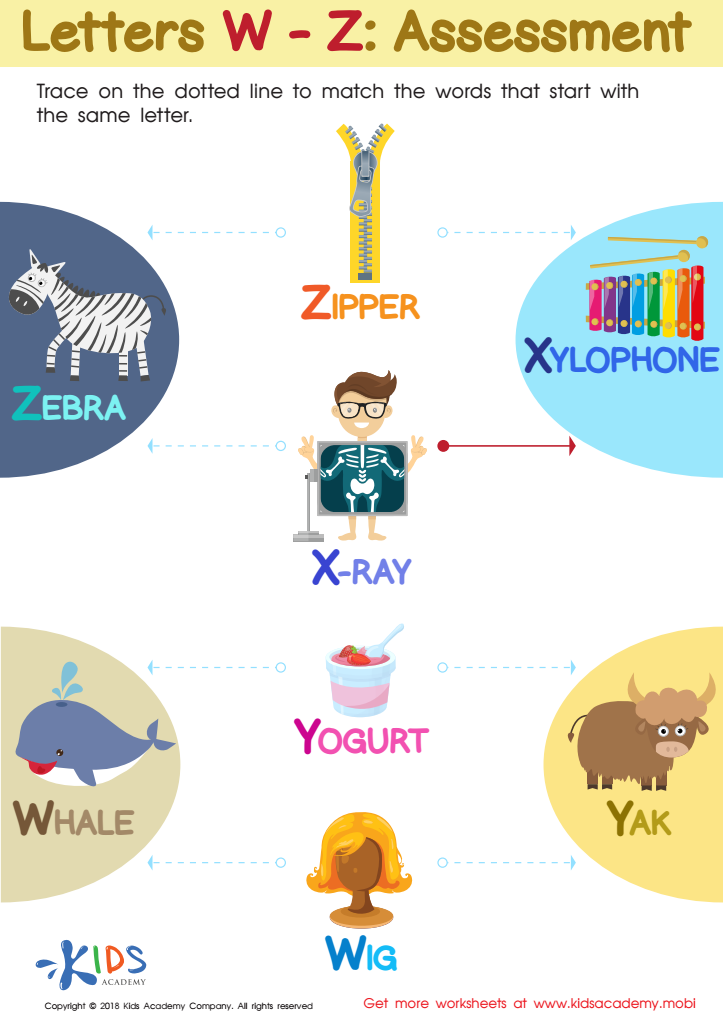
Letters W–Z Tracing Worksheet
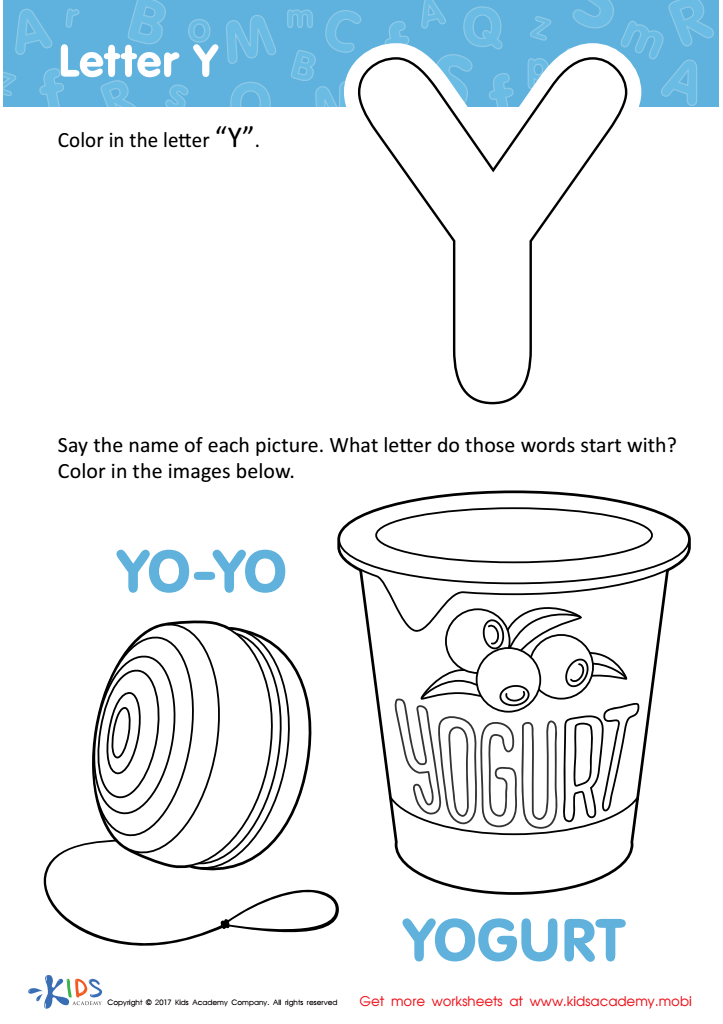
Letter Y Coloring Sheet
 Assign to My Students








Letter formation and letter recognition are critical components of early literacy skills for children aged 4-6. At this stage, children are exploring the world of letters, which serve as foundational blocks for reading and writing. Understanding and correctly forming letters not only helps them recognize words but also enhances their handwriting skills, contributing to effective communication later on.
When children recognize letters and can form them correctly, they develop confidence in their abilities. This foundational skill enhances their phonemic awareness, making it easier for them to sound out words, spell, and eventually read fluently.
Furthermore, proper letter formation can prevent confusion between similar-looking letters, such as b and d, which often leads to challenges in reading and writing. Encouraging correct formation early on supports fine motor skills and hand-eye coordination, essential for overall development.
For both teachers and parents, fostering these skills is fundamental to promoting a lifelong love for reading and writing. By engaging in fun and interactive activities, such as play-based learning, they can instill these essential skills while making the learning process enjoyable and effective. Prioritizing letter formation and recognition plays a vital role in setting children up for future academic success.







