
Phonics enhancement Letter Recognition Worksheets for Ages 4-6
3 filtered results
Difficulty Level
Grade
Age
-
From - To
Subject
Activity
Standards
Nurture early reading skills with our Phonics Enhancement Letter Recognition Worksheets tailored for ages 4-6. Designed to cultivate a strong foundation in phonics and letter recognition, these engaging printables feature interactive activities that spark curiosity and enthusiasm for learning. Each worksheet is thoughtfully created to make the identification and sound association of alphabet letters enjoyable and effective. Perfect for parents and educators, our resources provide a structured yet fun approach to early literacy, supporting children in becoming confident readers. Dive into a world of letters and sounds with our expert-crafted worksheets, paving the way for reading success.
Favorites
With answer key
Interactive
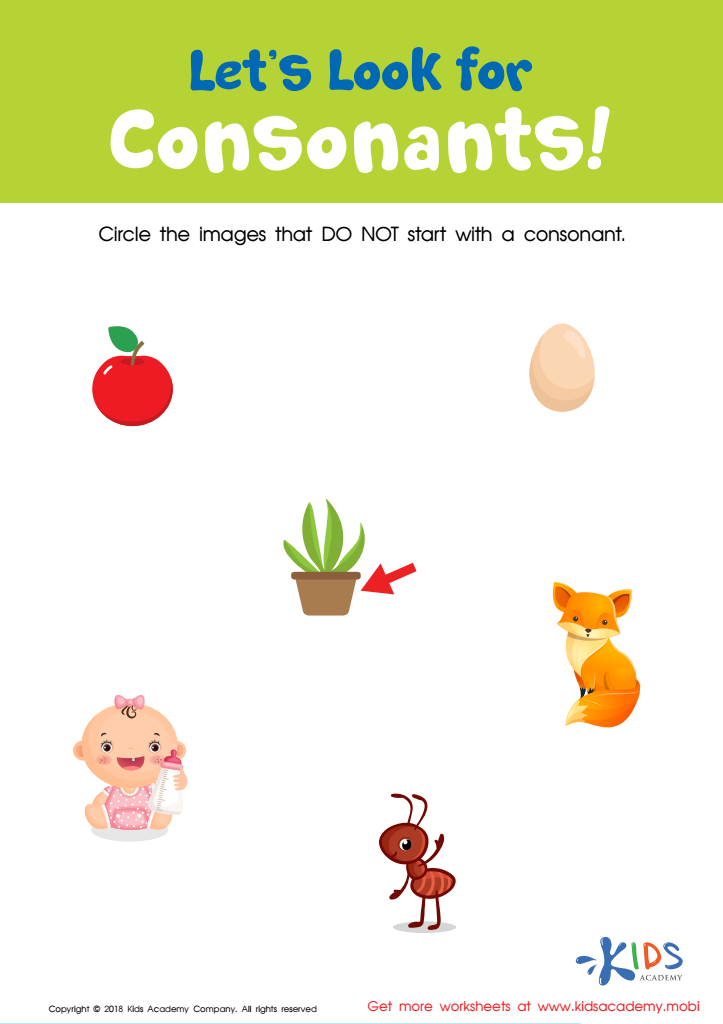
Let's Look for Consonants Worksheet
Help kids learn consonants and words that start with them. Ask them to recite the alphabet, then explain consonants are all letters but the 5 vowels. Use the worksheet to ask them to circle items without a consonant. Emphasize that's 21 consonants.
Let's Look for Consonants Worksheet
Worksheet
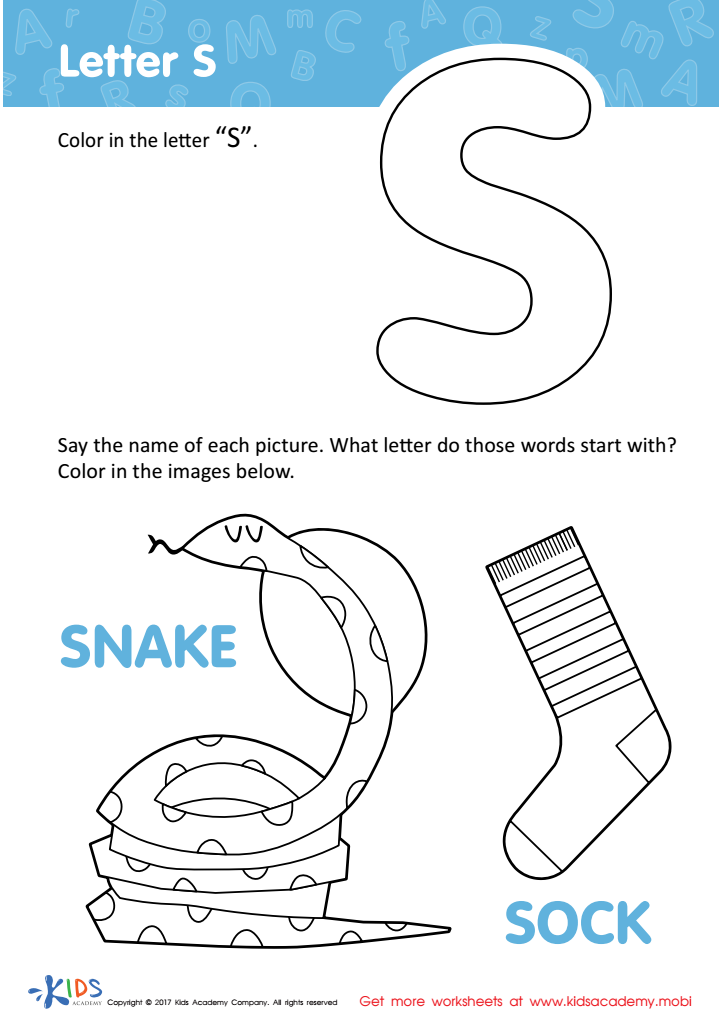
Letter S Coloring Sheet
Help your child practice recognizing the letter "S" and the sound it makes with this fun coloring page. It features a slippery snake, smelly sock and more! Give them extra practice by coming up with more "S" sounds and words.
Download (PDF)
 Assign to My Students
Assign to My Students
Letter S Coloring Sheet
Worksheet
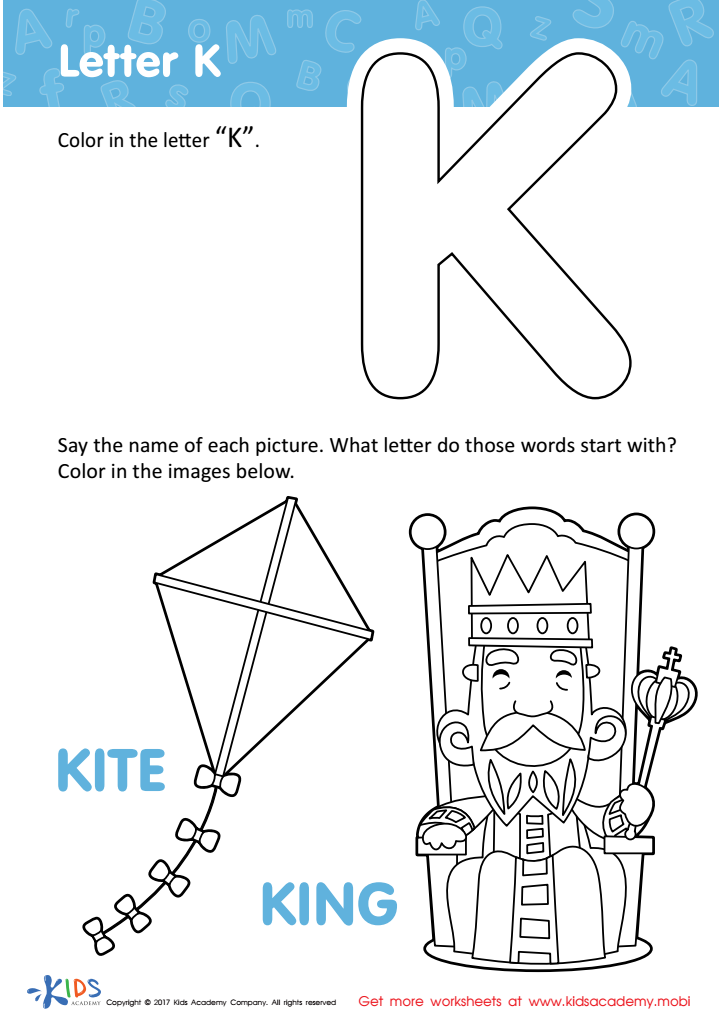
Letter K Coloring Sheet
This letter K coloring page captivates your child's creativity while learning the letter! Showcasing a king and kite, common words for their age group, it's sure to spark their imagination.
Download (PDF)
Assign to My Students
Assign to My Students
Letter K Coloring Sheet
Worksheet
Join Kids Academy for Free
Who is primarily going to use this learning content?








Phonics enhancement and letter recognition are fundamental components of early literacy that significantly impact a child's overall educational development. For children aged 4-6, these skills are particularly vital as they lay the foundation for successful reading and writing.
Firstly, phonics teaches children the relationship between letters and sounds, which is essential for decoding words and reading fluently. Understanding these associations helps young learners to tackle new words independently, building their confidence and fostering a love for reading. By making sense of how letters combine to form sounds and words, children can begin to build a robust vocabulary.
Secondly, letter recognition is crucial for both reading and writing. Being able to quickly recognize and name letters of the alphabet enables children to understand written text more easily. This skill is not only vital for reading but also for accurate and efficient writing. When children can recognize letters quickly, it reduces their cognitive load, allowing them to focus on comprehending the material instead of struggling with the basics.
Moreover, early mastery of these skills is shown to contribute positively to later academic success across various subjects. Children who develop strong phonics and letter recognition skills are often better equipped to handle advanced literacy tasks, which can lead to more positive school experiences and academic outcomes.
Therefore, focusing on phonics enhancement and letter recognition for ages 4-6 sets the groundwork for lifelong learning and academic achievement.







