
Reading Skills Letter Sounds Worksheets for Ages 4-6
5 filtered results
Difficulty Level
Grade
Age
-
From - To
Subject
Activity
Standards
Boost your child's reading confidence and foundational skills with our "Reading Skills Letter Sounds Worksheets for Ages 4-6." These engaging worksheets are expertly designed to help young learners recognize and pronounce letter sounds, the building blocks of early reading success. Perfect for preschool and kindergarten children, each worksheet incorporates fun activities such as matching, coloring, and tracing to make learning letter sounds enjoyable and effective. Developed by education professionals, our printable resources support your child's journey to becoming a confident and enthusiastic reader. Encourage daily practice with these vibrant, easy-to-follow worksheets and watch their skills flourish!
Favorites
With answer key
Interactive
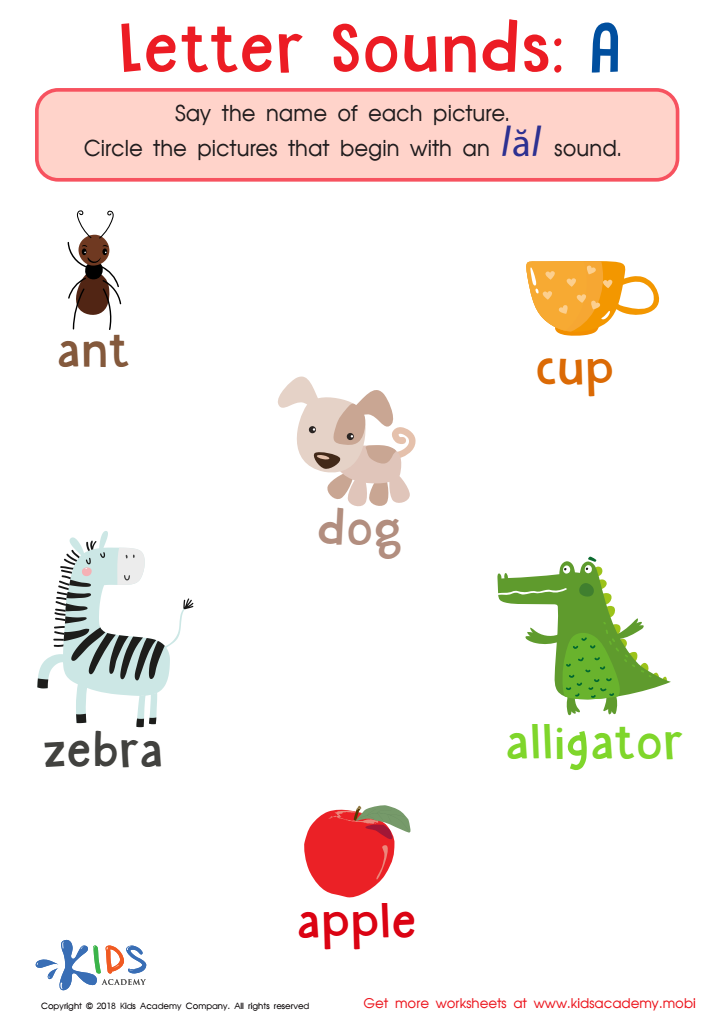
Letter A Sounds Worksheet
Encourage your new reader to practice the «ă» sound with this fun, free PDF worksheet. With the help of picture clues, they'll say the name of each word and trace circles around the items that start with «ă». This worksheet is an effective way to boost beginning sound skills while having fun!
 Assign to My Students
Letter A Sounds Worksheet
Worksheet
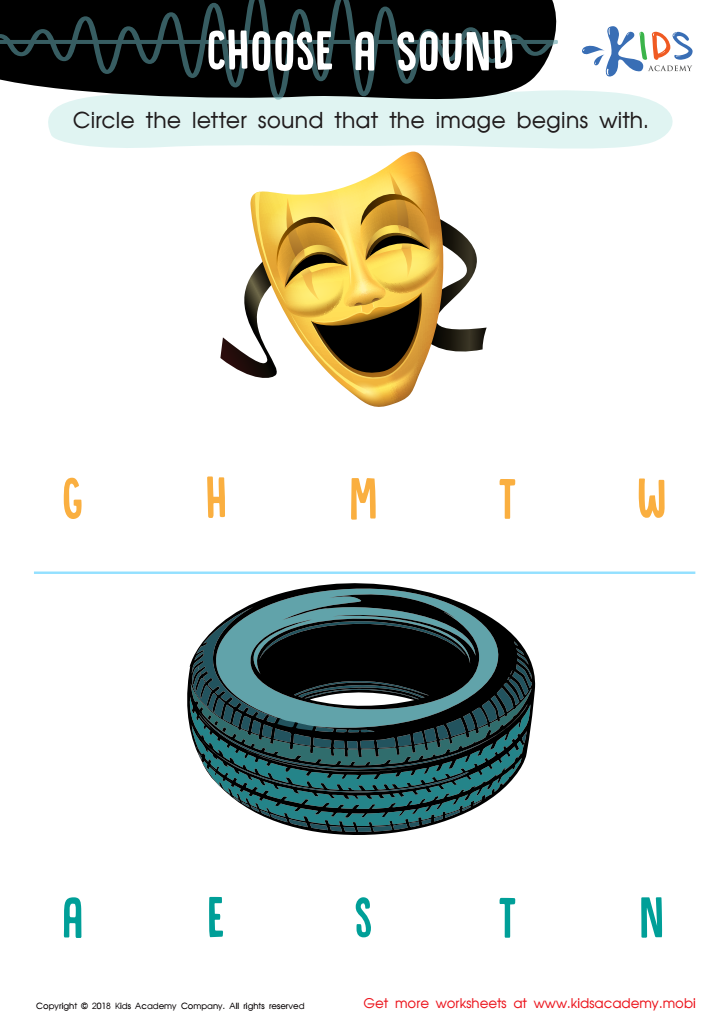
Choose a Sound Worksheet
Help your child hone pre-reading skills with this colorful worksheet! They'll practice tracing letter sounds, develop phoneme awareness, and gain confidence. Plus, it's a fun way to work on their fine motor skills.
Choose a Sound Worksheet
Worksheet
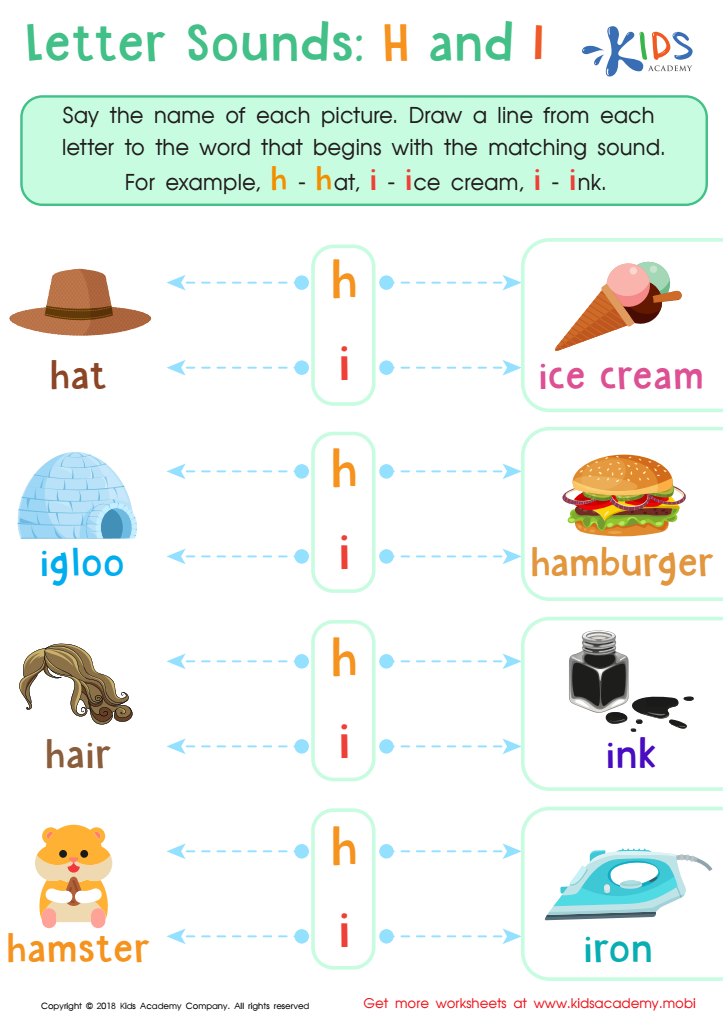
Letter H and I Sounds Worksheet
Preschoolers will have fun and develop reading and writing skills at the same time! They'll use pictures to recognize familiar words and differentiate between 'H' and 'I' sounds. Then they'll trace lines to connect each sound to the picture, improving their fine-motor skills. Bright and cheerful visuals make learning a breeze!
Letter H and I Sounds Worksheet
Worksheet
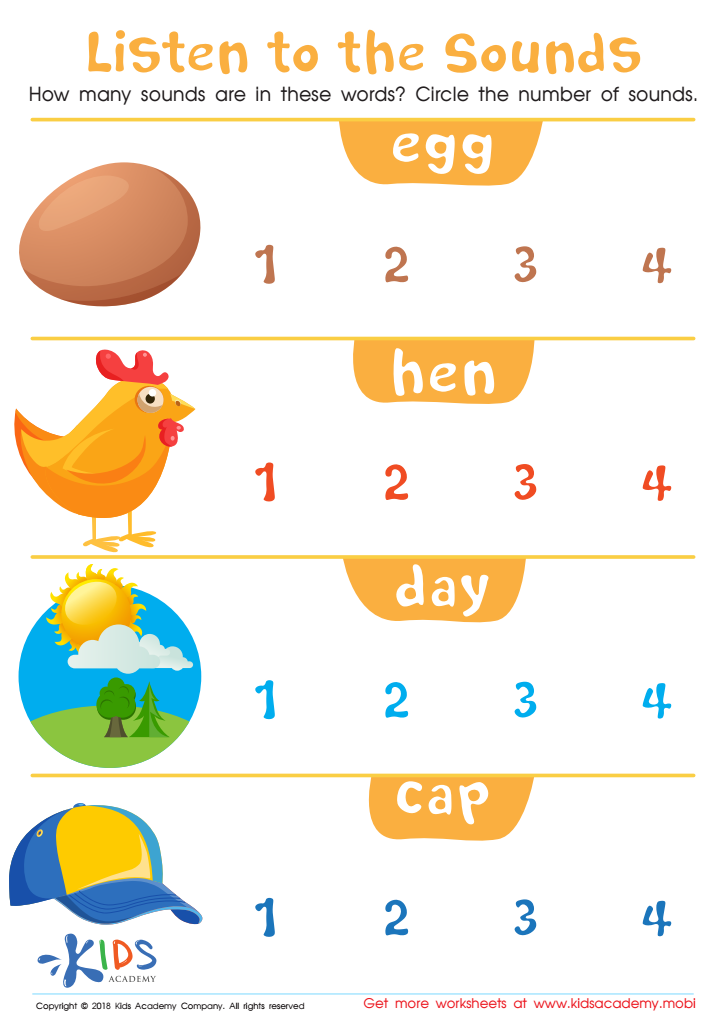
Listen to the Sounds Worksheet
This worksheet builds emerging readers' skills in using sounds for reading and spelling. It helps strengthen auditory processing by having them count the sounds in each word, then trace the corresponding number. Fun and cheerful!
Listen to the Sounds Worksheet
Worksheet
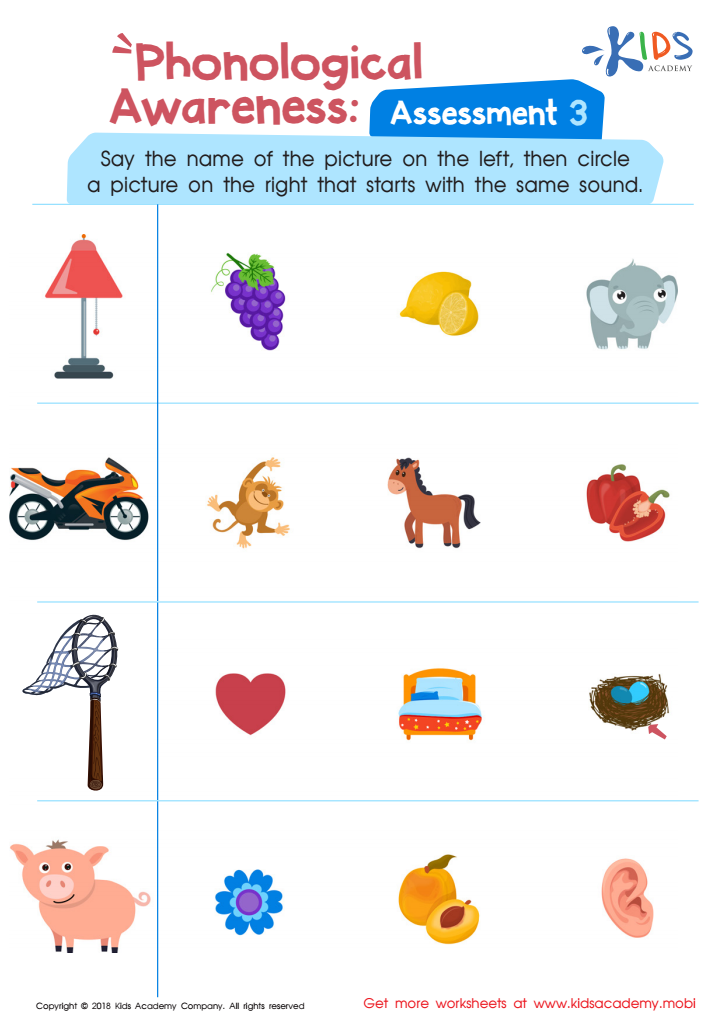
Phonological Awareness: Assessment 3 Worksheet
Test kids' reading readiness with a phonological awareness worksheet! With this PDF exercise, encourage children to name each picture aloud and match left to right. Help them learn to recognize word sounds at the start, middle and end of words. They'll be sure to remember that lamp doesn't sound like elephant!
Phonological Awareness: Assessment 3 Worksheet
Worksheet
Join Kids Academy for Free
Who is primarily going to use this learning content?








Reading skills, particularly recognizing letter sounds, are fundamental for children aged 4-6 as they lay the groundwork for successful literacy development. At this critical early age, children are particularly receptive to learning linguistic concepts that will influence their future reading and writing abilities.
When children learn to identify letter sounds, they are essentially acquiring phonemic awareness, a key skill that helps them understand the relationship between sounds and their corresponding letters. This awareness is the basis for decoding words, which is essential for reading fluently. Without a strong understanding of letter sounds, children may struggle with reading comprehension, leading to difficulties across all academic areas since reading is the gateway to other subjects.
Teachers and parents play a pivotal role in this learning process. Engaging children in activities that emphasize letter sounds, such as singing alphabet songs, playing phonics games, and reading aloud, reinforces these critical concepts. Moreover, early mastery of letter sounds builds confidence and fosters a positive attitude towards learning.
Investing time in developing reading skills and letter sounds in children aged 4-6 ensures that they have the tools they need to become proficient readers. This early literacy foundation is not only crucial for academic success but also for lifelong learning and effective communication.







