Filters

6 filtered results

Clear all filters
Favorites
With answer key
Interactive

6 filtered results

Difficulty Level

Grade


Enhance your child's vocabulary with our engaging Letter Sounds Worksheets designed specifically for ages 4-6! Perfect for early learners, these interactive worksheets introduce essential phonetic sounds alongside vibrant illustrations to captivate young minds. Each worksheet facilitates the connection between letters and their corresponding sounds, making essential vocabulary concepts accessible and fun. Ideal for at-home learning or classroom activities, our resources ensure that children build a strong foundation in language skills. Explore a variety of exercises that encourage hearing, identifying, and practicing letter sounds while fostering a love for reading and improving vocabulary. Start your journey towards linguistic success today!

Check out this FREE Trial Lesson on Letter Sounds for age 4-6!

Review

Favorites
With answer key
Interactive
  • 4-6
  • Vocabulary development
  • Letter Sounds
Letter N and O Sounds Worksheet

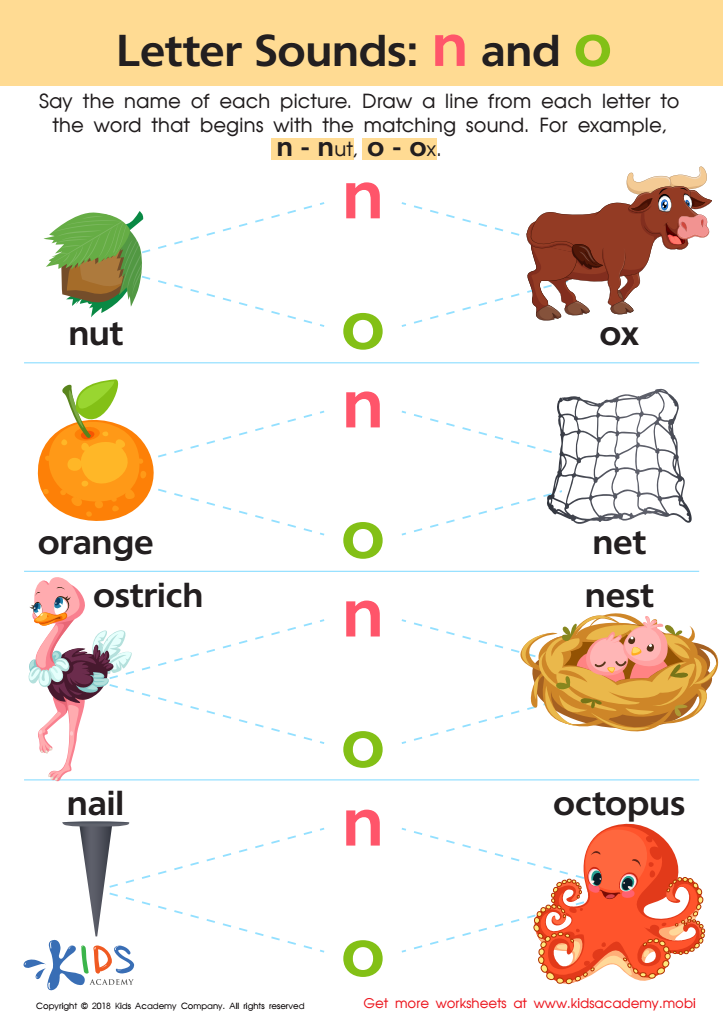
Letter N and O Sounds Worksheet

Help your preschooler learn to recognize the N and O letter sounds with this vibrant worksheet from Kids Academy! Have them say the name of each picture and listen for N or O. Trace the dotted line from letter to its match to complete the phonics review. It's a fun way to help them master the difference between the two sounds!
Letter N and O Sounds Worksheet
Worksheet
Letter f sounds worksheet

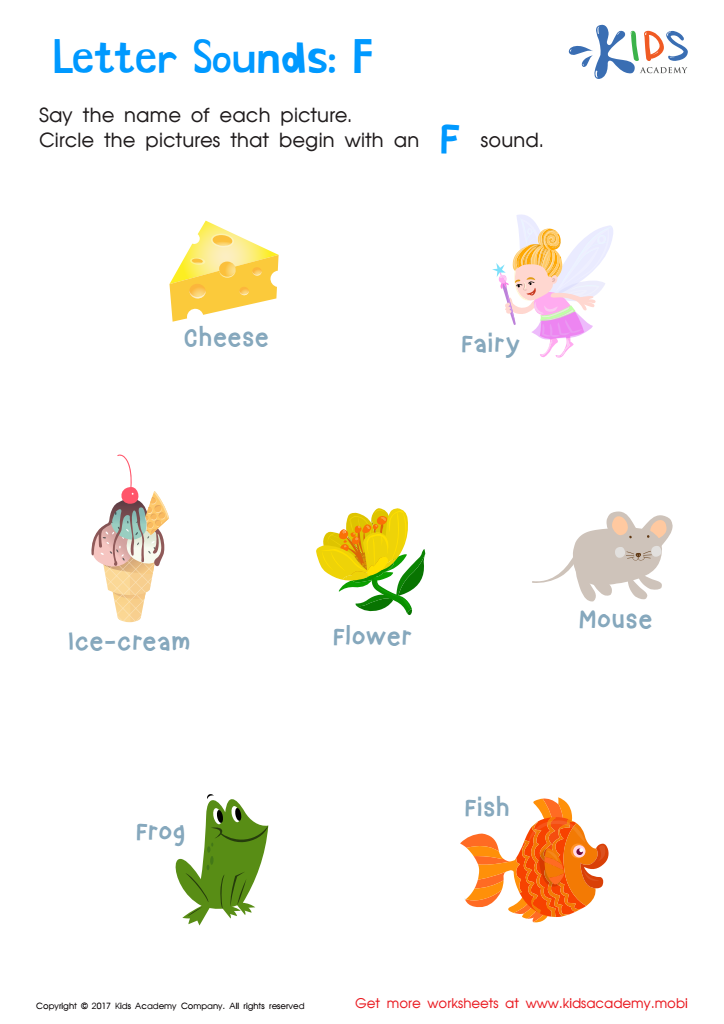
Letter F Sounds Worksheet

Kids will practice identifying 'f' words, tracing, and coloring the letter F for a great way to learn phonics. Help your child discover the wonders of the letter 'F' with this fun worksheet! Kids will practice identifying 'F' words, tracing and coloring the letter, and building early reading skills. Stimulate their learning and let them connect letter sounds to words they know. An enjoyable way to practice phonics!
Letter F Sounds Worksheet
Worksheet
Identify the Written Words Worksheet

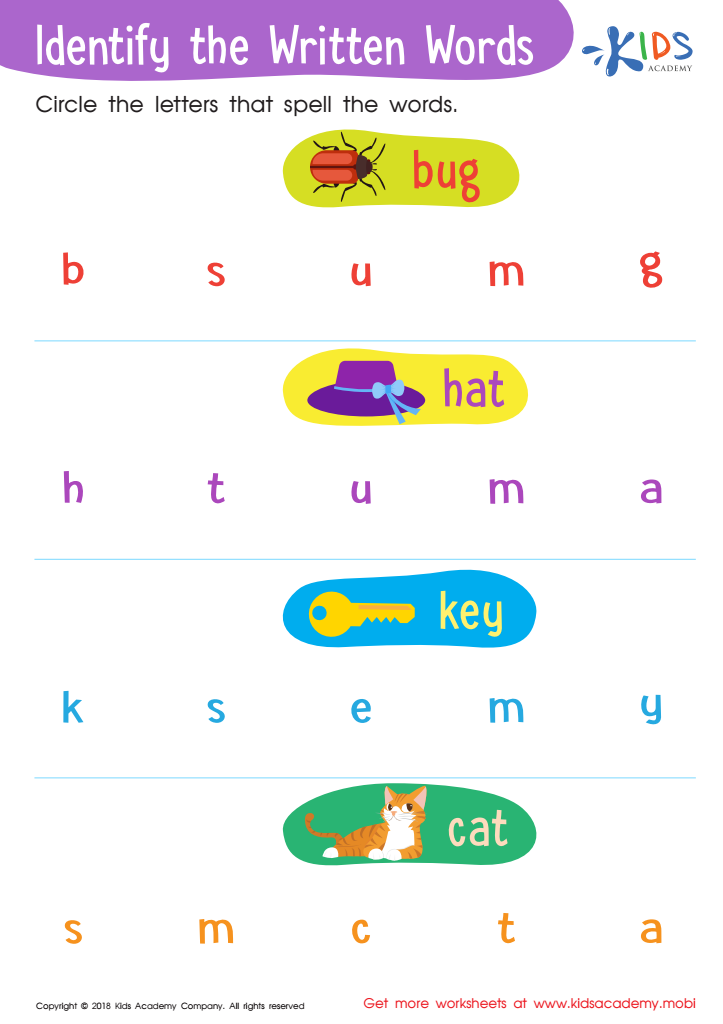
Identify the Written Words Worksheet

Have your students identify the objects on the printout, then spell the words. If they already know how to spell, this exercise should be easy. Help them circle the correct letters from the set to spell out the words. This is a great way to reinforce reading and spelling skills. Max 80 words.
Identify the Written Words Worksheet
Worksheet
Letter R and S Sounds Worksheet

Letter R and S Sounds Worksheet

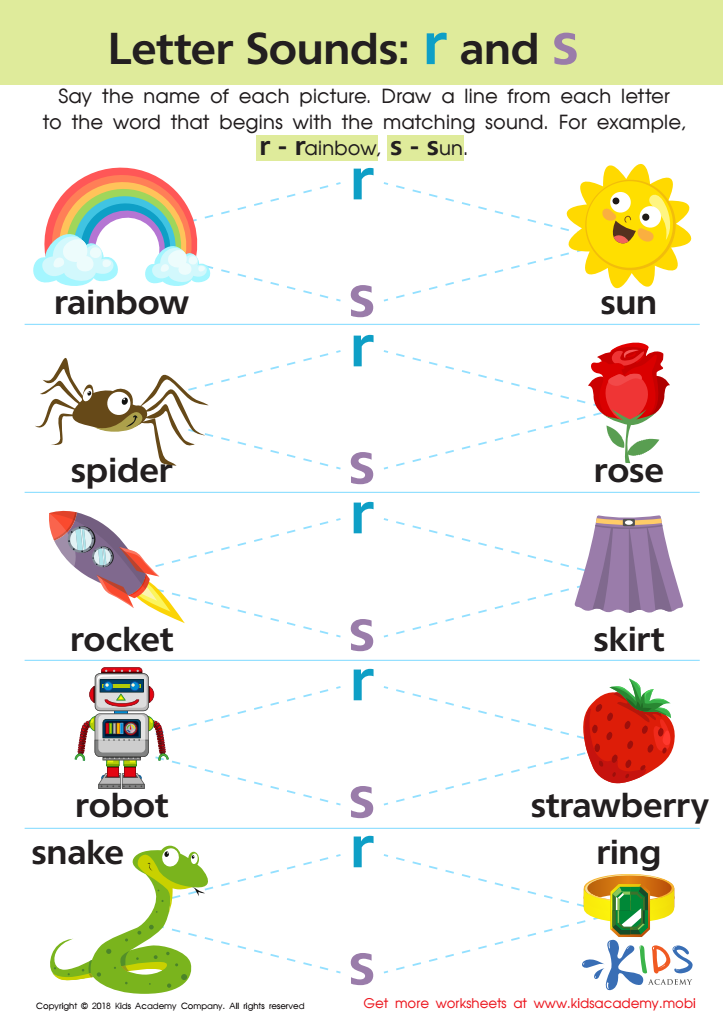
Kids Academy's phonics worksheet is full of fun and color! Help your child name the pictures and read the words under each one. Does it begin with an R or S? Then, use a pencil to trace the dotted line from the letter to its image. It's a great way to practice phonics skills!
Letter R and S Sounds Worksheet
Worksheet
Finding the Sounds Worksheet

Finding the Sounds Worksheet

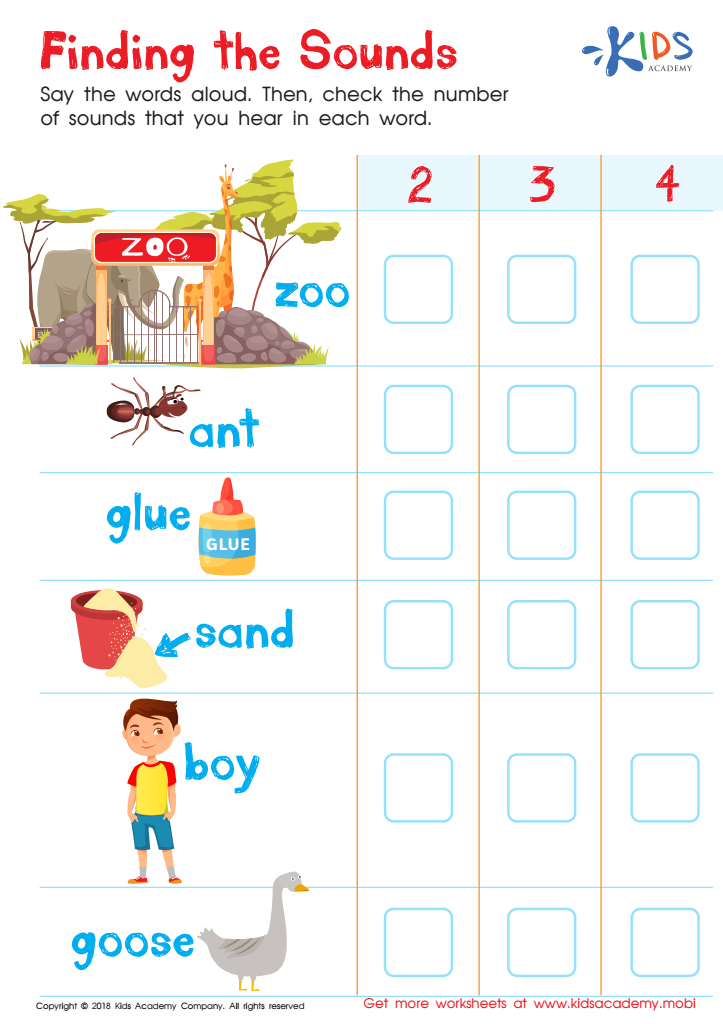
This free colorful worksheet assists children in learning words and breaking them down into sounds. It boosts auditory discrimination, phonological awareness and fine motor skills. Picture clues help them read confidently, and they can check the appropriate boxes to practice their reading skills.
Finding the Sounds Worksheet
Worksheet
Letter D and E Sounds Worksheet


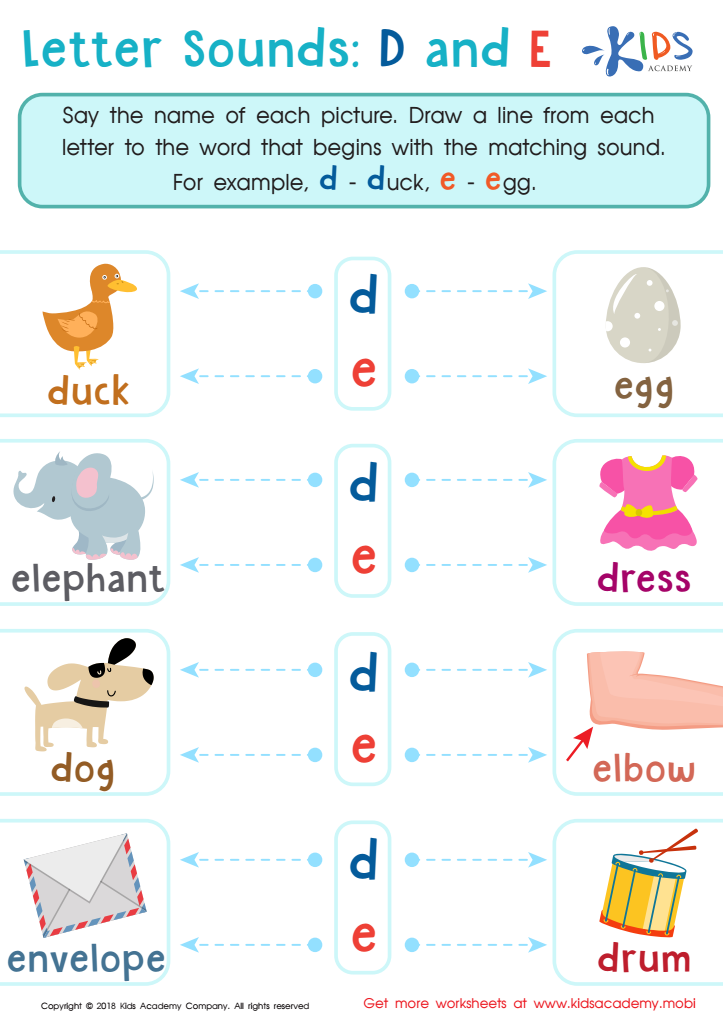
Letter D and E Sounds Worksheet

Kids can use picture clues and visual discrimination to name cheerful pics and isolate the beginning sound. This free PDF worksheet will help them develop phonological awareness, differentiate between "D" and "E", and hone fine-motor skills. It'll also boost their confidence as they become readers.
Letter D and E Sounds Worksheet

Worksheet


Vocabulary development and letter sounds are crucial for children aged 4-6, laying the foundation for their reading and communication skills. At this age, children are rapidly developing language through interactions with their environment and the people around them. Strong vocabulary and phonemic awareness—understanding the sounds that letters make—are key components in learning to read effectively.

A robust vocabulary enhances a child’s ability to express their thoughts and feelings, helping them develop social skills and academic confidence. Engaging with new words during storytelling, daily conversations, and play stimulates cognitive development and encourages curiosity about the world.

Letter sounds, or phonics, are fundamental to reading. When children can recognize and pronounce letter sounds, they gain the tools to decode words, leading to improved reading fluency. Phonics-based instruction nurtures their understanding of how letters form words, acting as a bridge between spoken language and written text.

Moreover, parents and teachers can play an active role in this development. Utilizing simple, playful activities—like singing songs or reading alound with rhymes—makes learning an enjoyable experience. Investing time in vocabulary and letter sound development not only prepares children for academic success but also fosters a lifelong love for learning.