Phonics Skills Long And Short Vowel Worksheets for Ages 4-6
5 filtered results
Difficulty Level
Grade
Age
-
From - To
Subject
Activity
Standards
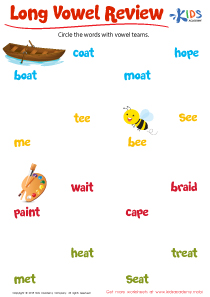
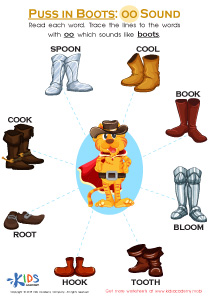
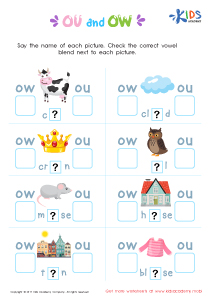
Enhance your child's reading journey with our engaging Phonics Skills Long and Short Vowel Worksheets, designed for ages 4-6. These expertly crafted activities are perfect for young learners to grasp the fundamentals of vowel sounds through interactive exercises. Kids will differentiate between long and short vowels, improving their phonemic awareness and reading efficiency. Our worksheets are filled with fun visuals and varied learning tasks that make phonics practice an enjoyable experience. Ideal for classroom or home use, these resources support early literacy development and help children unlock the magic of reading. Boost your child's phonics skills today!
Favorites
With answer key
Interactive
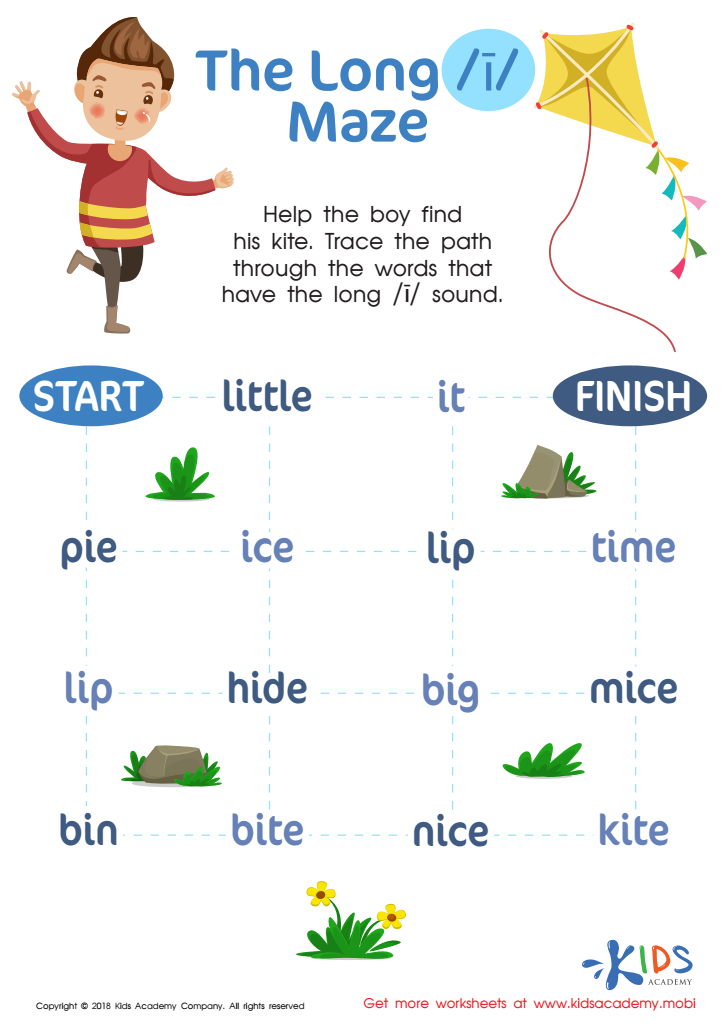
The Long I Maze Reading Worksheet
Help your child learn phonics to help them read. Show them the difference between long and short "i" sounds. Guide them as they use a pencil to trace words with the long "i:" sound in the "Help the Boy in the Picture" worksheet exercise. This will help them find the kite in the picture.
 Assign to My Students
The Long I Maze Reading Worksheet
Worksheet
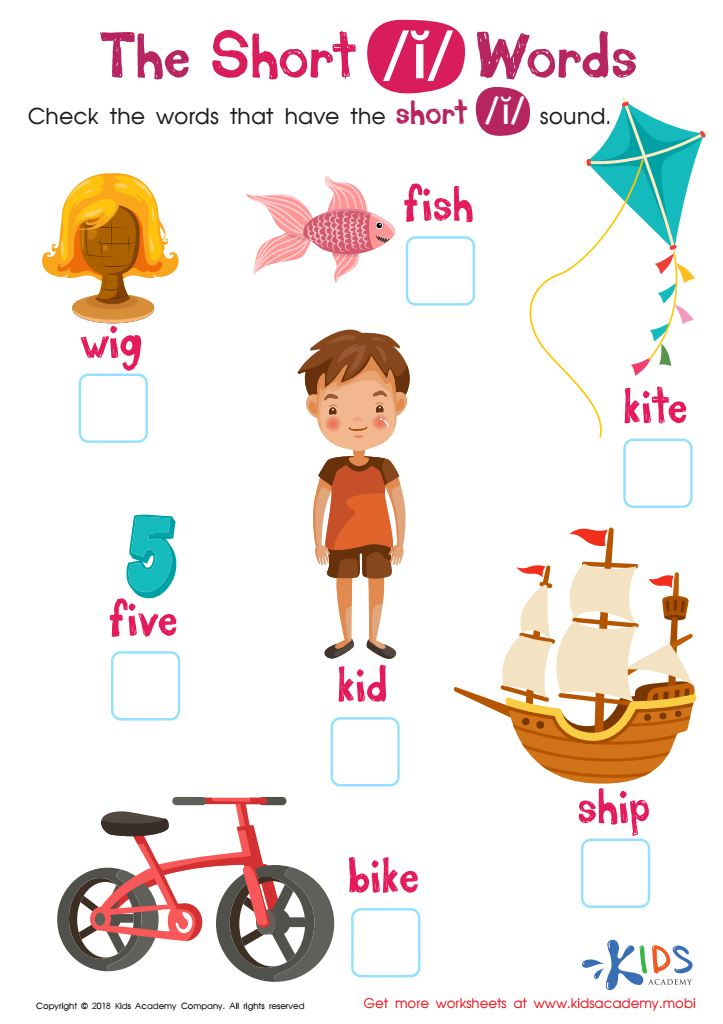
The Short I Words Reading Worksheet
Teach your kindergartner phonics with this printout worksheet! It introduces the short «i» sound and helps them differentiate and articulate sounds and letters of the alphabet. With practice, your child will soon find it easy to classify sounds into long and short vowels.
The Short I Words Reading Worksheet
Worksheet
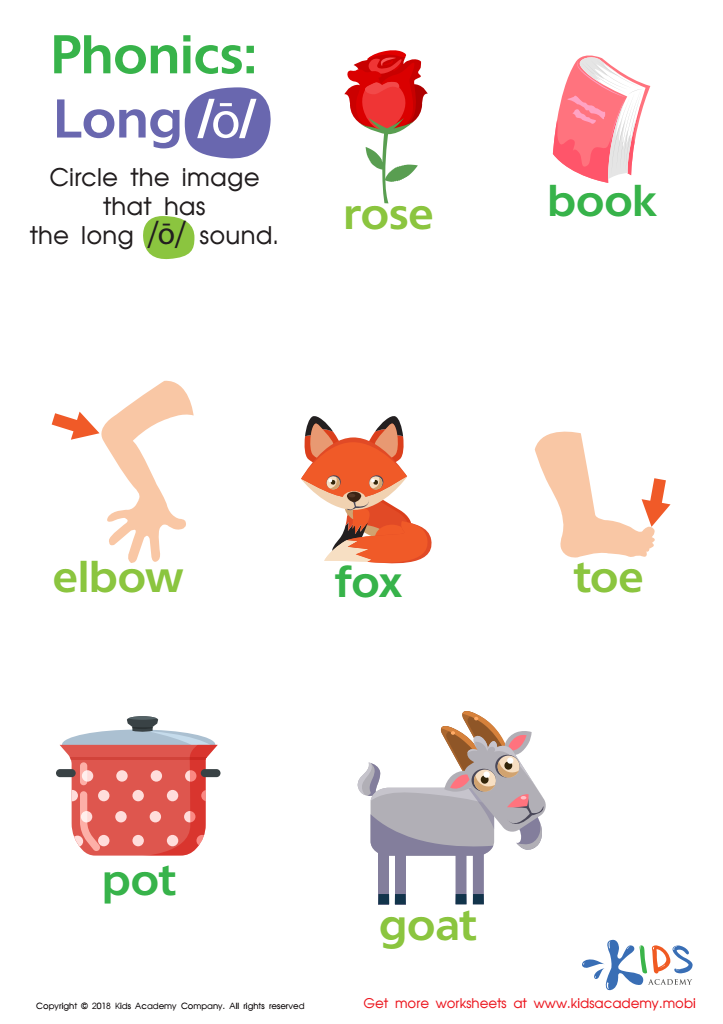
Phonics Long O Reading Worksheet
Are you ready to help your child learn the phonics long «o» sound? This worksheet is designed to aid them in getting familiar with the sound. After completing the exercise, your child should be able to differentiate letters, and recognize words with the long «o» sound. Encourage them to circle the images that have the sound.
Phonics Long O Reading Worksheet
Worksheet
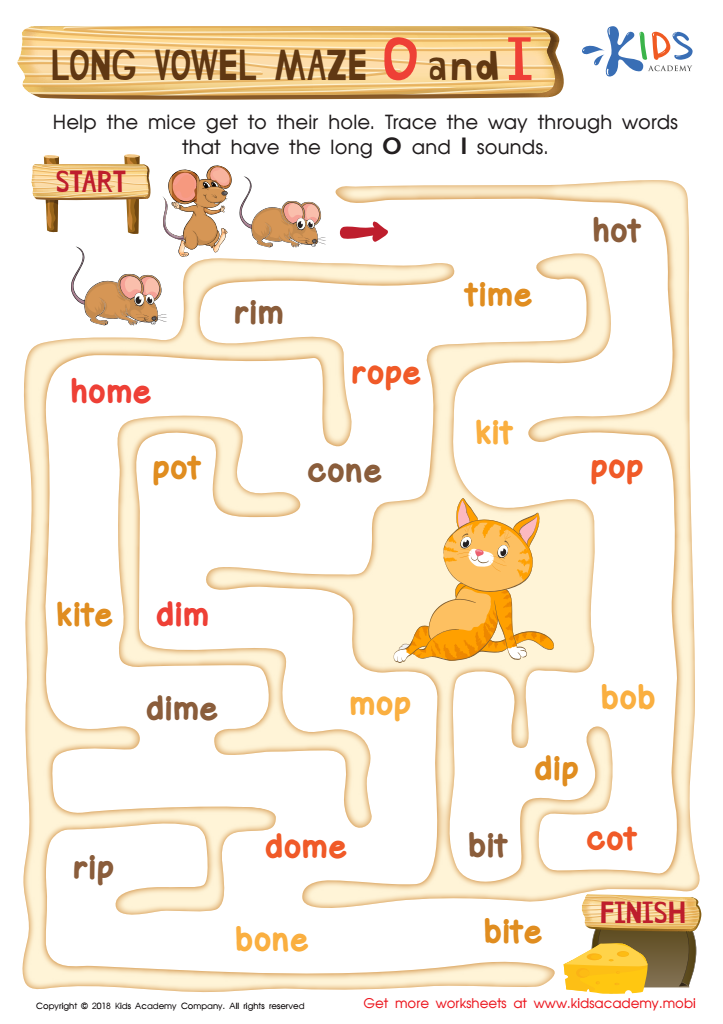
Long Vowel Maze /o/ and /i/ Worksheet
Help your new readers have fun and build their sight word vocabulary! Guide the mice to their prize cheese by having them trace the route on the worksheet, using words with the long o and long i sounds. But watch out for the kitty!
Long Vowel Maze /o/ and /i/ Worksheet
Worksheet
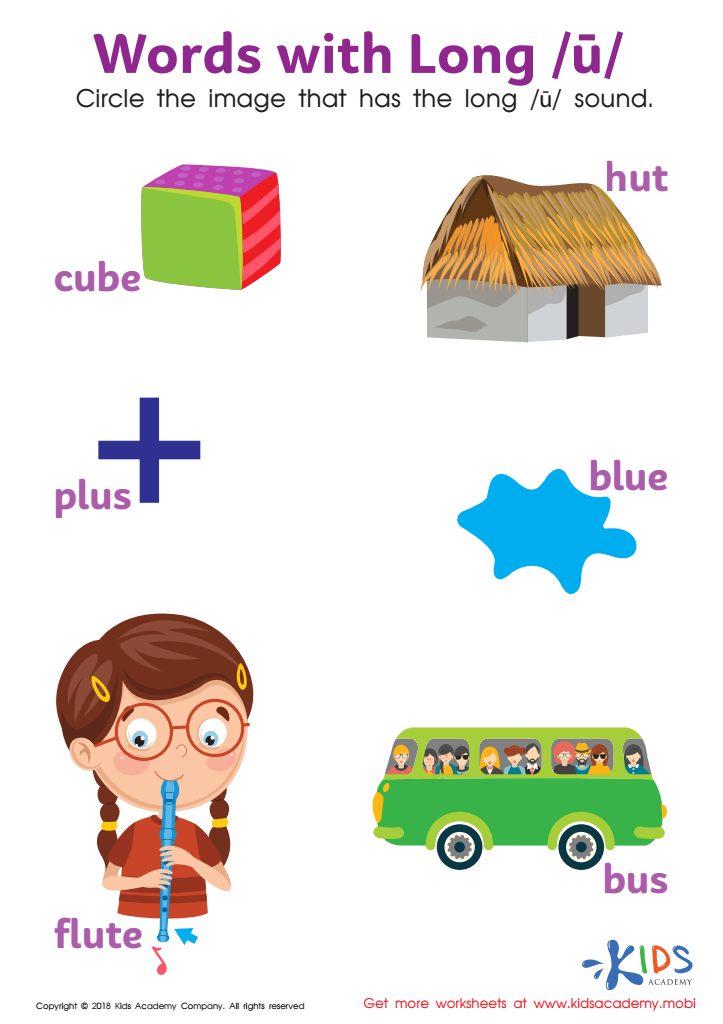
Words with Long U Reading Worksheet
Help your new reader master vowel recognition with this fun worksheet. By using picture clues and practicing fine motor skills, they'll learn to differentiate between words with the long and short «u» sound. Your learner will also get to practice vowel discrimination in high-frequency words. It's a great way to learn the importance of vowels in reading!
Words with Long U Reading Worksheet
Worksheet
Join Kids Academy for Free
Who is primarily going to use this learning content?




Phonics skills, particularly understanding long and short vowels, are crucial for children aged 4-6 as they form the foundation of reading and spelling. During these early years, children's brains are highly adaptable and primed for language acquisition, making it the optimal time to introduce phonics.
Long and short vowel sounds are fundamental components of most words. A grasp of these sounds allows children to decode and encode words more effectively. For instance, differentiating between the short "a" in "cat" and the long "a" in "cake" helps kids understand how sounds influence word meanings. This skill not only boosts reading fluency but also enhances comprehension.
Moreover, early phonics education is linked to academic success. Kids who master these skills early typically find learning to read both easier and more enjoyable, bolstering their confidence and fostering a lifelong love of reading.
Parents and teachers play a pivotal role in this learning process. By incorporating playful, interactive phonics activities into daily routines, they can make learning these essential skills both fun and effective. Investing time and effort in phonics at this stage sets children up for a smoother, more successful educational journey, giving them the tools they need to thrive academically and personally.