Reading comprehension Long And Short Vowel Worksheets for Ages 4-6
8 filtered results
-
From - To
Enhance your child's reading skills with our engaging Long and Short Vowel Worksheets designed for ages 4-6. These printable worksheets from Kids Academy focus on early grade reading comprehension, helping young learners distinguish vowel sounds through interactive activities. Our expertly crafted exercises guide children in identifying and pronouncing both long and short vowels, fostering foundational literacy skills crucial for their education. Fun and educational, our worksheets provide parents and teachers with effective tools to support young learners' reading journeys. Visit us to explore our diverse selection of reading comprehension resources and give your child the head start they deserve!
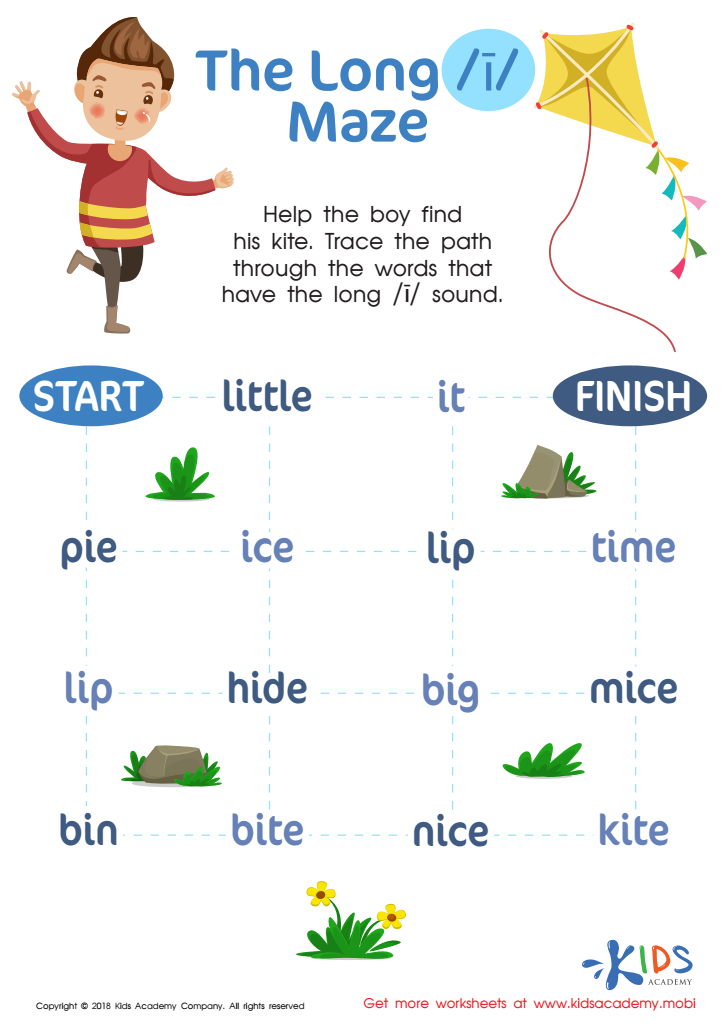
The Long I Maze Reading Worksheet
 Assign to My Students
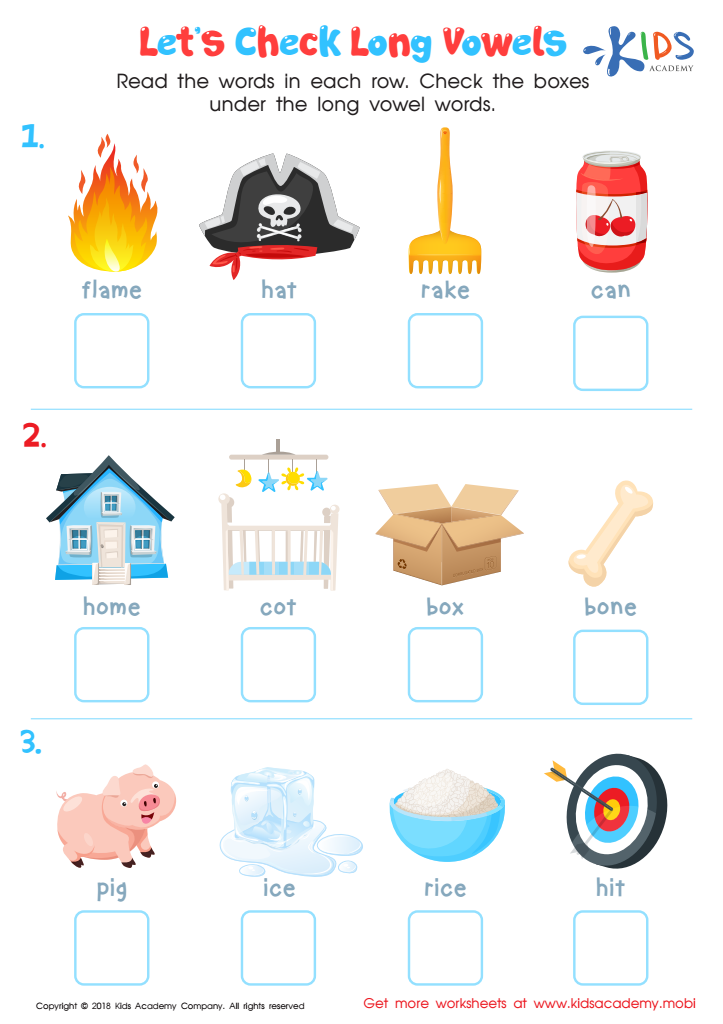
Let's Check Long Vowels: Assessment Worksheet
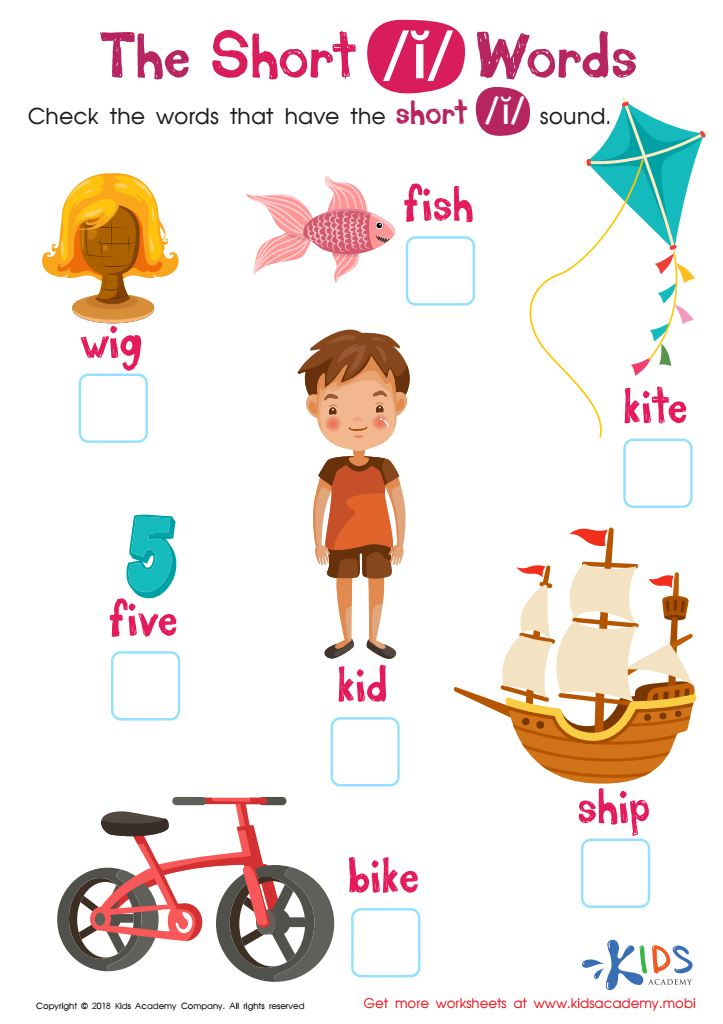
The Short I Words Reading Worksheet
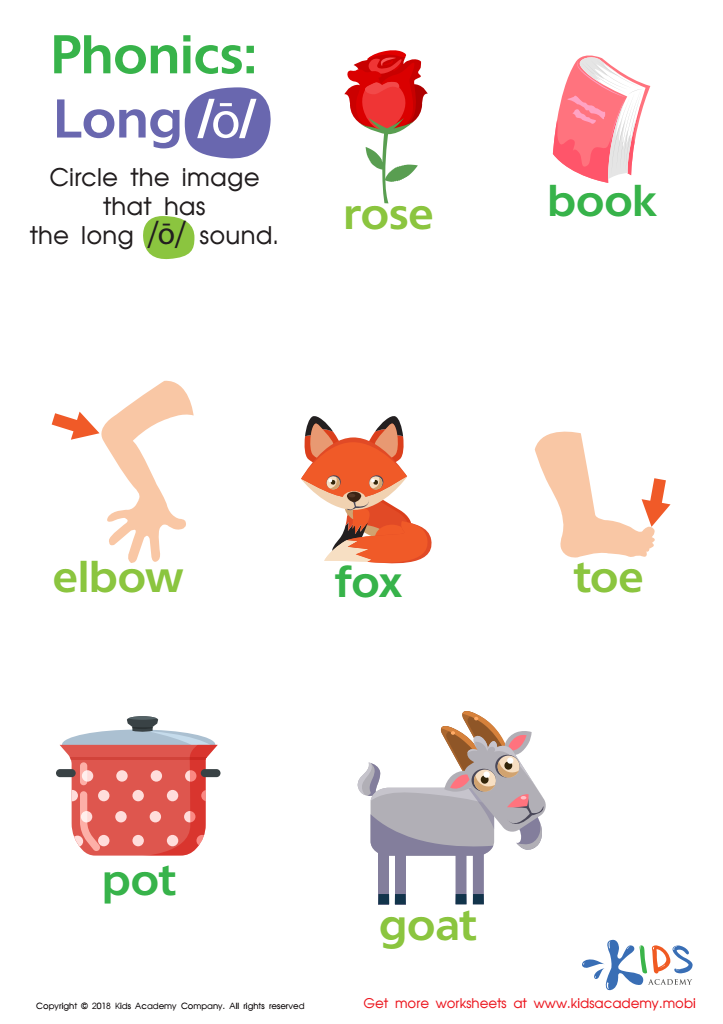
Phonics Long O Reading Worksheet
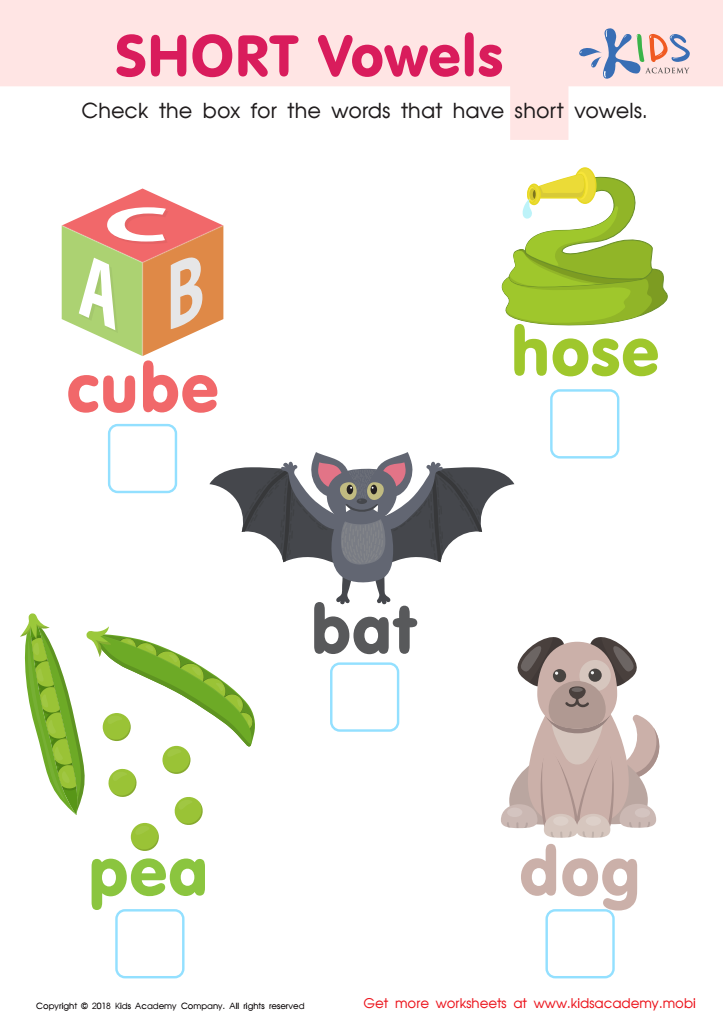
short vowels Worksheet
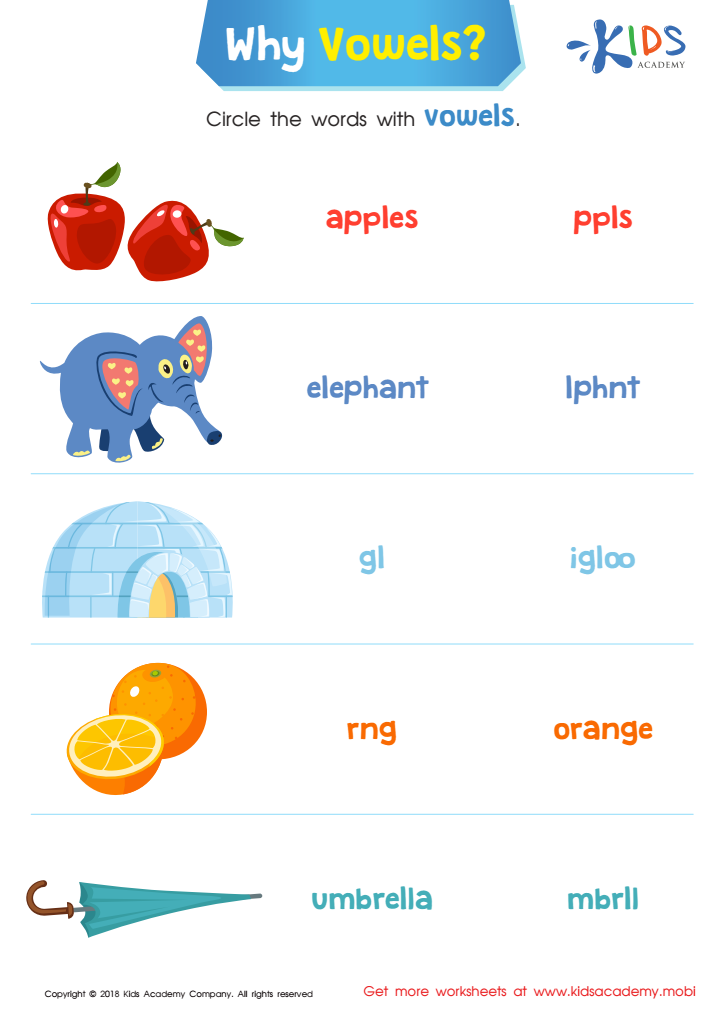
Why Vowels? Reading Worksheet
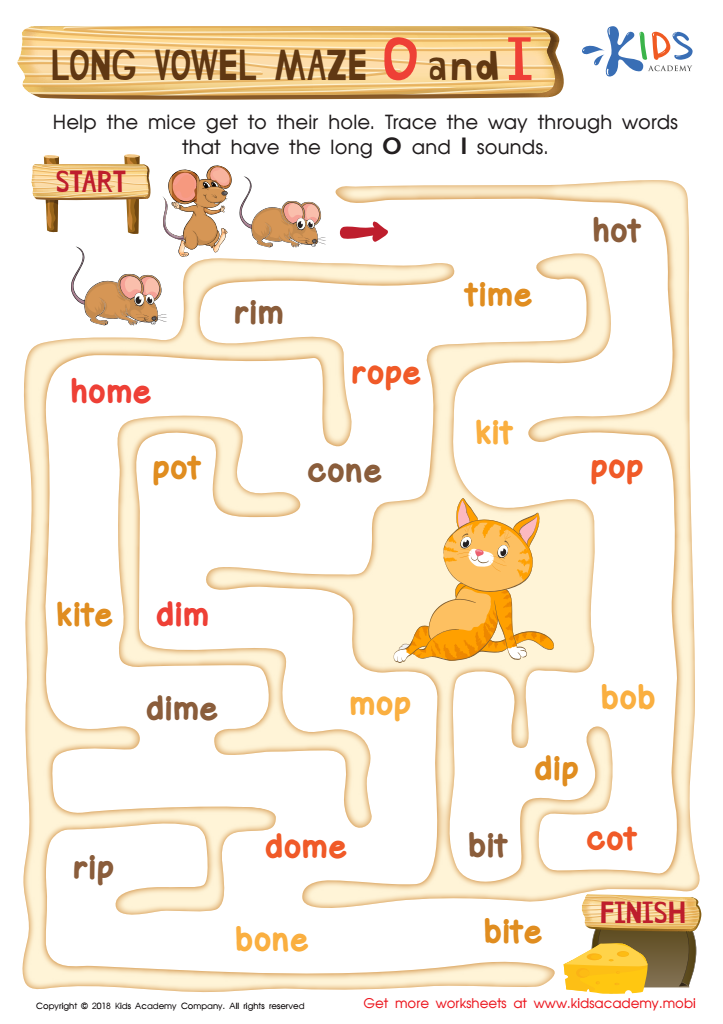
Long Vowel Maze /o/ and /i/ Worksheet
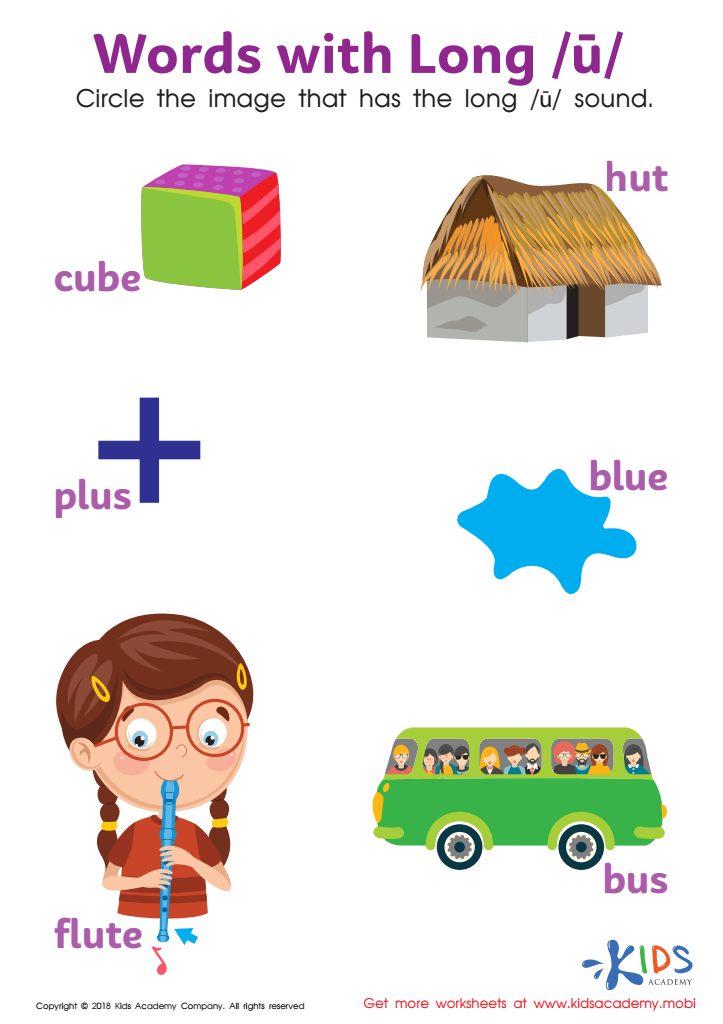
Words with Long U Reading Worksheet




Reading comprehension and understanding long and short vowels are foundational skills for children aged 4-6 that significantly shape their future academic and life success. Mastery in these areas prioritizes their linguistic development and cognitive growth.
Recognizing long and short vowels is essential because these sounds form the building blocks of words. When children can differentiate between them, they can correctly pronounce words, enhancing their spoken language skills. Additionally, understanding these vowel sounds bolsters phonemic awareness, which is crucial for developing effective decoding strategies, making it easier for children to read unfamiliar words.
Comprehending what they read forms an integral part of children’s educational experience, fostering a love for reading and enhancing their knowledge base. Strong reading comprehension skills enable children to grasp story elements, follow instructions, and learn information across all subjects. Early exposure to these skills supports critical thinking, enhancing their ability to draw inferences and make predictions which are vital cognitive tools in learning.
Parents and teachers play pivotal roles in nurturing these skills through engaging activities, read-aloud sessions, and consistent practice. Caring about these early literacy skills ensures children experience less frustration during learning, leading to a positive self-image and love for lifelong learning. Investing time in these areas sets a robust foundation for all future academic endeavors.