Lowercase identification Lowercase/Small Letters Worksheets for Ages 4-6
5 filtered results
-
From - To
Welcome to our "Lowercase Identification Worksheets" designed for children ages 4-6! These engaging resources are perfect for young learners to enhance their recognition of lowercase letters. Our worksheets feature vibrant illustrations and interactive activities that make learning fun and effective. Children will identify, trace, and practice writing small letters, boosting their literacy skills in a playful way. This foundational skill is essential for reading and writing success. Parents and educators can easily access and print these worksheets to support early learning at home or in the classroom. Start your child’s reading journey today with our captivating lowercase letter activities!
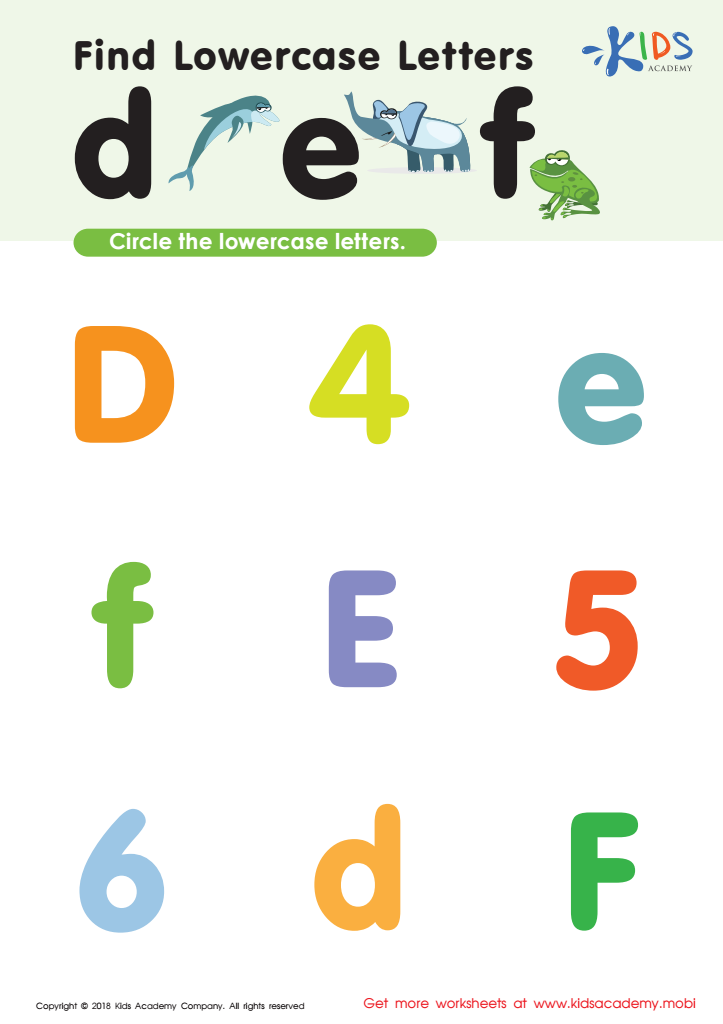
Find Lowercase Letters d e f Worksheet
 Assign to My Students
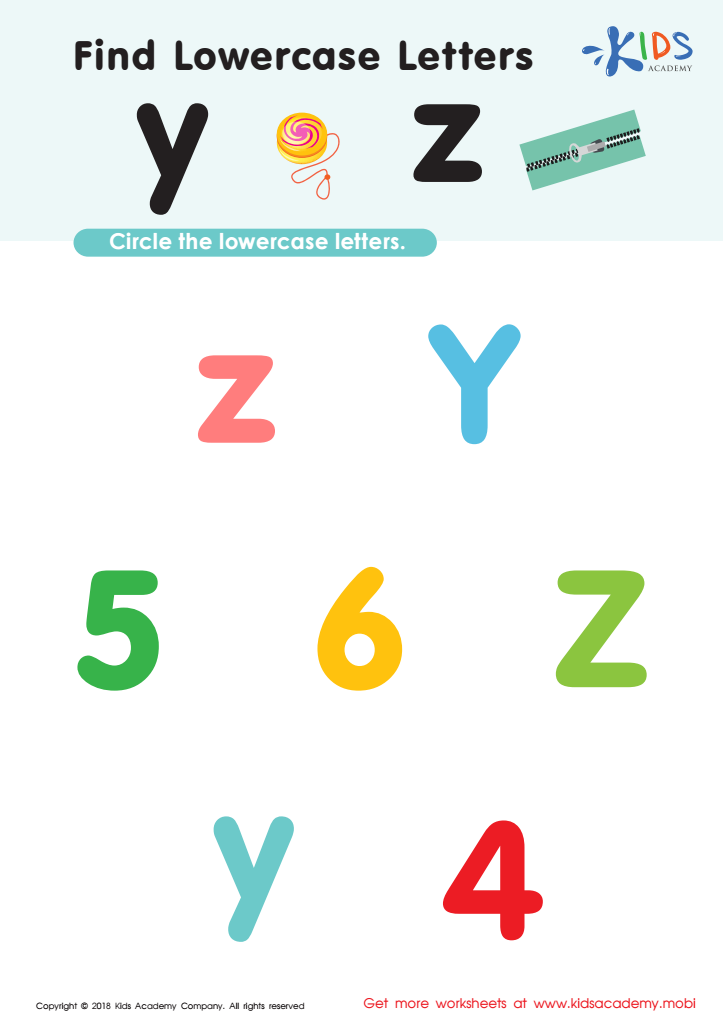
Find Lowercase Letters y z Worksheet
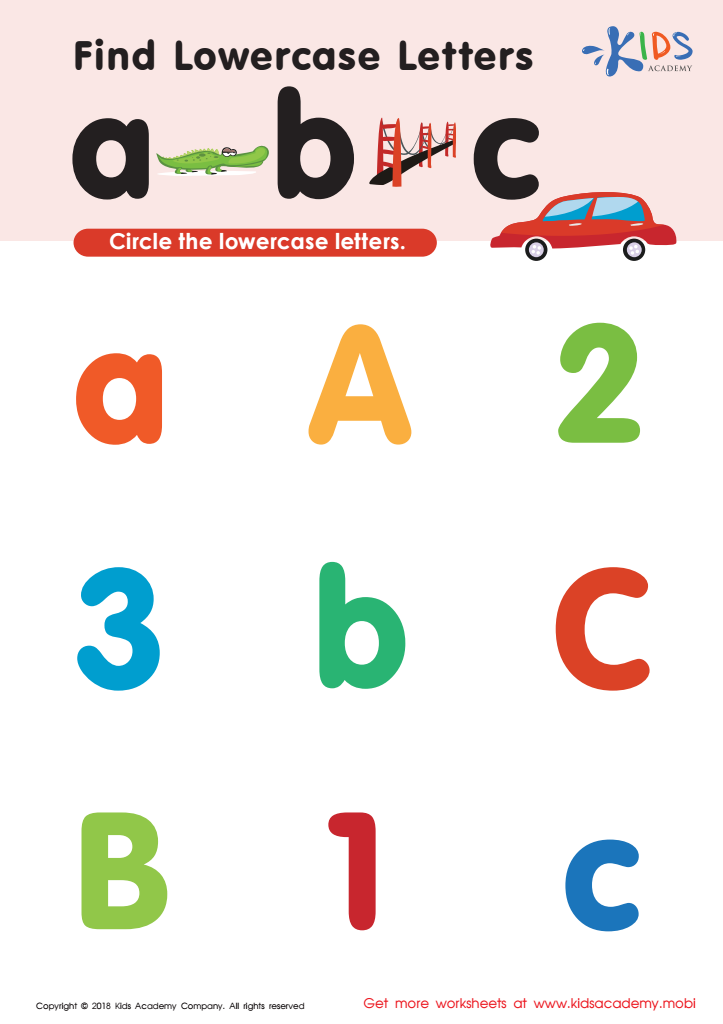
Find lowercase letters a b c Worksheet
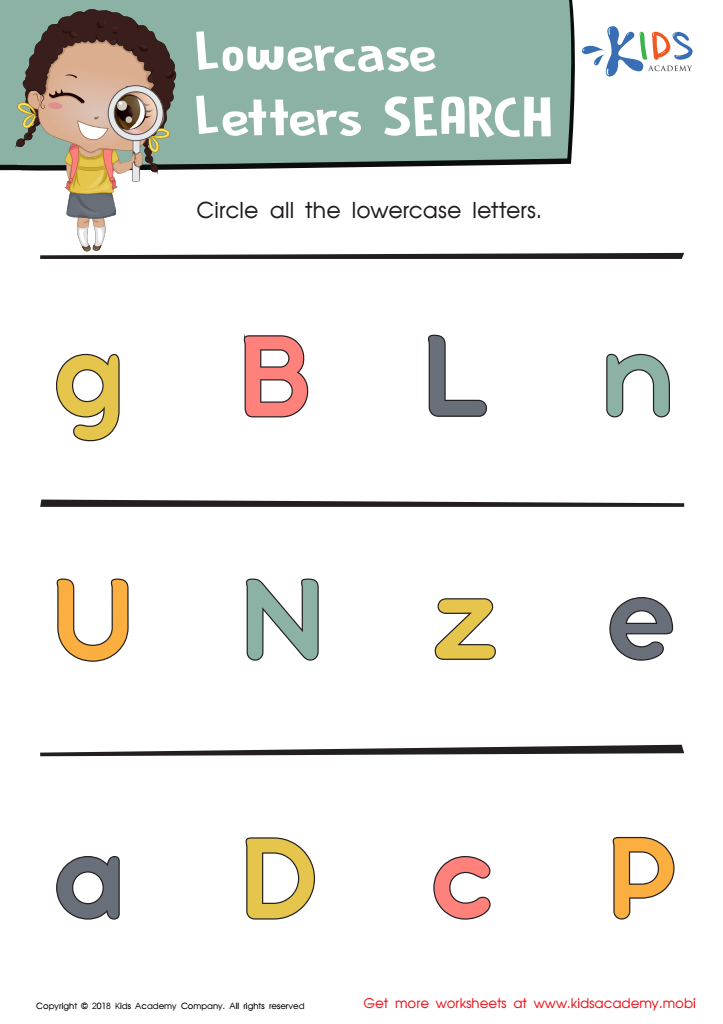
Lowercase Letters Search: Assessment Worksheet
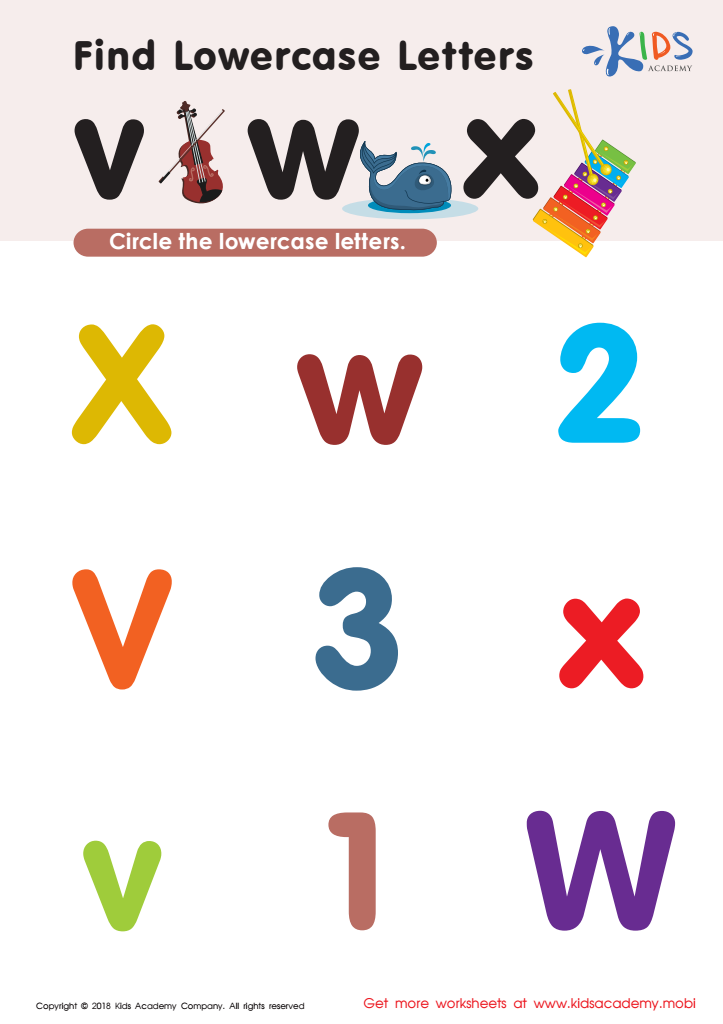
Find Lowercase Letters v w x Worksheet


Lowercase letter identification is crucial for children aged 4-6 as it serves as the foundation for reading and writing. During these formative years, children begin to recognize and understand that letters have specific sounds and meanings, and lowercase letters are essential in everyday communication. Most text is written in lowercase, which means that children must learn to identify these letters to effectively read age-appropriate books, signs, and labels.
By mastering lowercase letters, children enhance their phonemic awareness, unlocking the ability to blend sounds and decode words. This skill promotes early literacy and prepares them for more complex reading tasks as they progress in school. Additionally, recognizing lowercase letters aids in writing tasks, since children often write in lowercase for everyday use.
Parents and teachers play a pivotal role in fostering this skill through engaging and interactive activities, creating a supportive learning environment. By focusing on lowercase letter identification, they can significantly impact children's confidence and academic success. As children gain fluency in recognizing small letters, they cultivate a love for reading and writing that can last a lifetime, highlighting the importance of this foundational skill in their educational journey.