Alphabet Recognition Missing Letters Worksheets for Ages 4-6
3 filtered results
-
From - To
Boost your child's alphabet recognition skills with our engaging Missing Letters Worksheets for ages 4-6! Designed to make learning fun, these worksheets help young learners identify and fill in missing letters, reinforcing their understanding of the alphabet. Perfect for preschool and kindergarten, each activity supports early literacy development while fostering critical thinking and problem-solving abilities. Kids will enjoy vibrant illustrations and interactive exercises that keep them motivated and excited to learn! Download our free printable worksheets and watch your little ones enhance their phonetic skills and letter recognition in an enjoyable and educational way. Perfect for home or classroom use!
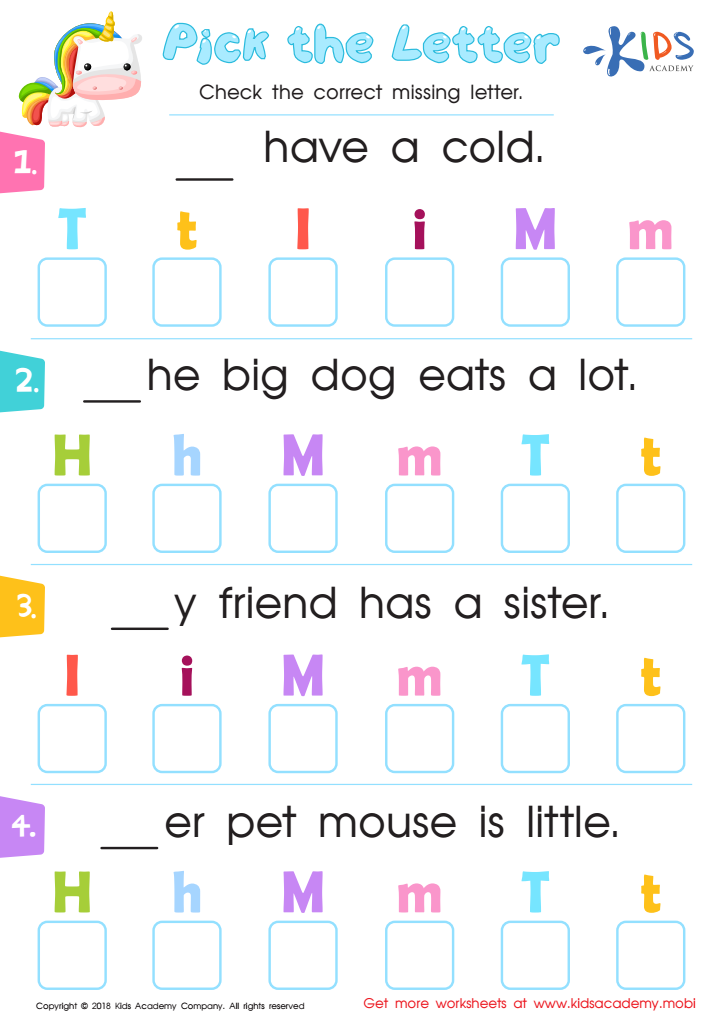
Pick the Letter Worksheet
 Assign to My Students
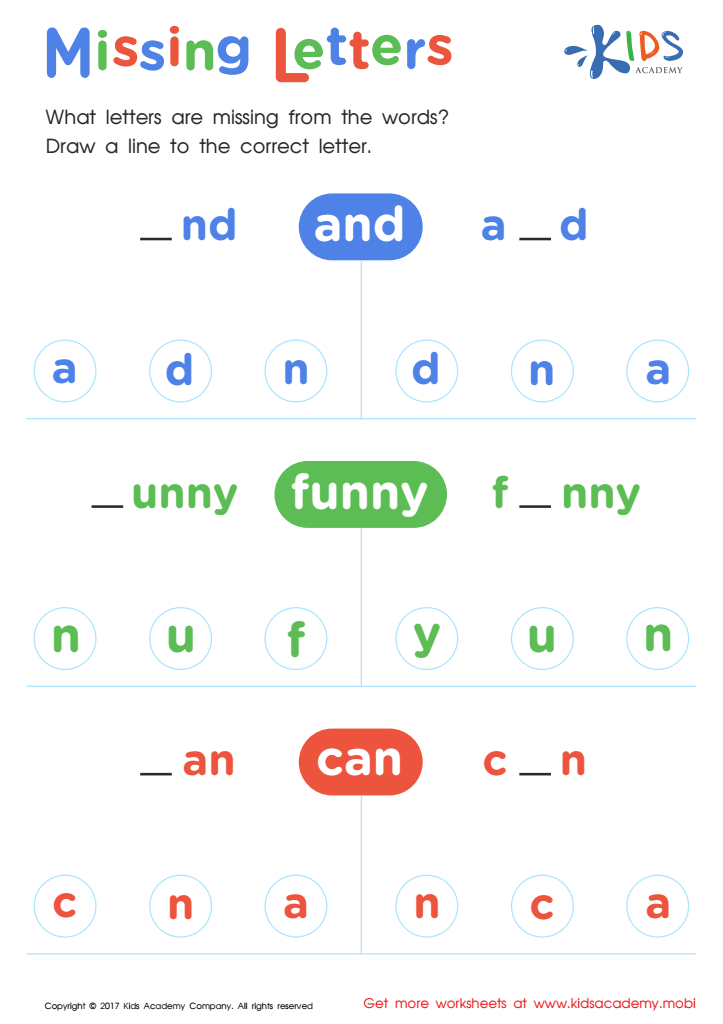
Missing Letters Worksheet
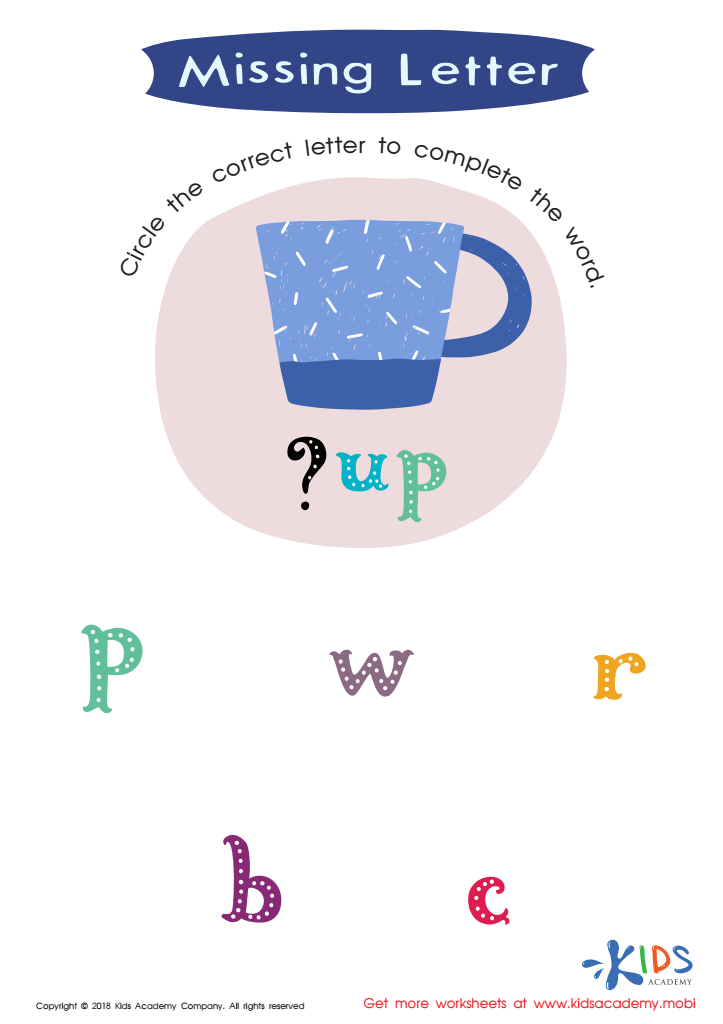
Missing Letter Worksheet



Alphabet recognition, specifically the ability to identify missing letters, is crucial for children aged 4-6 as it lays the foundation for literacy development. Early mastery of the alphabet not only fosters reading and writing skills but also enhances cognitive functions, such as memory and attention. For parents and teachers, focusing on recognizing missing letters encourages interactive learning experiences that make education engaging and enjoyable.
Understanding the significance of missing letters also aids in phonemic awareness, helping children connect sounds with their corresponding letters, which is essential for word formation and reading comprehension. This skill supports vocabulary development, as children become more adept at recognizing and spelling common words.
Additionally, regular practice in contexts like alphabet games can boost children's confidence and make them eager learners. By actively participating in activities that target missing letters, parents and teachers can create a supportive environment that nurtures a child's curiosity and love for learning.
Ultimately, attention to alphabet recognition fosters a strong literacy foundation that equips children for future academic success. Investing effort into these early skills is a gift that empowers children throughout their educational journey, making it vital for both educators and parents to prioritize this learning aspect.







