
Letter identification Phonics Worksheets for Ages 4-6
3 filtered results
Difficulty Level
Grade
Age
-
From - To
Subject
Activity
Standards
Welcome to our Letter Identification Phonics Worksheets page, specially designed for children aged 4 to 6! These engaging worksheets help young learners build their foundational reading skills by focusing on letter recognition and phonics. Each printable activity includes fun illustrations and interactive exercises that make learning enjoyable. As your child identifies letters, they’ll enhance their phonemic awareness and develop a love for reading. Our carefully crafted worksheets are perfect for homeschooling or classroom use, promoting effective teaching strategies that cater to early learners’ needs. Dive into an exciting phonics journey with our colorful resources, and watch your child bloom in literacy!
Favorites
With answer key
Interactive
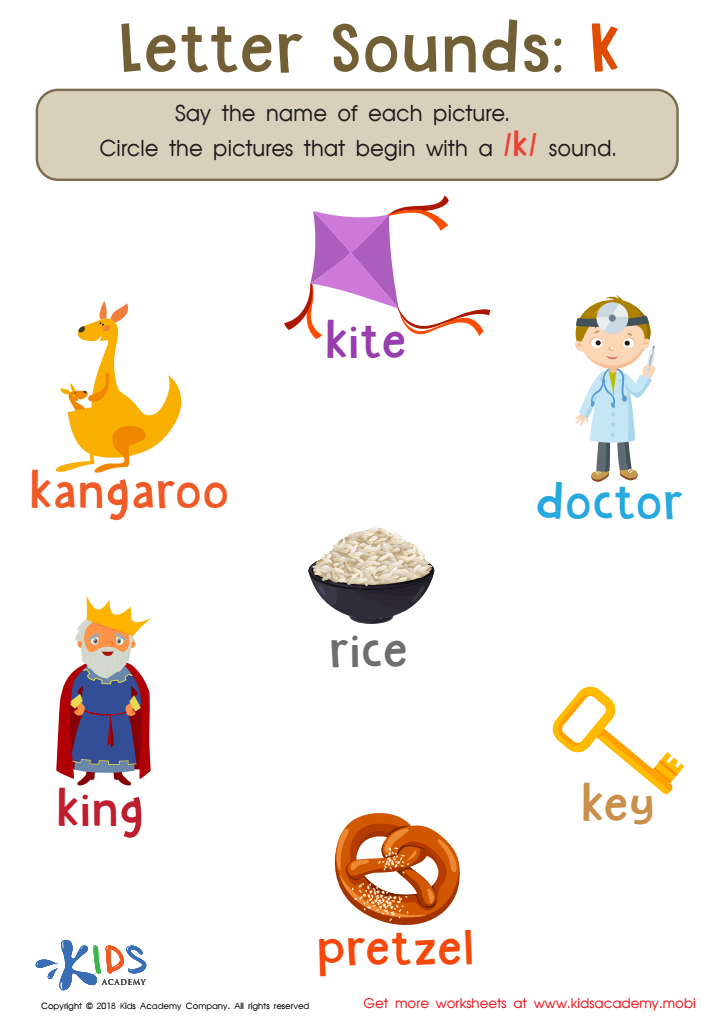
Letter K Sounds Worksheet
Help your child practice phonics with Kids Academy's illustrated worksheet! Have them look at the pictures, read the words and say them aloud. Only circle those that start with a hard 'K' sound. Perfect for preschoolers and kindergarteners! Plus, they'll learn the silent K used in a few words.
 Assign to My Students
Letter K Sounds Worksheet
Worksheet
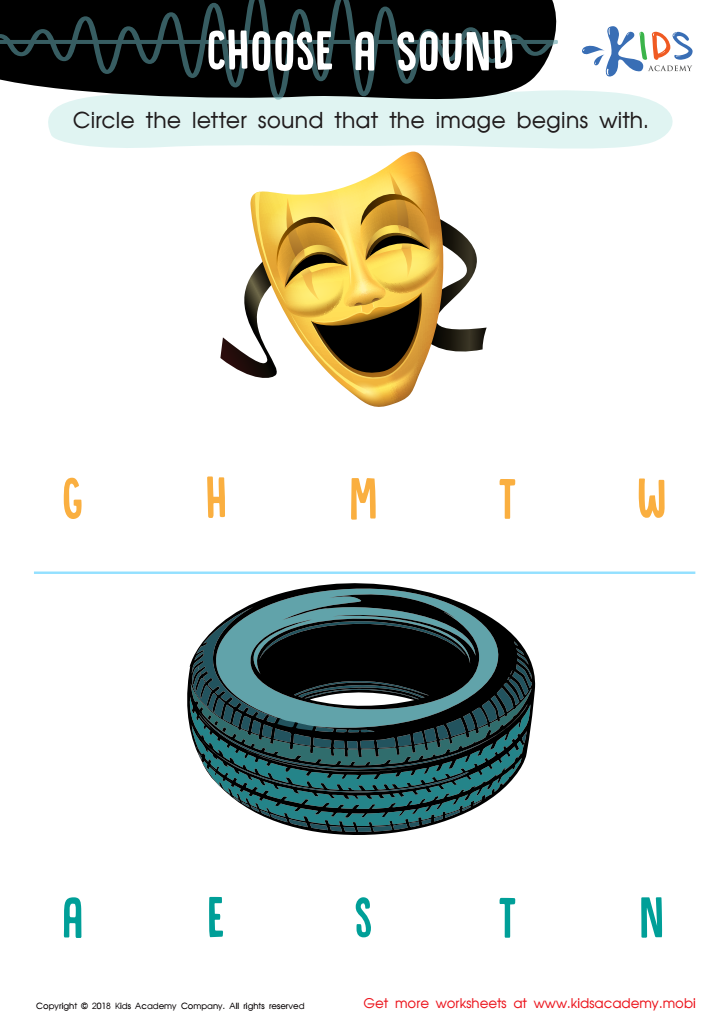
Choose a Sound Worksheet
Help your child hone pre-reading skills with this colorful worksheet! They'll practice tracing letter sounds, develop phoneme awareness, and gain confidence. Plus, it's a fun way to work on their fine motor skills.
Choose a Sound Worksheet
Worksheet
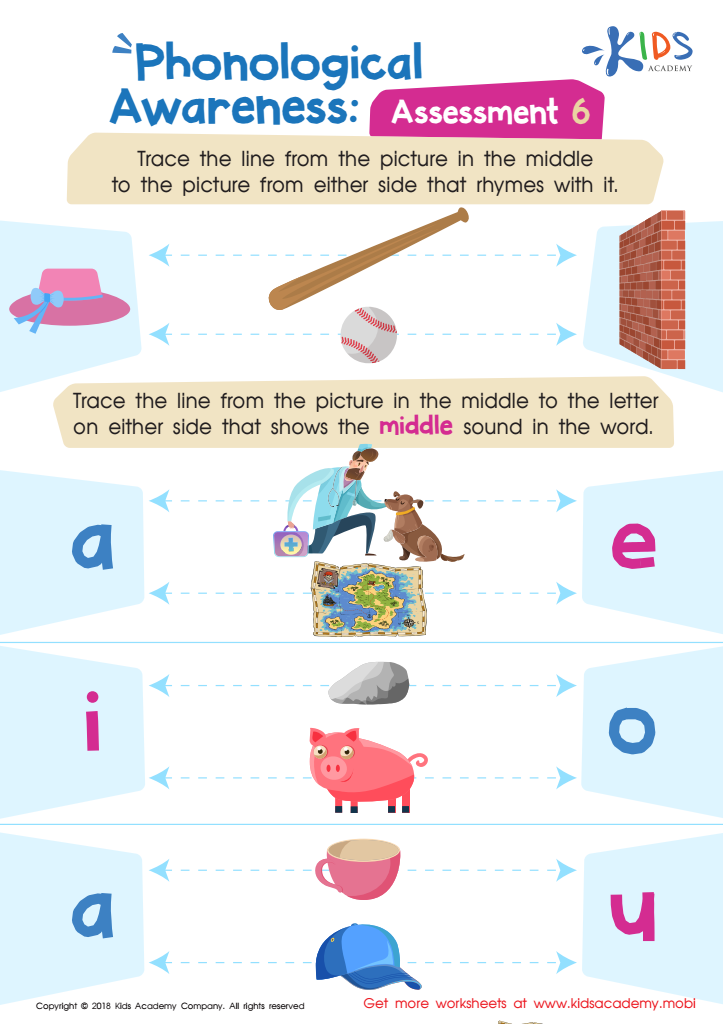
Phonological Awareness: Assessment 6 Worksheet
Check your child's ability to recognize middle word sounds using this free worksheet. Help them learn phonics by practicing with rhyming. Trace the line from the image to its rhyming match then encourage them to name each image aloud to identify which letter matches the sound. It's a great way to assess letter and sound recognition.
Phonological Awareness: Assessment 6 Worksheet
Worksheet
Join Kids Academy for Free
Who is primarily going to use this learning content?








Letter identification and phonics are crucial elements of early literacy that greatly impact children aged 4-6. During these formative years, children are introduced to the foundational skills necessary for reading and writing. Understanding letter identification helps children recognize and name individual letters, which is essential for phonics instruction that connects letters with corresponding sounds.
For parents and teachers, fostering these skills is vital as they are the building blocks of literacy development. Proficient letter identification enables children to decode words, sounding them out, which is critical for independent reading. Knowing how to break down words into their individual sounds supports spelling and improves writing abilities.
Moreover, early phonics skills contribute to children's confidence and enthusiasm for reading. As they become more proficient readers, their enjoyment of literature increases, encouraging a lifelong love for reading. Parents and educators play a pivotal role in creating engaging and supportive learning environments where children can explore these skills through playful activities and structured lessons. By prioritizing letter identification and phonics, parents and teachers can help ensure that children are well-equipped for academic success and healthy literacy development.







