Phonics development Phonics Worksheets for Ages 4-6
5 filtered results
-
From - To
Unlock your child’s potential with our Phonics Development Worksheets tailored for ages 4-6. Our engaging and colorful worksheets are designed to enhance early reading skills by introducing essential phonics concepts through fun activities. Children practice identifying sounds, blending letters, and recognizing word patterns. Boost your young learner’s confidence and build a solid foundation for reading with our expertly crafted resources. Ideal for parents and educators, our worksheets support various learning styles and make phonics enjoyable and effective. Start your child’s journey to reading success today with our innovative phonics worksheets! Explore more at Kids Academy.
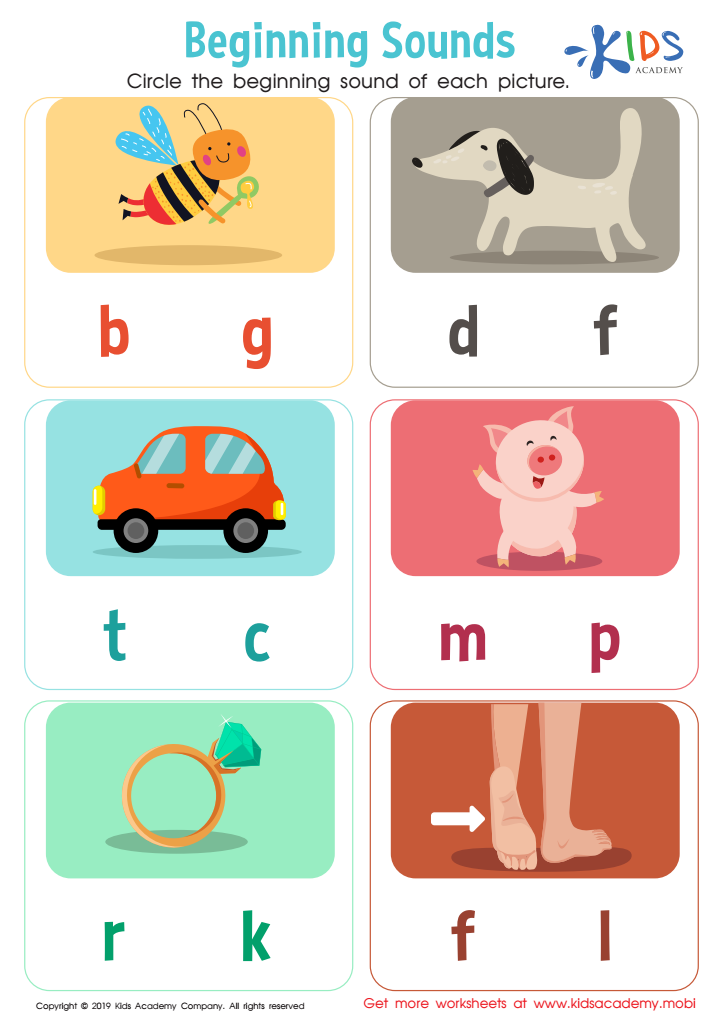
Beginning Sounds Worksheet
 Assign to My Students
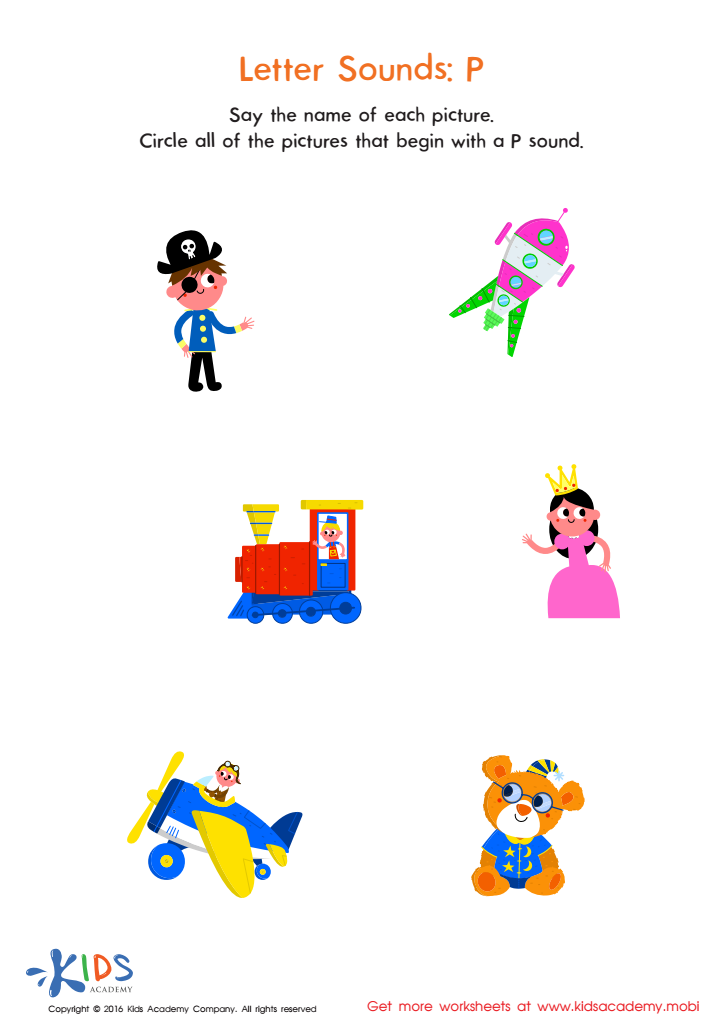
Letter P Sound Worksheet
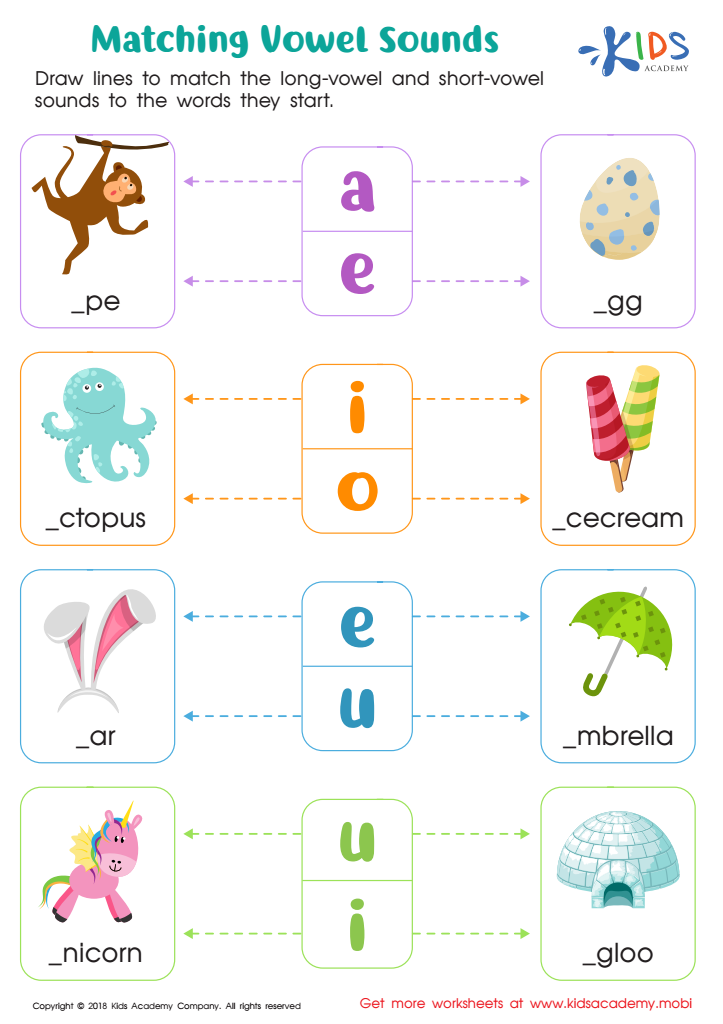
Matching Vowel Sounds Worksheet
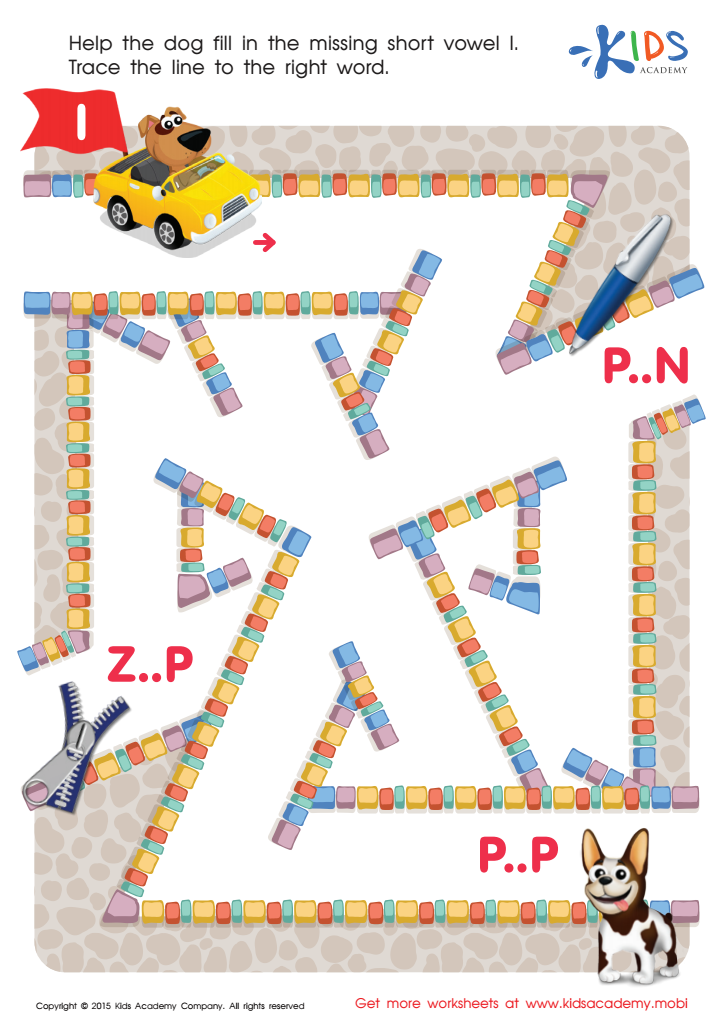
Short Vowel Sound I Worksheet
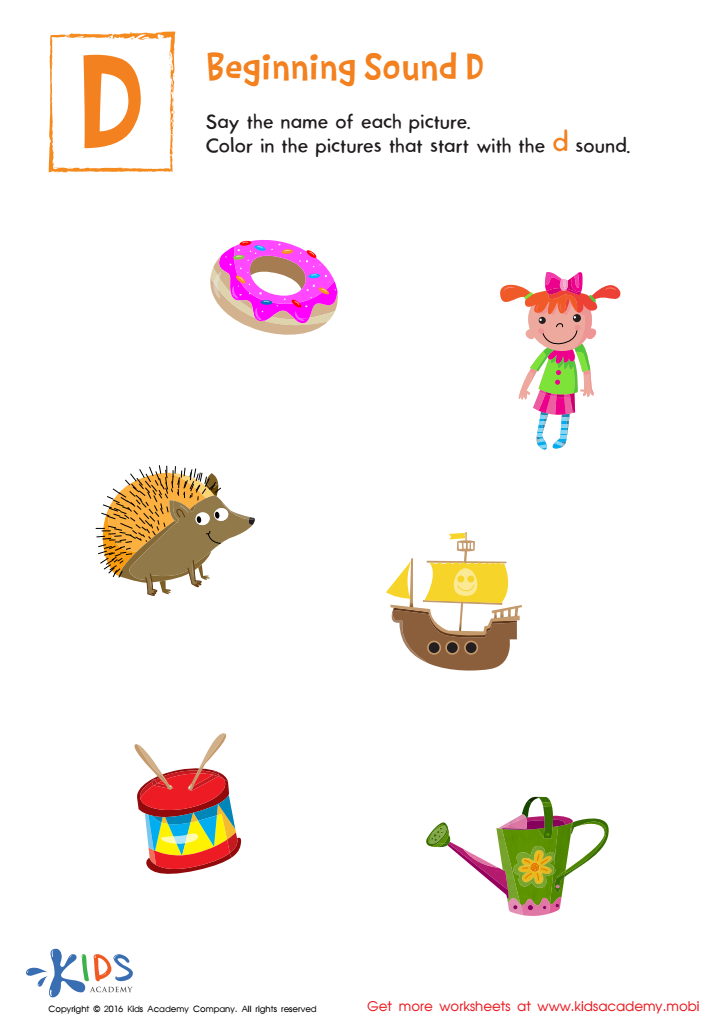
Beginning Sound D Worksheet








Parents and teachers should care deeply about phonics development for children aged 4-6, as it lays the foundational skills for reading and writing. Phonics teaches children the relationship between letters and sounds, enabling them to decode words accurately and efficiently. This early ability to translate written symbols into sounds is crucial for literacy.
Phonics instruction enhances children's reading fluency and comprehension. When children easily decode words, they can focus on understanding the text's meaning rather than expending cognitive resources on figuring out each word. This improves their overall reading experience and promotes a love for reading.
Additionally, strong phonics skills contribute to better spelling and writing. Knowing the predictable patterns in the English language helps children spell words correctly and use a broader vocabulary in their writing.
Early phonics education also boosts confidence and academic success. When children read successfully, they feel more competent and are more likely to engage in reading activities. This early success fosters a positive attitude towards learning and sets a strong foundation for future academic achievement.
In summary, investing in phonics development for young children ensures they acquire essential skills for literacy, setting them on a path for educational success and lifelong learning.







