
Reading practice Phonics Worksheets for Ages 4-6
6 filtered results
Difficulty Level
Grade
Age
-
From - To
Subject
Activity
Standards
Our engaging Reading Practice Phonics Worksheets are designed specifically for children ages 4-6 to develop their foundational reading skills. Through fun, interactive exercises focused on letter sounds, word recognition, and early reading strategies, youngsters build their confidence and phonemic awareness. Tailored to suit varying learning paces, these worksheets make reading practice enjoyable and effective. Parents and educators can easily incorporate these printable activities into daily routines, ensuring consistent progress and a solid proficiency in early literacy. Unlock the door to joyful learning with our carefully crafted phonics worksheets that nurture a lifelong love for reading in your young child.
Favorites
With answer key
Interactive
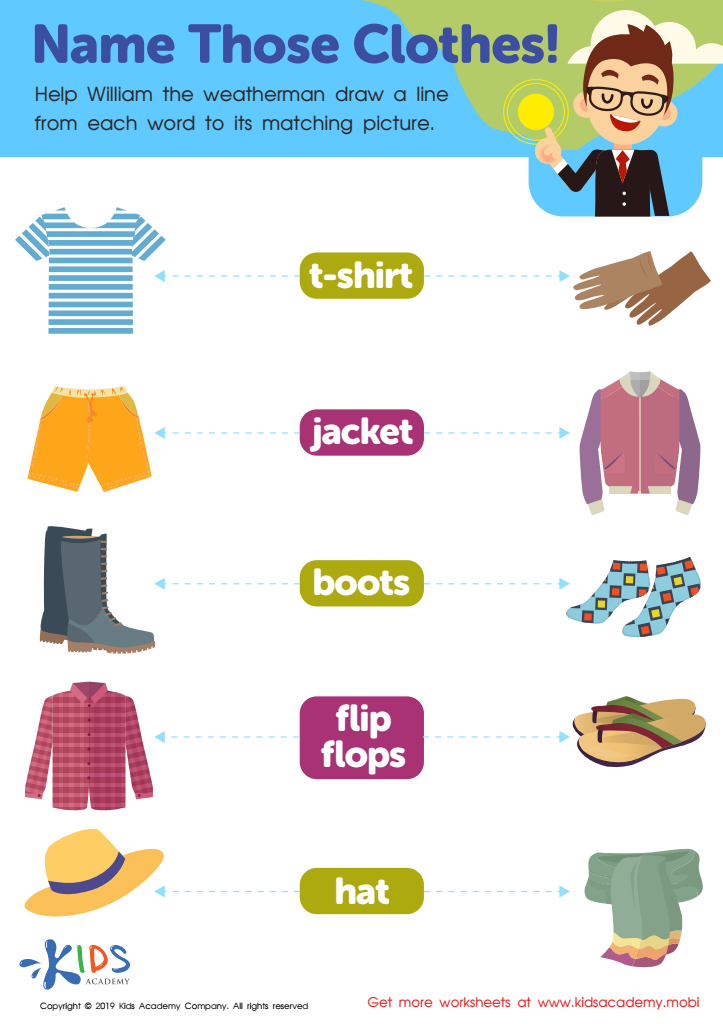
Name Those Clothes Worksheet
This worksheet will help your preschooler build their vocabulary, develop life-skills and work on fine motor skills. They'll analyze which clothing goes with the weatherman and match it to the word. It's a fun and interactive way to recognize high-frequency words.
 Assign to My Students
Name Those Clothes Worksheet
Worksheet
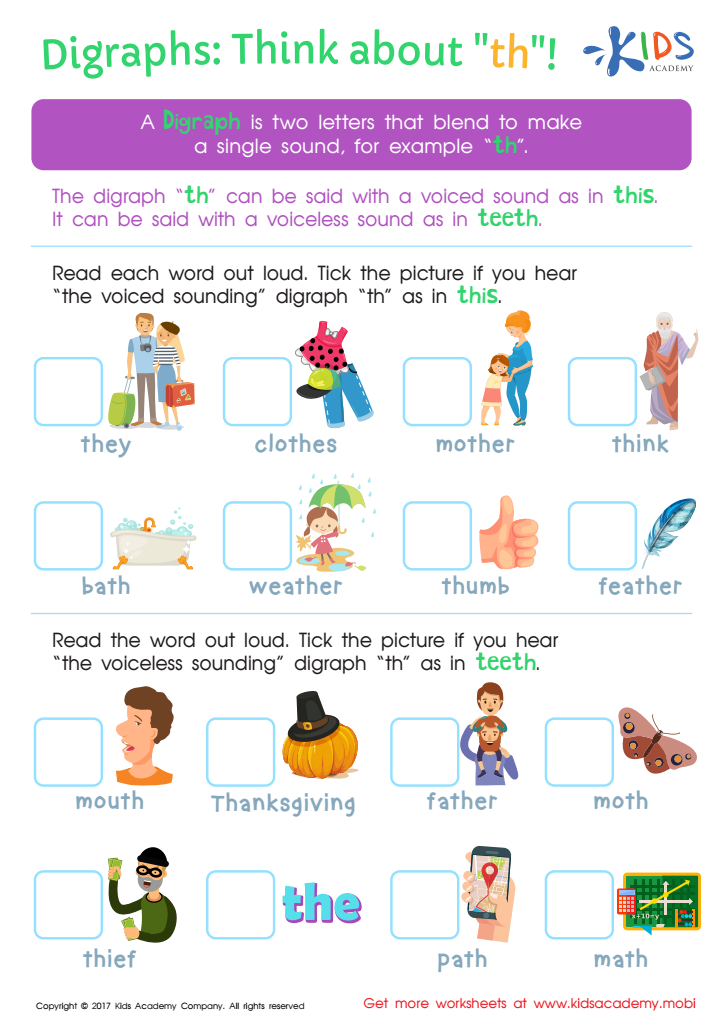
Digraphs: Think About "th" Worksheet
Help your child master phonics with this illustrated digraph Th printable worksheet. It will help recognize "Th" words, differentiate voiced and voiceless sounds and understand key concepts. Use similar words while they work to reap its full benefits!
Digraphs: Think About "th" Worksheet
Worksheet
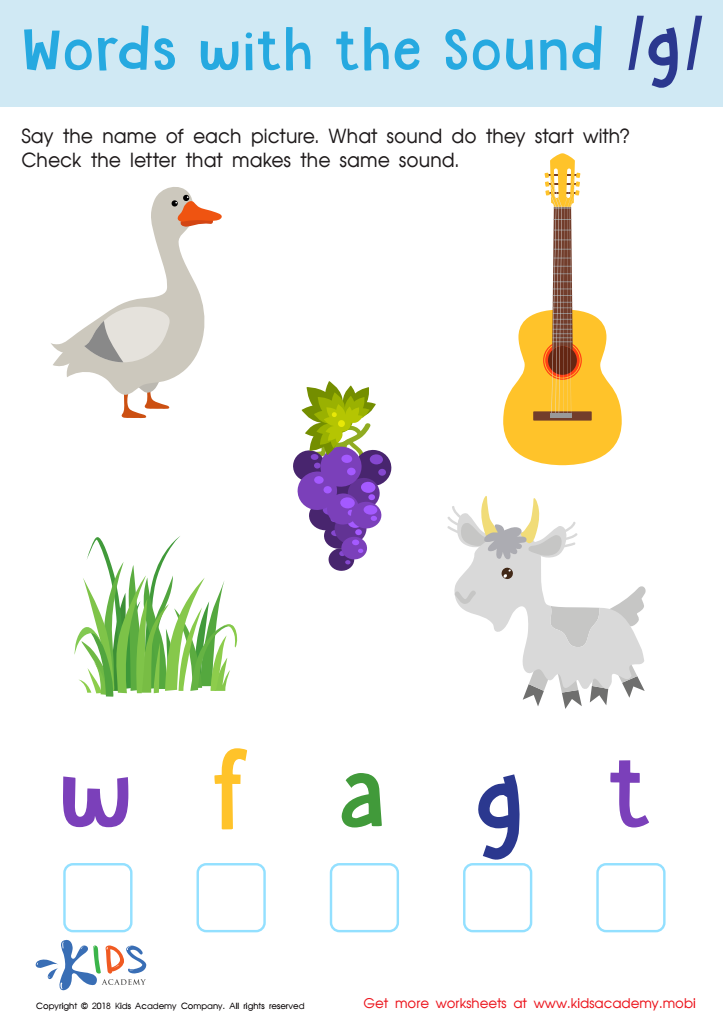
Words with sound g Reading Worksheet
Help your child learn the soft "g" sound with this phonics worksheet. Ask them to name each picture, then identify the letter sound it begins with. If it's "g", they can check the box. Have them repeat each word, listening for the soft "g" sound before moving on to the next page.
Words with sound g Reading Worksheet
Worksheet
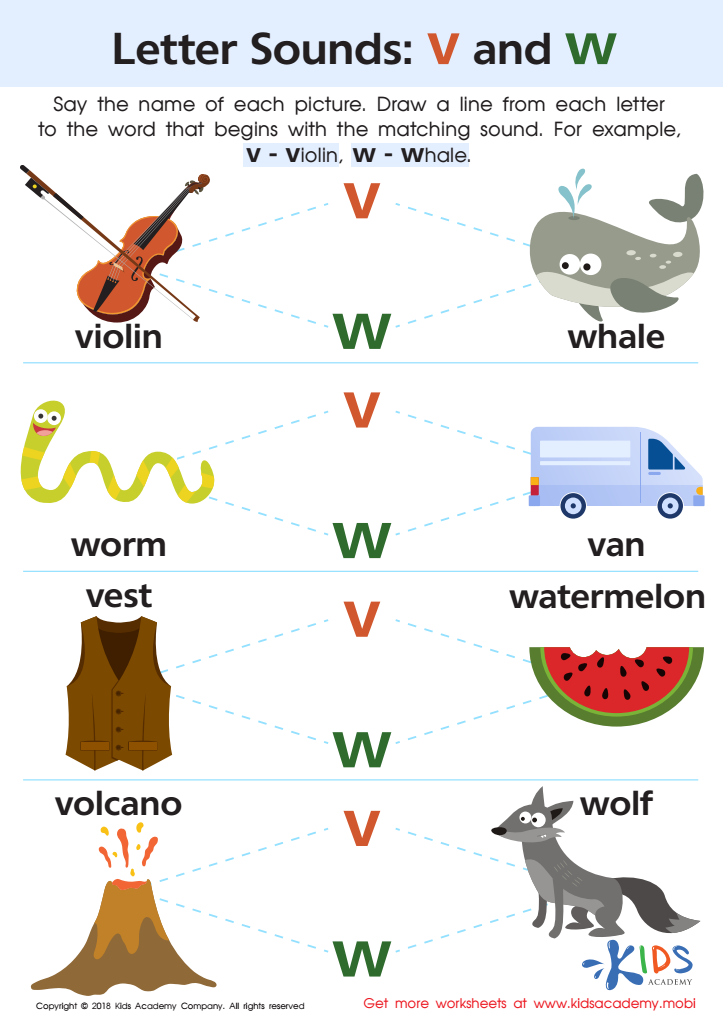
Letter V and W Sounds Worksheet
Help your child master the sounds of W & V while completing this fun phonics worksheet. Have them trace the dotted line from letter to picture while saying words like "worm", "violin" and "van" aloud to notice how each word begins with either W or V. Listen and pay attention to the pronunciation to complete the practice.
Letter V and W Sounds Worksheet
Worksheet
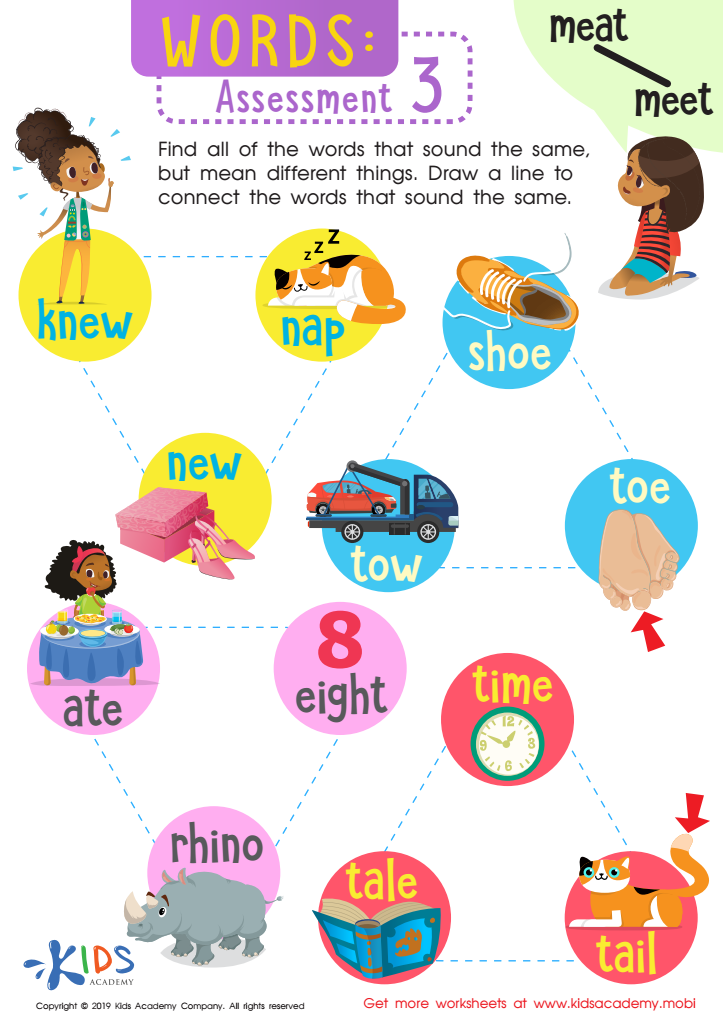
Words: Asessment 3 Worksheet
Assess your child's knowledge of homonyms with words like "toe" and "tow". This fun worksheet helps find words that sound the same but have different meanings and spellings. Use it to introduce homographs--words spelled the same with different meanings!
Words: Asessment 3 Worksheet
Worksheet
Join Kids Academy for Free
Who is primarily going to use this learning content?








Parents and teachers should place great importance on reading practice and phonics for children ages 4-6 because it lays the foundation for future reading and academic success. During these formative years, children’s brains are particularly receptive to learning language and literacy skills. Phonics—the method of teaching reading by associating sounds with letters and groups of letters—helps young learners understand the relationship between written and spoken language.
Proficiency in phonics enables children to decode new words, enhancing their ability to read independently and understand texts. Early practice in phonics helps build crucial reading fluency, comprehension, and vocabulary. As children become more confident readers, they are likely to develop a love for reading, which fosters lifelong learning and curiosity. Additionally, strong reading skills are closely linked to better performance in other academic areas, such as mathematics and science, because many subjects rely on the ability to read and comprehend instructions and problem statements.
Moreover, engaging in reading activities strengthens parent-child or teacher-student bonds, creating positive learning experiences. These interactions bolster social and emotional development, aiding children in becoming effective communicators. Consequently, by prioritizing phonics and reading practice, parents and teachers set children on a path toward academic success and personal growth.







