
Reading skills development Phonics Worksheets for Ages 4-6
5 filtered results
Difficulty Level
Grade
Age
-
From - To
Subject
Activity
Standards
Enhance your child's reading abilities with our engaging Phonics Worksheets designed specifically for ages 4-6. These expertly crafted worksheets focus on fundamental phonics skills, helping young learners recognize letters, understand their sounds, and begin blending them into words. With colorful illustrations and fun activities, each worksheet captures the interest of early readers, making learning an enjoyable experience. Our phonics worksheets promote confidence in reading, setting a strong foundation for future literacy success. Perfect for both classroom and home use, these resources support parents and teachers in providing high-quality, effective reading skill development for young children. Start your child's reading journey today!
Favorites
With answer key
Interactive
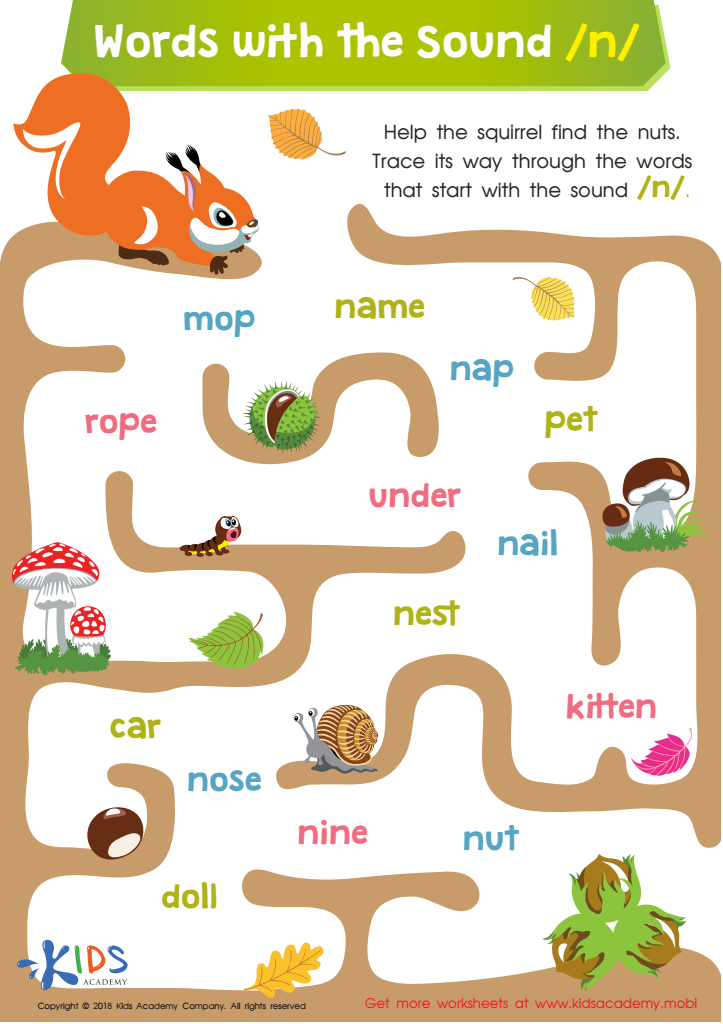
Words with Sound N Reading Worksheet
Young readers will love the colourful pictures and simple sight words on this download worksheet. They can trace their way through the maze as they help the cute squirrel reach his acorns, finding words with the sound "n" as they go. It's a fun way to work on reading skills - they won't even realise they're learning!
 Assign to My Students
Words with Sound N Reading Worksheet
Worksheet
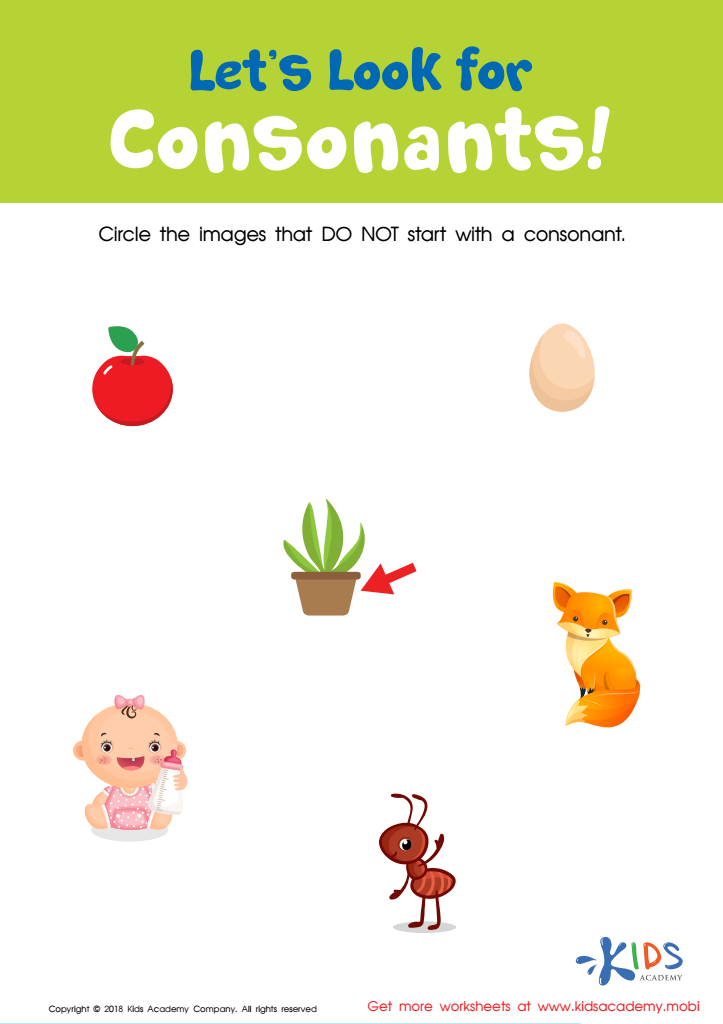
Let's Look for Consonants Worksheet
Help kids learn consonants and words that start with them. Ask them to recite the alphabet, then explain consonants are all letters but the 5 vowels. Use the worksheet to ask them to circle items without a consonant. Emphasize that's 21 consonants.
Let's Look for Consonants Worksheet
Worksheet
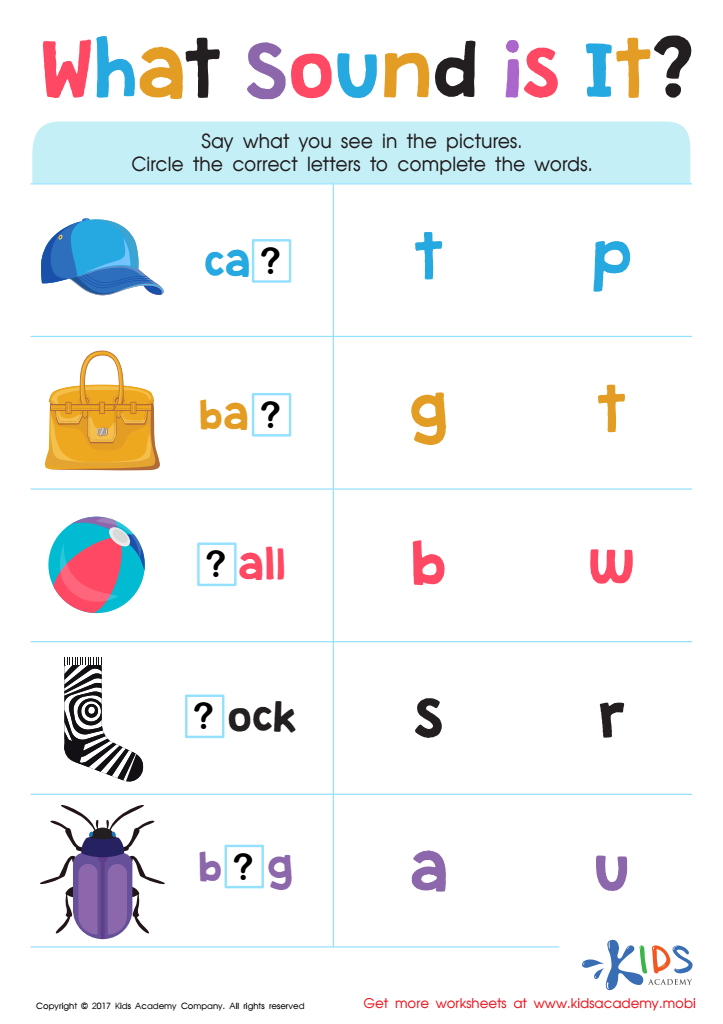
What Sound Is it? Worksheet
Have your child say the words for the pictures on this fun worksheet. As he or she sounds out the word, your child will use the provided letter choices to complete it, building reading and phonics skills. Visual cues make it easier to identify the correct beginning, middle, or end sound.
What Sound Is it? Worksheet
Worksheet
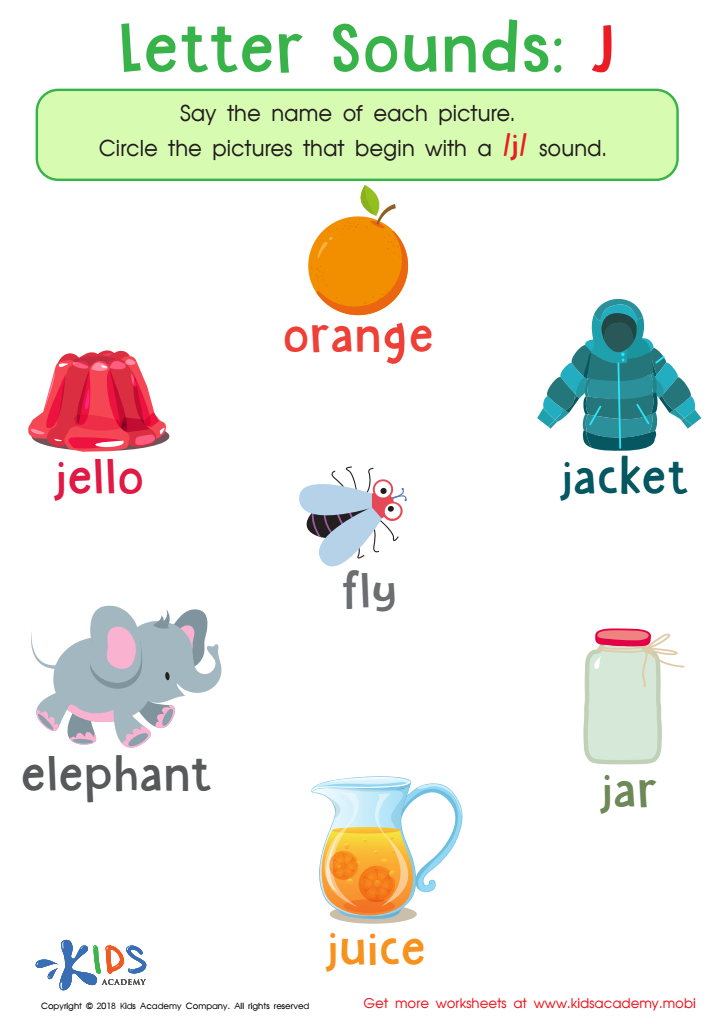
Letter Sounds: J Printable Worksheet
Preschoolers can learn to identify letter sounds by focusing on beginning sounds. This cute and colorful worksheet reviews the hard “j” sound. Kids can point it out by naming the words and circling only those starting with the “j” sound. Read the text out loud and listen closely!
Letter Sounds: J Printable Worksheet
Worksheet
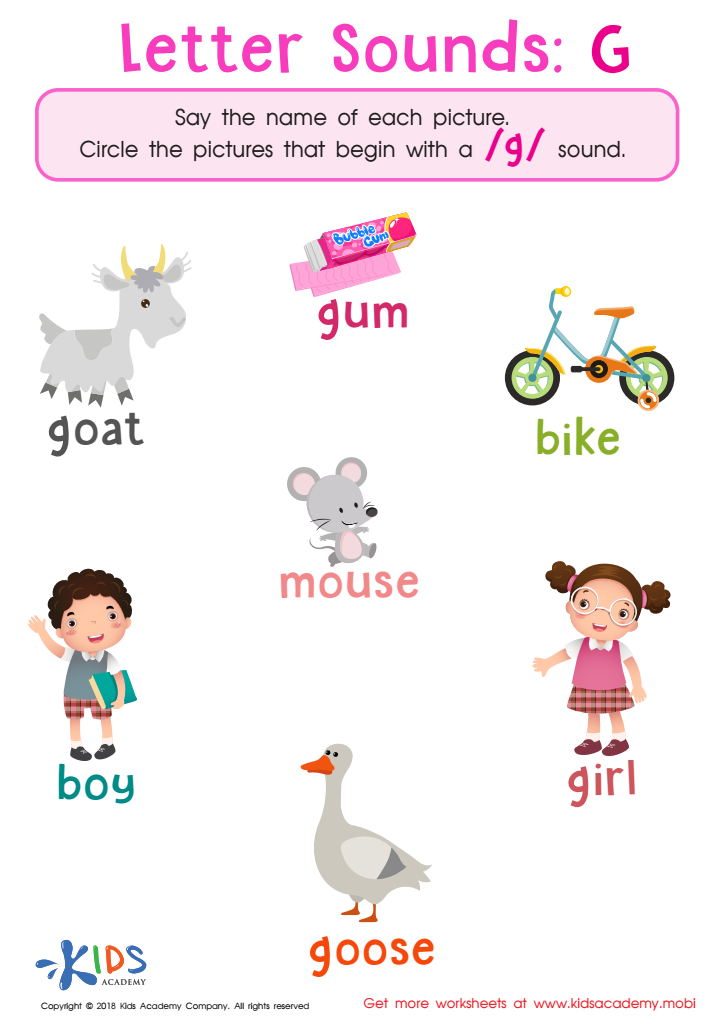
Letter G Sounds Worksheet
Help emerging readers build confidence by giving them practice identifying hard "G" with this free PDF worksheet. They'll use picture clues to name the words, and practice fine-motor skills tracing circles around the corresponding pics. It's a great way to introduce or reinforce hard "G" words.
Letter G Sounds Worksheet
Worksheet
Join Kids Academy for Free
Who is primarily going to use this learning content?








Parents and teachers should care deeply about the development of reading skills and phonics for children aged 4-6 because these early years are foundational for future academic success. Phonics instruction is crucial as it teaches children the relationship between letters and sounds, enabling them to decode words accurately and fluently. This skill is fundamental for reading, which is essential for almost all other learning.
Children who develop strong phonics skills typically become confident readers. This confidence can foster a lifelong love of reading, promoting continuous cognitive and language development. Conversely, children who struggle with reading at an early age may face ongoing academic challenges, often leading to difficulties in other subjects that require reading comprehension.
Additionally, early reading success is linked to greater self-esteem and an enhanced ability to articulate thoughts and ideas. For educators, effective phonics instruction can lead to improved classroom dynamics, as children are better equipped to engage with the curriculum. For parents, supporting phonics development can strengthen the parent-child bond through shared activities like reading storybooks.
Given these profound impacts, ensuring children aged 4-6 achieve strong reading and phonics skills is a crucial investment that can set the stage for future educational achievements and lifelong intellectual and emotional wellbeing.







