Sound Association Phonics Worksheets for Ages 4-6 - Page 2
26 filtered results
-
From - To
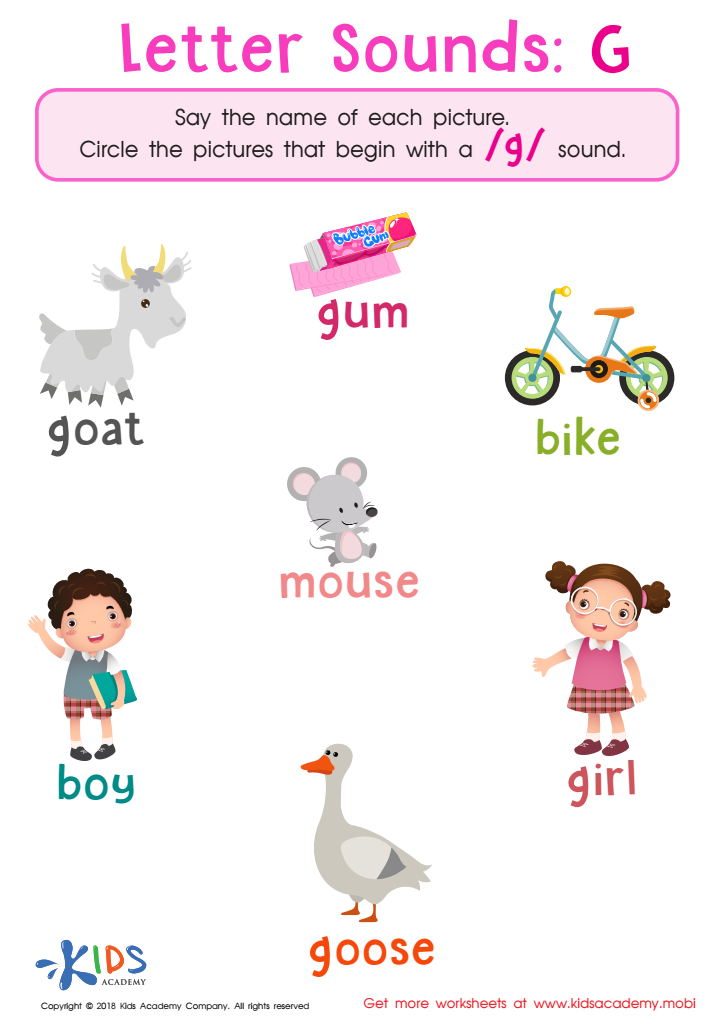
Letter G Sounds Worksheet
 Assign to My Students
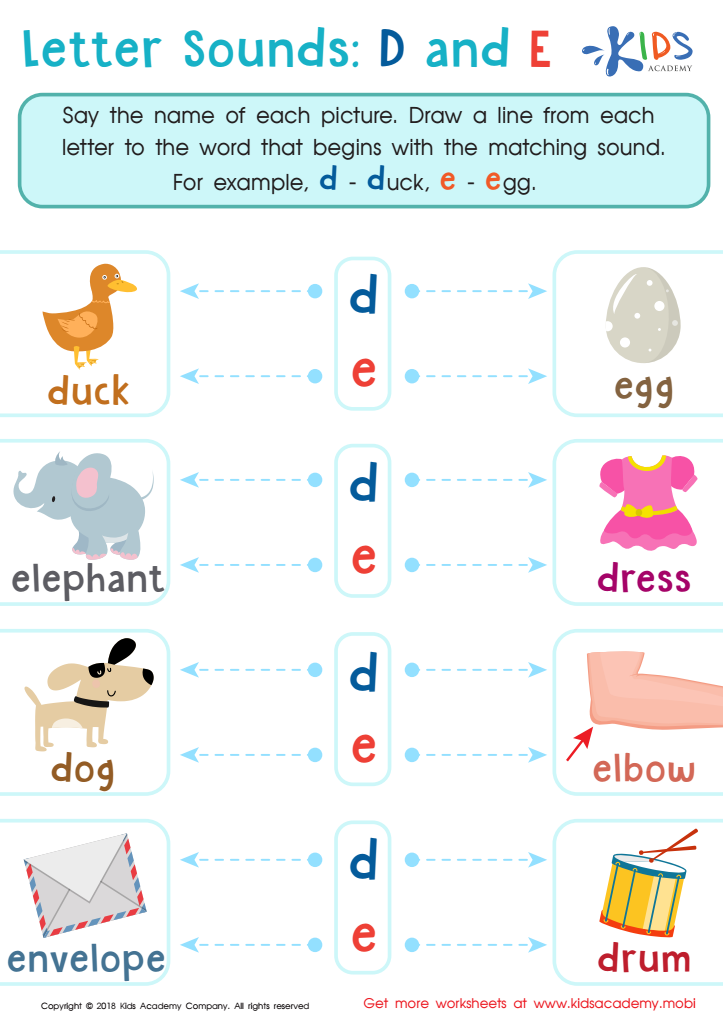
Letter D and E Sounds Worksheet








Sound Association Phonics is crucial for young learners aged 4-6 as it lays the foundation for their reading and writing skills, fundamental competencies for their overall academic success. Engaging in Sound Association Phonics means connecting letters with their corresponding sounds, a practice that enables children to decode words and understand their meanings more effectively.
Parents and teachers should care about this because early phonics training supports language development, sharpens focus, and boosts confidence. When children become familiar with letter sounds through playful activities, songs, and stories, they enhance their listening skills and vocabulary. These experiences prime their brains for more advanced literacy skills, promoting a sense of achievement when they begin to read texts independently.
Moreover, research indicates that children who receive systematic phonics instruction perform significantly better in reading and spelling compared to their peers who do not. Phonics helps in mastering the alphabetic principle, spelling patterns, and pronunciation, making learning smoother and more enjoyable.
Teachers and parents investing in phonics-based methods can mitigate future reading difficulties, creating a positive, lifelong impact on children's academic journeys. Early engagement through fun, interactive methods ensures not only academic success but also a lifelong love for reading and learning.







