Fine motor skills development Tracing Letters Worksheets for Ages 4-6
3 filtered results
-
From - To
Discover our engaging "Tracing Letters Worksheets" designed specifically for children aged 4-6 to enhance their fine motor skills! These printable worksheets help young learners practice writing letters while improving hand-eye coordination and finger dexterity. Tracing activities not only make learning fun but also lay a strong foundation for handwriting proficiency. Each worksheet features colorful designs and age-appropriate exercises that capture children's attention and encourage them to practice regularly. Perfect for parents and educators, these resources are designed to support your child’s early literacy journey, fostering confidence and excitement about learning letters. Start your child's handwriting adventure today!
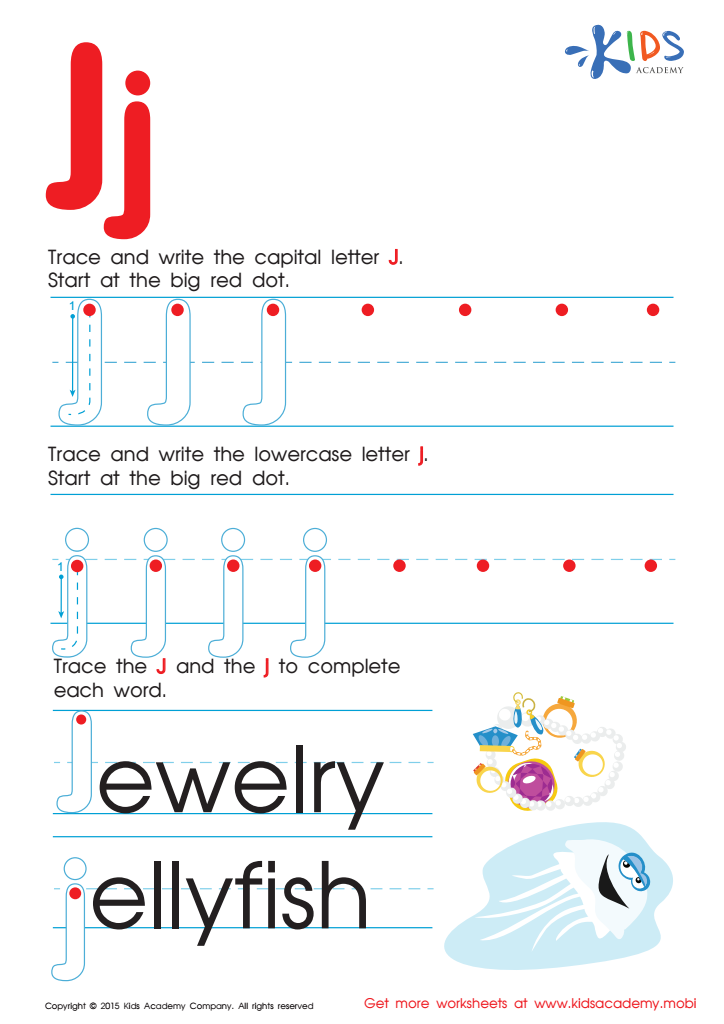
Letter J Tracing Page
 Assign to My Students
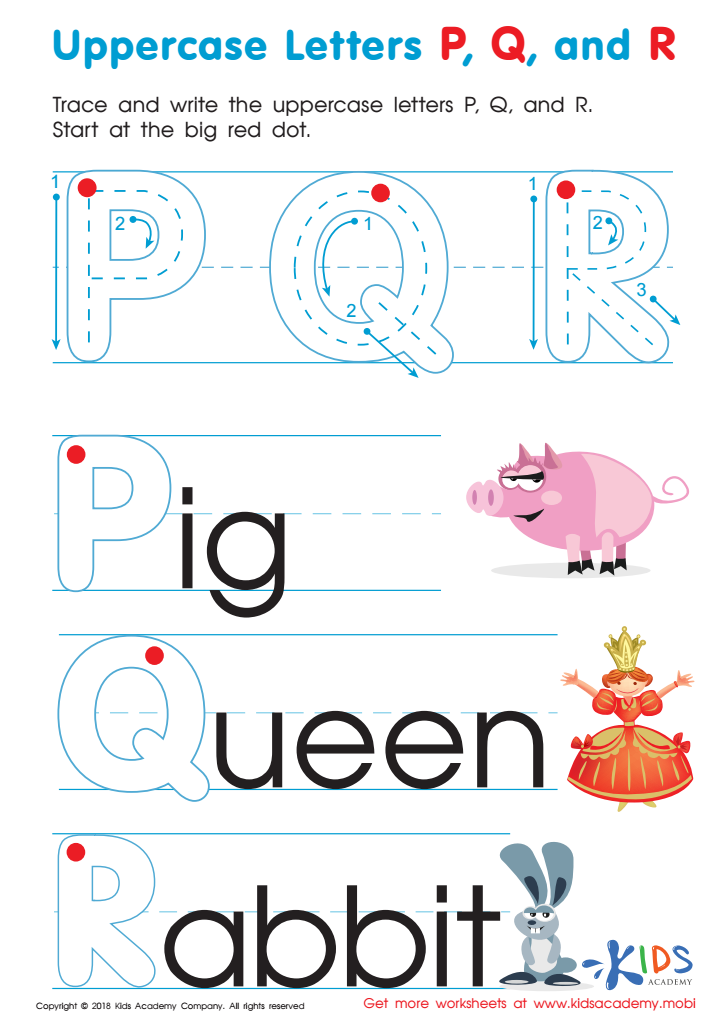
Uppercase Letters P, Q, and R Worksheet
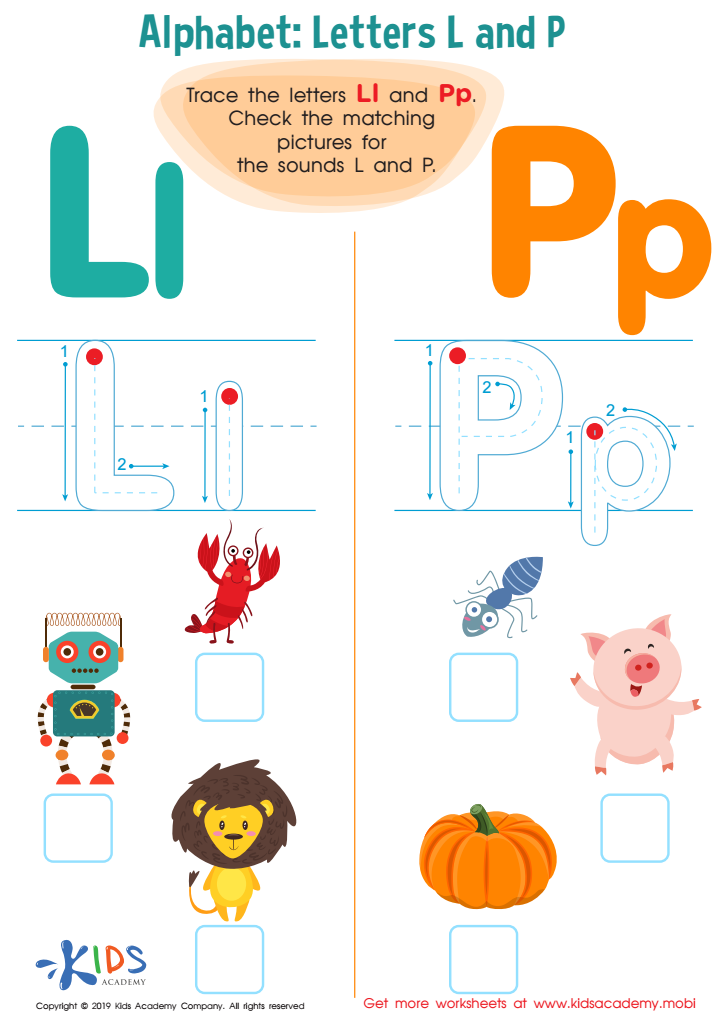
Letter L and P Tracing Worksheet








Fine motor skills development is crucial for children aged 4-6, particularly through activities like tracing letters. These skills facilitate precise movements required for writing, drawing, and other tasks requiring hand-eye coordination. Engaging in tracing helps children develop the small muscles in their hands and fingers, promoting better control and coordination essential for later academic success.
When children trace letters, they also become familiar with the shapes and structures of the alphabet, bolstering their literacy skills. This interaction fosters recognition and recalls, paving the way for efficient reading and writing. Moreover, fine motor practice encourages focus and perseverance, as it often requires patience to master the movements involved in tracing.
Parents and teachers should also view fine motor skills development as integral to a child’s overall confidence and independence. As children gain proficiency, they are likely to feel a sense of achievement, motivating them to engage further in educational activities. Ultimately, fostering fine motor skills through tracing is not just about writing—it's foundational for cognitive development, essential for schooling, and influences emotional growth. Supporting kids in this area sets them up for future learning and everyday tasks, making it a vital focus for both parents and educators.








