Handwriting practice Tracing Letters Worksheets for Ages 4-6 - Page 2
28 filtered results
-
From - To
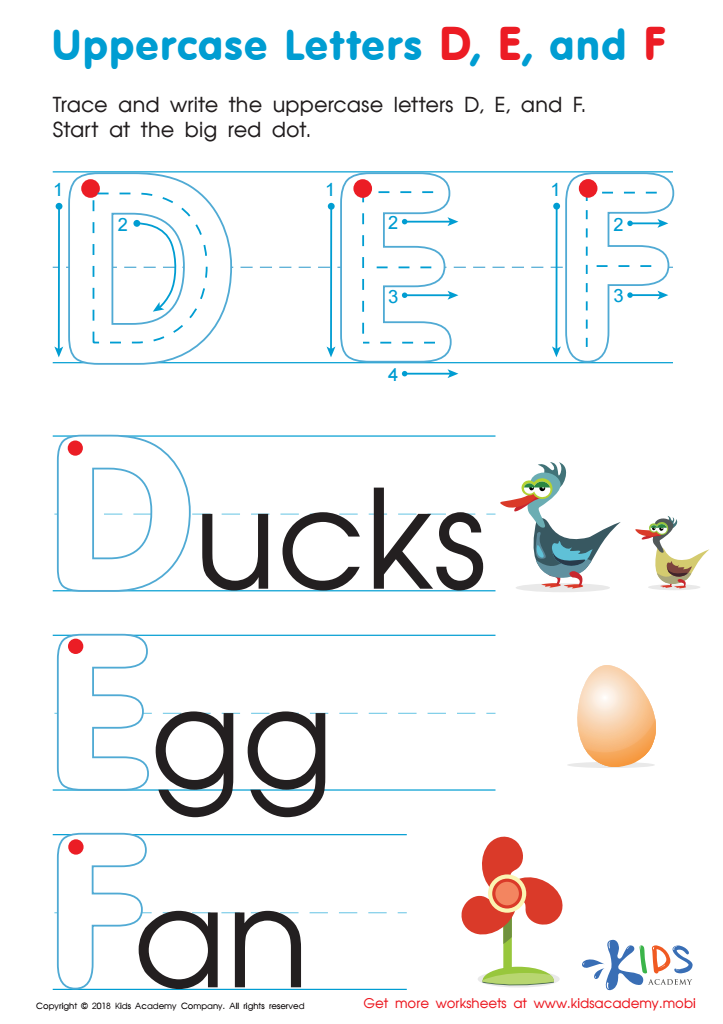
Uppercase Letters D, E, and F Worksheet
 Assign to My Students
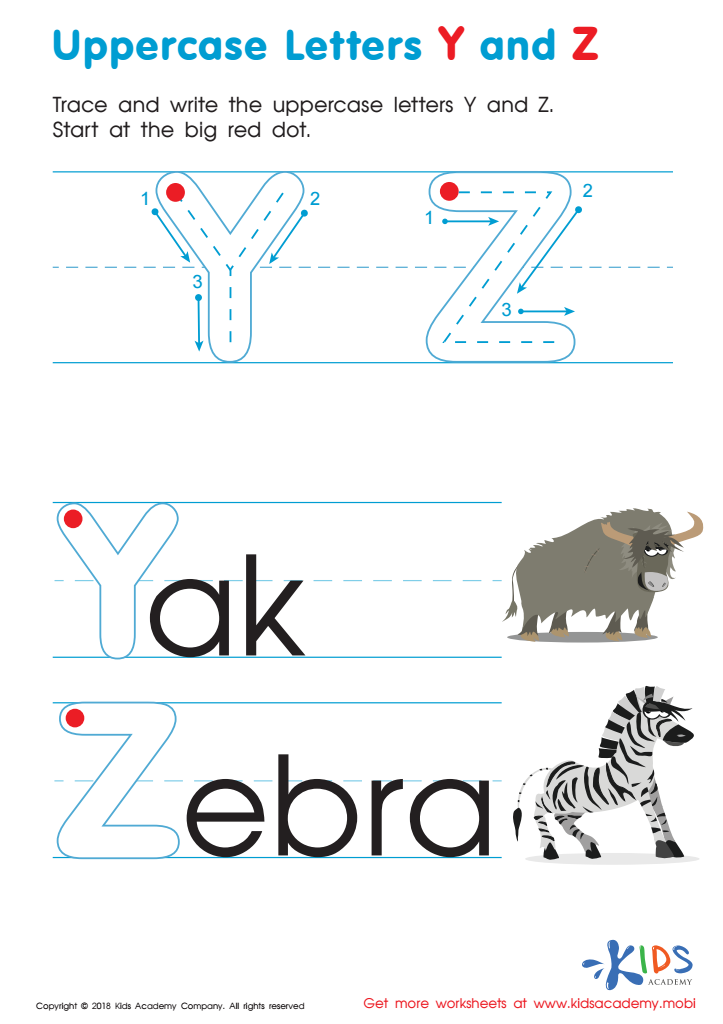
Uppercase Letters Y Z Worksheet
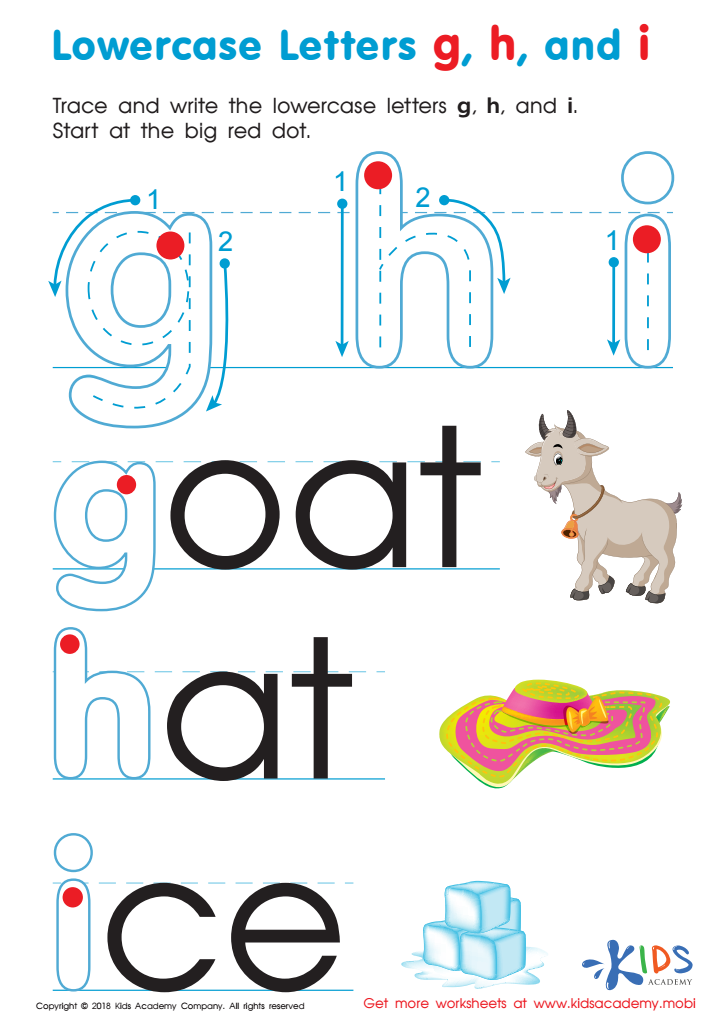
Lowercase Letters g h i Worksheet
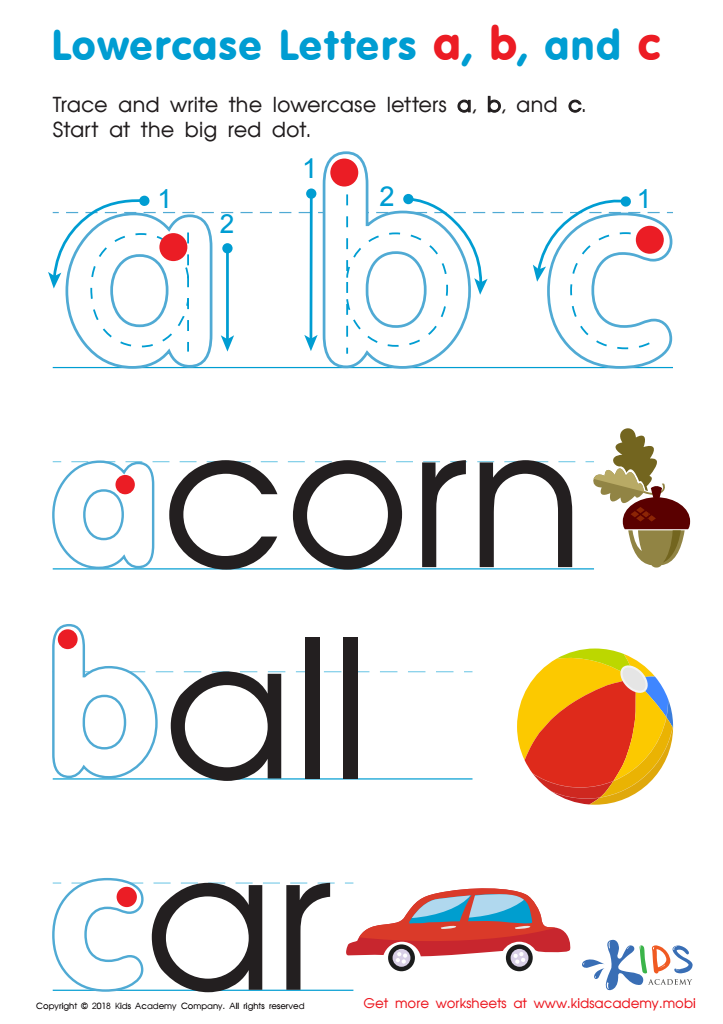
Lowercase Letters a b c Worksheet








Handwriting practice, particularly tracing letters, is an essential activity for children aged 4-6 as it lays the foundation for their writing skills. Parents and teachers should care about this practice because it significantly contributes to a child's fine motor development, which is critical for many everyday skills. Tracing letters helps strengthen the small muscles in the hands and fingers, improving control and coordination.
Furthermore, handwriting is linked to cognitive development. As children trace letters, they begin to recognize shapes and sounds associated with each letter, enhancing their literacy skills. This activity fosters letter recognition, aids in phonetic understanding, and boosts overall literacy, preparing them for future reading and writing experiences.
Moreover, handwriting practice promotes focus and discipline. As students engage in tracing, they learn to concentrate, follow instructions, and take pride in their progress. It also encourages creativity and self-expression as they develop their unique writing styles.
Lastly, establishing good handwriting habits early can lead to greater academic success. Neatly written work boosts confidence and encourages a positive attitude toward learning. In essence, handwriting practice is not just about putting pen to paper; it’s a holistic developmental tool that benefits a child’s growth in multiple areas.








