Letter Tracing Practice Tracing Letters Worksheets for Ages 4-6
5 filtered results
-
From - To
Enhance your child's learning journey with our Letter Tracing Practice Worksheets designed for ages 4-6. These engaging worksheets from Kids Academy offer a fun and effective way to develop essential writing skills. Each colorful sheet provides ample space for kids to trace both uppercase and lowercase letters, helping to improve their fine motor skills and letter recognition. Our worksheets support preschool and kindergarten curriculum, making early learning enjoyable and rewarding. With step-by-step guides and playful illustrations, your child will quickly gain confidence and mastery in writing the alphabet. Start tracing today and watch them excel!
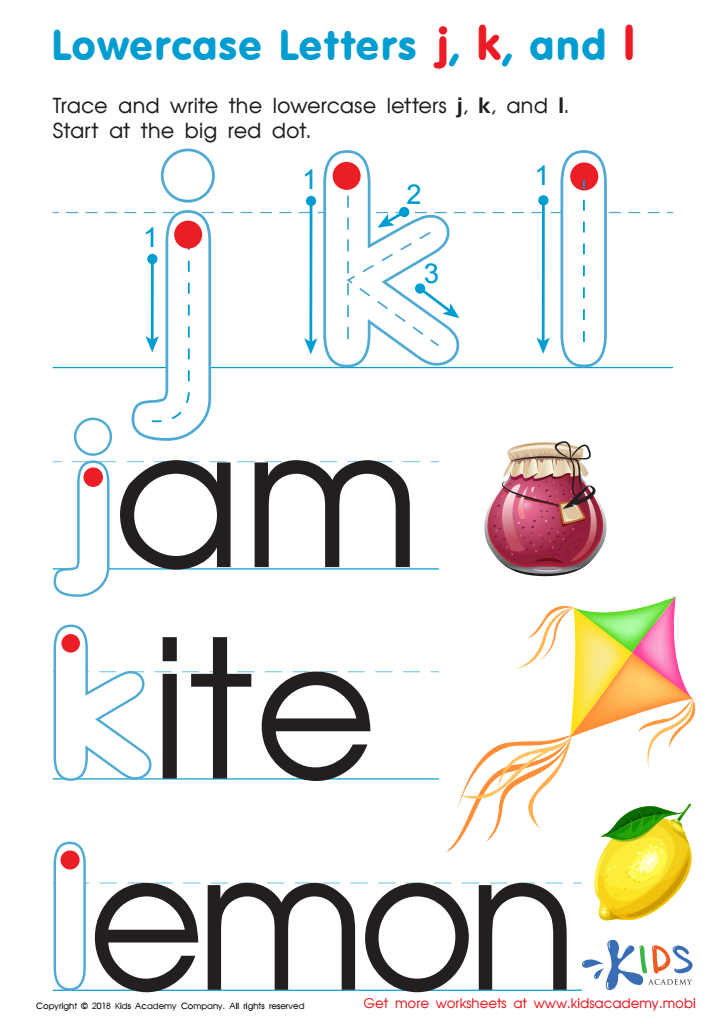
Lowercase Letters j k l Worksheet
 Assign to My Students
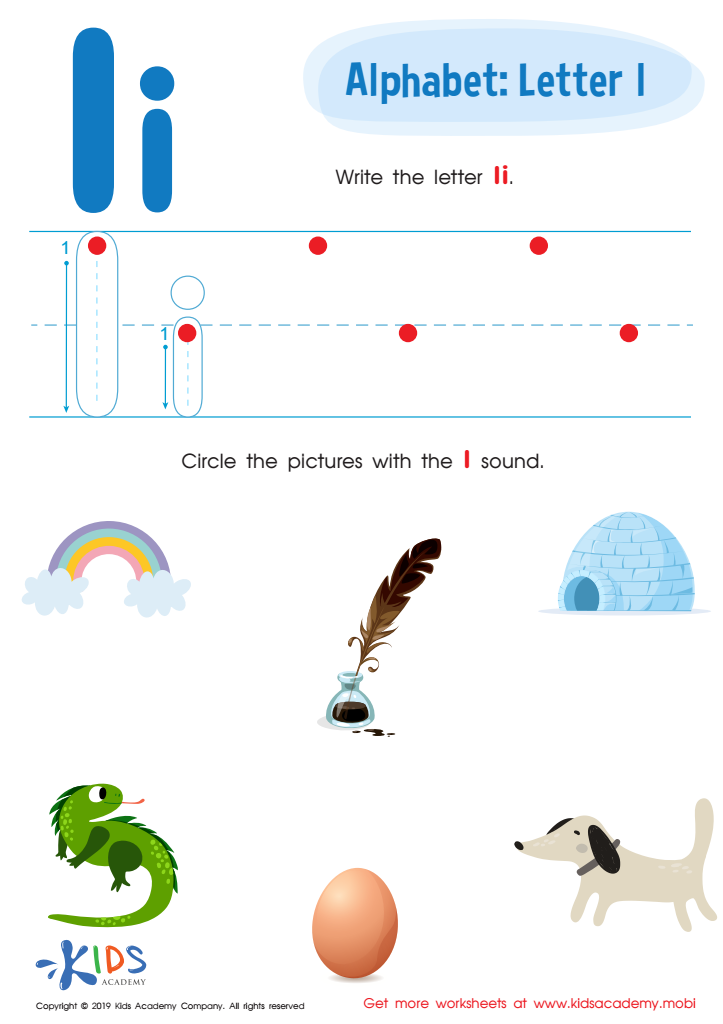
Letter I Tracing Worksheet
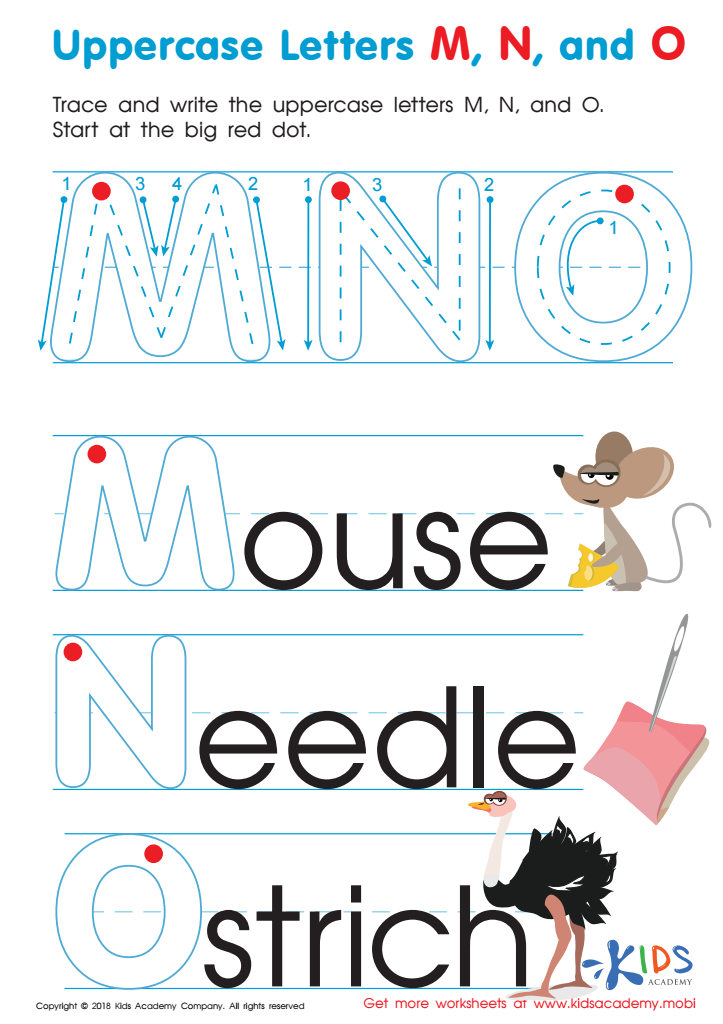
Uppercase Letters M, N, and O Worksheet
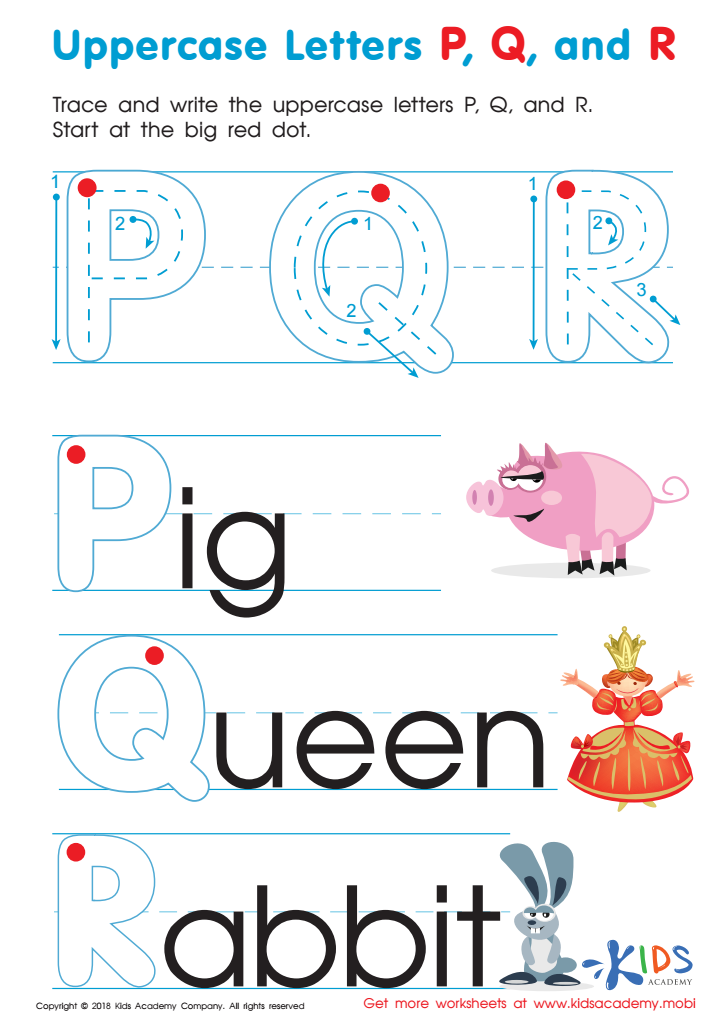
Uppercase Letters P, Q, and R Worksheet
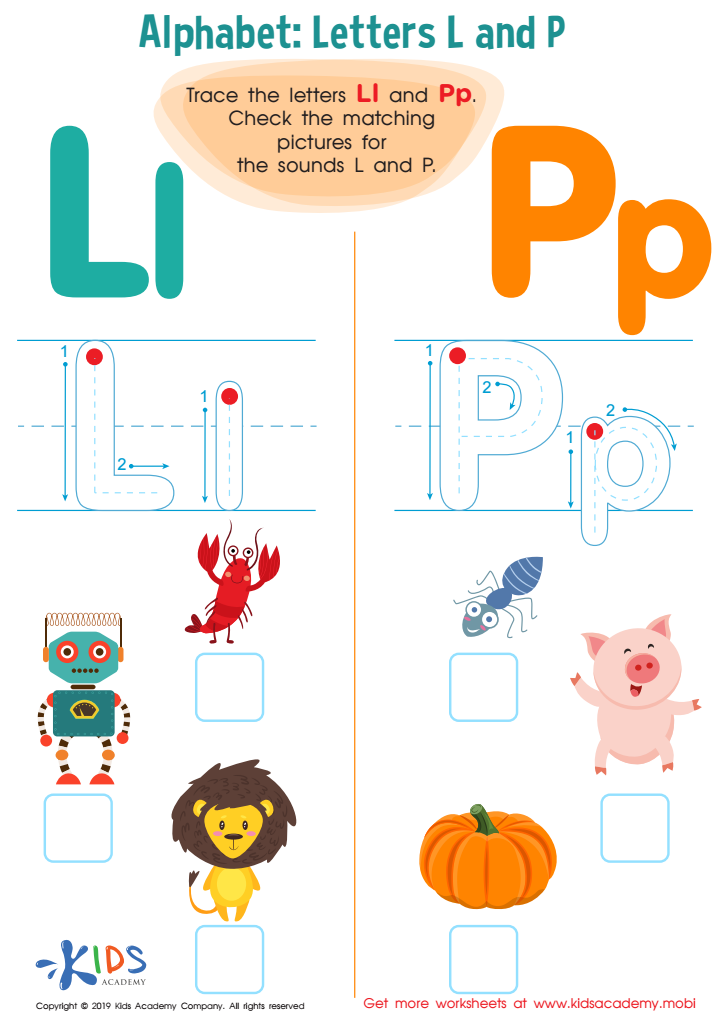
Letter L and P Tracing Worksheet








Parents and teachers should care about letter tracing practice for children ages 4-6 because it serves as a foundational step in developing essential literacy skills. At this critical age, children are just beginning to understand the basics of written language. Letter tracing helps refine fine motor skills, hand-eye coordination, and muscle memory, which are crucial for proper handwriting. This practice also supports cognitive development by enhancing the child’s ability to recognize letter shapes and sounds, which is integral for learning to read and write.
Moreover, letter tracing introduces young learners to the concepts of directionality and spatial awareness, teaching them how letters are formed and arranged. This understanding fosters a child’s confidence and reduces frustration when they start writing independently. Additionally, consistent practice encourages concentration and patience, important traits for academic success.
For teachers, letter tracing is an effective tool to assess a child's progress in letter recognition and formation, allowing for targeted interventions where needed. For parents, participating in letter tracing activities at home creates an engaging and supportive learning environment, strengthening the parent-child bond and making learning a shared experience. Overall, letter tracing is a simple yet impactful activity that prepares children for future academic endeavors and promotes a positive attitude toward learning.








