Visual discrimination skills Upper & Lowercase Letters Worksheets for Ages 4-6
4 filtered results
-
From - To
Enhance your child's visual discrimination skills with our engaging Upper & Lowercase Letters Worksheets tailored for ages 4-6. These worksheets are specifically designed to help young learners differentiate between uppercase and lowercase letters through a variety of fun activities. By practicing these worksheets, children will strengthen their recognition skills, boost their confidence in letter identification, and improve their overall literacy foundation. Our visually stimulating exercises foster a love for learning while making it easy and enjoyable for parents and teachers to support early reading skills. Discover the perfect resources to aid your child's journey towards reading proficiency today!
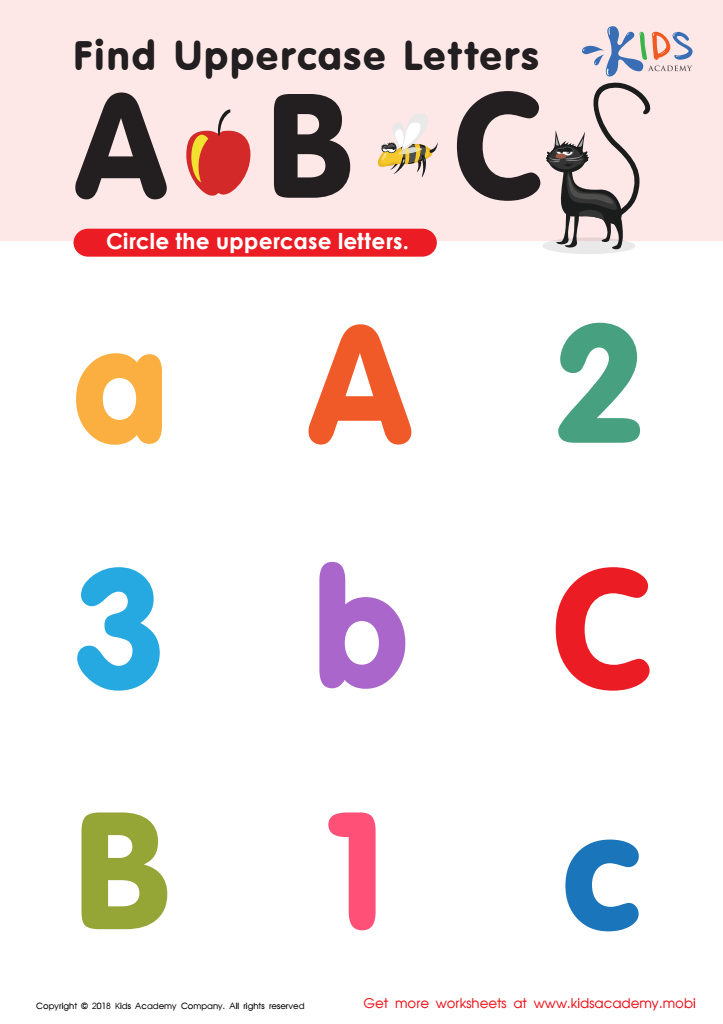
Find Uppercase Letters A, B, and C Worksheet
 Assign to My Students


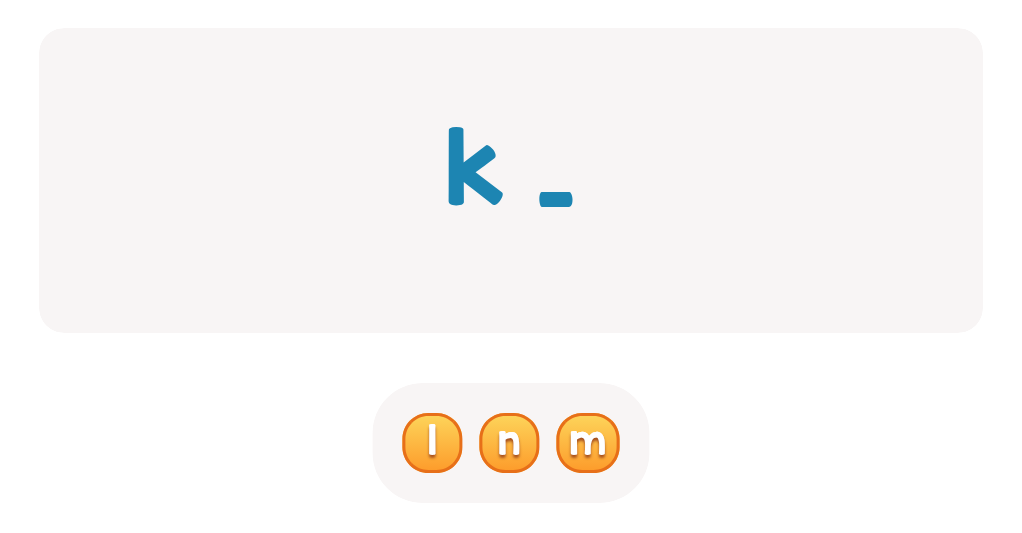
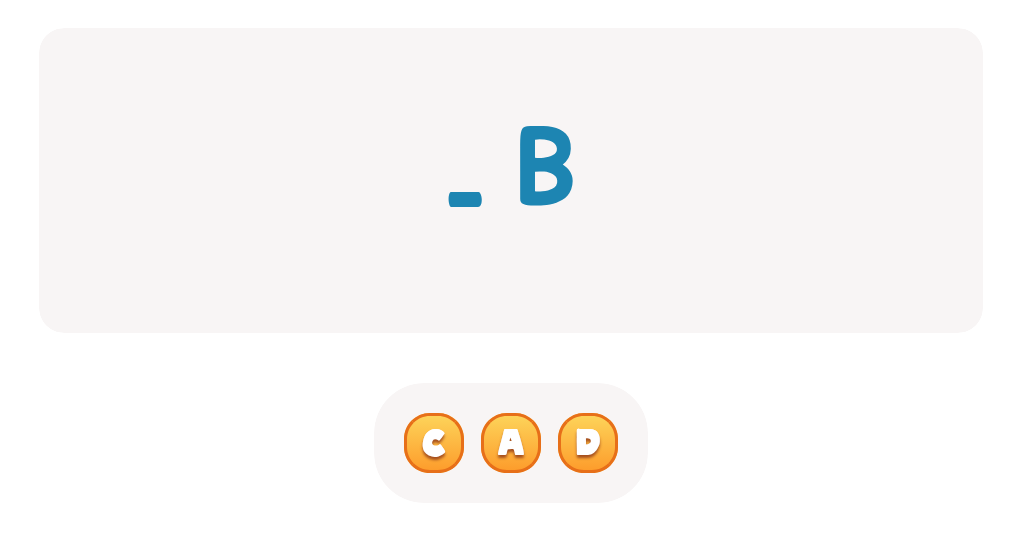


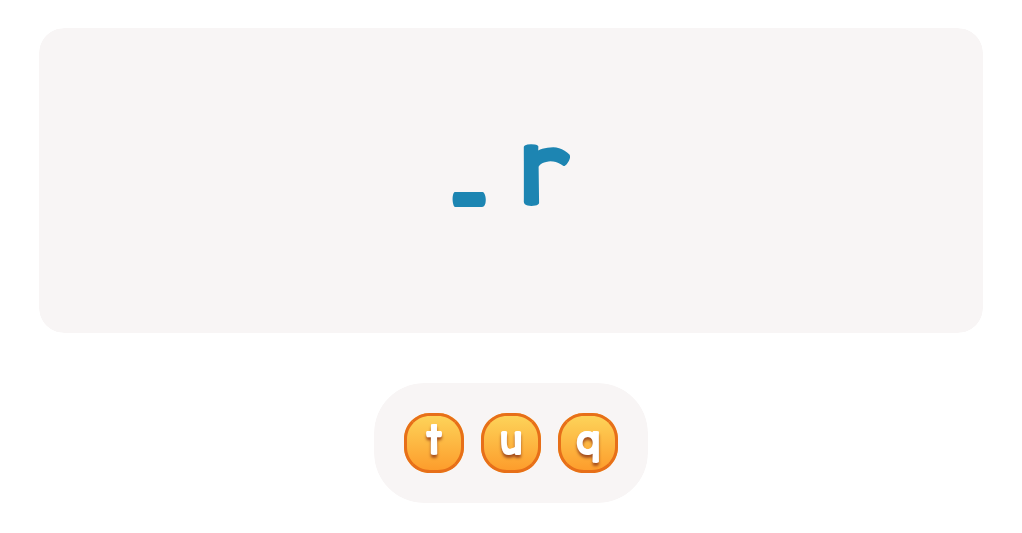

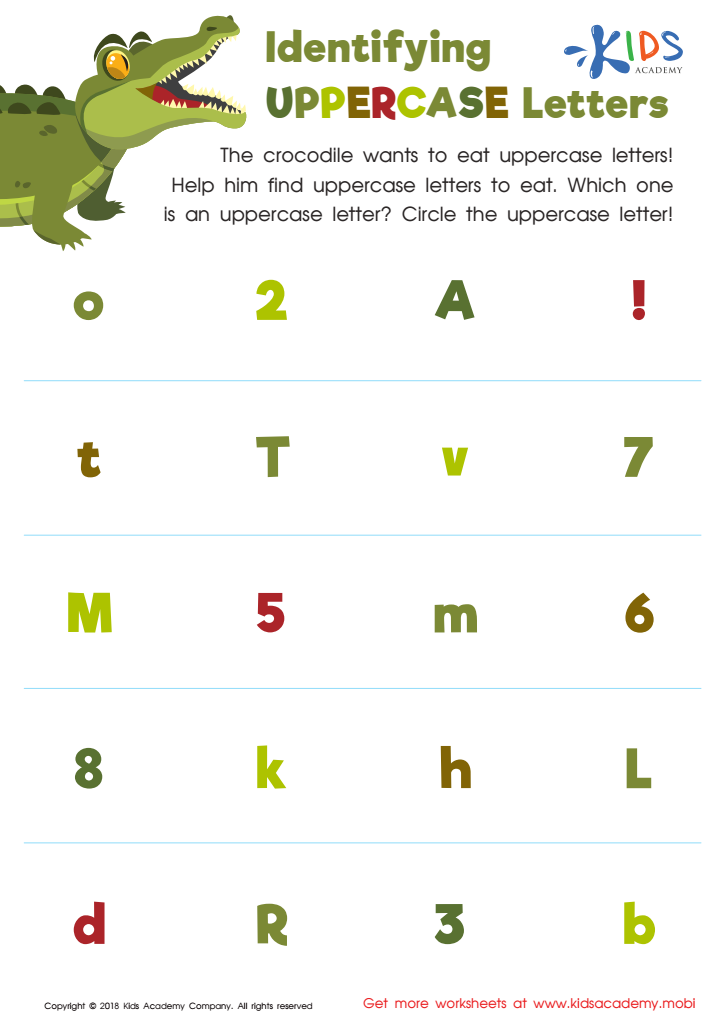
Identifying Uppercase Letters Worksheet
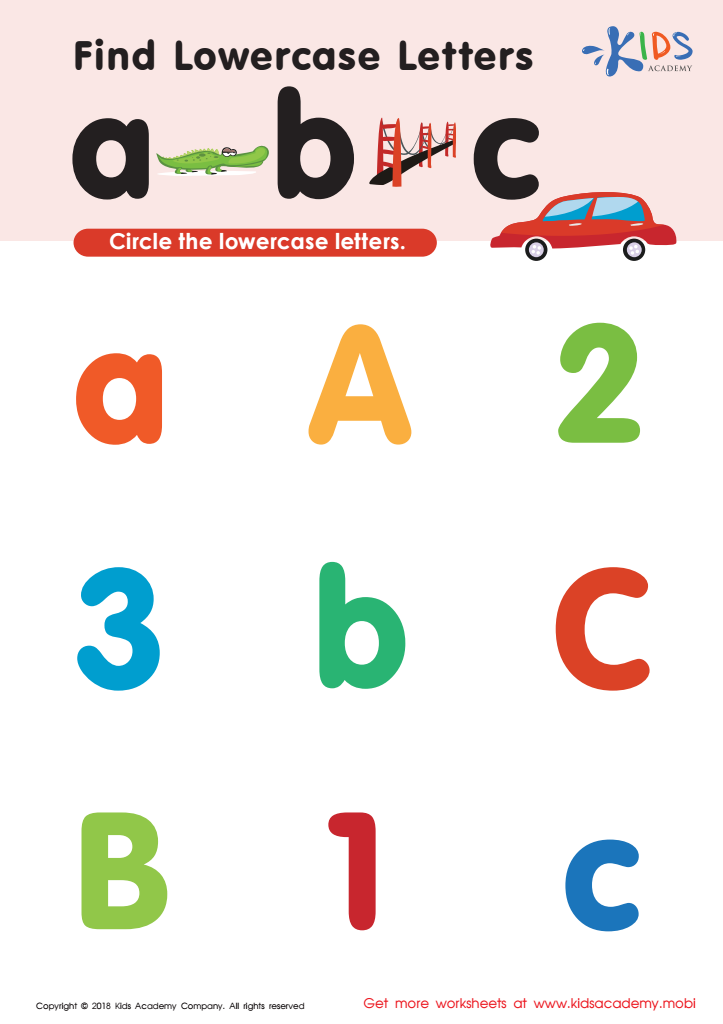
Find lowercase letters a b c Worksheet
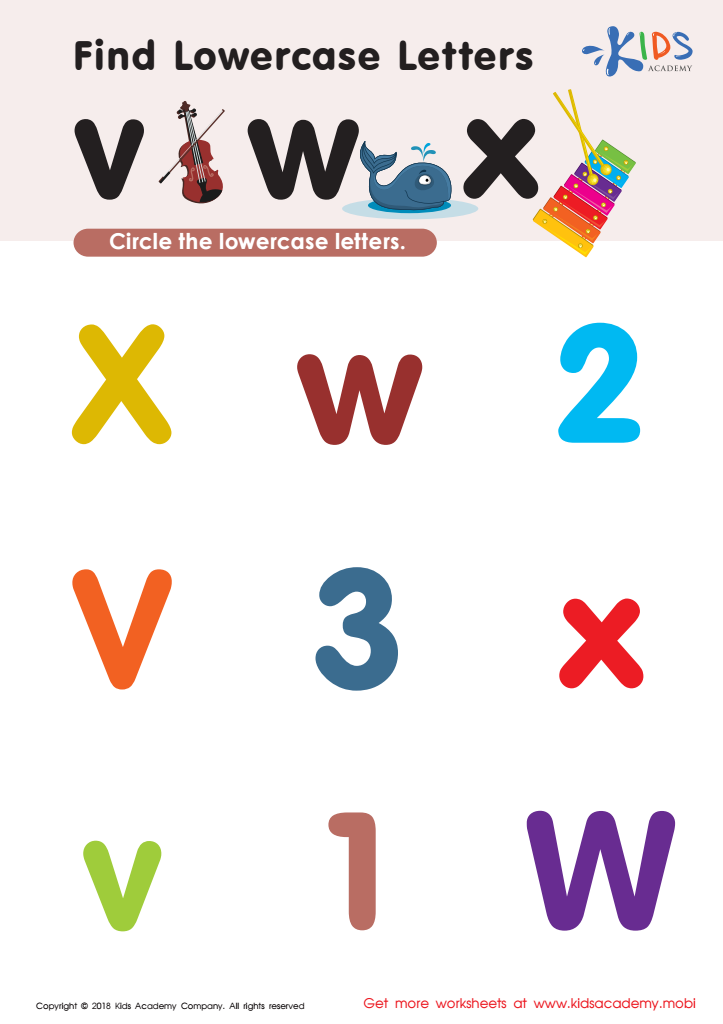
Find Lowercase Letters v w x Worksheet






Visual discrimination skills, particularly regarding uppercase and lowercase letters, are crucial for children aged 4-6 as they lay the foundation for literacy development. These skills enable children to recognize, differentiate, and understand various letter forms, which is essential for reading and writing. At this formative stage, children are beginning to make sense of written language and need to identify letters effectively for phonics and spelling.
By honing visual discrimination skills, kids can better recognize words and build vocabulary, enhancing their reading fluency. Additionally, the ability to distinguish between uppercase and lowercase letters supports their writing skills and helps them understand sentence structure. When children start writing, they need to use the correct case, so clear discrimination between these forms minimizes errors and confusion.
For teachers and parents, nurturing these skills involves using engaging activities such as letter matching games, flashcards, and interactive storytelling, which can significantly enhance a child’s reading readiness. As children become confident in recognizing and utilizing different letter cases, they also gain a sense of achievement, fostering a positive attitude towards learning. Ultimately, visual discrimination skills contribute to a child’s academic success and set the stage for future literacy endeavors.







